

Printing woven mats: what buyers should know before placing a production order
If you are sourcing printing for woven mats, placemats, or similar flat home-textile items, the first question is usually not about artwork. It is whether the decoration process will hold up in real use. A mat that looks sharp on the factory floor can still disappoint if the print shifts, fades, cracks, or sits awkwardly on a natural fiber surface. That is why buyers in retail, hospitality, and promotional goods tend to care as much about process as they do about design.
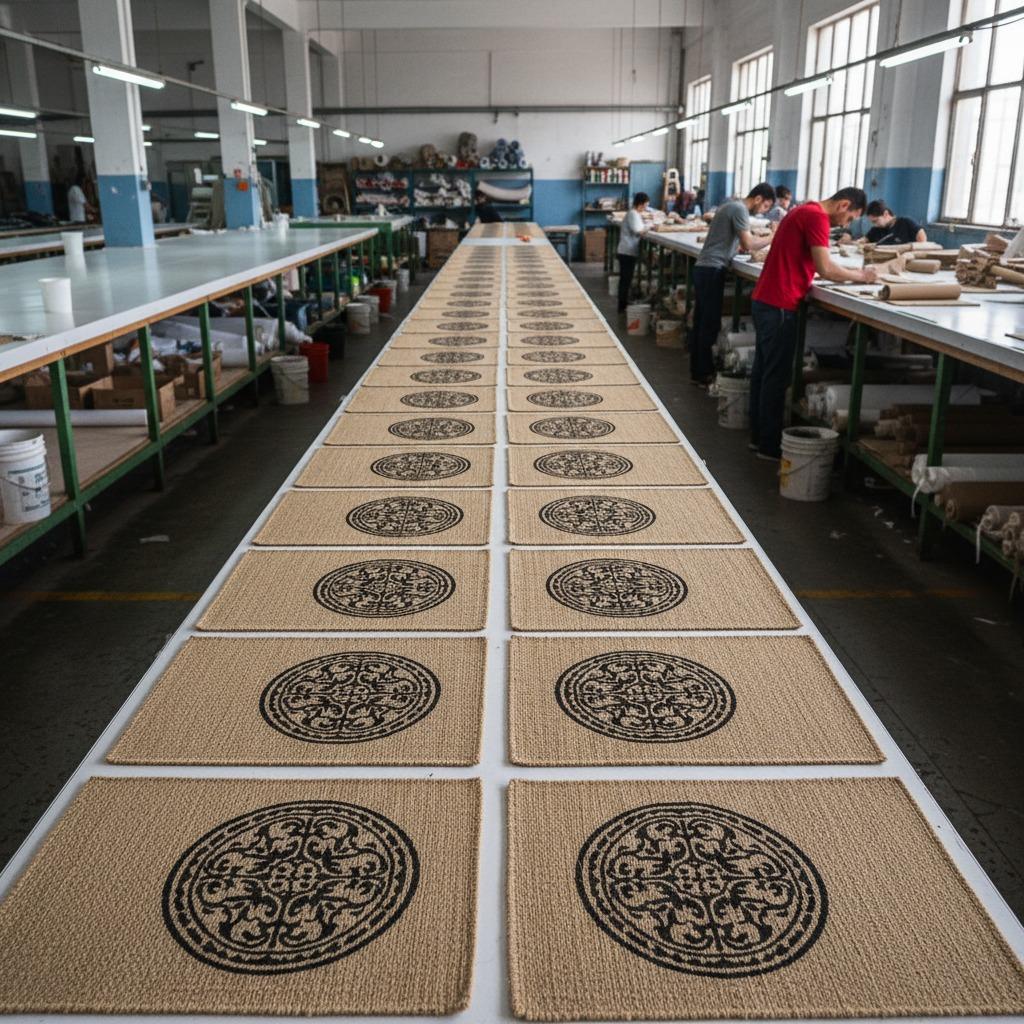
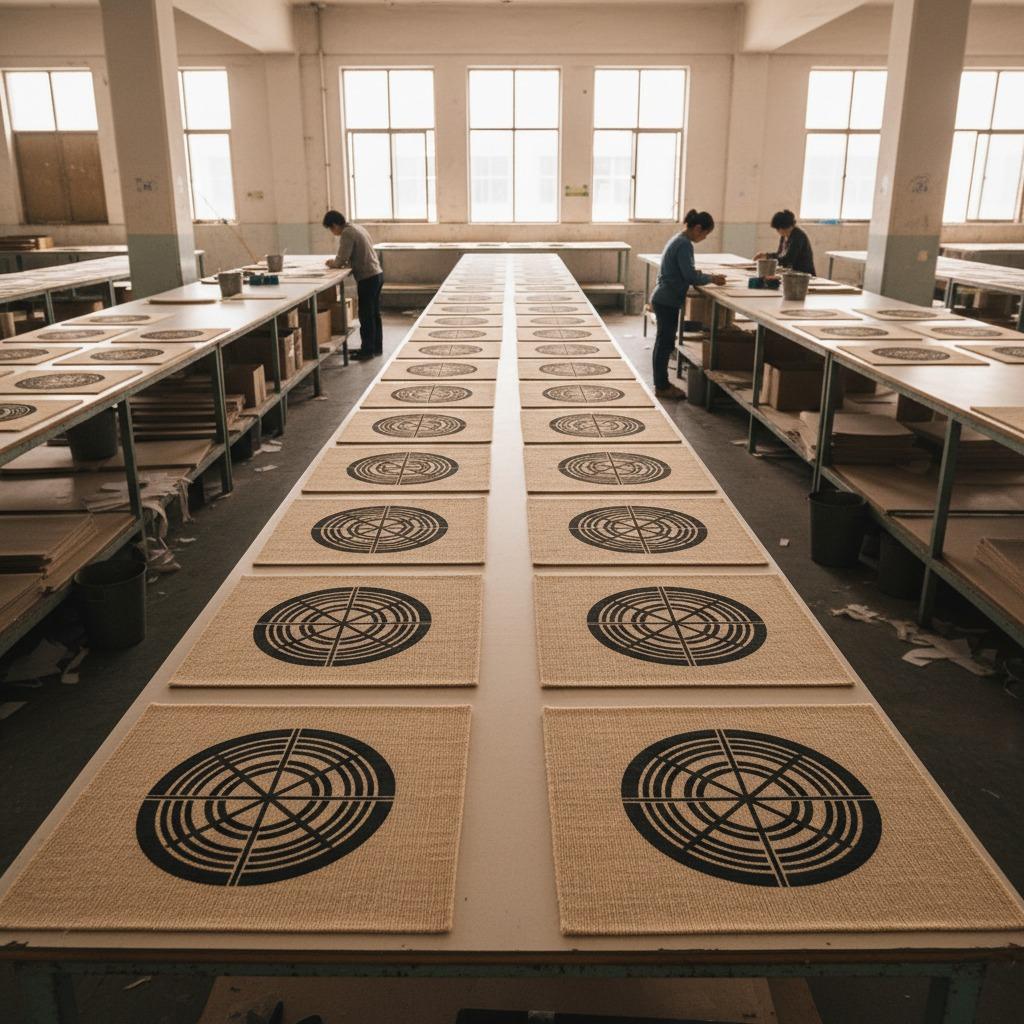
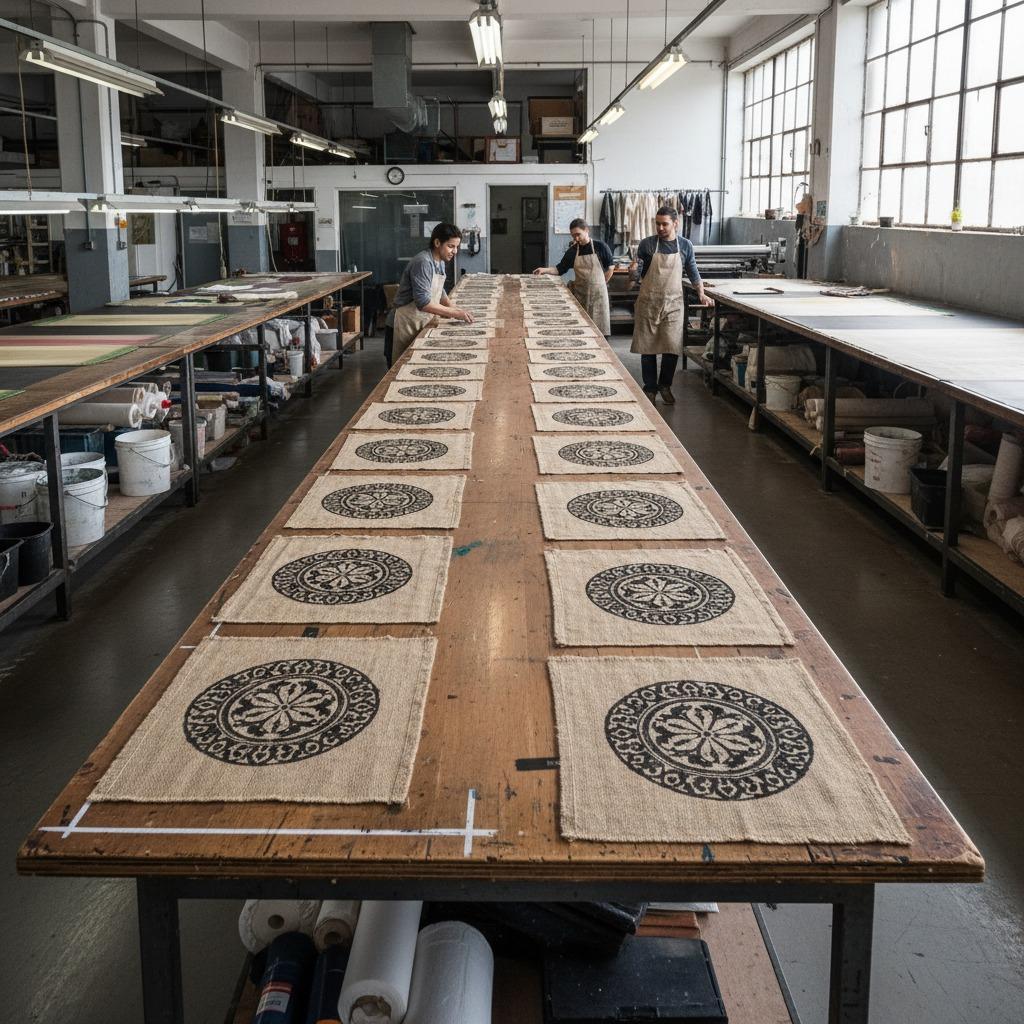
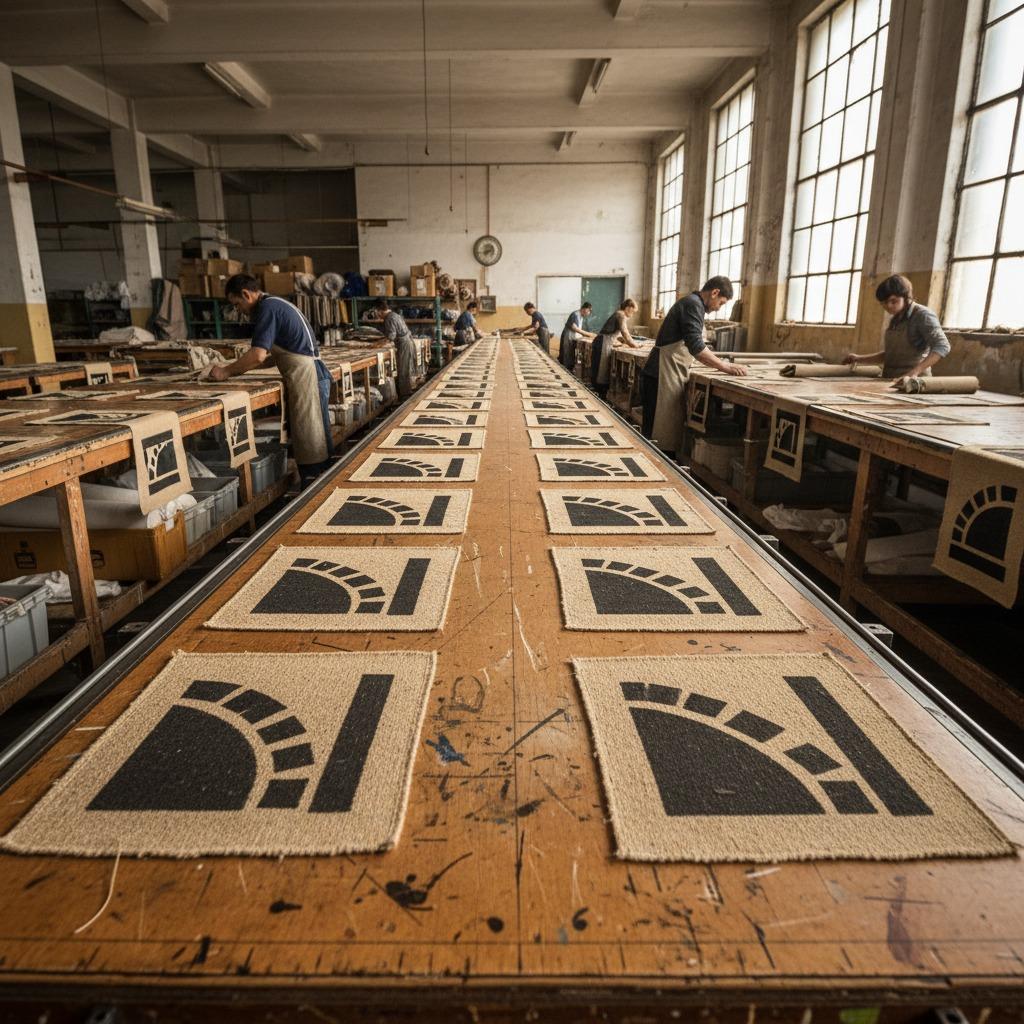
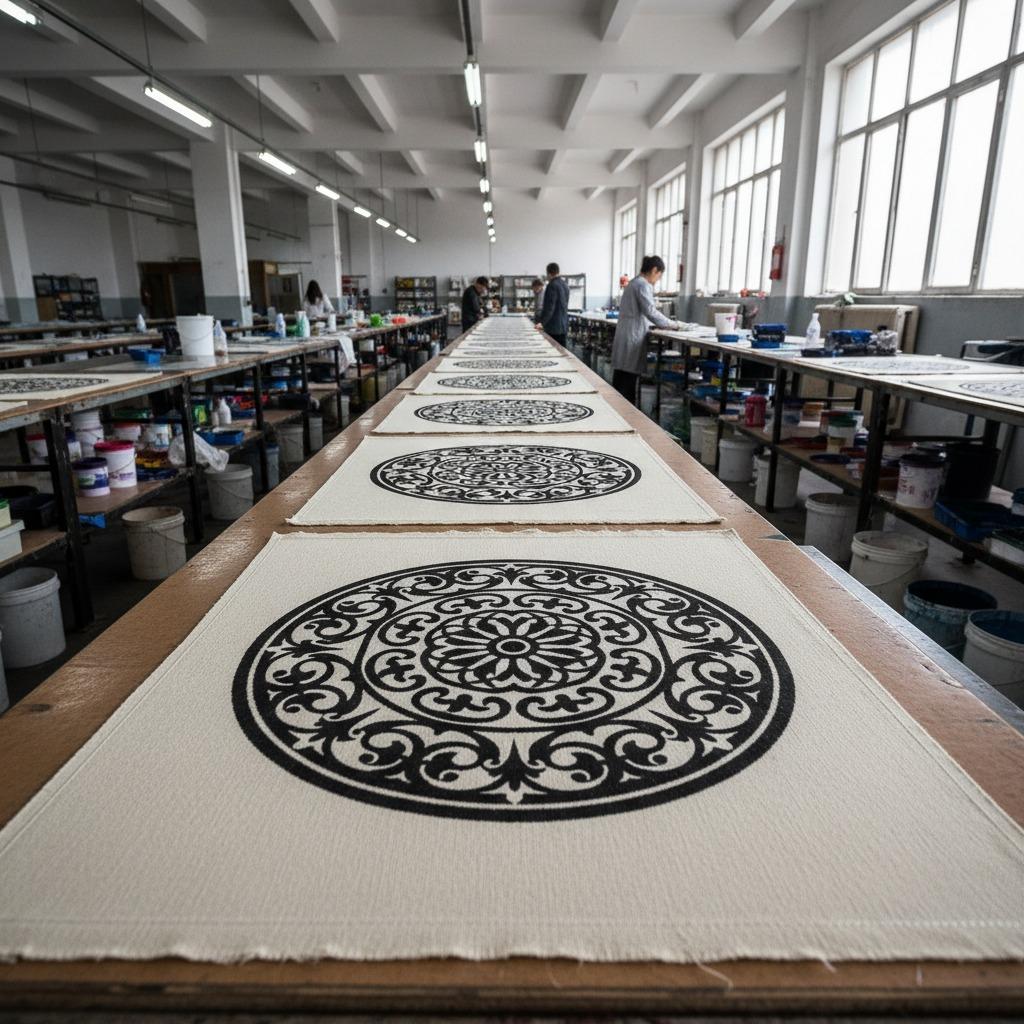
The product type shown here suggests a batch of rectangular woven blanks with a printed geometric motif placed on one end. That layout tells you something useful: this is not a one-off craft job. It looks like repeatable, assembly-style production, the kind that matters when you need consistent output for a store program, restaurant rollout, or seasonal collection.
Why the printing process matters on woven surfaces
Printing on a woven or textured mat is different from printing on a smooth paper or coated board. The surface is less forgiving. Ink can sit unevenly, bleed slightly into the fibers, or lose detail if the mesh is too open or the substrate is too rough. Buyers often underestimate that point and focus only on color approval.
For decorative mats, the process has to balance appearance and daily use. A dining mat, café placemat, or entryway mat may be exposed to spills, wiping, light abrasion, and handling during cleaning. That means the decoration method should be chosen with the end environment in mind, not just the sample in front of you.
Common printing methods and where they fit
Offset printing
Offset printing can deliver crisp detail on suitable flat substrates, but it is not the automatic choice for woven or fibrous materials. It tends to make sense when the surface has been prepared or when the material behaves more like a printable sheet than a loose textile. Buyers should ask how the substrate is being stabilized before assuming offset printing is appropriate.
Digital printing
Digital printing is attractive for short runs, design changes, and custom printing programs. It is often used when artwork varies or when a buyer needs online printing-style flexibility without committing to a large inventory. Still, digital output on textured mat blanks can show surface variation, especially if the fibers are uneven or the color is light and the motif is fine-lined.
Commercial printing and batch production
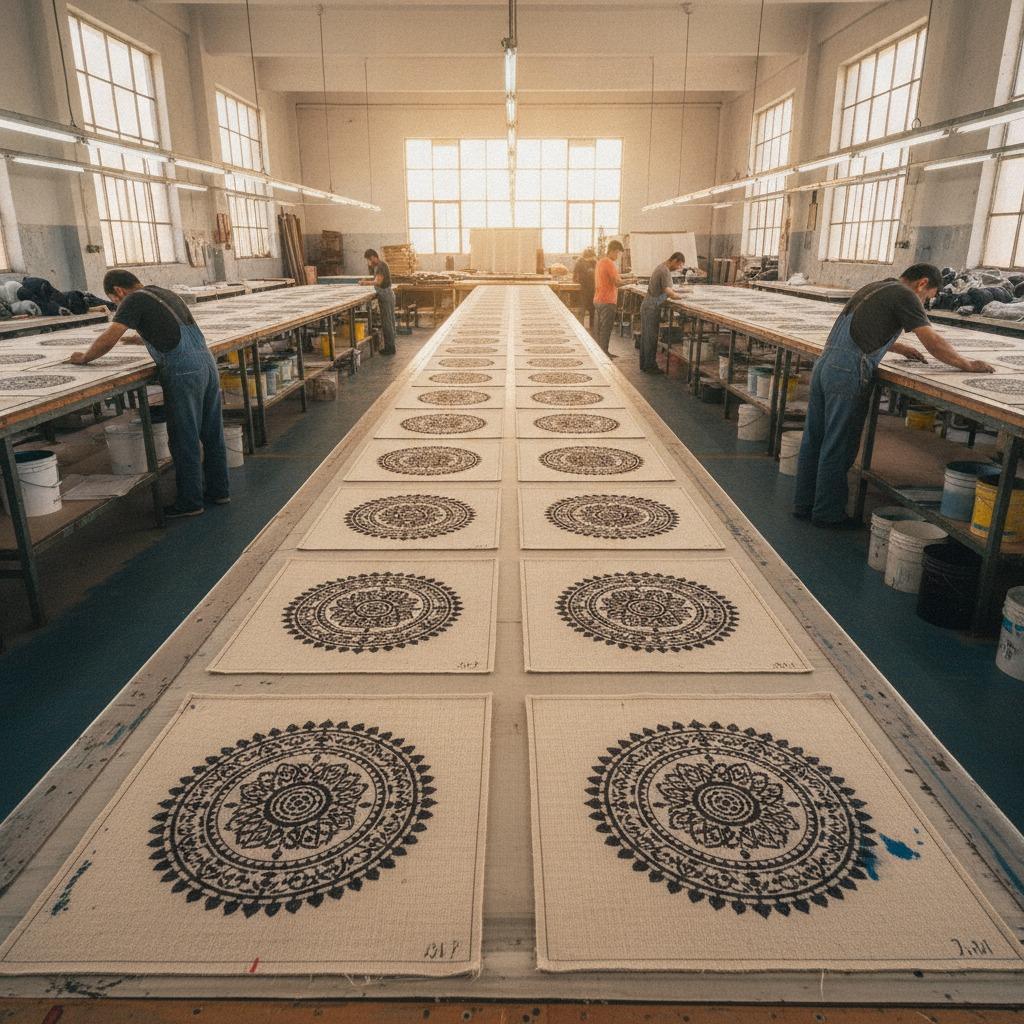
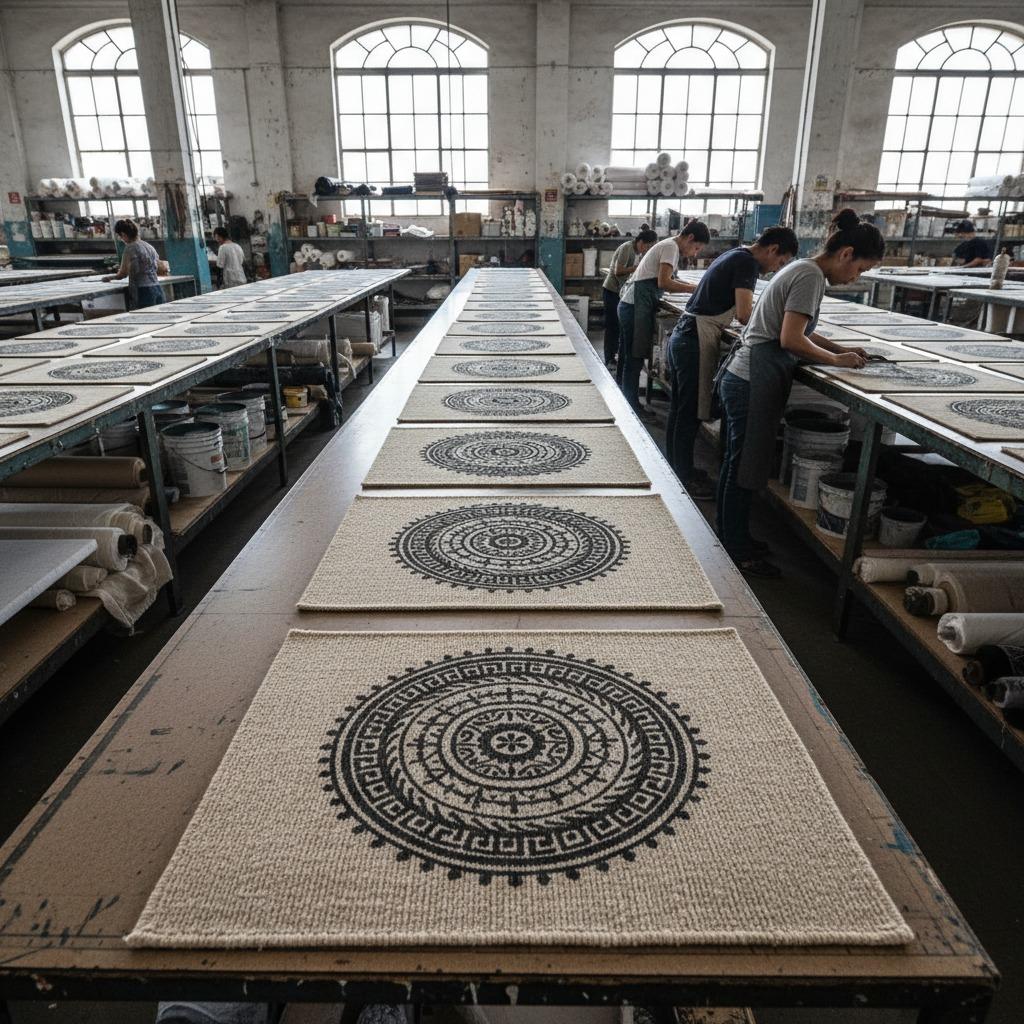
Commercial printing, in practical terms, is where most sourcing decisions land. The buyer needs repeatability, acceptable color consistency, and enough throughput to justify the order. The repeated placement seen in the product layout suggests a line that supports larger batches, which is exactly what many retail buyers want. It also hints at the need for good setup discipline, because a small placement error repeats across the whole run.
What to check before approving samples
For custom printing on mats, sample approval should go beyond artwork alone. Ask for checks on print alignment, edge-to-design spacing, surface coverage, and how the ink behaves on the natural fiber look of the blank. If the mat is intended for food service, handling and cleanability matter too, though those performance points should be verified rather than assumed.
A practical buyer warning: dark motifs on tan woven surfaces can look forgiving in low light and then show inconsistencies under retail lighting. Always review samples under the kind of lighting your customer will actually see.
How to choose a supplier for high quality printing
When evaluating high quality printing, ask the supplier a few grounded questions: How is registration controlled? What happens when the substrate thickness varies slightly? How do they inspect batch consistency? Do they print before or after cutting, and why? Those questions reveal more than generic claims ever will.
For online printing programs or recurring replenishment, consistency matters even more than novelty. A buyer who needs the same motif month after month should prioritize process control and the ability to repeat previous work. For limited-edition décor, by contrast, color flexibility and fast changeover may be more valuable.
Frequent mistakes buyers make
The first mistake is treating all flat products as if they print the same way. A woven mat is not coated paper, and it is not a smooth synthetic sheet. The second mistake is approving a beautiful sample without checking how the print sits on the full surface of the item. The third is asking for a design change after production setup has already been optimized, which can add delay and increase waste.
Another common oversight is forgetting the product’s real environment. A restaurant placemat faces different abuse than a decorative table mat in a home setting. That should influence both artwork and print method.
What this means for sourcing teams
If your next order involves printed woven mats, think in terms of process fit, not just image quality. The best supplier is usually the one that can show stable batch production, sensible substrate handling, and a straightforward approval path. That is especially true when the product is sold into retail or hospitality channels, where small defects become visible very quickly.
For teams comparing printing options, the decision usually comes down to run size, surface texture, and how much variation the end market will tolerate. Get those three points clear before you lock the artwork.
FAQ
Is digital printing always better for custom mat designs?
Not always. It can be better for small runs or frequent design changes, but textured woven surfaces may still favor another method depending on the finish and required durability.
Can these printed mats be used in restaurants or cafés?
Potentially, yes, if the material and print hold up to cleaning and handling. That should be verified with the supplier rather than assumed from appearance alone.
What should I request from a supplier first?
Ask for a sample, a description of the printing process, and confirmation of how they control placement and batch consistency. If the supplier cannot explain those basics clearly, that is a useful signal in itself.
Next step
If you are sourcing printed mats for home, retail, or hospitality use, start with a sample and a process discussion. The artwork may be the visible part of the order, but the real buying decision lives in the print method, the substrate, and the factory’s ability to repeat the result across a full batch.