

Printing on woven mats: what buyers need to know before placing an order
When a product depends on printing for its visual appeal, small details decide whether the finished goods look premium or merely serviceable. That is especially true for woven mats and placemats, where the base material is textured, slightly uneven, and often made from natural-fiber-looking stock. A black motif that looks crisp on a flat sheet can behave very differently on jute, straw, rattan, sisal, or similar substrates.
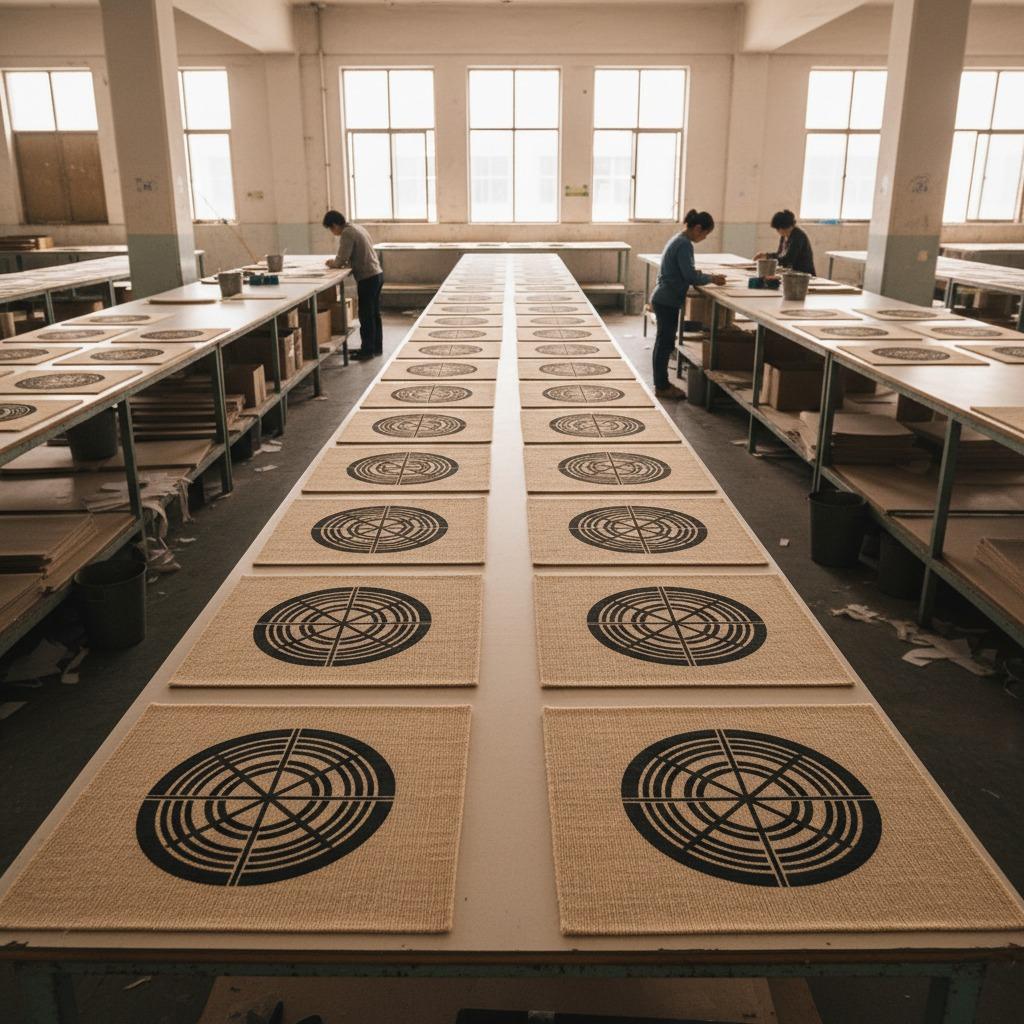
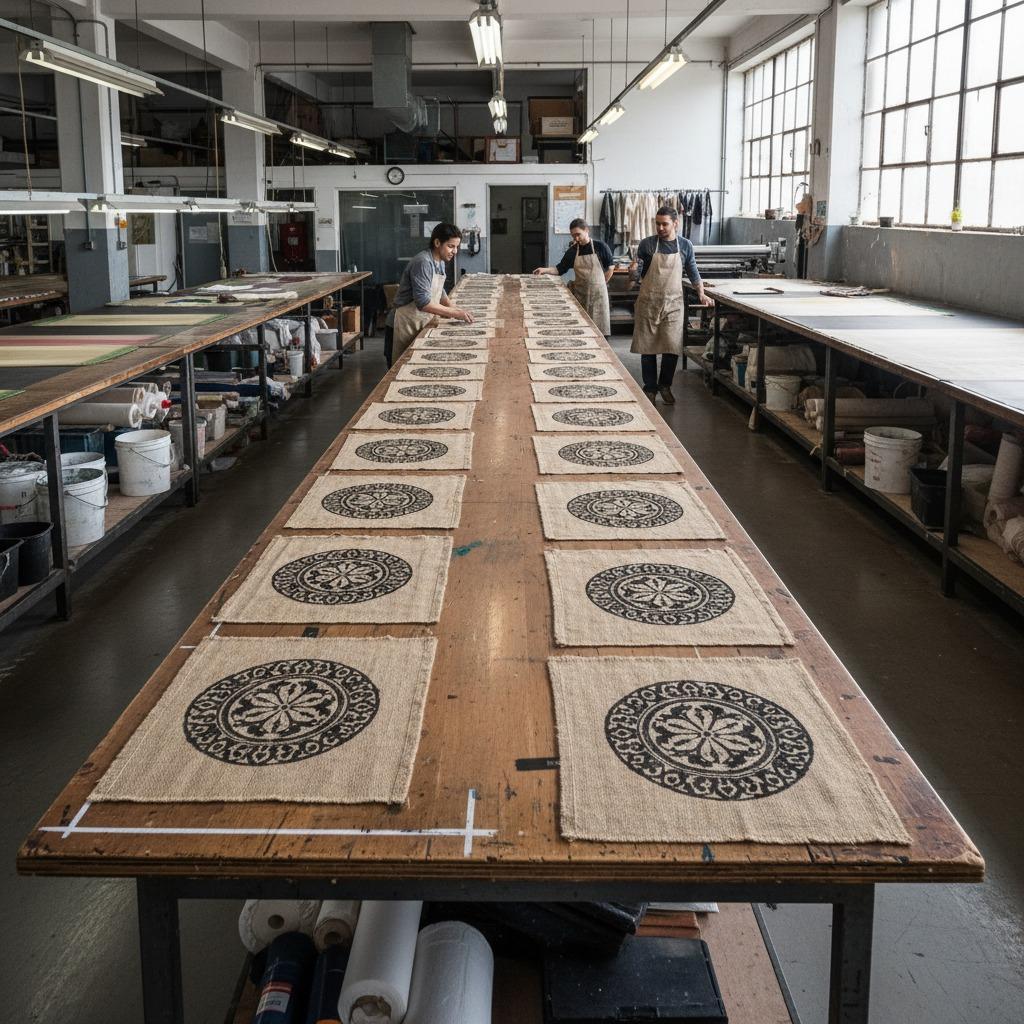
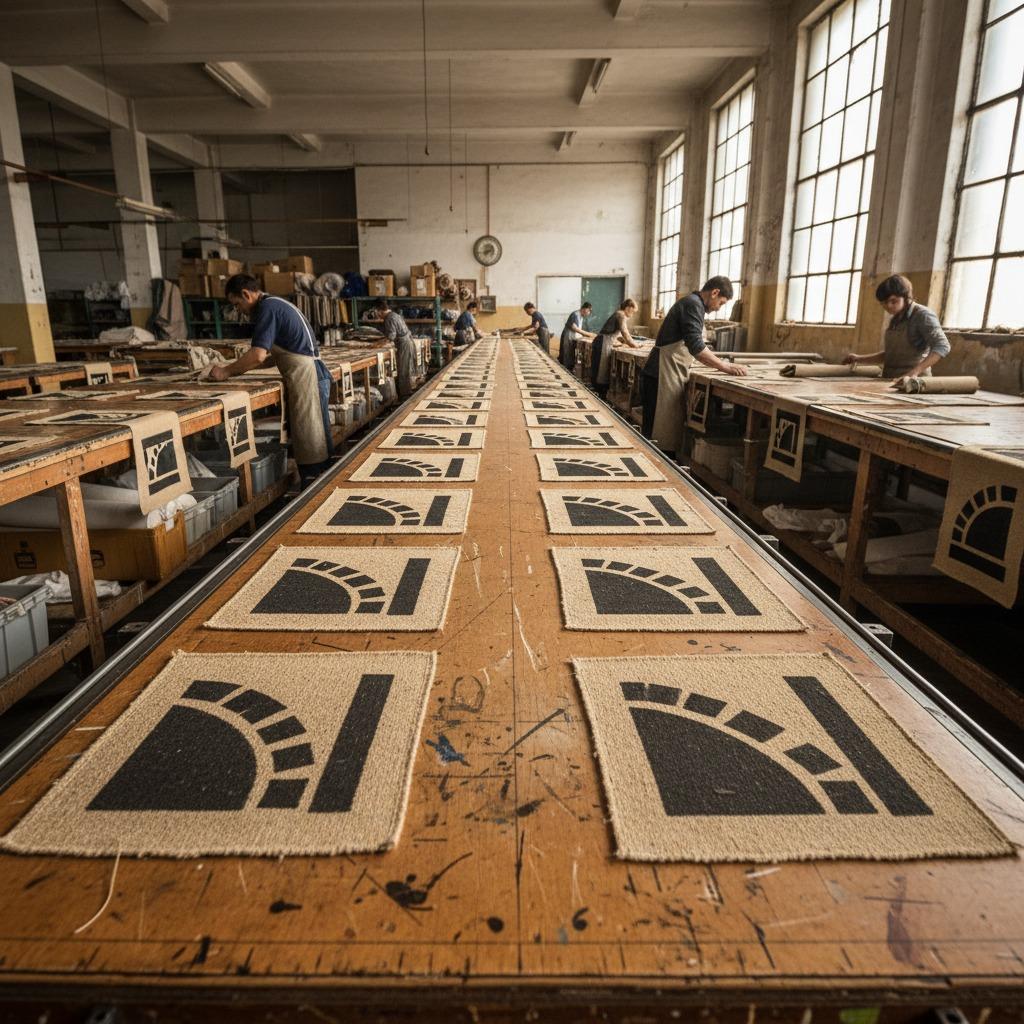
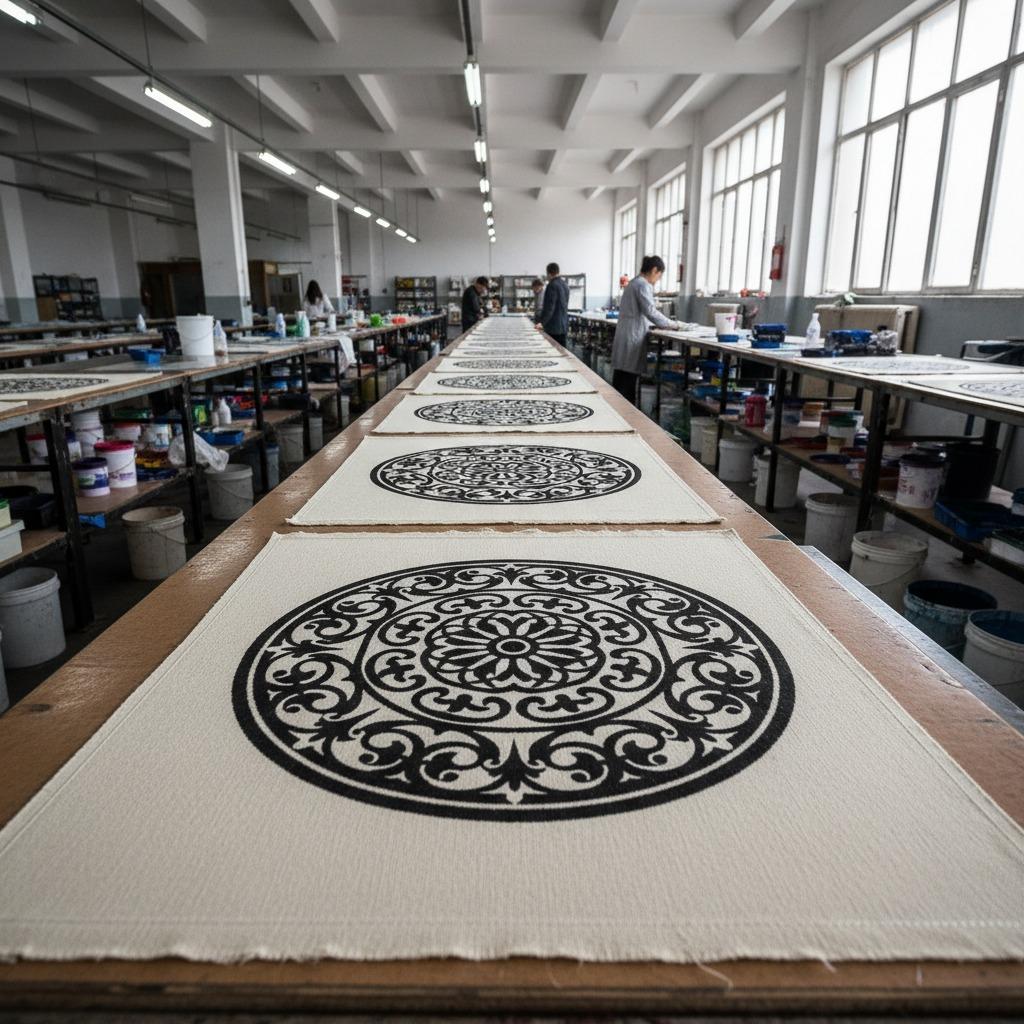
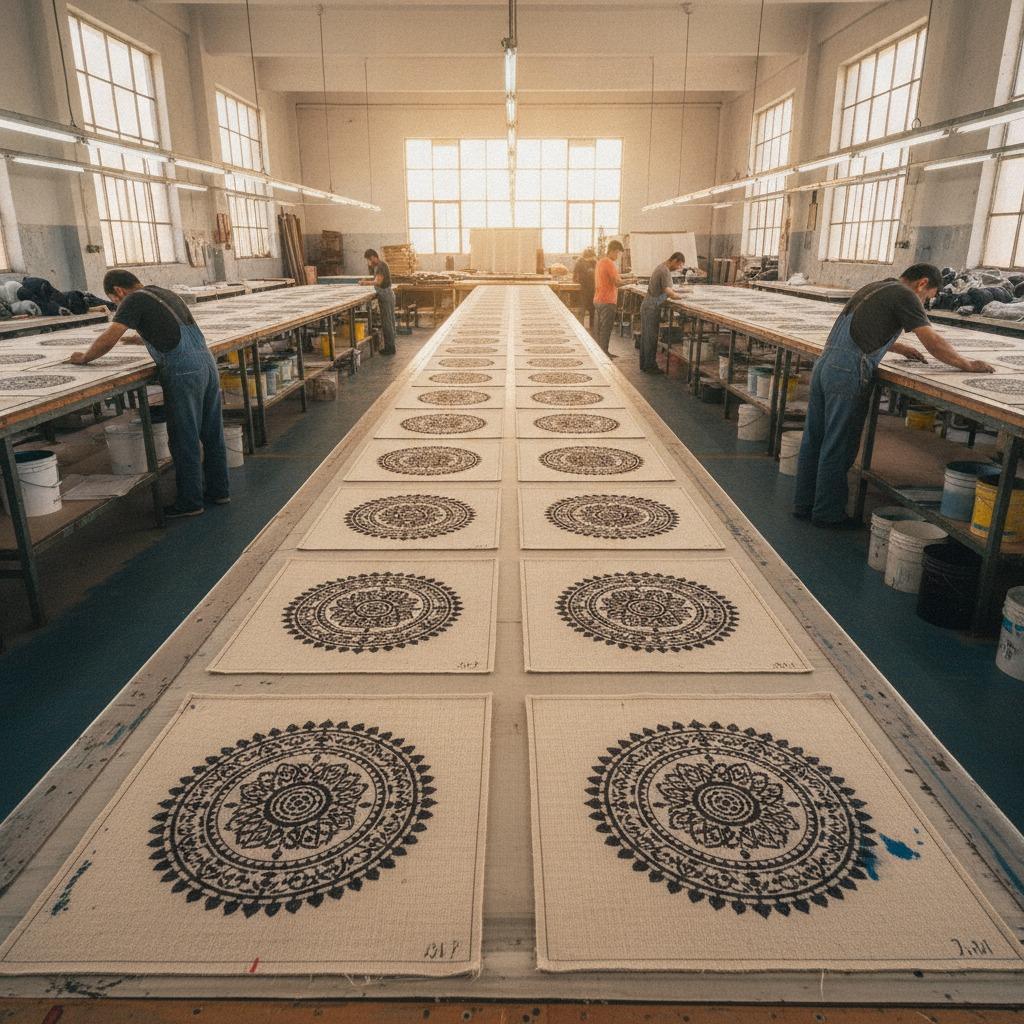
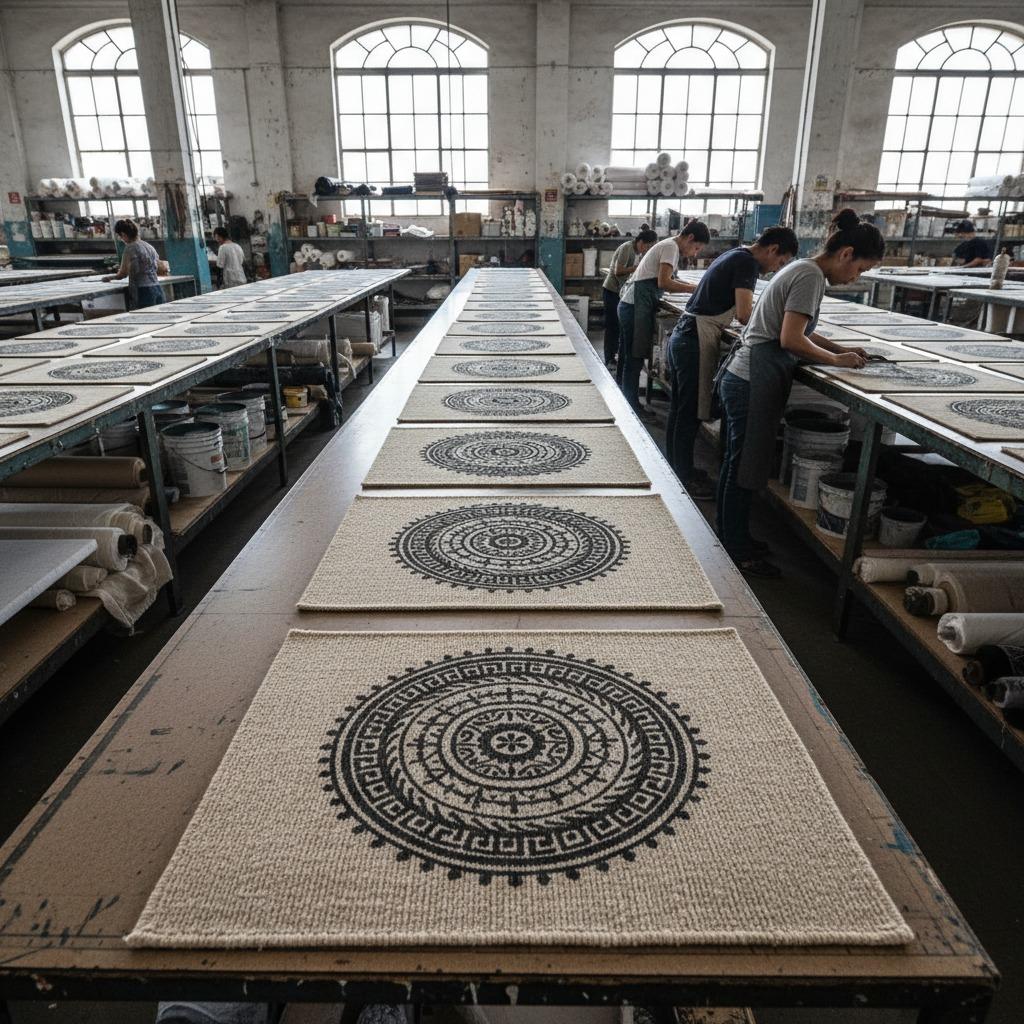
For sourcing teams, the real question is not just how the image is applied. It is whether the chosen method gives repeatable placement, clean edges, and a finish that suits the end market, whether that is hospitality, homeware, gifting, or retail packaging. The production scene here suggests a batch process with identical rectangular blanks laid out in sequence on a long table, which is a useful clue: consistency matters as much as artwork.
What the production setup tells you
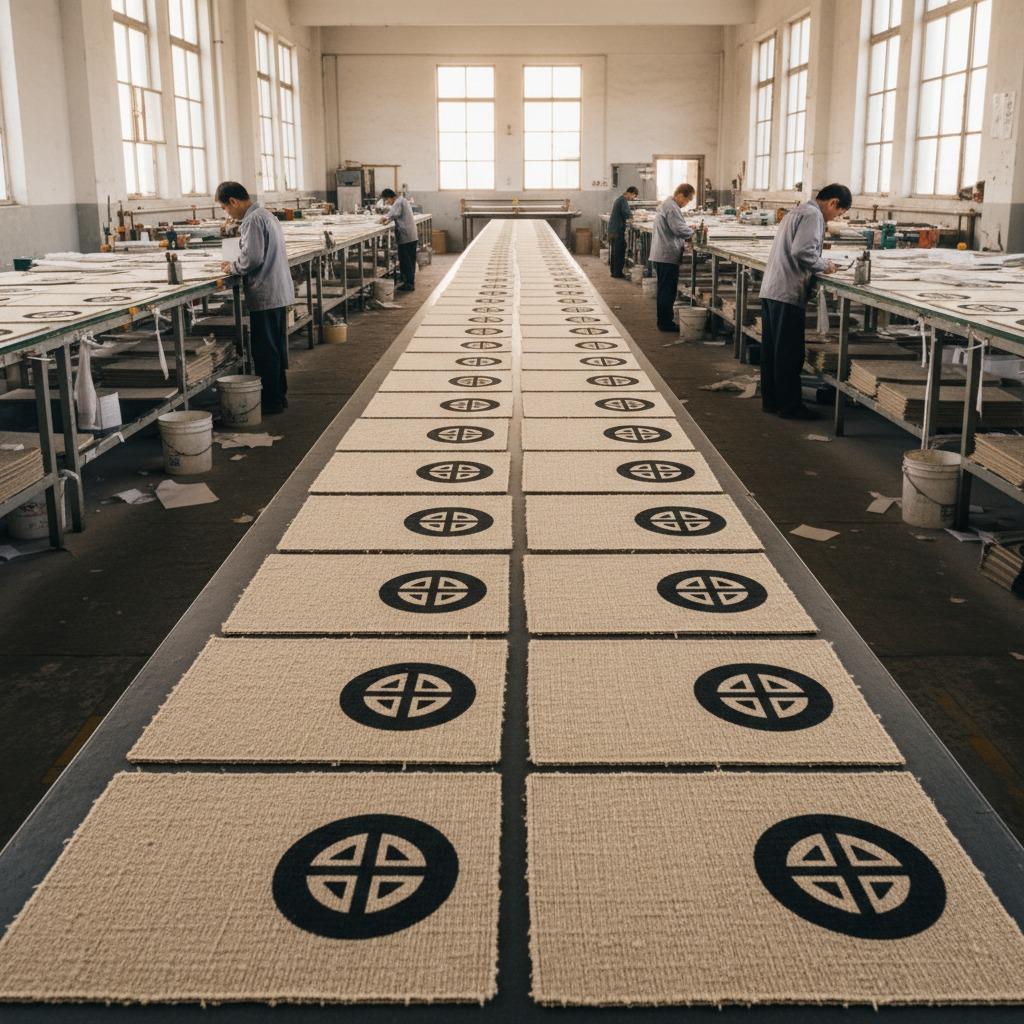
The visible pieces are rectangular woven mats with a matte, textured surface and a large semicircular or circular black graphic printed at one end. That kind of layout usually points to a controlled production line, not a one-off decorative sample. Workers are handling multiple units at once, which is common in commercial printing or finishing operations where repeatability is the selling point.
On textured material, placement is often harder than buyers expect. Ink can sink into the weave, edges can feather, and light pressure can leave gaps. That is why a workshop producing custom printing for woven goods typically needs stable registration, a flat working surface, and enough drying time between steps. If the process is rushed, the first issue you notice is usually not color drift but inconsistent sharpness from piece to piece.
Which printing methods are commonly used on textured mats
There is no way to confirm the exact process from the image alone, but three methods are most often considered for this kind of product: screen printing, heat transfer, and some forms of direct digital printing. Each has its place.
Offset printing
Offset printing is excellent for paper and smooth sheets, but it is generally not the first choice for rough woven surfaces. If a buyer asks for offset printing on a mat-like substrate, it usually raises a practical question: is the material actually compatible, or is the spec sheet borrowing familiar language from a different product line?
Digital printing
Digital printing can be attractive for short runs, variable artwork, or frequent design changes. It is often discussed in online printing workflows because setup is fast. Still, on textured natural-fiber-looking materials, the finished quality depends heavily on ink behavior and surface prep. Fine detail may look softer than it does on coated stock.
Commercial printing for repeat batches
For larger runs, commercial printing methods with stronger process control are usually favored. The advantage is not only speed. It is also the ability to keep motif placement consistent across a batch, which matters when the product is meant for restaurant tables, giftware sets, or retail assortments where mismatched visuals hurt perceived value.
Selection criteria that matter more than the artwork
Buyers often start with design. That is understandable, but the better questions are about substrate, ink behavior, and use case. A woven mat intended for dining use faces different expectations than one used as wall decor or packaging insert.
Start with the base material. Natural-fiber-looking woven goods vary widely in absorbency and surface roughness, and both affect high quality printing. Next, ask how the edges are finished. Clean cut edges suggest a production line that values uniformity, but they also create a point of wear if the product will be handled frequently. Finally, clarify the expected visual standard: solid black fills, crisp circular geometry, and batch-to-batch match are not automatic on textured goods.
Common mistakes in custom printing projects
One recurring mistake is approving artwork on a screen and assuming it will reproduce the same way on a woven substrate. It will not. Dark motifs can look slightly broken where the weave opens up, and very fine lines may disappear. Another common issue is underestimating drying or curing needs, which can lead to smudging during packing. That is a small operational detail until it becomes a large reject pile.
Buyers also sometimes over-specify the design while neglecting the production workflow. If a supplier is handling custom printing on a long table with manual placement, tight registration tolerances and complex multicolor graphics may be unrealistic. A simpler motif can look more premium if it is applied cleanly.
Practical buyer advice for sourcing
Ask for a sample on the actual woven material, not just a digital proof. Request confirmation of print location, repeatability, and whether the artwork is applied before or after cutting. If the end use is hospitality, discuss how the mat will be cleaned and handled. If it is for retail, verify packaging appearance too, because a good printed surface can be let down by sloppy bundling.
For online printing orders, make sure the supplier understands that textured goods behave differently from flat promotional items. The files may be simple, but the production is not. A clear spec sheet should describe substrate, size, placement, and acceptable variation. If any of that is vague, the finished batch will probably be more variable than the buyer wanted.
Why this product type is worth attention
Printed woven mats sit at an interesting intersection of decor and utility. They are small enough to produce in batches, but visible enough to influence a customer’s first impression of a table setting or gift collection. In that sense, printing is not decoration added at the end; it is part of the product’s commercial identity.
If you are evaluating a supplier, the next step is simple: ask for the material spec, the print method used on textured surfaces, and a real sample from the production line. That will tell you more than a polished catalog image ever will.