

Printing for flat textile products: what buyers need to know before placing a batch order
When a buyer searches for printing on flat textile goods like mats, placemat-style panels, or decorative floor coverings, the real question is usually not about ink alone. It is about repeatability, placement accuracy, finish quality, and whether the production method can hold up across a batch. A design can look acceptable on one sample and still fail badly when moved into commercial production. That is why the choice between offset printing, digital printing, commercial printing workflows, or a more specialized textile process matters more than it first appears.
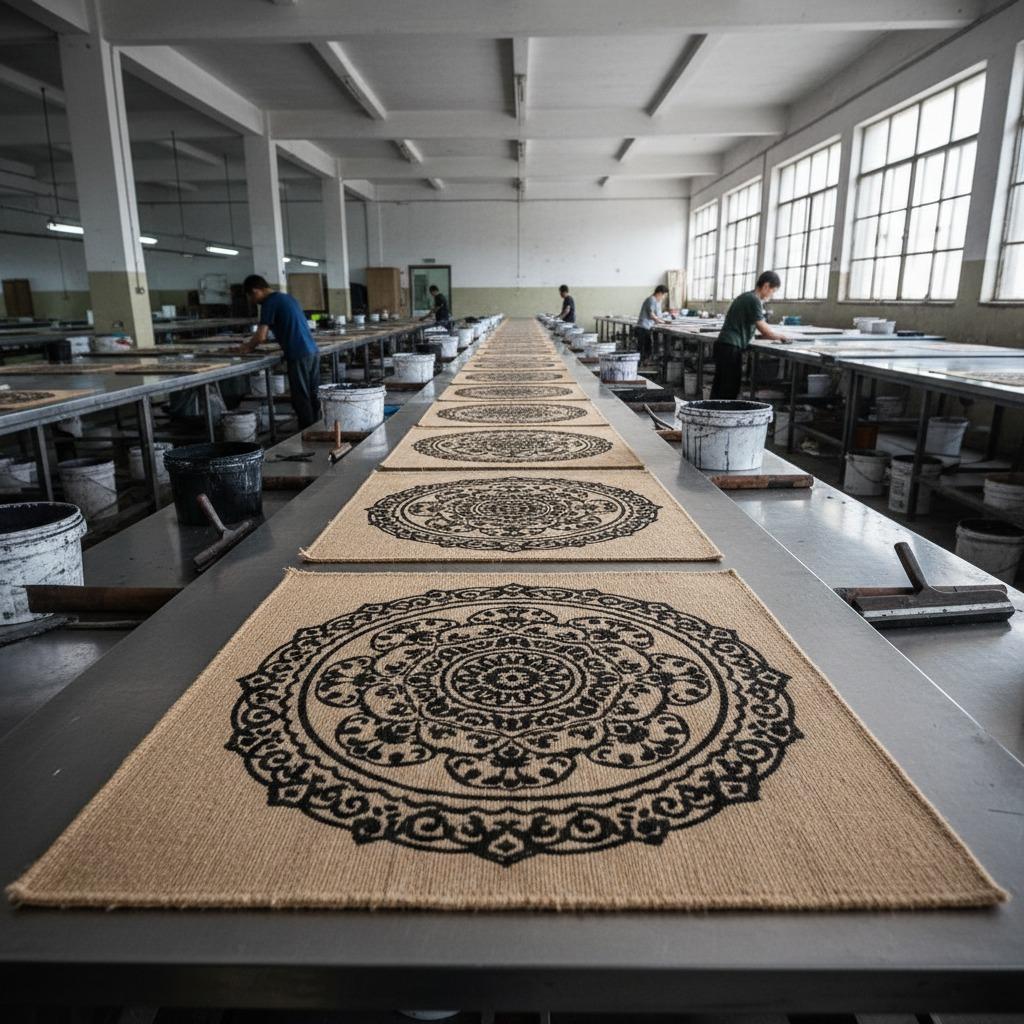
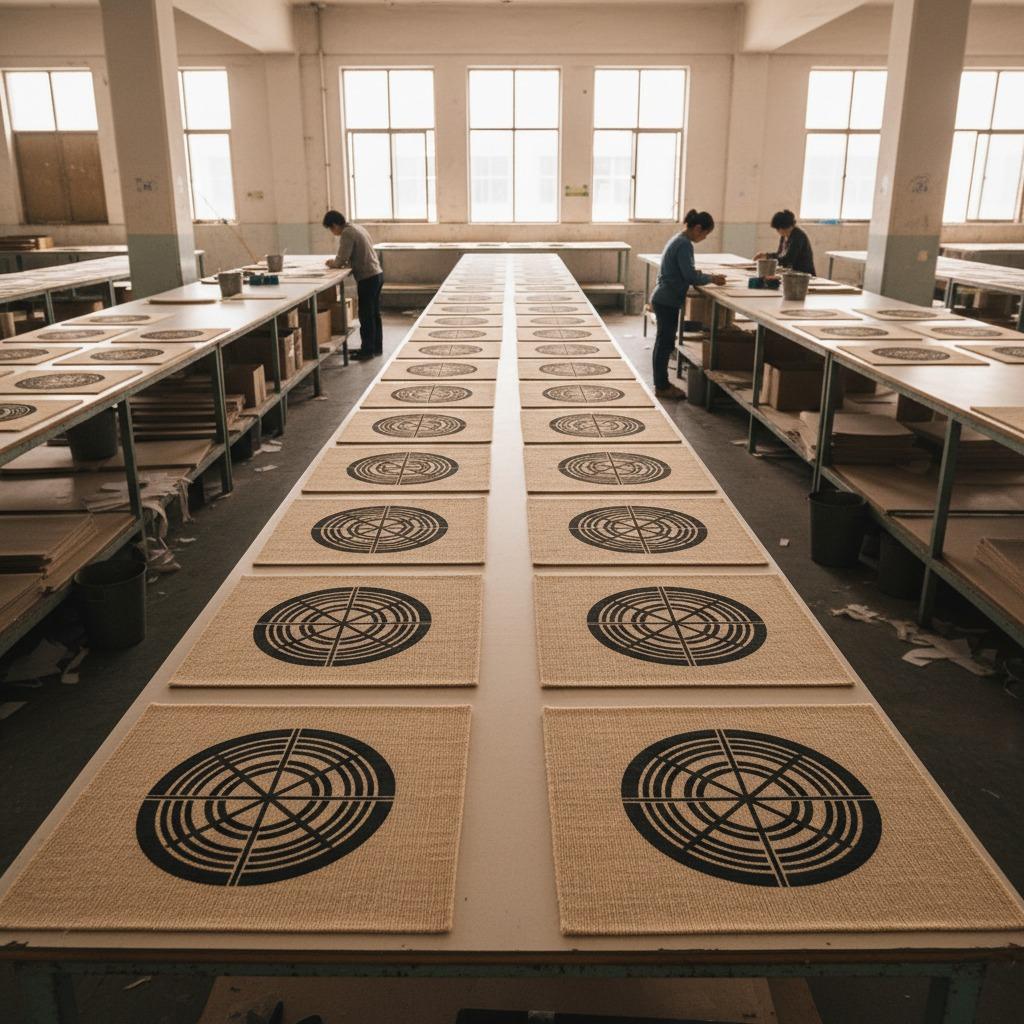
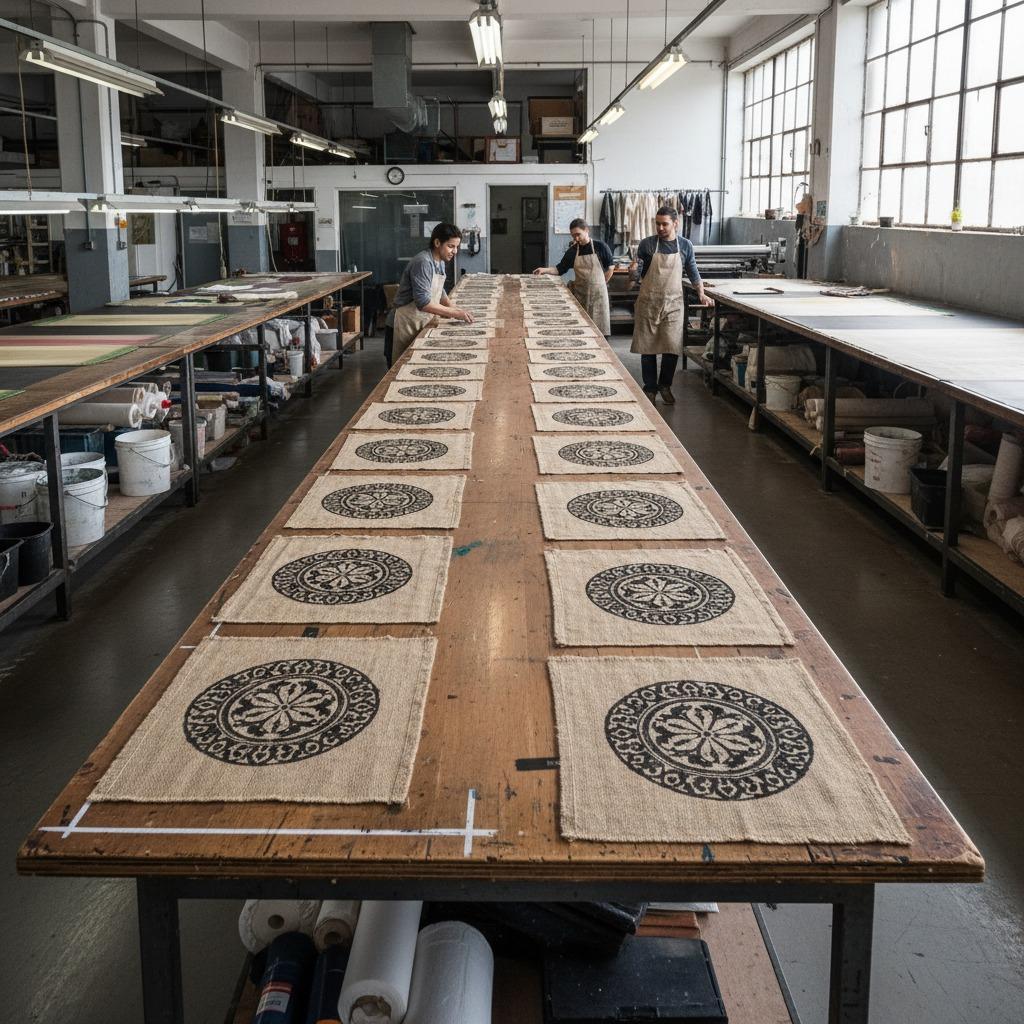
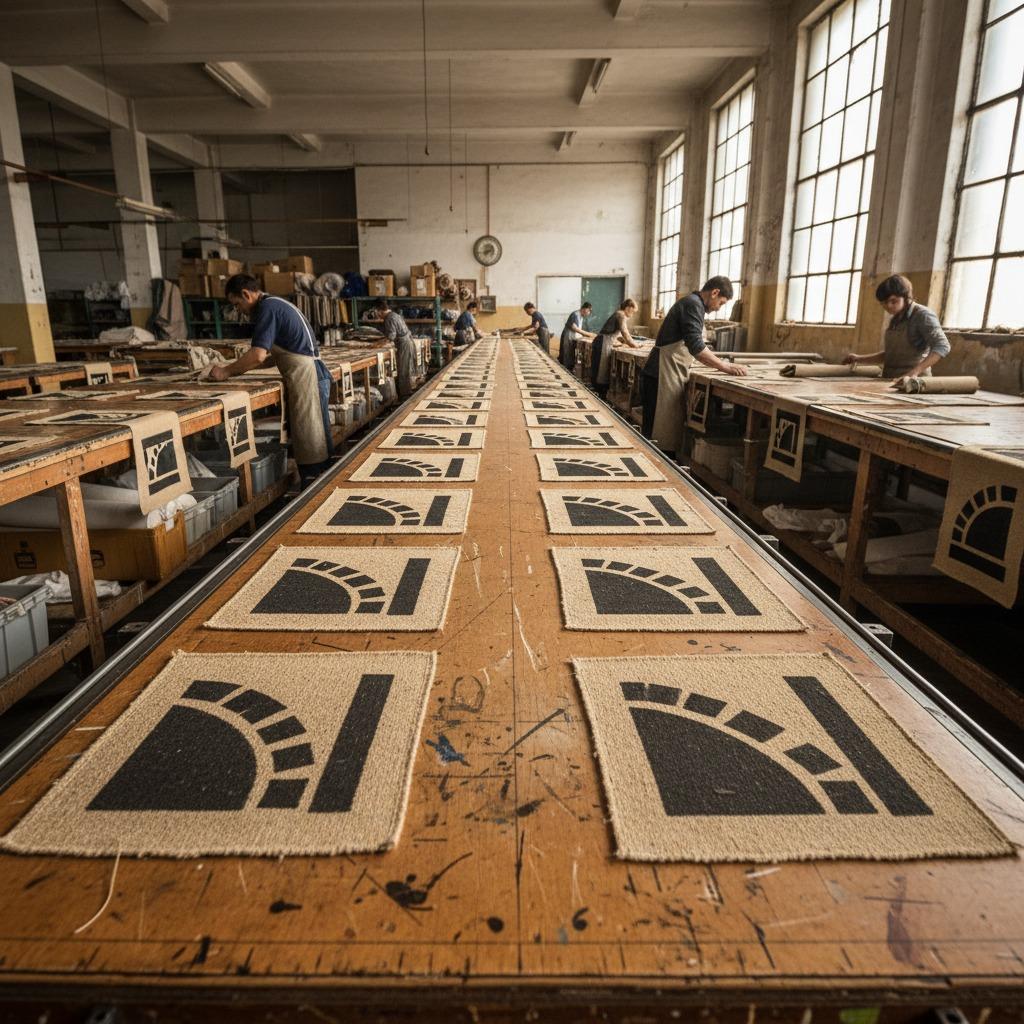
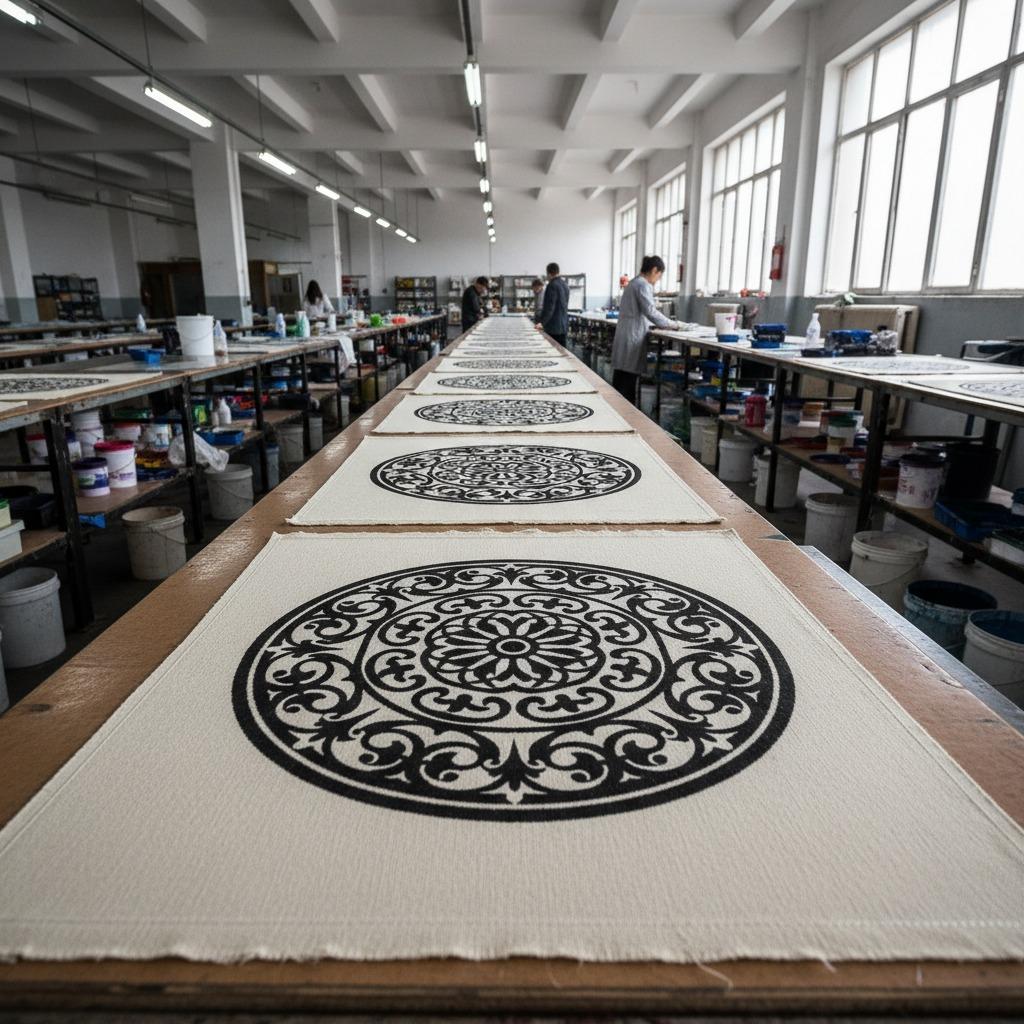
The product type described here appears to be a thin, woven or textured rectangular textile panel with a repeated ornamental motif printed near one end of each piece. That kind of layout suggests batch production, likely with alignment and inspection steps built into the workflow. For sourcing teams, the important decision is simple: does the factory have a process that can keep the pattern consistent across many units without distorting the base material?
What this kind of printed product is really judged on
For decorative textile goods, the market rarely buys on image alone. Buyers look at how the printed design sits on the substrate, whether the edges remain clean, whether the panel lies flat, and whether the pattern registration stays consistent from piece to piece. On a woven base, the surface texture can influence how sharply a motif transfers. A design that looks crisp on screen may soften once it meets a textured weave. That is not a defect in the artwork; it is a manufacturing reality.
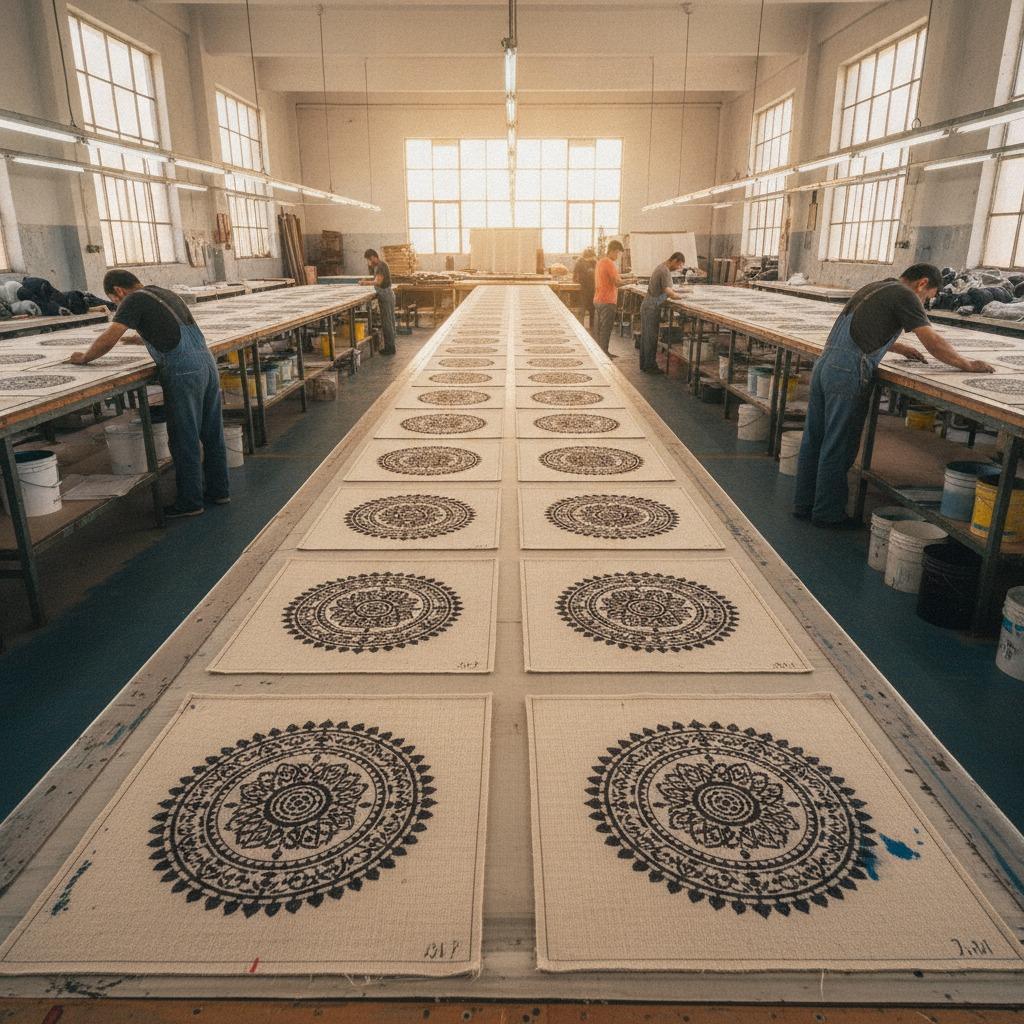
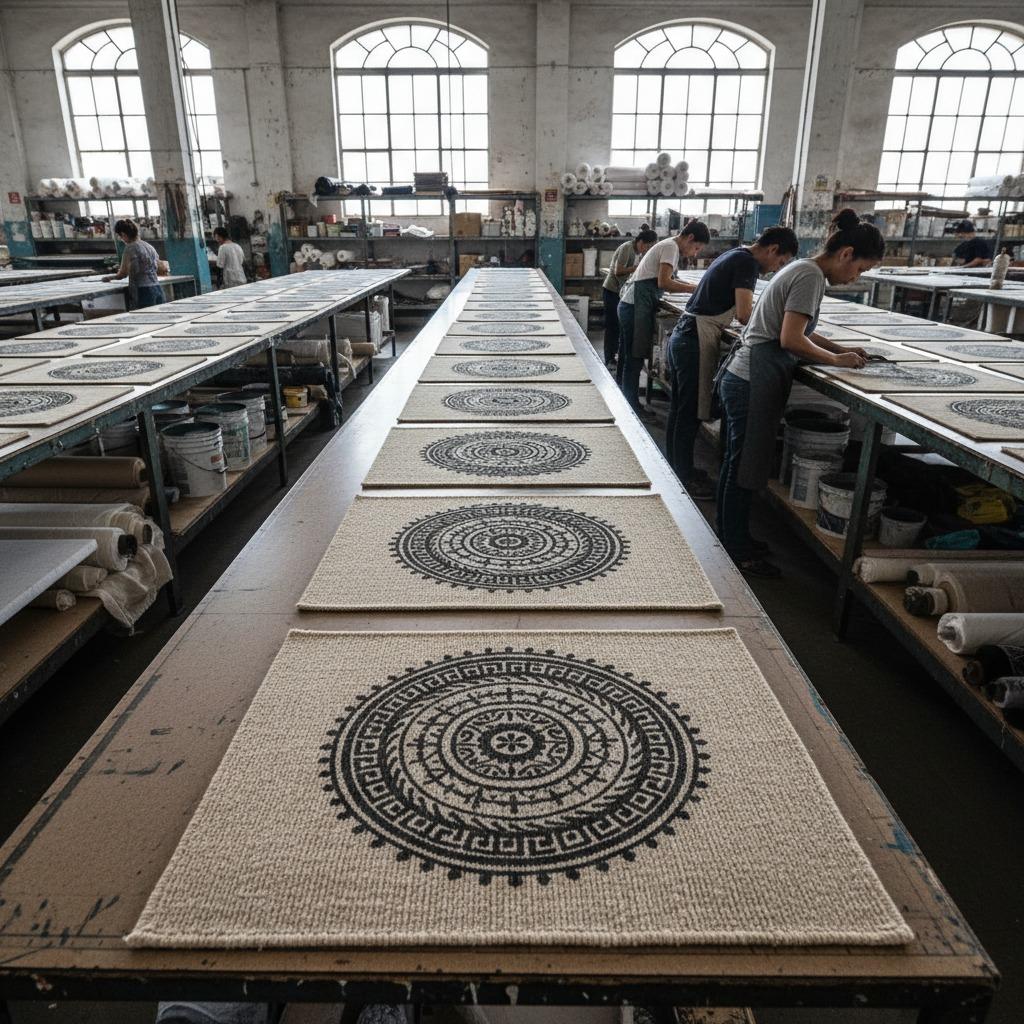
Another point that gets overlooked is batch behavior. In commercial printing, a single sample can be adjusted by hand. A production run cannot be babysat that way forever. If the pieces are being arranged in rows on tables, as the workshop setup suggests, the operation may rely on placement jigs, drying space, or a controlled inspection flow. Buyers should ask how the factory maintains consistency when volume rises.
Offset printing, digital printing, and textile-style production: a practical comparison
Offset printing is well known for high-volume graphic work, but it is not automatically the answer for every woven or mat-like substrate. It tends to make sense when the surface, ink system, and design format all suit the process. It is efficient for repeat jobs, but less forgiving when the substrate is irregular.
Digital printing offers flexibility and is often attractive for short runs or design changes. If a buyer wants frequent artwork revisions or smaller order sizes, digital printing can reduce setup friction. The trade-off is that the result depends heavily on substrate compatibility and ink behavior. On textured textile panels, that matters a great deal.
Commercial printing is a broader umbrella than the other two terms. In practice, it usually means a factory is set up to handle volume, workflow discipline, and repeat output. For custom printing programs, buyers should care less about the label and more about the exact process used, the curing or drying stage, and the quality checks between print and packing.
Why printed mats and placemat-style panels are tricky to source
Products like these sit in a gray area between décor, household utility, and light industrial textile goods. That creates a sourcing problem. One supplier may focus on visual appeal and ignore handling performance. Another may make a sturdier piece but miss the decorative effect. If the item is meant for hospitality, retail display, or home décor collections, the print needs to stay visually clean while the base needs to remain practical for handling and shipping.
That is also where high quality printing becomes more than a marketing phrase. In a real production environment, high quality means the motif lands in the right position, color stays reasonably uniform, and the fabric does not warp badly during processing. If the design is repeated across many pieces, uniformity is often more important than a single spectacular sample.
Selection criteria buyers should not skip
1. Ask about the exact print method
Do not assume the factory uses one method just because the sample looks good. Ask whether the job is screen-based, transfer-based, ink-based, or another textile process. If the supplier is vague, that is worth noticing.
2. Confirm substrate behavior
The base material should be discussed plainly: woven, textured, coated, or otherwise finished. A print process that works on smooth material may perform differently on a fabric-like surface.
3. Inspect edge handling and alignment
For rectangular pieces, straight edges and stable layout matter. Uneven trimming or drifting motif placement can make a batch look low-grade even if the artwork itself is attractive.
4. Clarify the intended use
Is this item a floor mat, a placemat, a décor panel, or a retail furnishing component? The intended use affects everything from visual requirements to handling expectations. Buyers sometimes skip this conversation and then discover the product was designed for a different market altogether.
Common mistakes in custom printing orders
The most common mistake is approving a sample without testing it in realistic conditions. Another is asking for custom printing while leaving the factory free to choose any process, which can create surprises in texture or color appearance. A third mistake is failing to discuss how a repeat pattern should be aligned across multiple pieces. That is particularly important when the motif appears at one end of each panel and needs to look uniform in a set.
There is also a practical warning for buyers working through online printing channels: online ordering is convenient, but convenience does not replace material verification. Request photographs, process notes, and a clear description of the production route before committing to volume.
What a good buyer-supplier conversation should cover
Before placing a production order, buyers should ask for the following in plain language: material description, printing process, batch size handling, placement tolerance expectations in general terms, drying or curing workflow, and packaging method. If the supplier cannot explain how they maintain consistency across a run, the order is probably too complex for a casual first trial.
If the product is going into a décor program, hospitality catalog, or OEM/ODM collection, ask for a production sample from the actual line, not just a hand-finished proof. That is often the difference between a useful sourcing conversation and a costly rework.
FAQ
Can one printing method work for every flat textile product?
No. The right method depends on the base material, design complexity, batch size, and finish requirements.
Is digital printing always better for custom printing?
Not always. It can be useful for flexibility, but some commercial programs still benefit from other methods when volume and consistency matter more.
What should buyers prioritize first?
Start with substrate compatibility and batch repeatability. If those are wrong, the design quality will not save the order.
Next step for sourcing teams
If you are evaluating a supplier for printed mats, placemat-style textile panels, or other flat decorative products, ask for a process description, a production sample, and clear batch handling details before pricing becomes the only conversation. That simple step filters out a lot of avoidable problems and helps separate a decent print shop from a factory that can genuinely support repeat commercial work.