

Printing on woven mats: what buyers should know before placing an order
If you are sourcing printing for mats, placemats, or similar flat textile goods, the first question is usually not about artwork. It is whether the chosen process will hold up on a coarse, flexible surface without losing registration, contrast, or commercial consistency. That matters because a decorative panel that looks fine on a sample can behave very differently once it is run across a workshop table in batches.
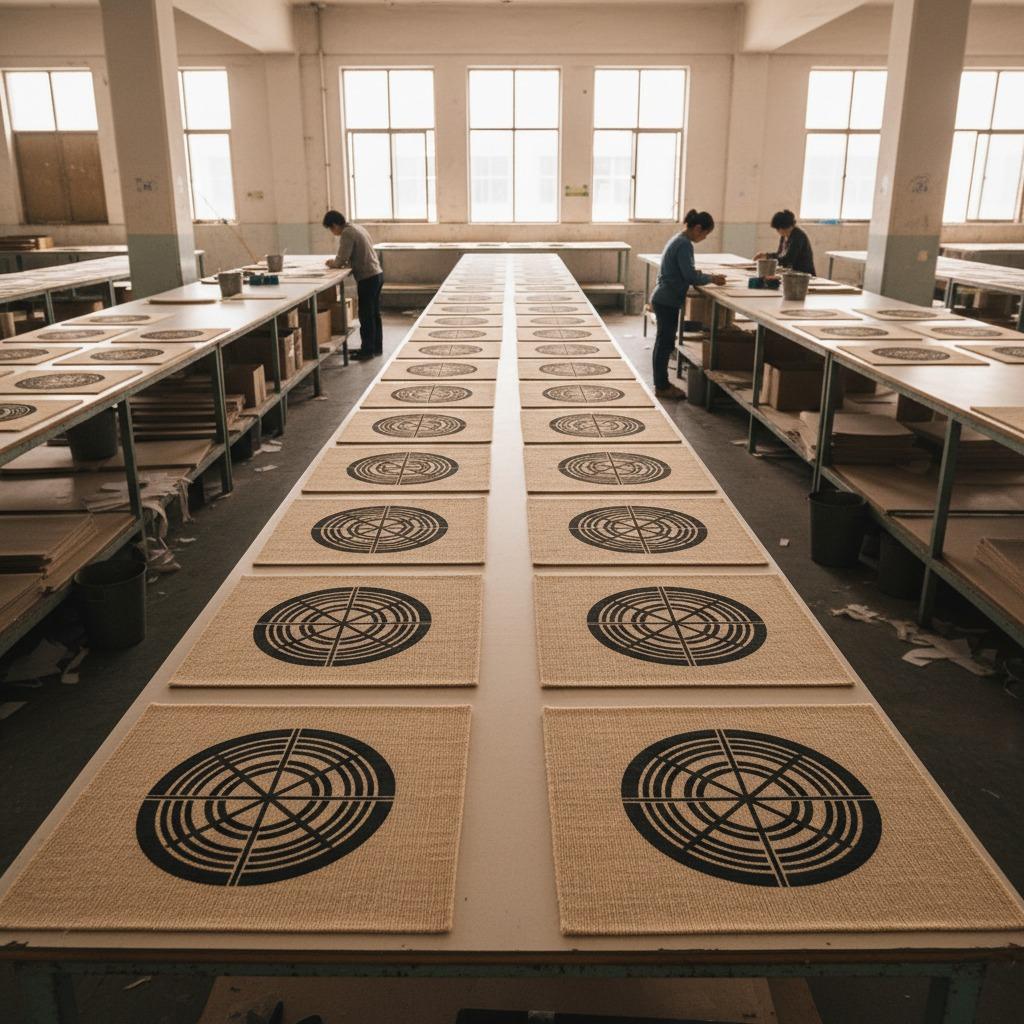
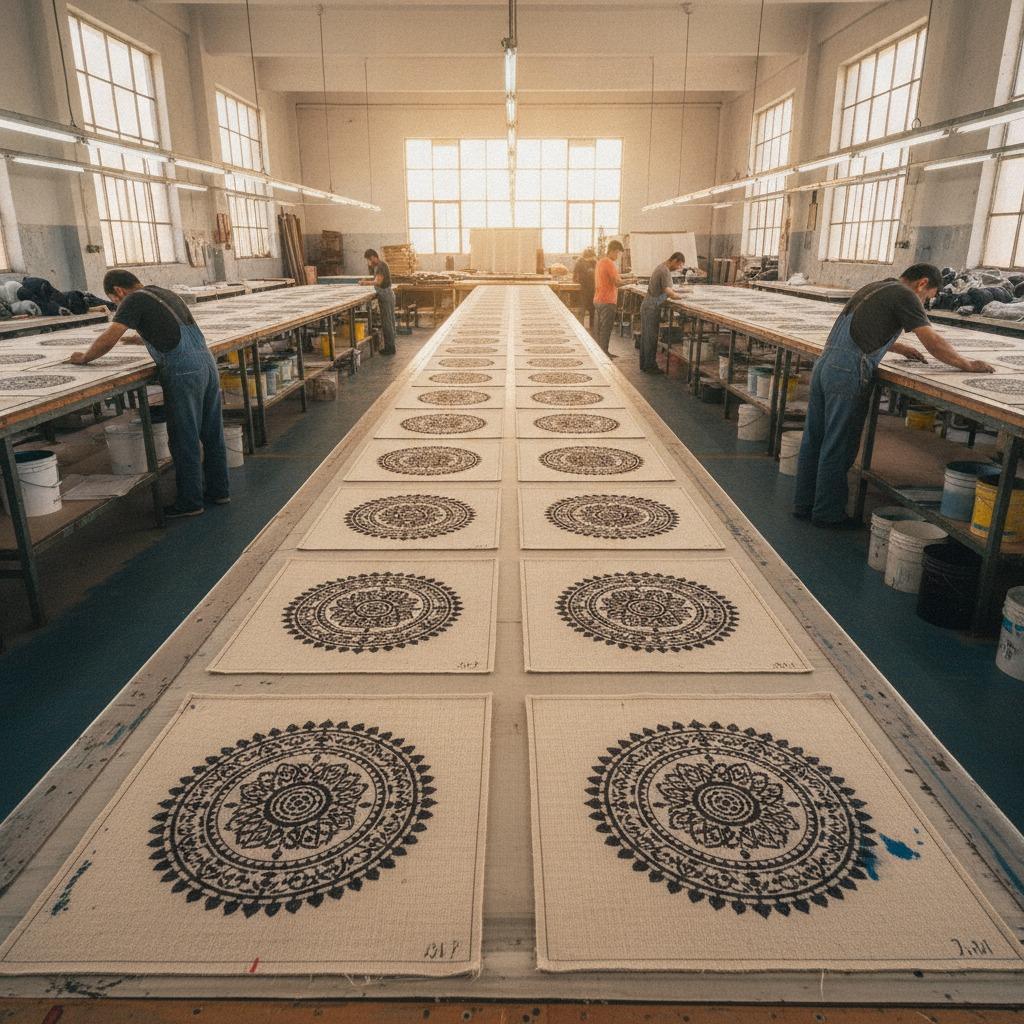
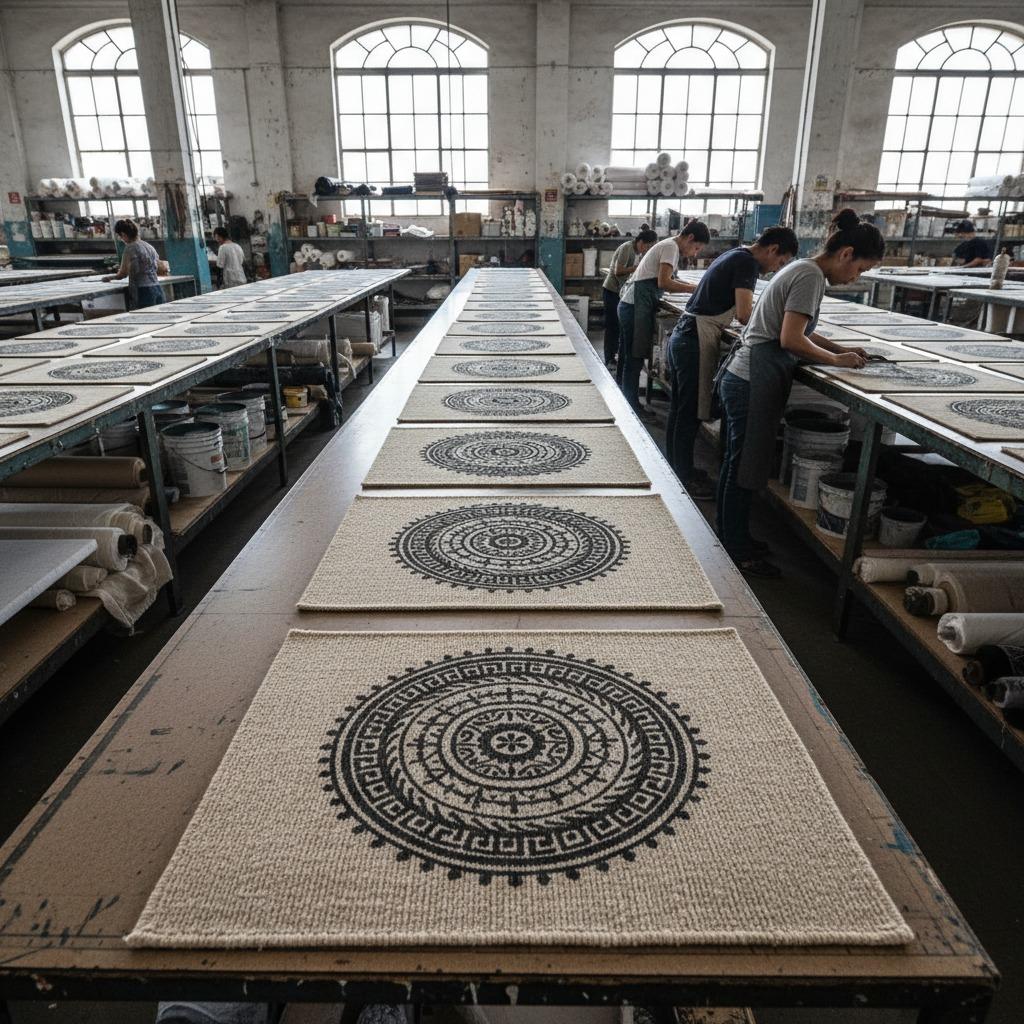
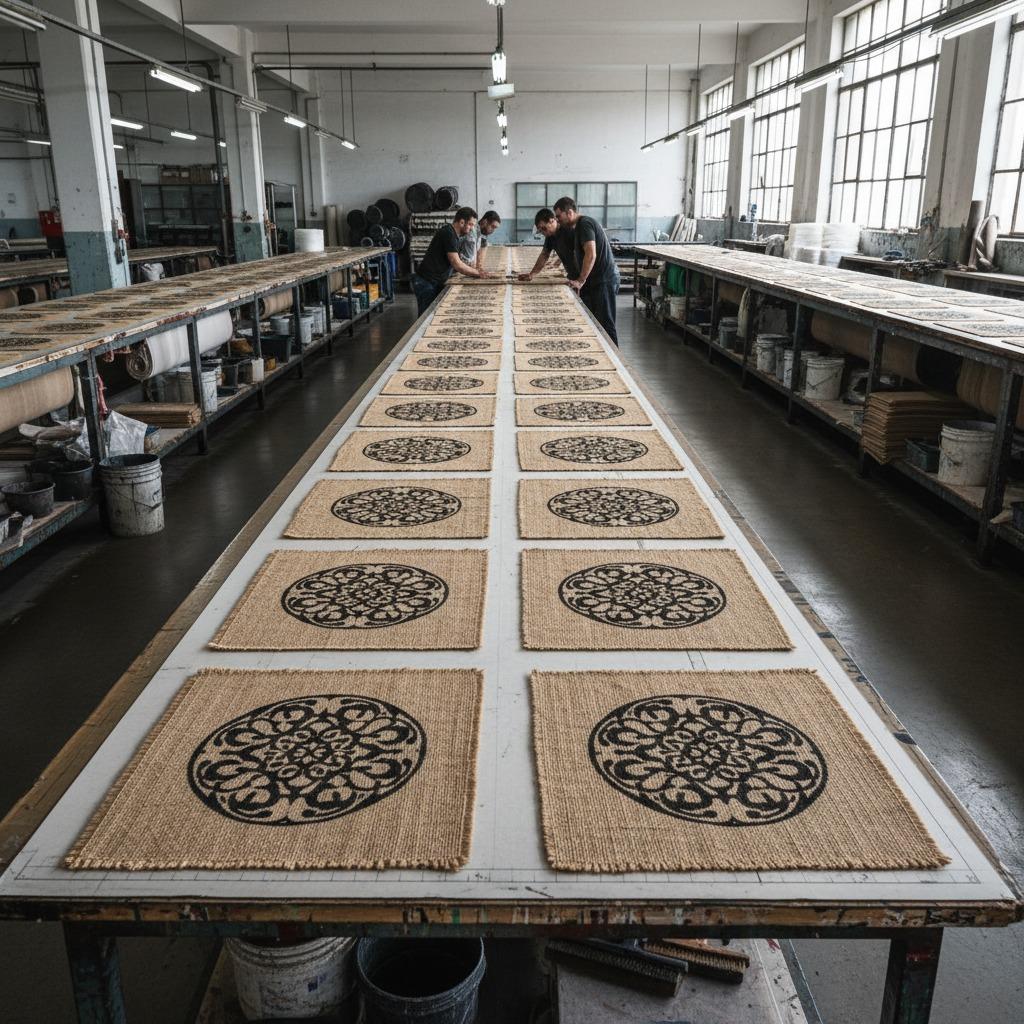
The product in question here appears to be a flat, woven, straw-like mat or placemat panel with a printed geometric motif applied near one end. The visual clues suggest a production environment where multiple identical pieces are handled in rows, which is exactly the kind of setting where repeatability becomes more important than a single perfect sample. For buyers in home décor, hospitality, or retail packaging, the decision is rarely just “can it be printed?” It is “which printing method is practical for this surface, this volume, and this finish?”
Why surface type changes the printing decision
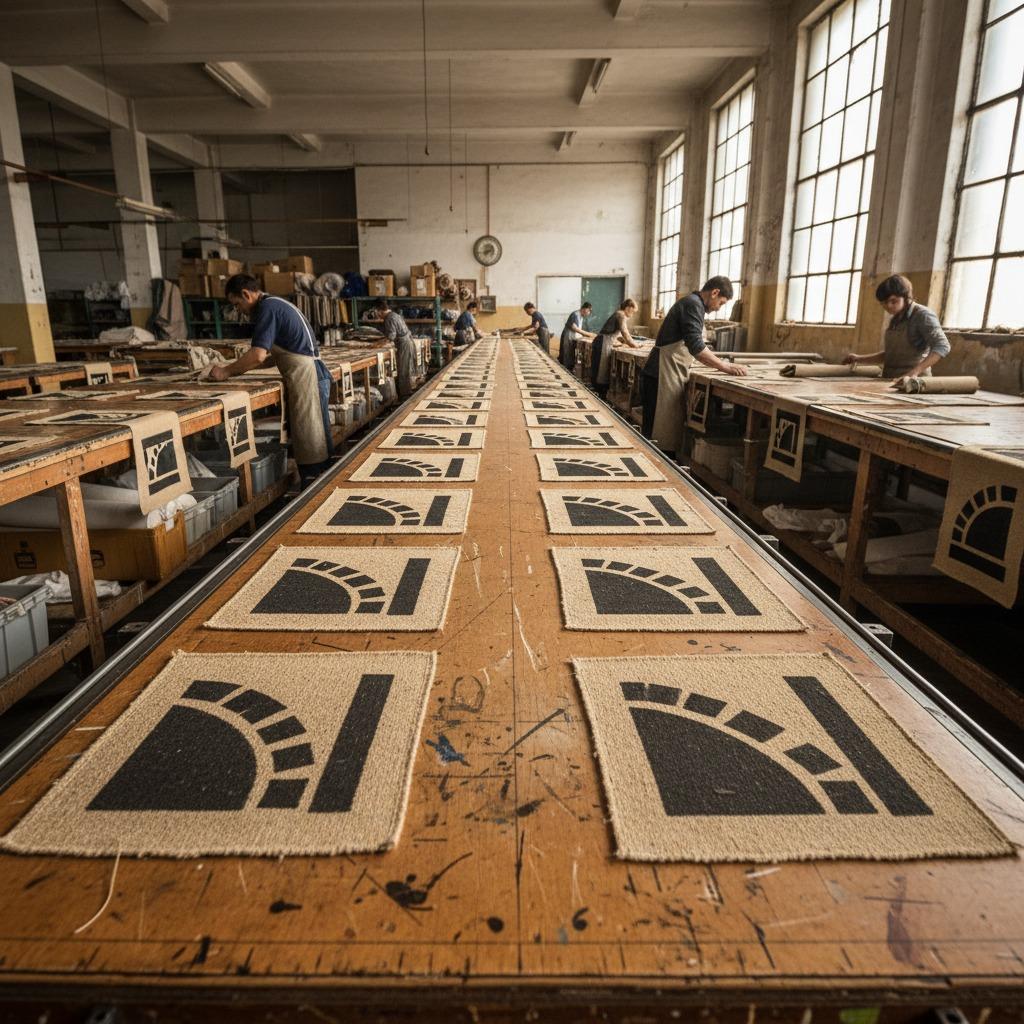
A woven mat is not the same as paper, film, or a smooth cotton tee. The texture is open, uneven, and often absorbent in unpredictable ways. That affects ink laydown, edge sharpness, and how the motif sits against the base material. A semi-circular decorative mark may look simple, but on a coarse substrate the boundaries can soften or skip if the process is not matched to the material.
That is why sourcing teams should separate the artwork from the production method. A design that works in offset printing on a smooth insert may not translate well to a textured mat. Likewise, digital printing can be attractive for short runs or variable art, but not every digital system is suited to rough, porous surfaces. In many workshop settings, custom printing on flat goods still leans on screen-style or transfer-based approaches because they can be easier to control on repeat jobs.
Quick reference: common approaches for flat-surface decorative goods
Offset printing
Best known for paper and smooth boards, offset printing is usually not the first choice for coarse woven mats. It can be highly efficient for the right substrate, but buyers should be cautious about assuming it fits every product category.
Digital printing
Digital printing is useful when artwork changes often, when order sizes are smaller, or when you want to test multiple designs quickly. The tradeoff is that the base material must still accept the image cleanly. On textured surfaces, fine details can get lost.
Commercial printing workflows
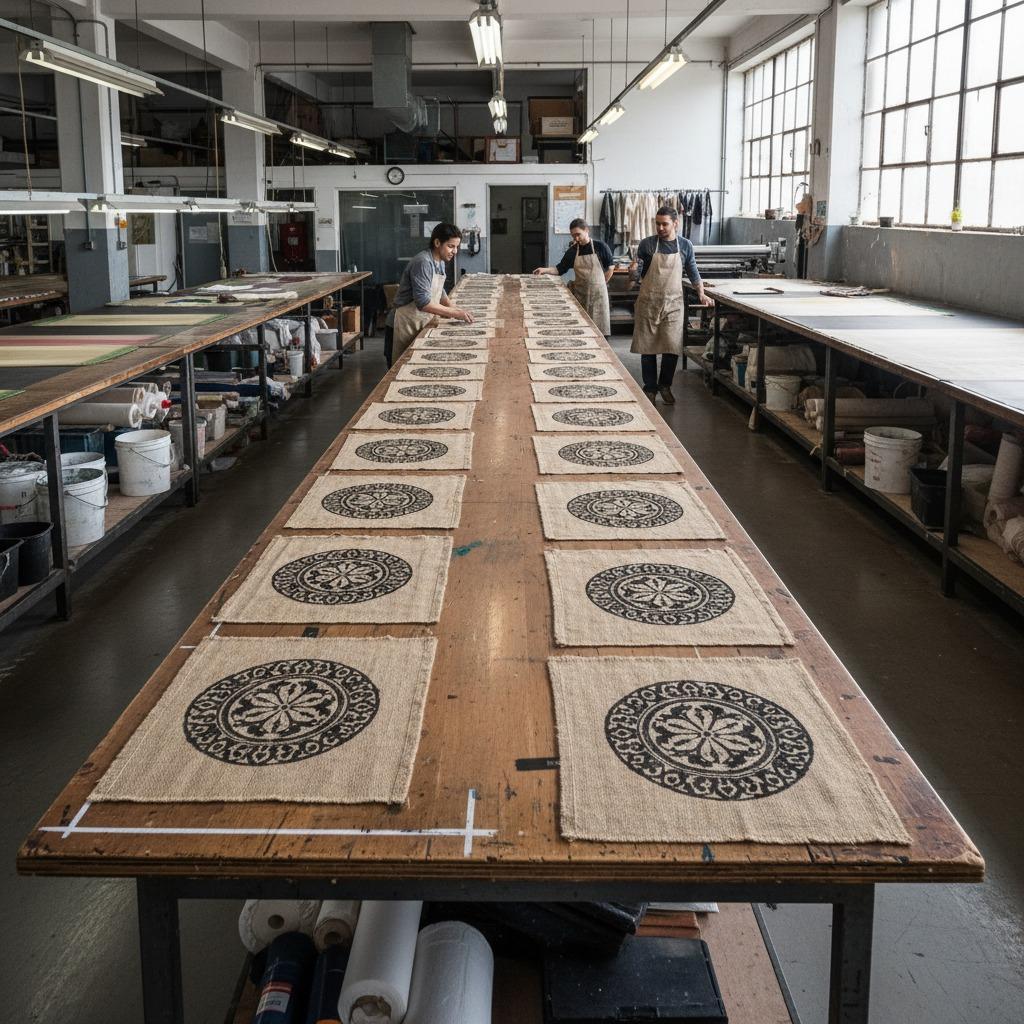
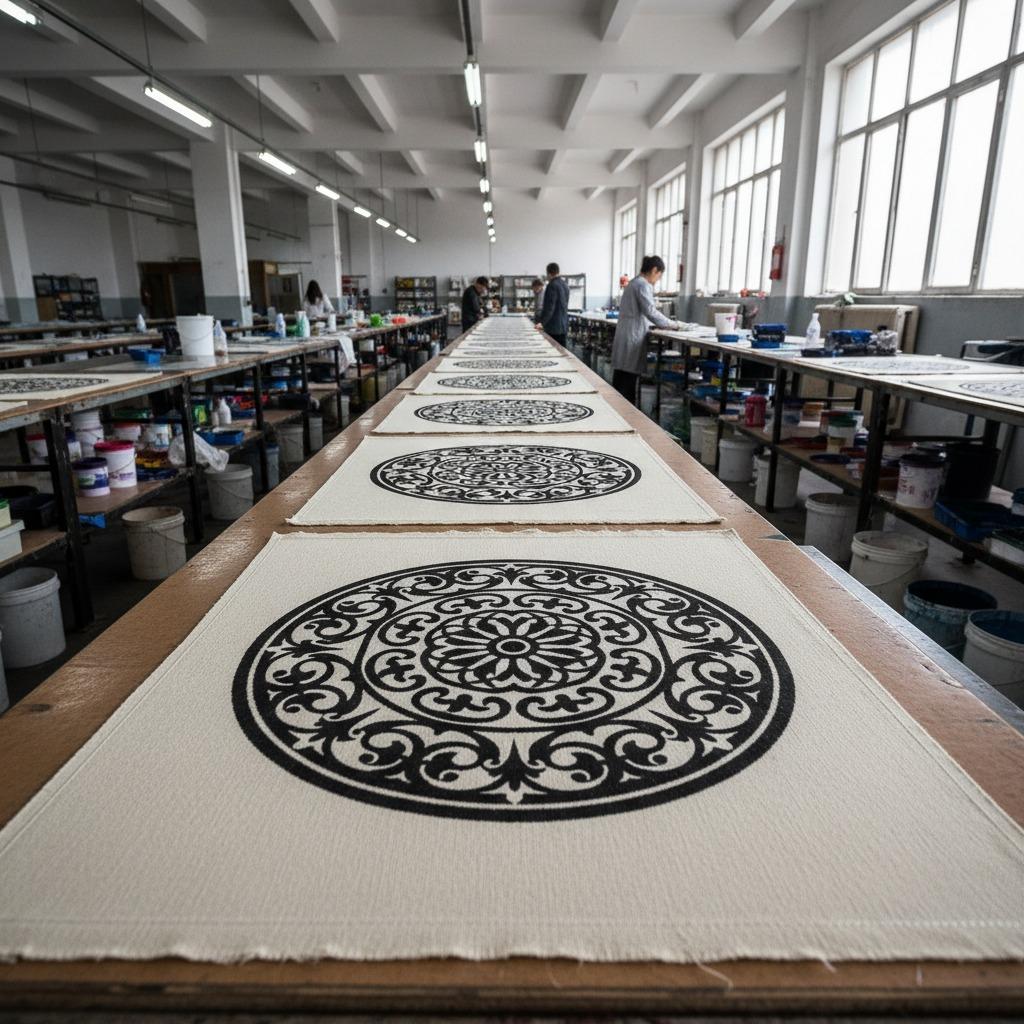
In practice, commercial printing for mats may involve a broader production setup: preparation, placement, drying or curing, and inspection. The visible rows of identical pieces suggest a line-based workflow where placement accuracy and hand handling matter as much as the print itself.
High quality printing on rough materials
“High quality” in this category does not simply mean sharper artwork. It means consistent motif placement, stable color appearance from piece to piece, and a finish that suits the product’s intended use. For decorative mats, consistency often sells better than overcomplicated effects.
What to ask before approving a sample
Buyers sometimes focus on the design proof and forget the basics. On textured, flat goods, a few questions save a lot of back-and-forth later.
Ask what material the mat is actually made from. The image suggests a natural-fiber or straw-like woven surface, but that should be confirmed rather than assumed. Ask whether the product is a finished good or work in process, because the print stage may affect the final appearance after trimming, backing, or assembly.
Also ask how the motif is positioned. The visual pattern appears to repeat in a controlled way, which implies layout discipline. That is important for retail packs and hospitality sets, where a small shift in placement can make the product look off-center or inconsistent.
Common mistakes buyers make
One common mistake is choosing a print method only by cost. Another is approving artwork on screen without checking how it behaves on a woven surface. The third, and probably the most expensive over time, is failing to define acceptable variation. On a natural-fiber product, some irregularity is normal; too much irregularity looks careless.
If you are ordering online printing for custom mats, be careful with product photos that show only the artwork and not the substrate. A smooth mockup can hide the problems that show up on the actual material. It is worth asking for a sample on the real base, even if that adds a little time.
Practical buyer advice for sourcing teams
For smaller runs, digital printing or a transfer-based approach may make sense if the design changes often. For stable, repeat orders, a workshop process built around consistent placement may be more economical, especially when the motif is simple and the base material is fixed.
When comparing suppliers, look beyond the phrase “custom printing.” Ask for details on artwork preparation, repeat alignment, drying or curing steps, and how they handle texture-related defects. If the supplier cannot explain how they control consistency on a coarse surface, that is a warning sign.
FAQ: a few questions that come up often
Can all woven mats be printed the same way?
No. Texture, absorbency, and flexibility change the result. A method that works on one woven substrate may fail on another.
Is online printing suitable for mat products?
It can be, especially for simple custom orders, but the final quality depends on whether the supplier understands the substrate and the print limitations.
What matters more: ink type or process control?
For buyers, process control often matters just as much. Good ink on a badly managed line still produces inconsistent pieces.
A sensible next step
If you are sourcing printed mats, ask suppliers for a sample on the actual material, not a substitute. Then check motif placement, edge clarity, and how the piece handles under normal handling. That is usually where the real differences show up, and it tells you more than a polished mockup ever will.