

Why printing quality matters in mat production
In mat manufacturing, printing is not just a decorative step. It is the part that turns a plain woven base into a sellable product with a brand identity, a seasonal look, or a functional design cue. For buyers comparing suppliers, the difference between an acceptable sample and a production-ready run often shows up in print placement, color consistency, edge cleanliness, and how well the design sits on the woven surface.
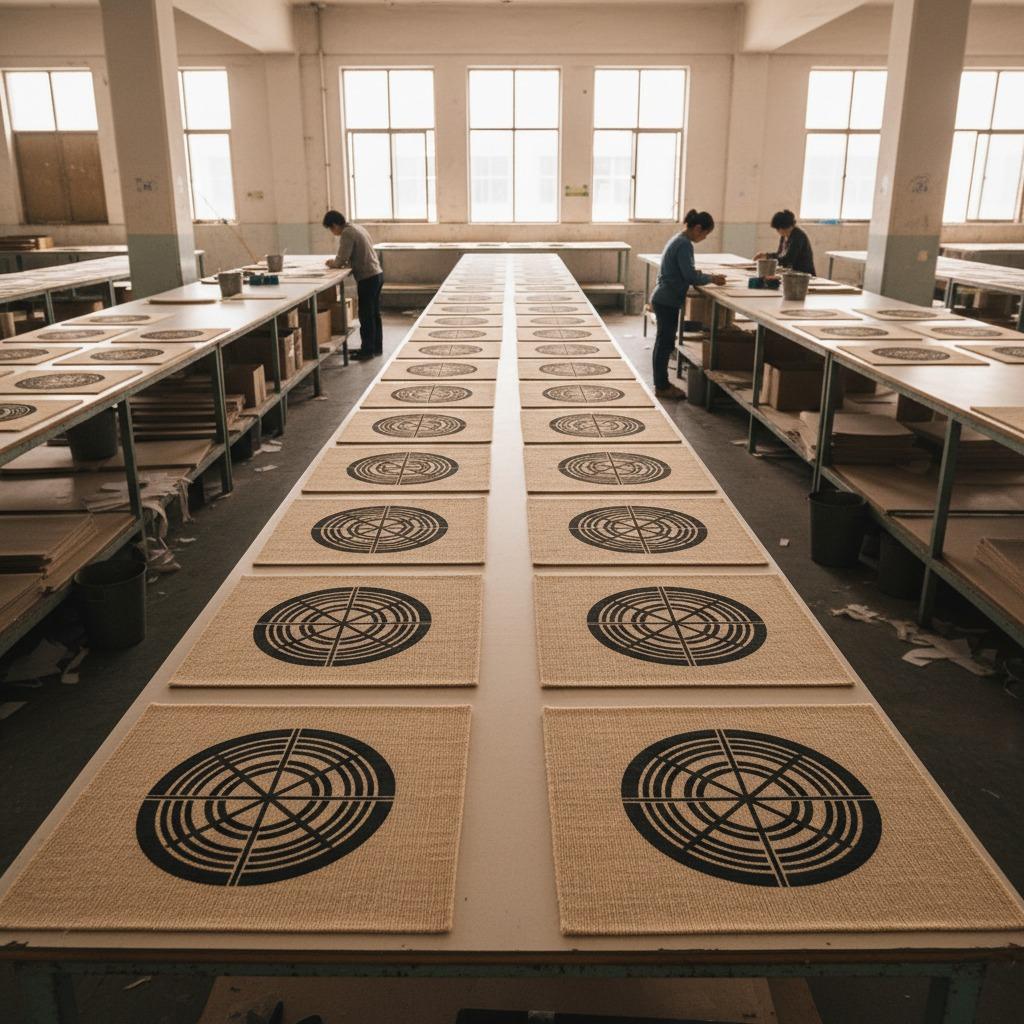
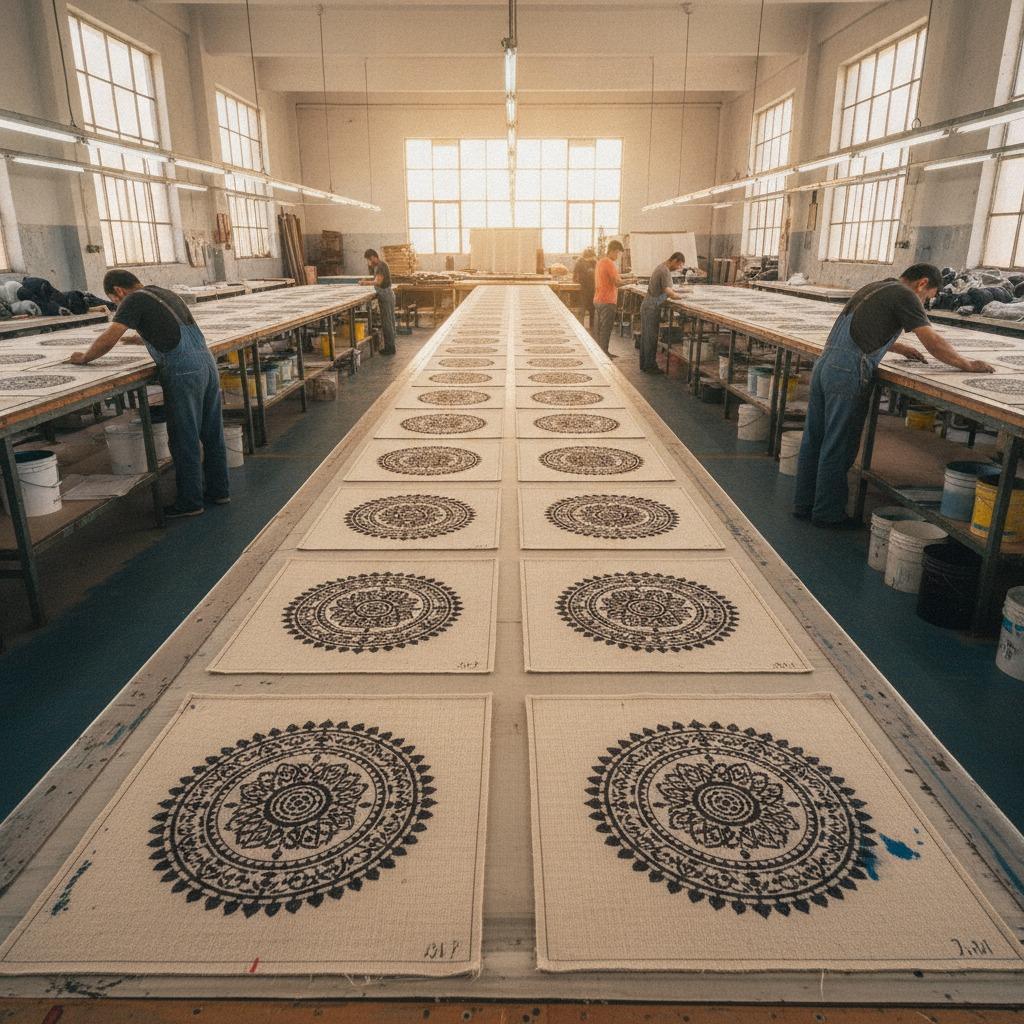
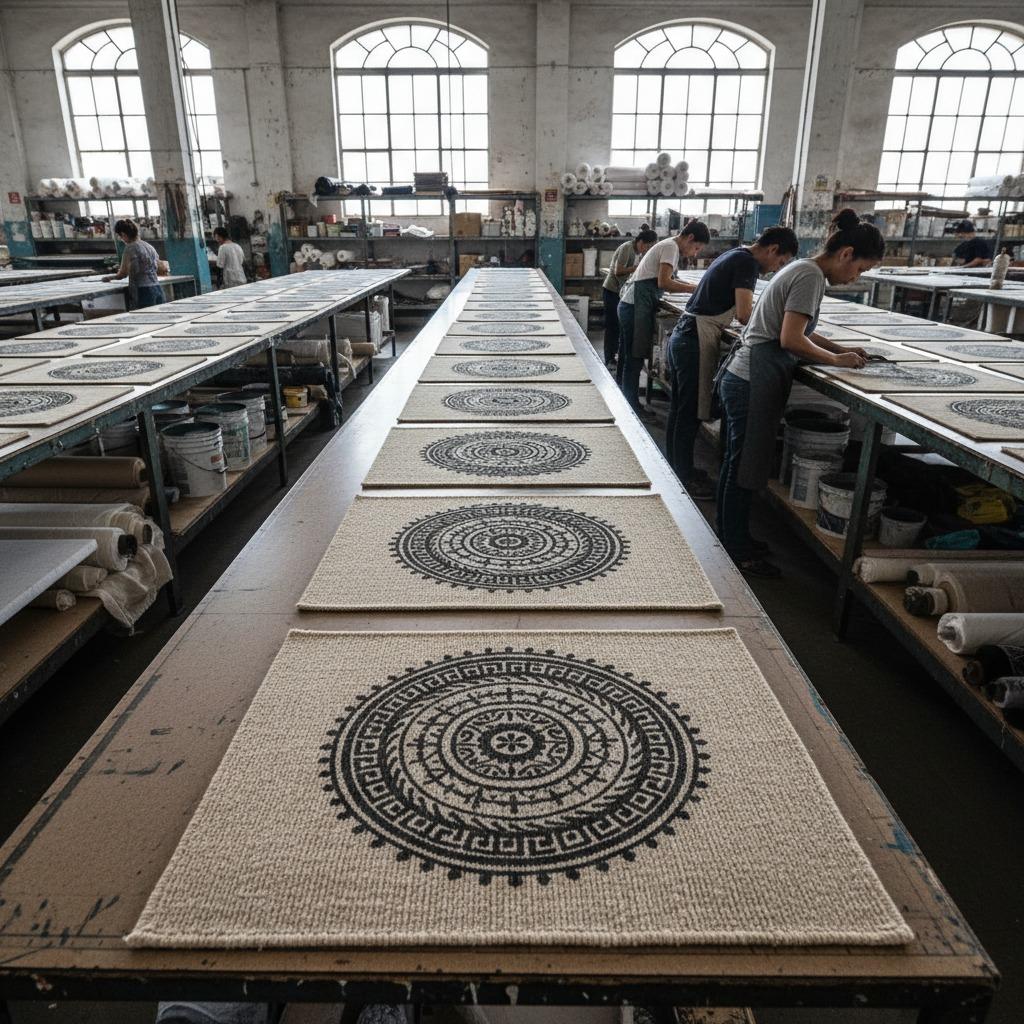
The image behind this topic shows what many workshops know well: a batch workflow, with multiple identical rectangular mats laid out in rows for drying or inspection. That setup tells a practical story. If the printing process is not stable, the whole batch becomes risky. Misaligned motifs, weak ink laydown, or uneven drying can quickly turn into waste, rework, or delayed shipments.
For sourcing managers and product teams, the decision is rarely “can it be printed?” The real question is which printing method fits the material, the quantity, the design detail, and the end-use expectations.
What buyers usually need to decide
When a buyer evaluates printing for woven mats or similar flat textile products, the main decision is usually between speed, detail, and unit economics. Some designs are simple enough for efficient repeat runs. Others need sharper detail, tighter registration, or better handling of mixed-color graphics. That is where the choice between offset printing, digital printing, and more traditional commercial printing routes starts to matter.
As a rule, the printed surface should match the product’s purpose. A decorative home mat may allow more freedom in pattern choice. A hospitality or retail display mat may need stronger consistency from piece to piece. If the mat is meant for repeated handling or foot traffic, the buyer should ask not only how it looks on day one, but how the printed area behaves after use and cleaning. That part is often glossed over in a sample approval conversation.
Common printing routes and where they fit
Offset printing
Offset printing is usually associated with flat, high-volume graphics on paper and board, but the term often comes up when buyers talk about precise image reproduction. For mat production, it is less about the exact press name and more about the need for controlled, repeatable image placement. If the design is detailed and the production run is large, consistency becomes the main attraction.
Digital printing
Digital printing is attractive when the design changes often, when runs are smaller, or when custom printing is part of the product strategy. It can be useful for test programs, limited seasonal collections, or products where multiple artwork versions must be produced without heavy setup. The trade-off is that buyers should check whether the finished print has the right visual depth on a coarse woven base. A design that looks sharp on screen may appear different once it meets texture.
Commercial printing and workshop batch production
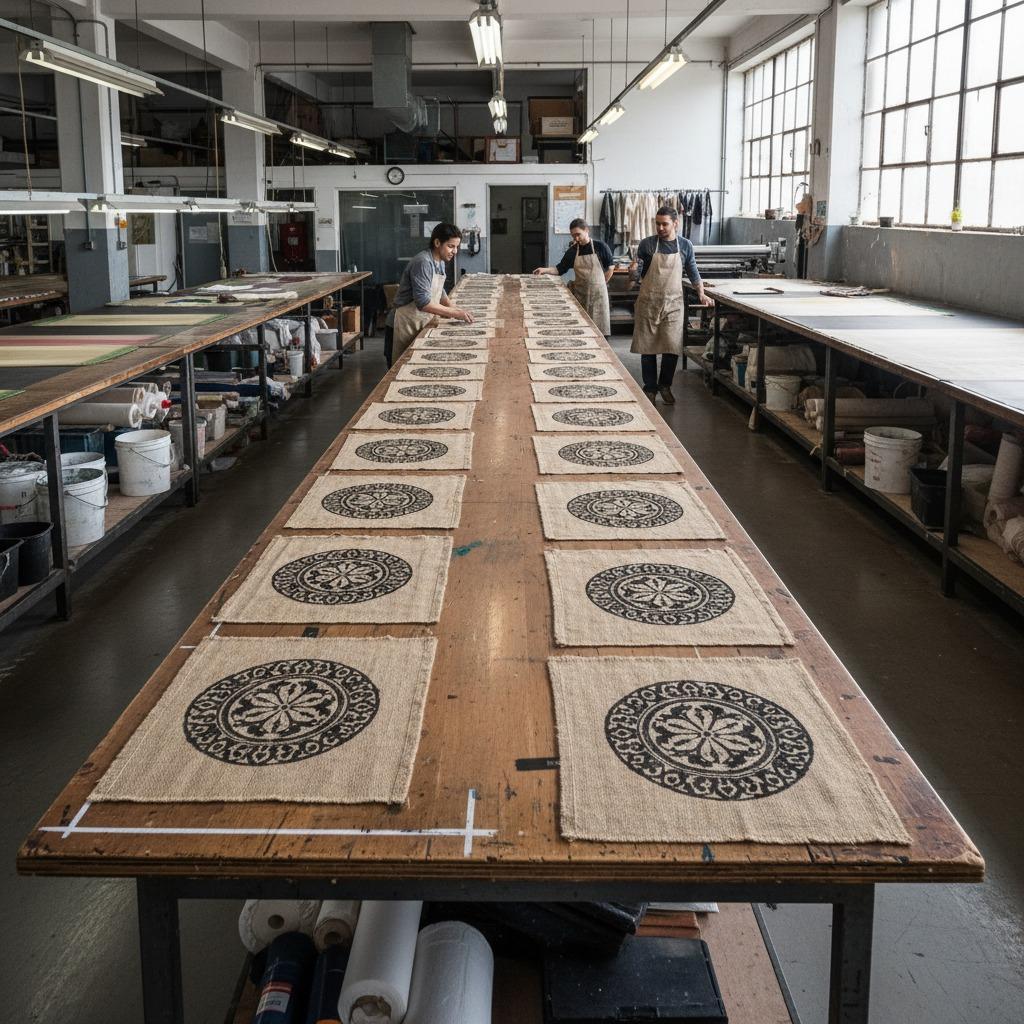
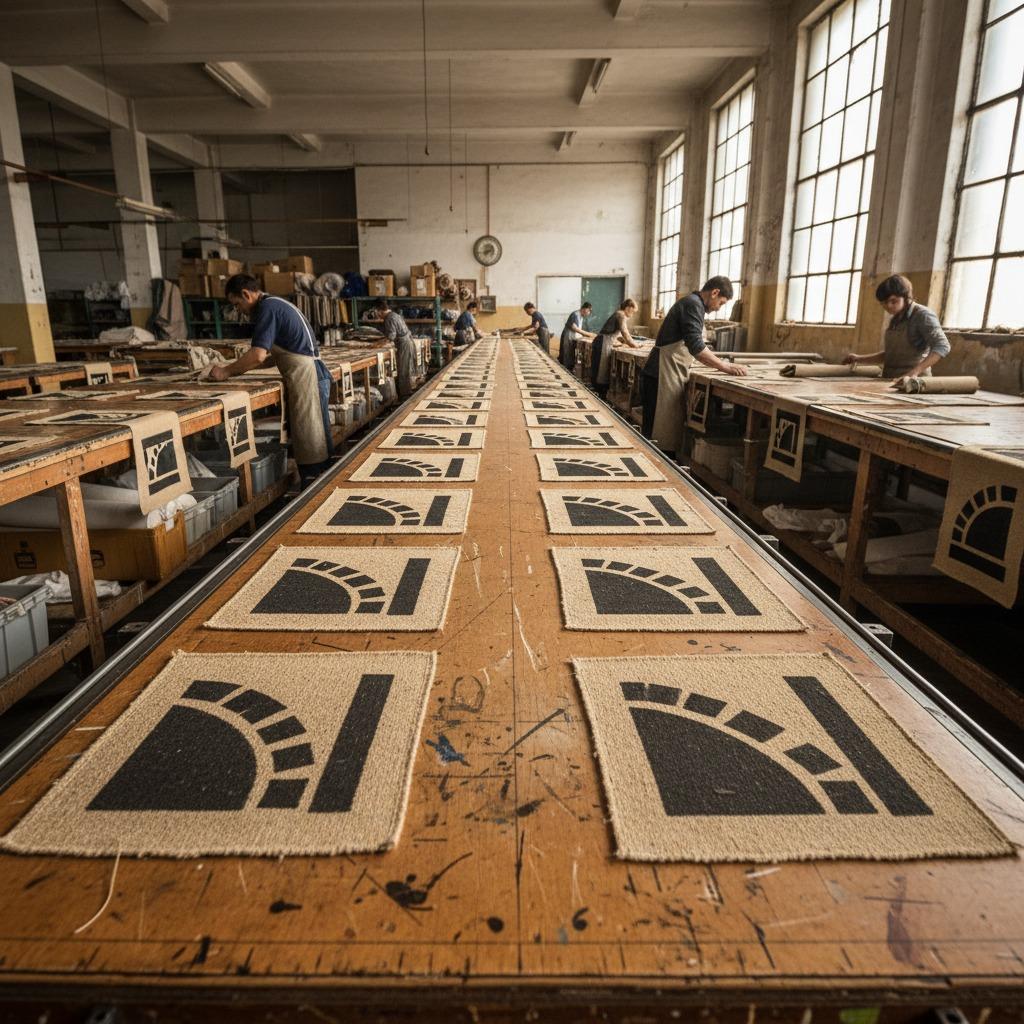
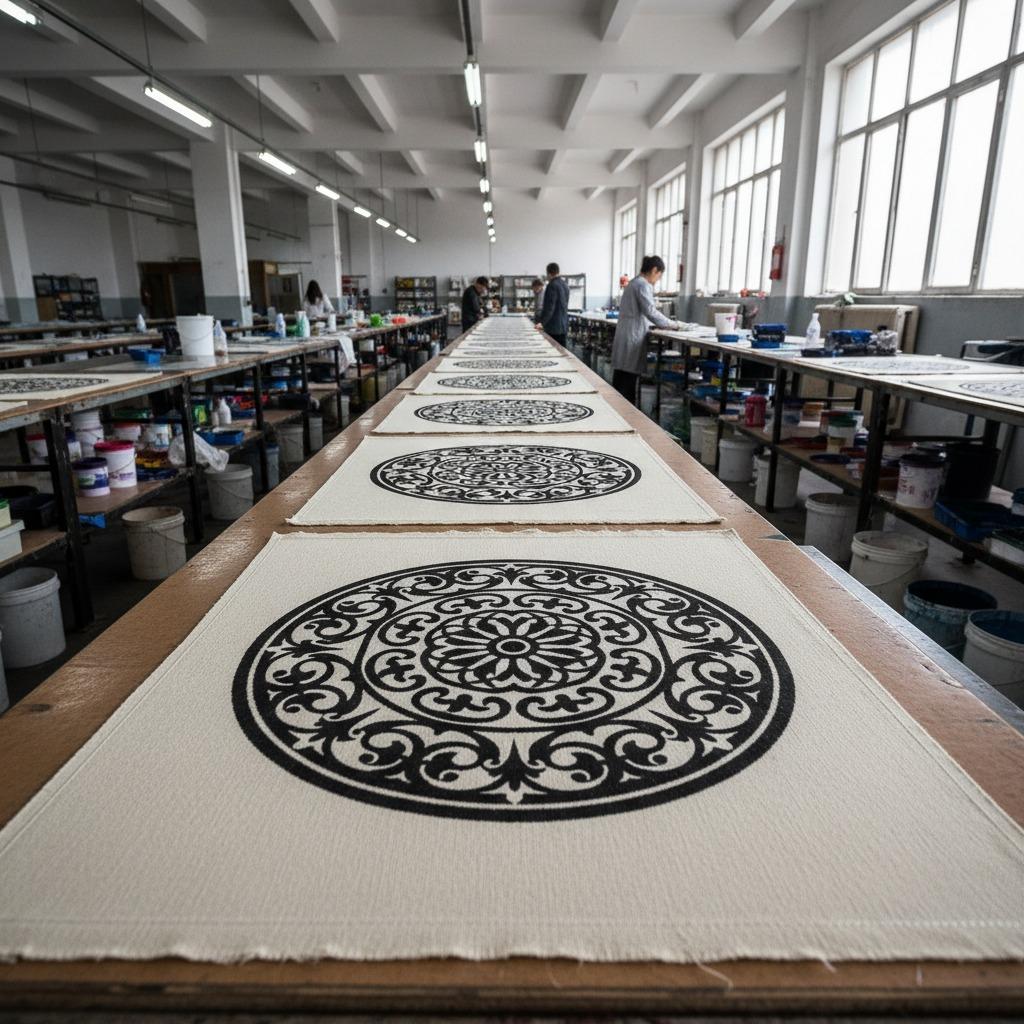
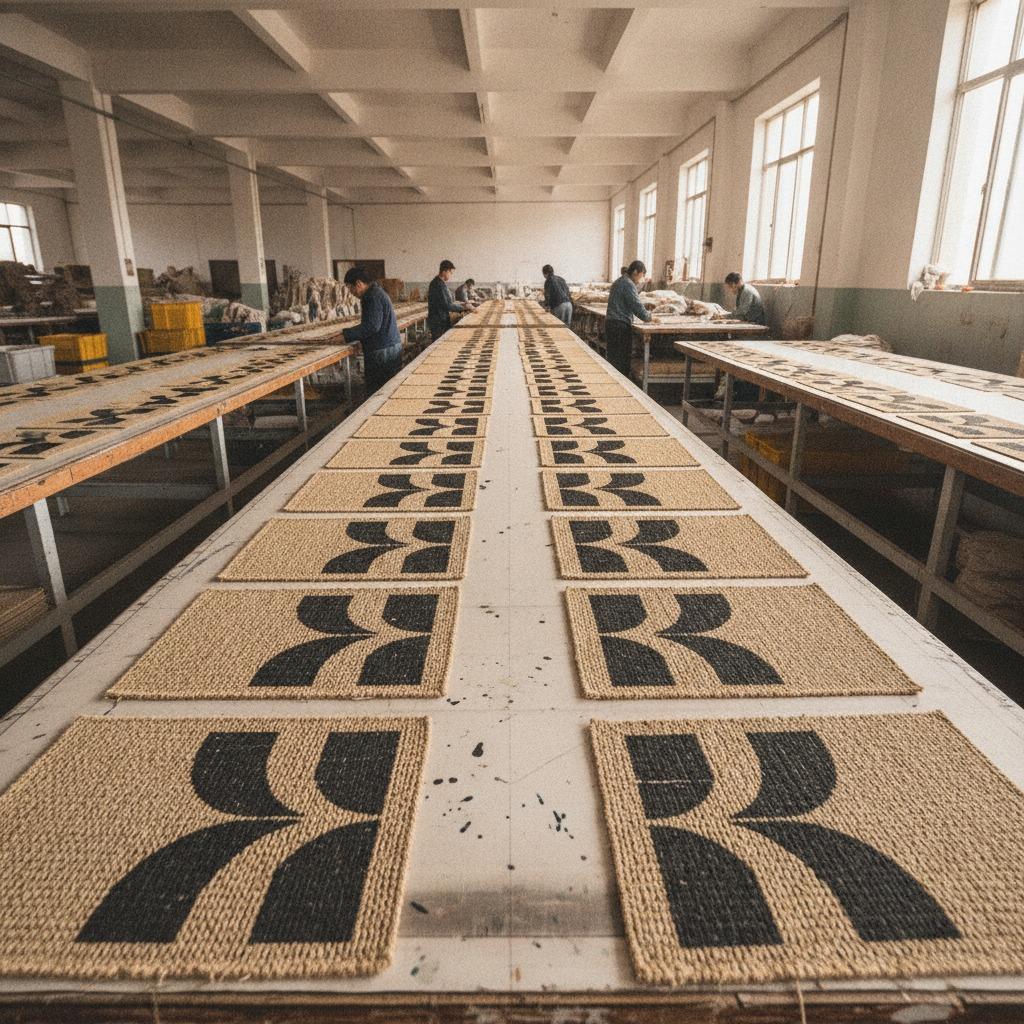
In a practical production environment, commercial printing on mats often means a batch-based process with drying, inspection, and sorting. The long tables in the workshop image suggest exactly that kind of flow. Pieces are laid out in parallel so operators can verify print position and drying uniformity before stacking or packing. That is not glamorous, but it is what protects yield.
Why woven texture changes the print result
Printed woven mats behave differently from smooth substrates. The weave can soften fine lines, break tiny details, or change how solid areas appear. A dark ornamental circular motif, for example, may look crisp in a sample image yet lose definition if the surface is too rough or the ink penetration is inconsistent. That is not necessarily a defect; it is a material reality.
Buyers should request samples on the actual base material, not just artwork proofs. If the product is intended for entry mats, area mats, placemat-style products, or decorative display pieces, the printed result should be judged on the real substrate under normal viewing distance. A close-up proof can be misleading.
Key selection criteria for buyers
Before approving a supplier, check a few practical points:
First, look at print registration. Repeating geometric motifs should land in the same position across the run. Second, inspect color consistency from piece to piece, especially on dark graphics over tan or brown woven surfaces. Third, ask about drying and handling, because freshly printed mats can be vulnerable to surface marking if the workflow is rushed. Fourth, confirm that the edge finish and cut geometry remain clean after printing; a good print cannot rescue a poorly cut mat.
For online printing or custom printing programs, the buyer should also ask how artwork changes are handled. If seasonal graphics, branding marks, or retail-specific designs are part of the plan, the supplier needs a stable prepress and sampling process. Otherwise, the first order may go smoothly while repeat orders become messy.
Common mistakes in mat printing projects
One common mistake is approving artwork without checking the actual texture of the base. Another is assuming every woven mat will accept the same print treatment. That is rarely true. A third mistake is focusing only on visual appeal and ignoring the production workflow. If a supplier cannot lay out, dry, and inspect the batch efficiently, commercial printing costs can rise quickly even when the design is simple.
Buyers should also be cautious about promises that sound too broad. A supplier may be capable of high quality printing on one substrate and only average results on another. Ask for the relevant sample, not a generic portfolio image.
Practical buyer advice
If you are sourcing printed mats for home decor, hospitality, retail, or event use, start with the end-use scenario. Will the product be displayed, stepped on, wiped down, or packed and shipped in volume? That answer should guide the printing method and the acceptance criteria. For repeat programs, consistency matters more than a single impressive sample. For limited runs, flexibility and turnaround may matter more.
If possible, review a production sample under real lighting. Woven surfaces can hide or exaggerate details depending on angle and texture. That small step saves surprises later.
FAQ
Is digital printing always better for custom mat designs?
Not always. Digital printing is useful for smaller or changing orders, but the final result still depends on the base material and the design detail.
Can fine artwork be used on coarse woven mats?
Sometimes, but fine lines may soften. Designers should simplify where needed and test on the real substrate.
What should a buyer check first in a sample?
Check print placement, color uniformity, edge quality, and whether the design still reads clearly at normal viewing distance.
Where to go next
If you are building a printed mat program, start with the material, then choose the printing route that fits the design and volume. Ask for samples on the actual woven base, review batch consistency, and confirm how the workshop handles drying and inspection. That is usually where the difference shows up between a pretty prototype and a product that can be ordered again.