

Why printing matters for mats, rugs, and other textile surfaces
When buyers look at printing for woven mats or rug panels, they are usually trying to solve two problems at once: how to make a surface look distinctive, and how to keep production consistent from one piece to the next. That matters whether you are sourcing for home décor, retail display, hospitality, or a factory line where finished pieces still need cutting, drying, or inspection. The basic challenge is simple enough. A printed design has to sit cleanly on a textured substrate without smearing, drifting, or looking uneven once the batch is laid out, stacked, or packed.
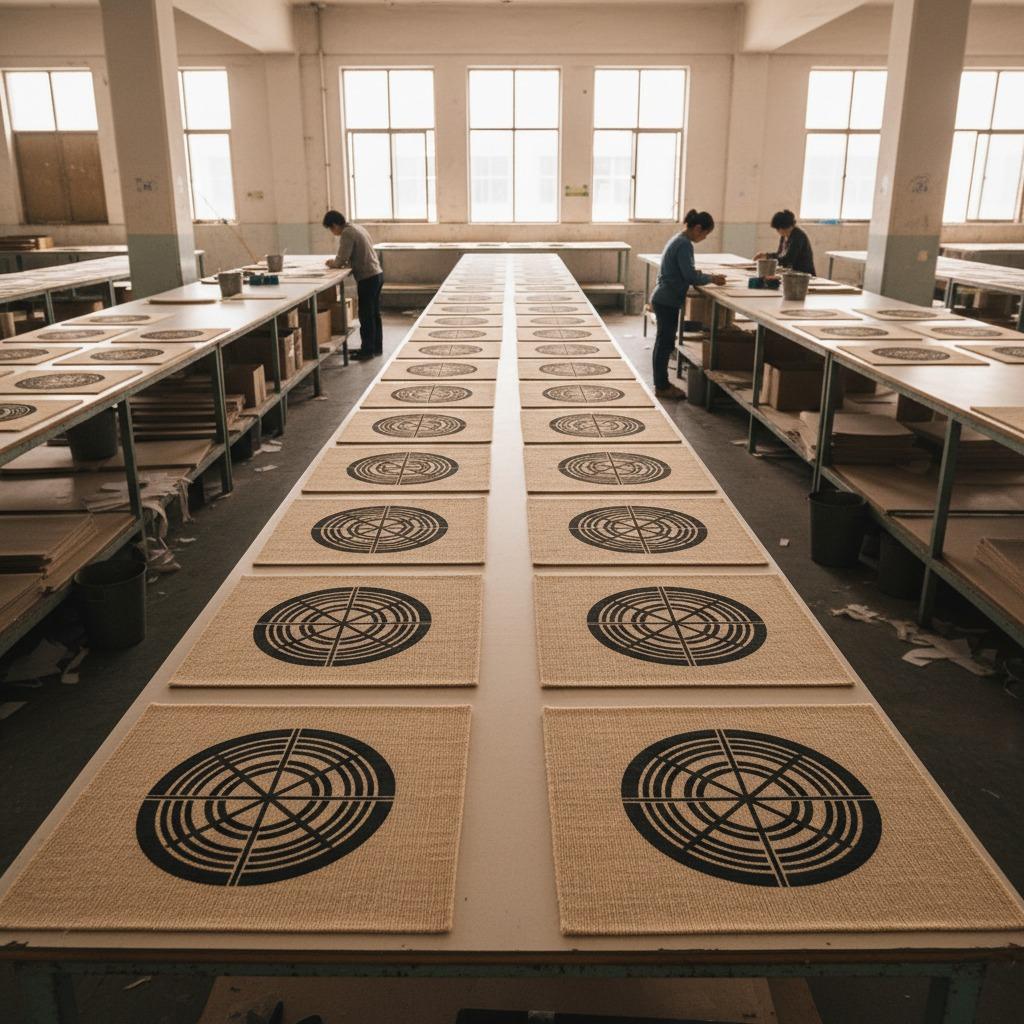
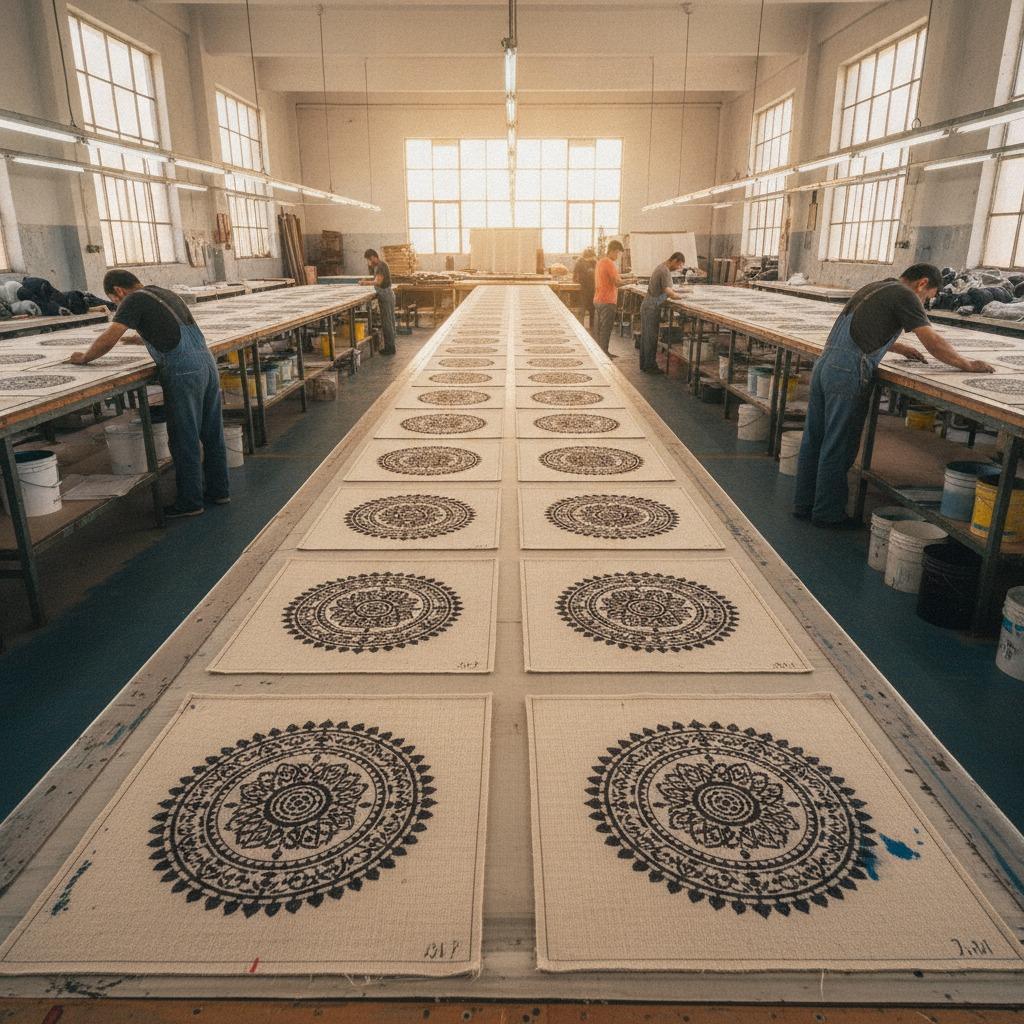
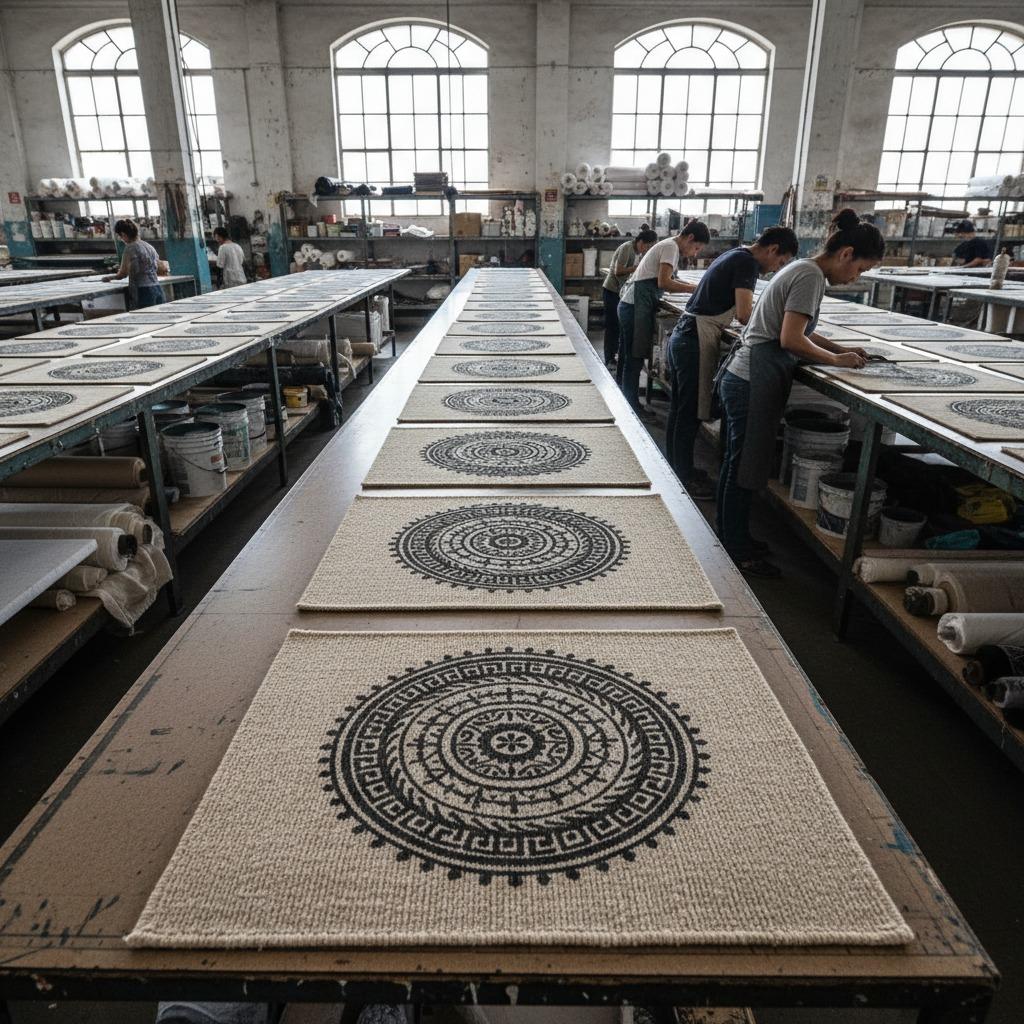
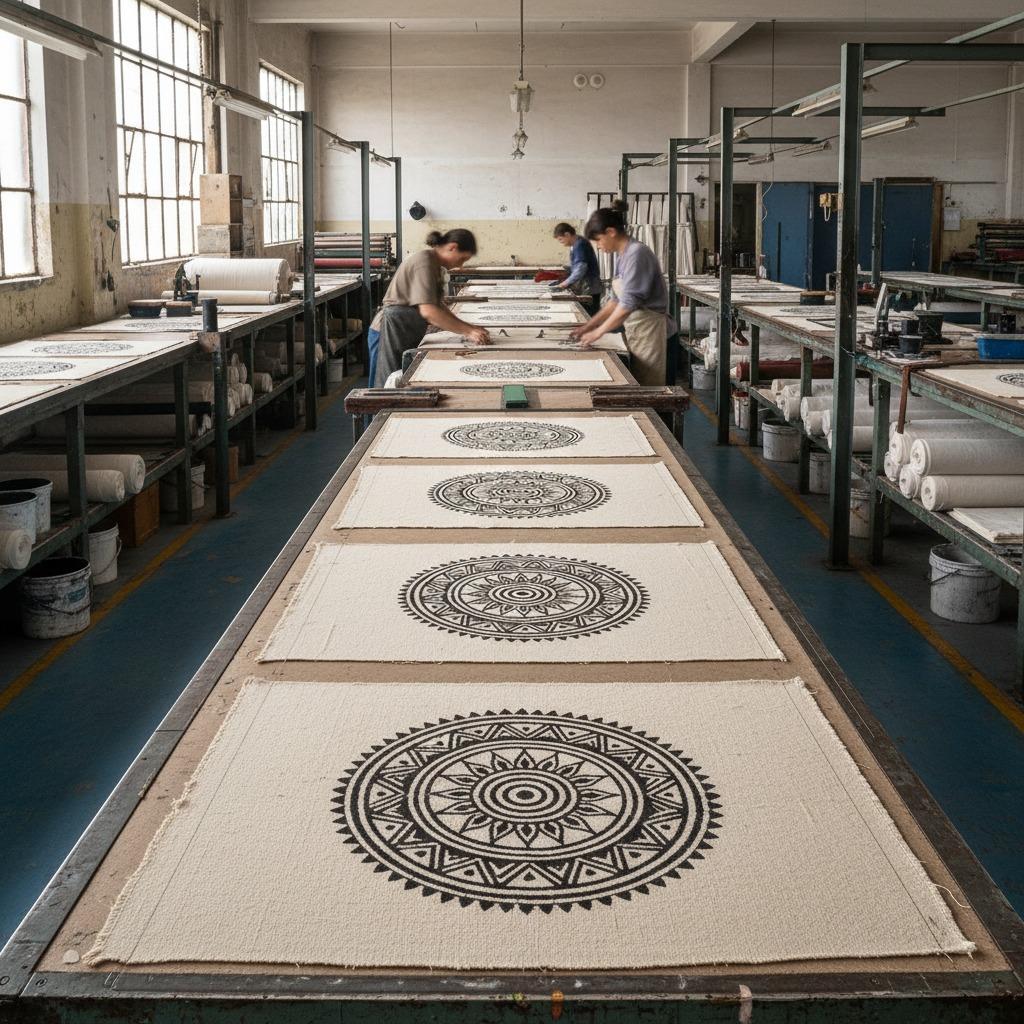
The product setup described here points to rectangular textile panels with a tan woven surface and a dark circular geometric motif placed near one end. That kind of repeated placement is a good sign that the process is being controlled, not improvised. In practical terms, it suggests the buyer is dealing with a batch-oriented workflow where visual consistency matters as much as image quality.
What buyers should notice first
For this kind of textile surface, the first decision is not just which design to print. It is which printing method can handle the substrate, the run size, and the intended end use. A woven mat or rug panel has a different behavior than a smooth poster stock or a coated carton. Texture can break fine detail. Flexing can crack weak inks. Heat can alter the base material. These are the ordinary tradeoffs that separate a decent sample from a stable production line.
Here is the short version:
- Offset printing is well known for sharp, repeatable image work, but it is not usually the first choice for flexible textile surfaces unless the process and material system are specifically built around it.
- Digital printing is often attractive when design changes are frequent, artwork varies by order, or smaller runs need faster setup.
- Commercial printing is the broad umbrella term buyers use when they need consistent output across larger orders and multiple SKUs.
- Custom printing becomes important when the motif, placement, or brand treatment has to match a specific interior or retail program.
- Online printing is often the sourcing route, but the real question is still process capability, not convenience.
And yes, high quality printing means more than a clean-looking photo. It usually means repeatable registration, controlled color, and a finish that still looks acceptable after handling, folding, and packing. Buyers sometimes miss that last part.
How textile printing on mat-like panels usually breaks down
On a woven or flat mat surface, decoration can be applied in several ways. Screen-based methods are common in industrial settings because they handle bold motifs well and can be efficient for repeating artwork. Heat-transfer approaches may suit certain substrates when the design needs crisp edges. Digital systems can be useful when the buyer wants variety, personalization, or shorter setup time.
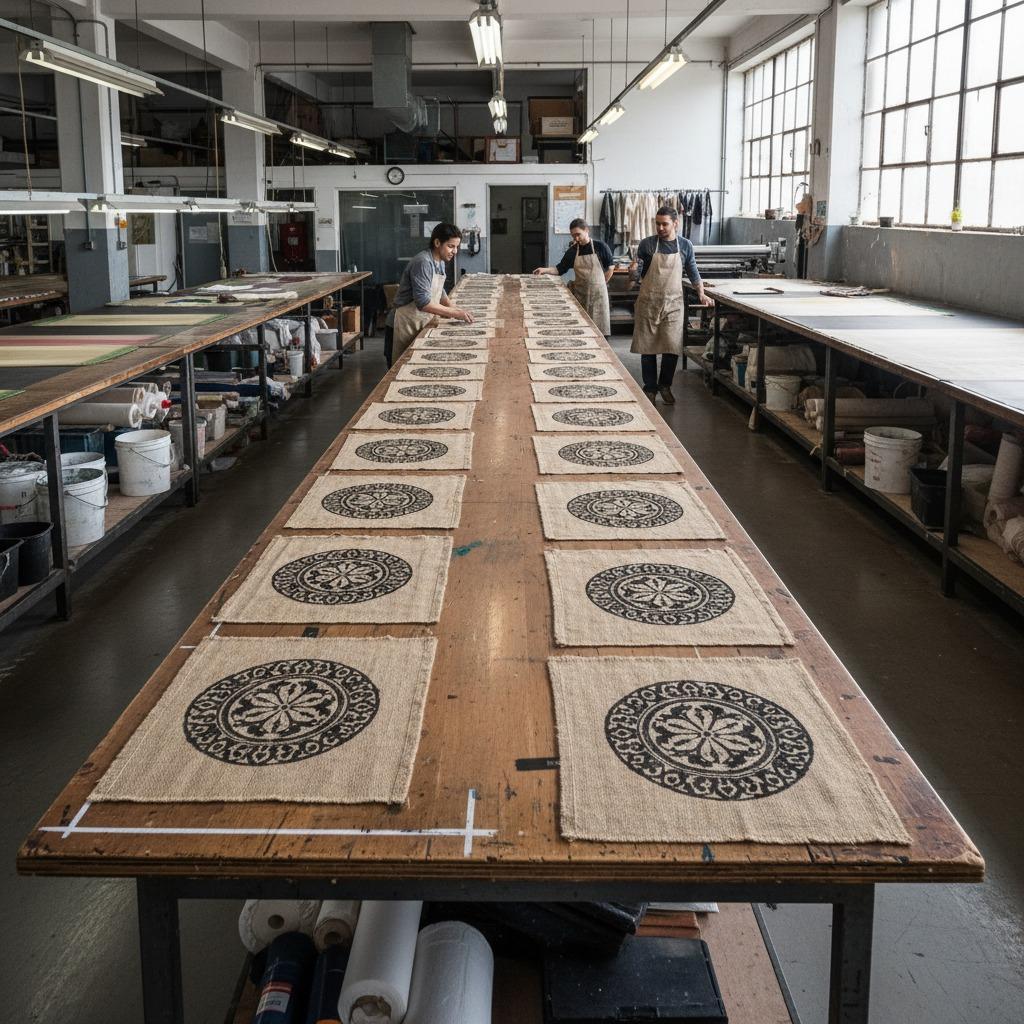
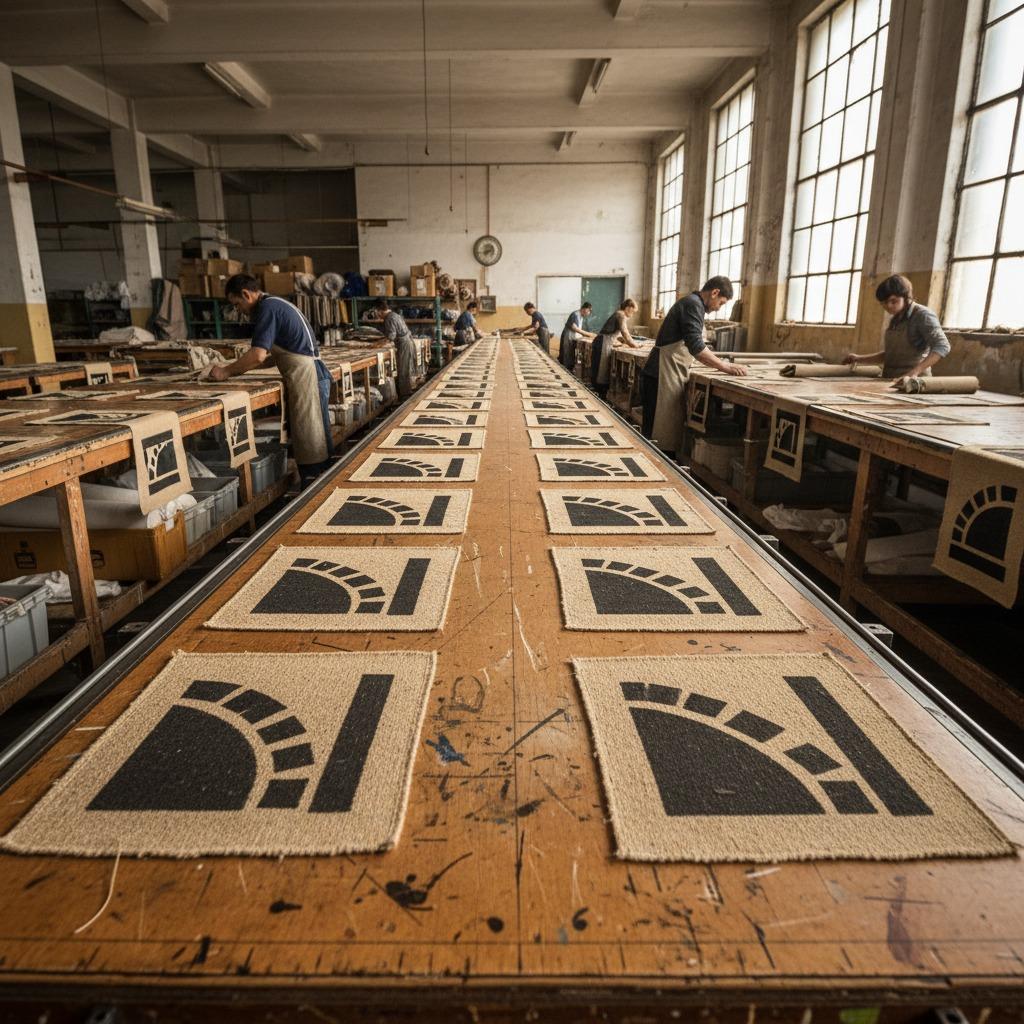
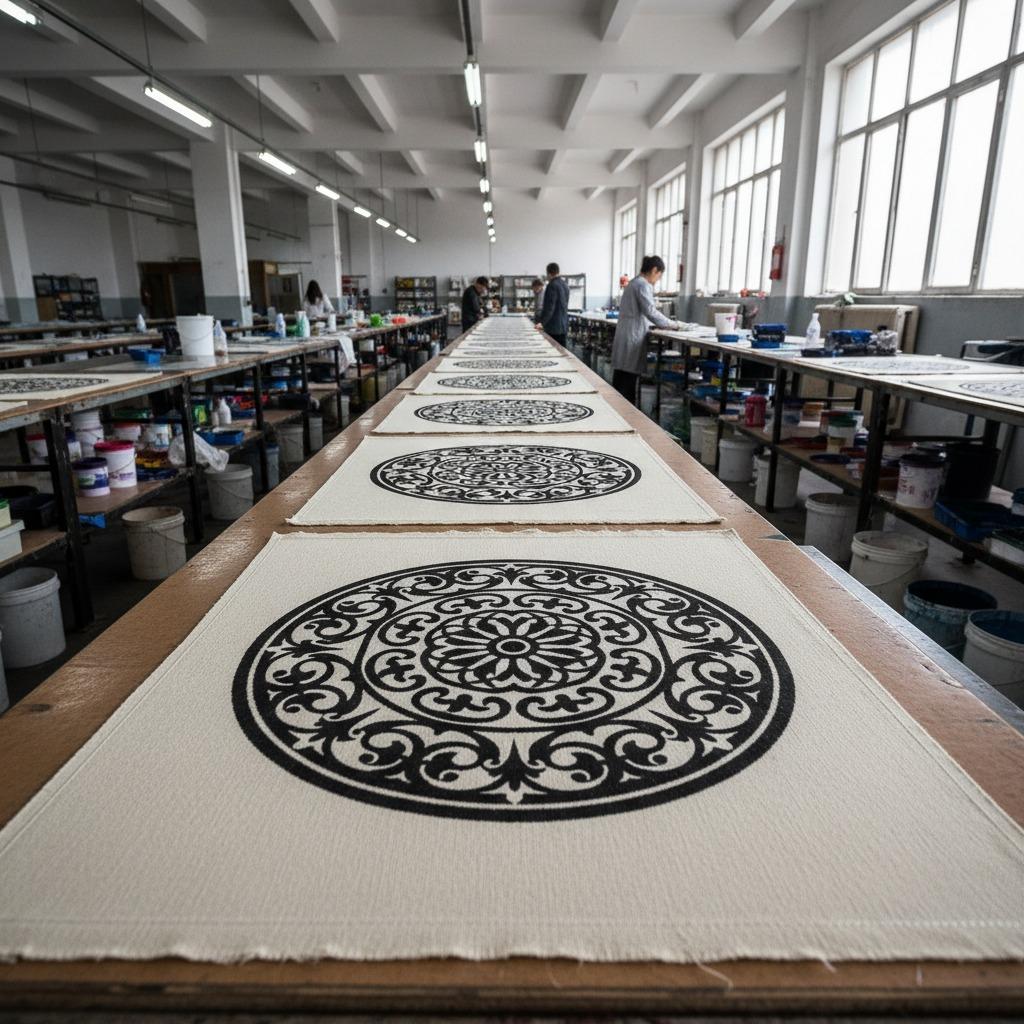
The visible product layout you described—multiple identical units aligned on long tables—suggests a manufacturing environment where drying, inspection, or curing may follow the print stage. That is a small detail, but an important one. A good-looking print straight off the machine is not enough if the substrate still needs to remain flat, keep its shape, and avoid handling marks before packing.
What tends to go wrong
The usual problems are not exotic. They are the everyday issues: image shift, uneven ink density, poor edge definition, or a design that looks fine on the sample but loses clarity on the woven texture. Sometimes the artwork is the problem. Sometimes the process is. Buyers should also be careful about assuming a decorative mat is automatically suitable for heavy foot traffic, outdoor exposure, or repeated washing. Those claims need verification, not wishful thinking.
Selection criteria that matter to sourcing teams
If you are comparing suppliers, look beyond the picture of the finished surface. Ask how the design is positioned on the panel, how the pieces are laid out during production, and what inspection happens before packing. For a repeated motif like the one described here, consistency across units is often more important than an extremely complex graphic.
Useful questions include:
- Does the supplier control motif placement from piece to piece?
- Can the process handle the weave texture without losing detail?
- Is the output intended as a finished mat, or as a semi-finished panel before later conversion?
- What visual defects are checked during production?
- How stable is the design under handling, stacking, or folding?
That last question sounds basic, but it is where many purchasing headaches begin. A surface that looks acceptable in a studio photo can behave differently in a warehouse.
Common buyer mistakes
One common mistake is treating all printing methods as interchangeable. They are not. Another is judging only the artwork and not the substrate. A third is forgetting that end use changes the standard. A decorative floor mat for a low-traffic interior space has different demands from a commercial mat used in a hospitality setting.
There is also a tendency to over-focus on the first sample. For textile products, the second and third pieces in the batch often reveal more about process control than the hero sample does. That is where pattern drift, color variation, or handling marks often show up.
Practical buyer advice before you place an order
If you are sourcing printed mat panels, ask for clear confirmation of the intended manufacturing stage. Are you buying a finished product, or are these panels still moving through print, drying, and inspection? That distinction affects packaging, logistics, and quality acceptance. It also affects how you write the spec sheet.
For brand-led or custom programs, insist on sample approval that reflects the actual production substrate, not a substitute material. If the design is geometric and placement-sensitive, check registration carefully. If the order is meant for commercial use, request use-case confirmation rather than assuming “decorative” means “durable enough.”
Offline conversations with suppliers still matter, even in an online printing workflow. A decent quoting form will not tell you whether the process is suitable for a woven mat surface. A knowledgeable production contact usually will.
A simple next step for buyers
If you are evaluating suppliers, start by comparing the print process, the substrate behavior, and the batch consistency—not just the artwork. That gives you a more reliable view of whether the product will hold up in real use. If the design is stable, the panel layout is clean, and the production tables show repeatable placement, you are likely looking at a process that is at least being managed with some discipline.
For teams planning a new decorative mat or rug program, the smartest move is to request a production sample on the actual material, then review it under the conditions it will face in storage, packing, and use. That small step saves a surprising amount of trouble later.