

Printing for Mats and Panels: What Buyers Need to Know Before Ordering
When people talk about printing in a manufacturing setting, they often picture paper, packaging, or labels. But the same buying questions come up on woven mats, decorative panels, and other non-paper substrates: Will the image hold up? Does the print land consistently from unit to unit? And is the process right for a short run, a branded collection, or a private-label program? For sourcing managers and product teams, those are not cosmetic questions. They decide whether a design looks premium on arrival or tired after the first handling cycle.
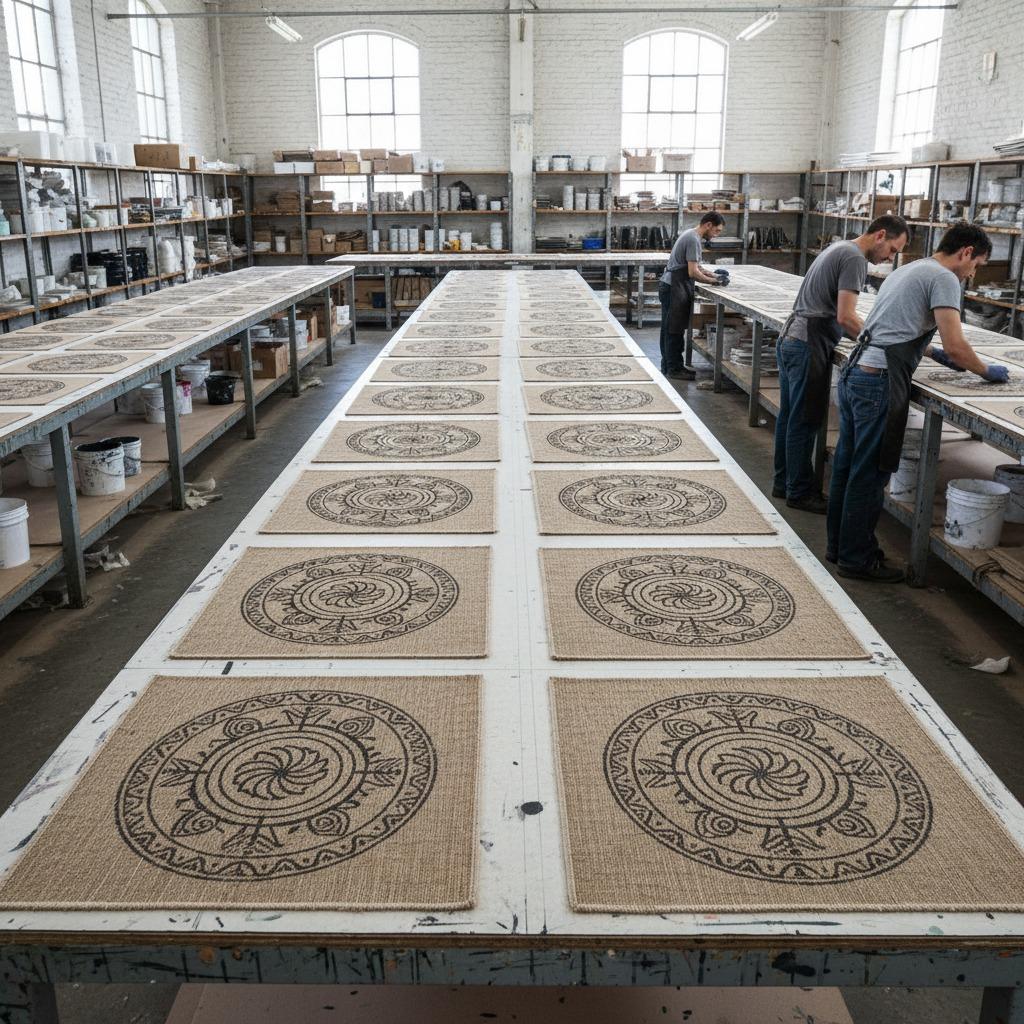
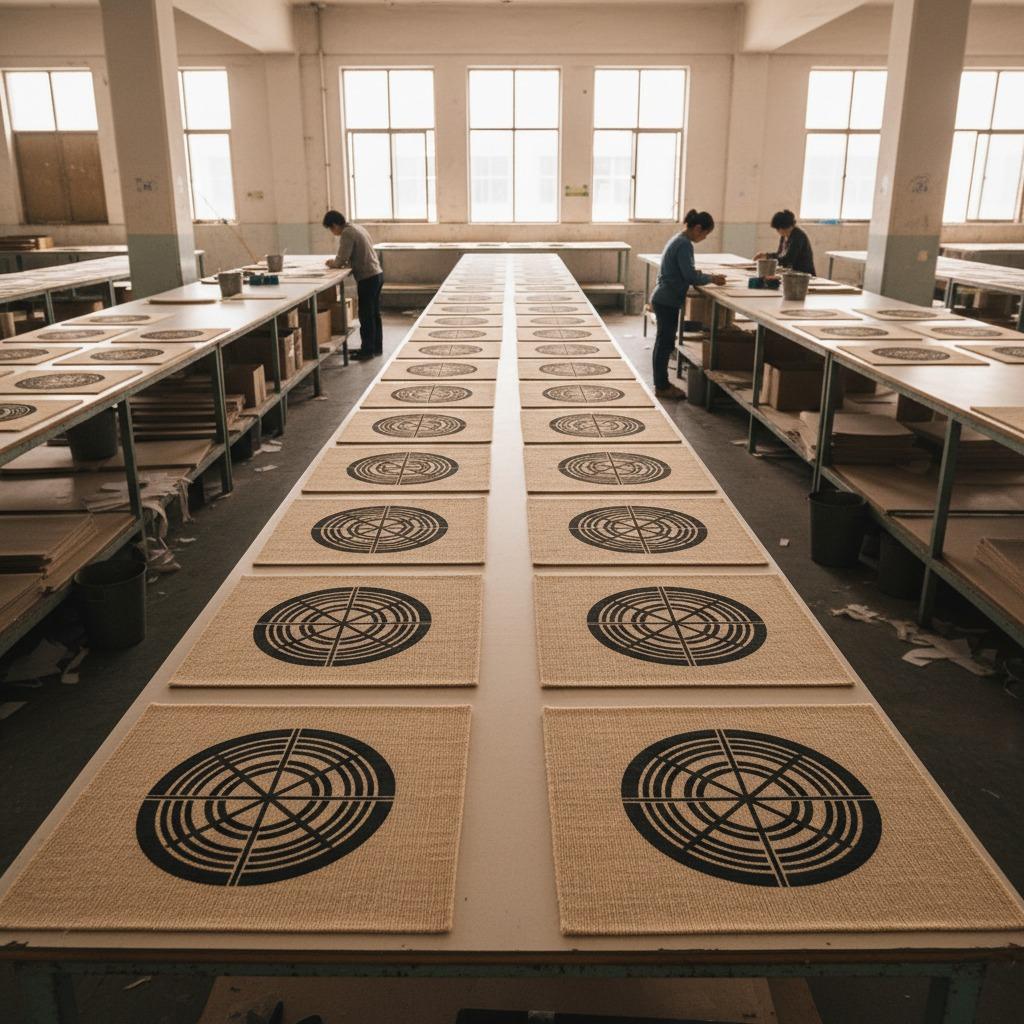
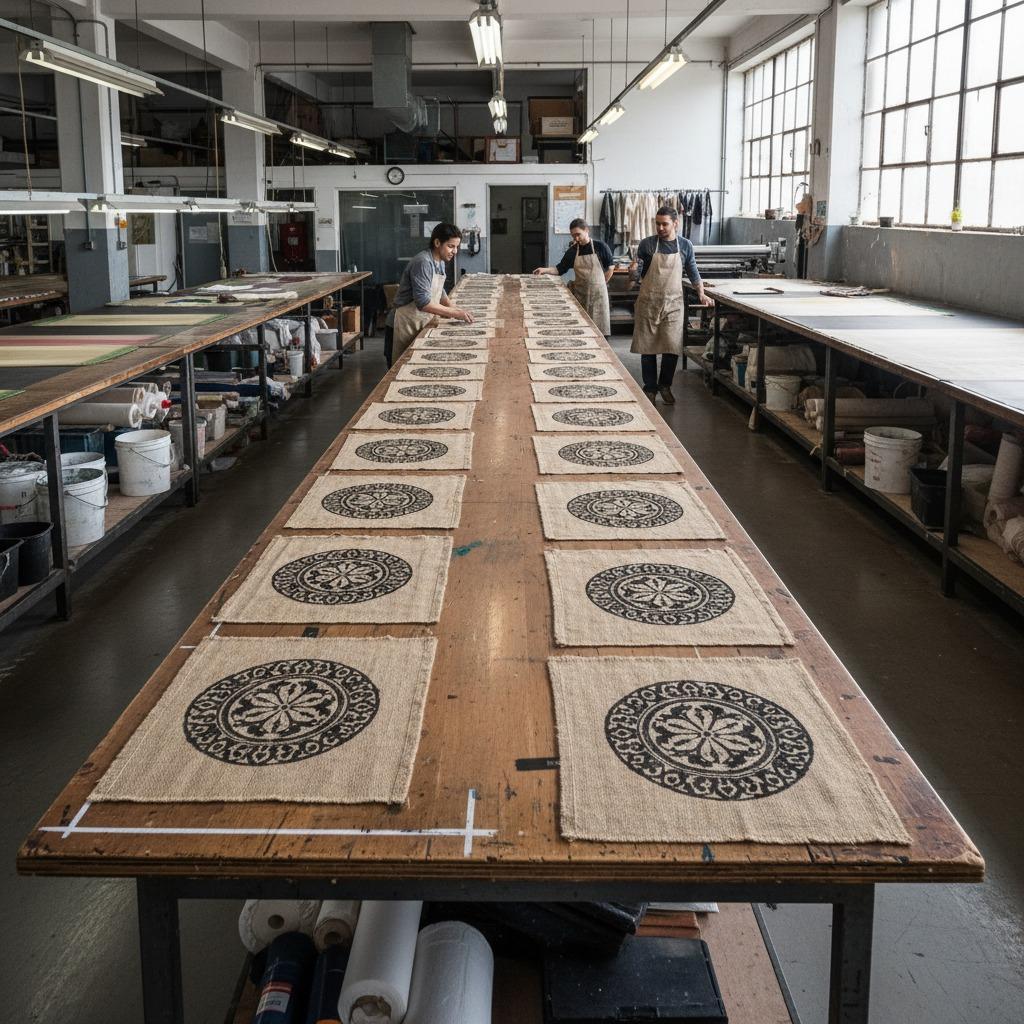
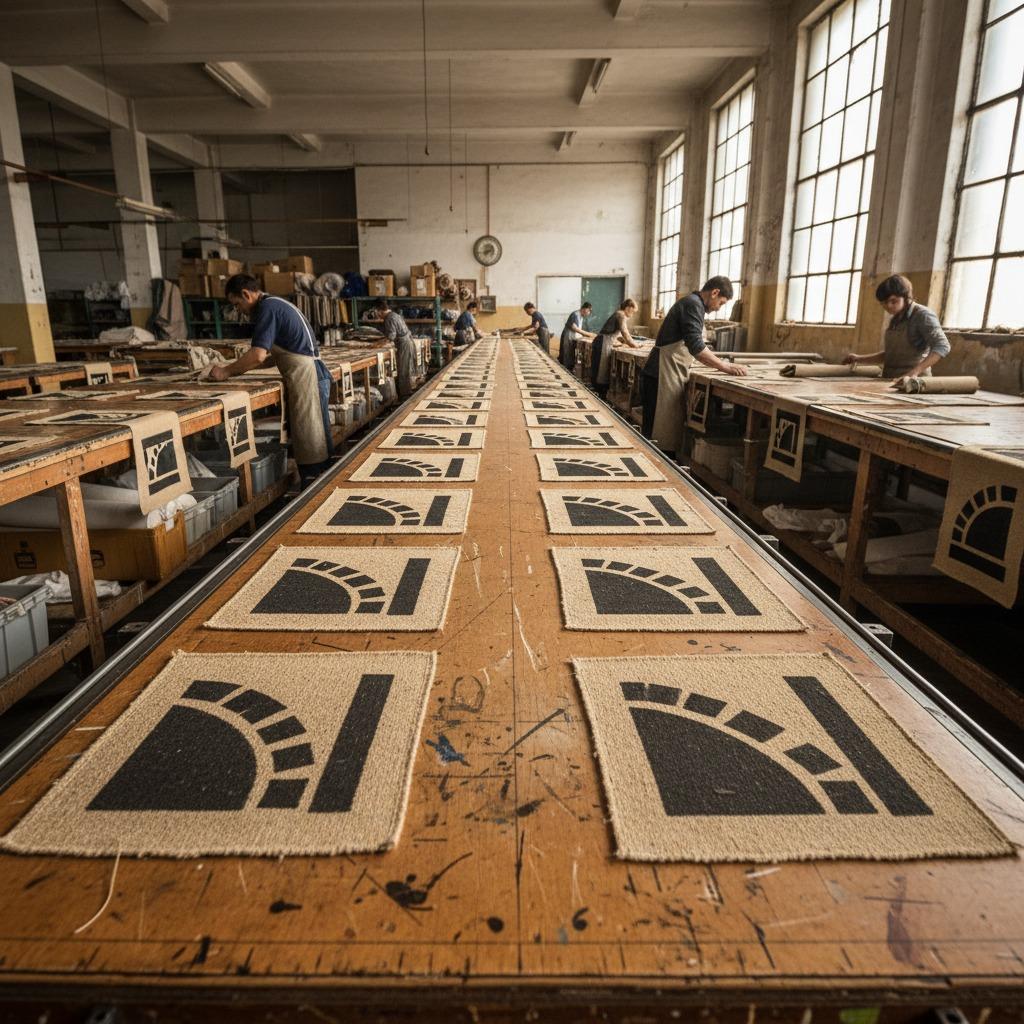
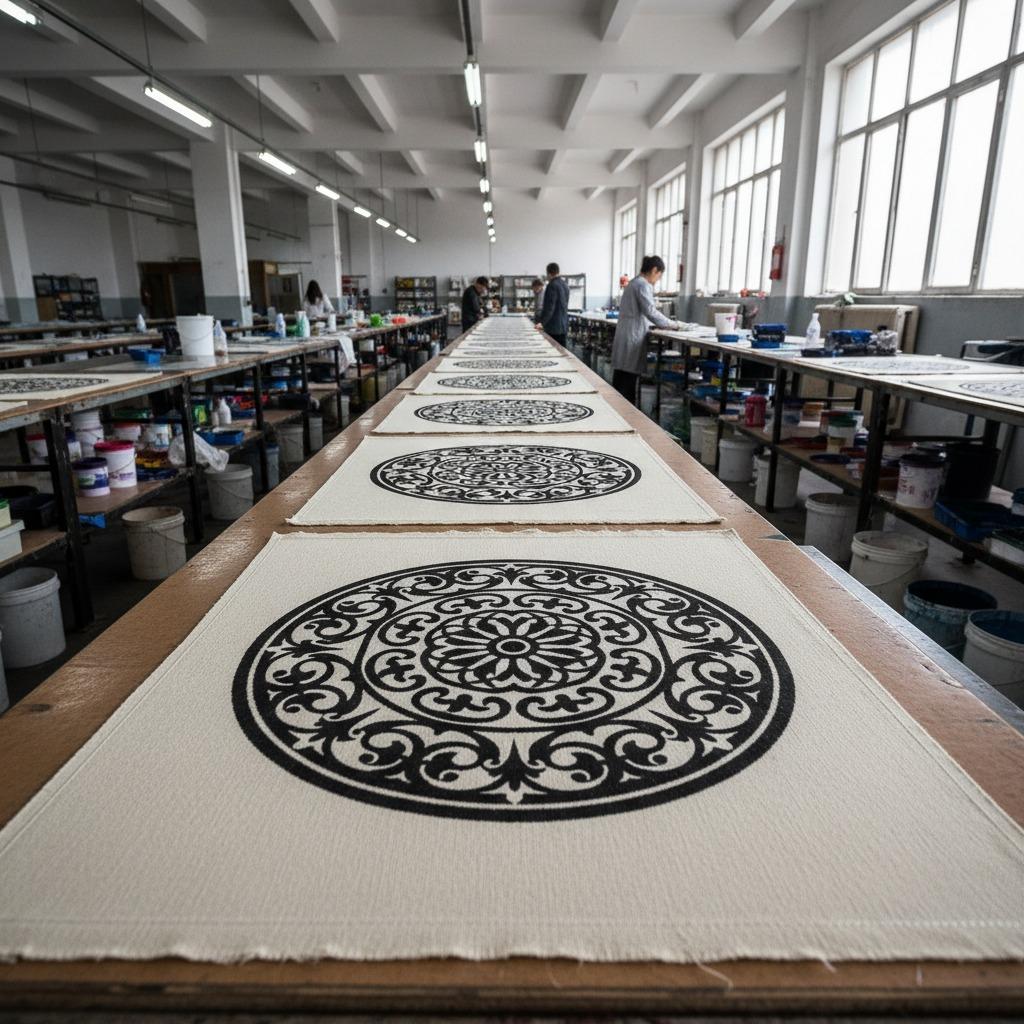
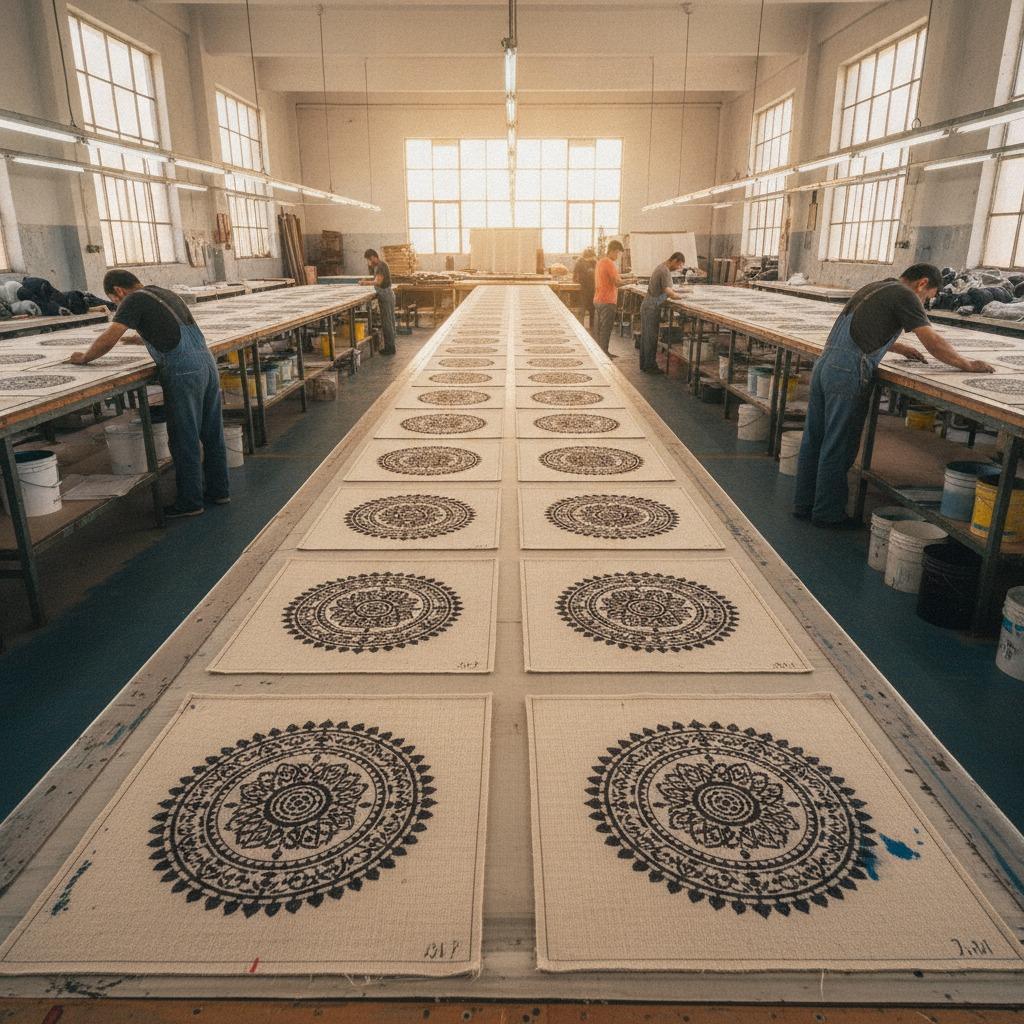
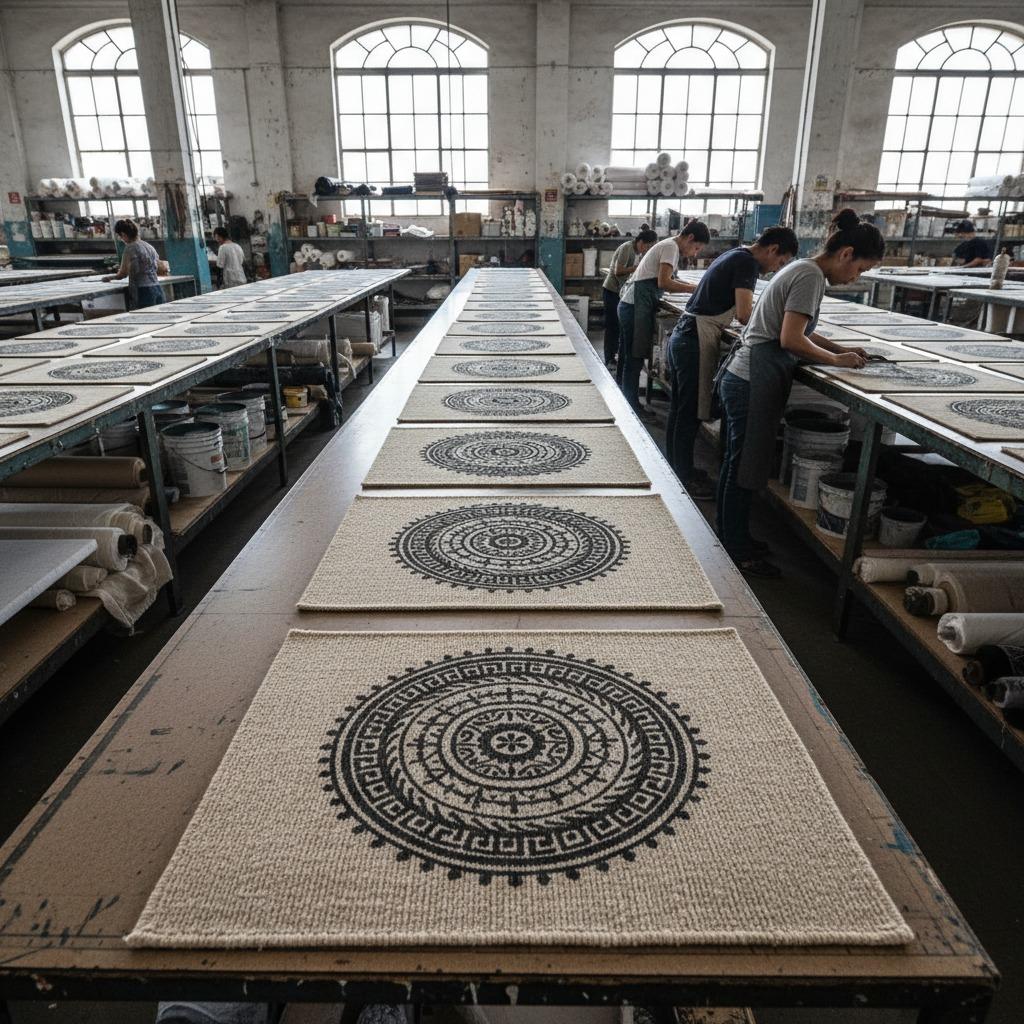
The product image behind this topic suggests repeated semicircular motifs printed on flat woven mat-like pieces laid out for drying or inspection. That setup matters. It points to batch production, controlled placement, and some form of curing or set time after image application. In other words, the buyer is not just choosing a pattern; the buyer is choosing a manufacturing method and a level of process control.
Why the Printing Method Matters on Woven or Textured Surfaces
Printing on a coarse, tan, fiber-like surface is not the same as printing on coated board or smooth film. The texture can soften edges, mute color, or create uneven transfer if the process is not matched to the substrate. That is especially relevant for custom printing programs where the design may include logos, border motifs, or repeating decorative elements.
For commercial printing buyers, the practical issue is repeatability. A one-off sample can look excellent. The real test is whether the same placement, density, and visual sharpness show up across a full production run. If the product is destined for retail display, hospitality, or OEM use, small deviations are obvious once the pieces are laid side by side.
Offset Printing, Digital Printing, and Other Options
There is no single best process for every mat or panel project. The right choice depends on order size, artwork complexity, substrate behavior, and how much variation the buyer can accept.
Offset printing
Offset printing is often associated with high-volume, highly repeatable work on suitable surfaces. For buyers, the appeal is consistency. The caution is that the substrate must be compatible, and setup can be less forgiving if the texture is rough or absorbent.
Digital printing
Digital printing tends to make more sense when designs change often, when runs are shorter, or when the artwork carries many color variations. It is a common fit for custom printing programs because changes are easier to manage. The tradeoff is that not every digital system handles coarse surfaces equally well, so “works on paper” is not enough of a qualification.
Commercial printing for batch production
Commercial printing in this context is less about a named technology and more about production discipline: aligned placement, color control, drying space, and handling that avoids scuffing. The long tables and multiple identical pieces in the image suggest exactly that kind of organized workflow.
What to Check in a Sample Before Approving an Order
A good buyer review should go beyond “does it look nice?” The useful checks are practical:
First, inspect print registration. On a mat or panel with a repeat motif, the design should sit in the same place on each piece. A drifting border or off-center semicircle may be acceptable in a rustic product line, but it usually signals weak process control.
Second, look at edge behavior. On textured material, ink spread or uneven saturation can appear near cut edges or across denser weave areas. If the sample shows that problem, it may worsen in production.
Third, ask how the finish is meant to be handled after printing. The image suggests drying or inspection on long worktables, which implies a staging step that protects the fresh surface. That is a small operational detail, but it often separates stable output from marred output.
Common Buying Mistakes
One common mistake is to specify the artwork before clarifying the base material. The substrate drives the result more than many buyers expect. Another is to approve a single hero sample and assume the rest of the run will match without any real production check.
A second mistake is treating online printing quotes as if they describe the entire job. Price can hide important questions: what surface is being printed, how the pieces are dried, whether color variation is expected, and how the batch will be inspected. In custom printing programs, those details matter more than a polished sample image on a screen.
Buyer Questions Worth Asking Early
Ask what type of printing process is being used and whether it is suited to the substrate. Ask how repeat artwork is aligned across a batch. Ask whether the material is finished goods or in-process blanks. Ask how the printed surface is protected during drying, stacking, and packing. These are not fussy questions; they are the ones that prevent late-stage surprises.
If the product is intended for hospitality, retail, or branded entryway use, ask how the print will look under indoor lighting and after routine handling. A design that photographs well can still look weak in a lobby or showroom if the contrast is too low.
Practical Takeaway for Sourcing Teams
For mat-like or panel-like products, printing is really a manufacturing decision dressed up as a design decision. The right process should match the surface, the run size, and the level of visual consistency the end market expects. High quality printing on textured substrates is possible, but only when artwork, material, and handling are treated as one system.
If you are comparing vendors, ask for a sample, a production plan, and a clear description of how the batch is controlled from print to drying to inspection. That will tell you more than a glossy catalog page ever will.
FAQ
Is digital printing always better for custom mat designs?
Not always. It can be very useful for short runs and varied artwork, but the best method still depends on the material surface and the production volume.
Why does print quality change on woven materials?
Texture, absorbency, and fiber structure affect how the image sits on the surface. Rougher substrates usually demand more process control.
What should I request from a supplier before placing an order?
Ask for a sample, confirmation of the printing method, and an explanation of how consistency is maintained across the batch. If the supplier cannot explain that clearly, that is worth noting.