

Printing on Woven Mats: What Buyers Should Look For
When a buyer is sourcing printing for woven mats or placemats, the real question is not just whether the design looks good on screen. It is whether the pattern will hold up on a textured substrate, stay aligned across a batch, and still look presentable after handling, packing, and service use. That matters whether you are buying for hospitality, retail, or private-label home décor. A piece that looks fine in a sample photo can behave very differently once it moves onto a production table.
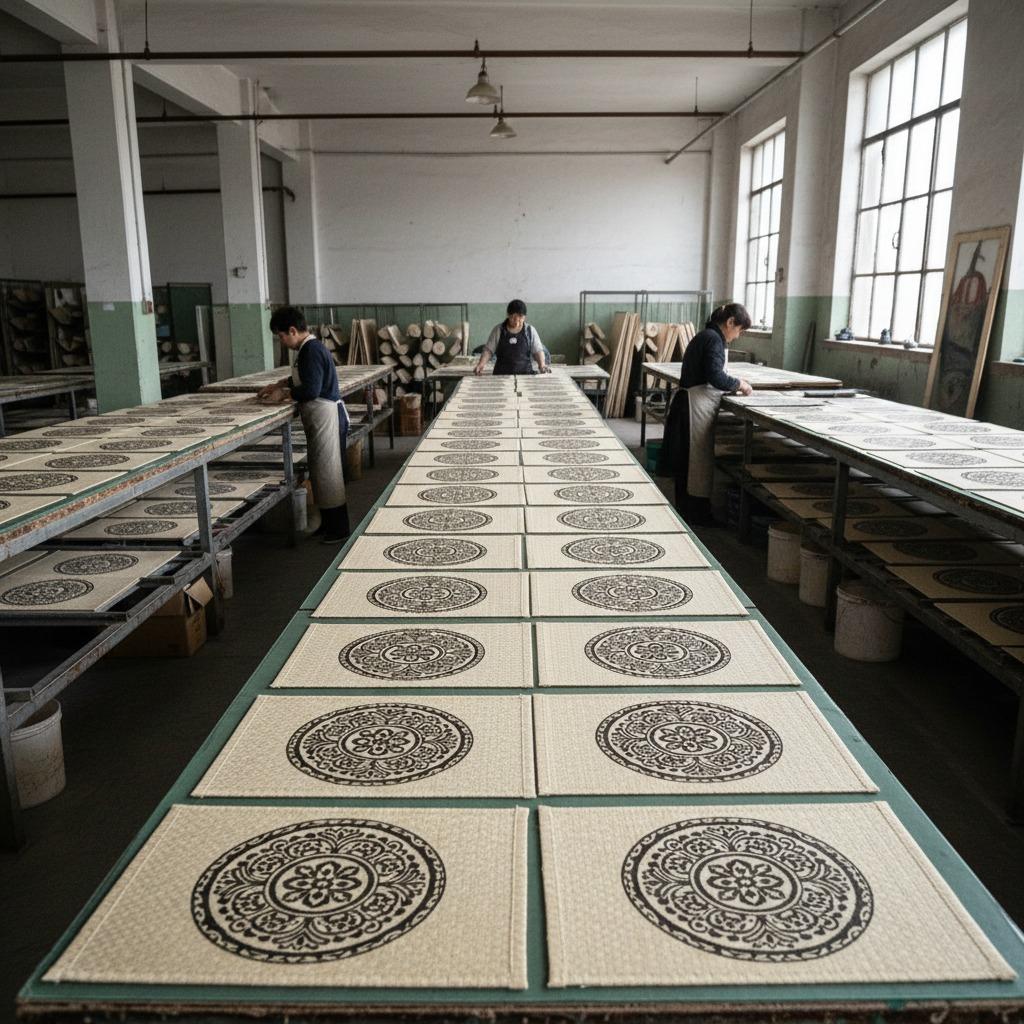
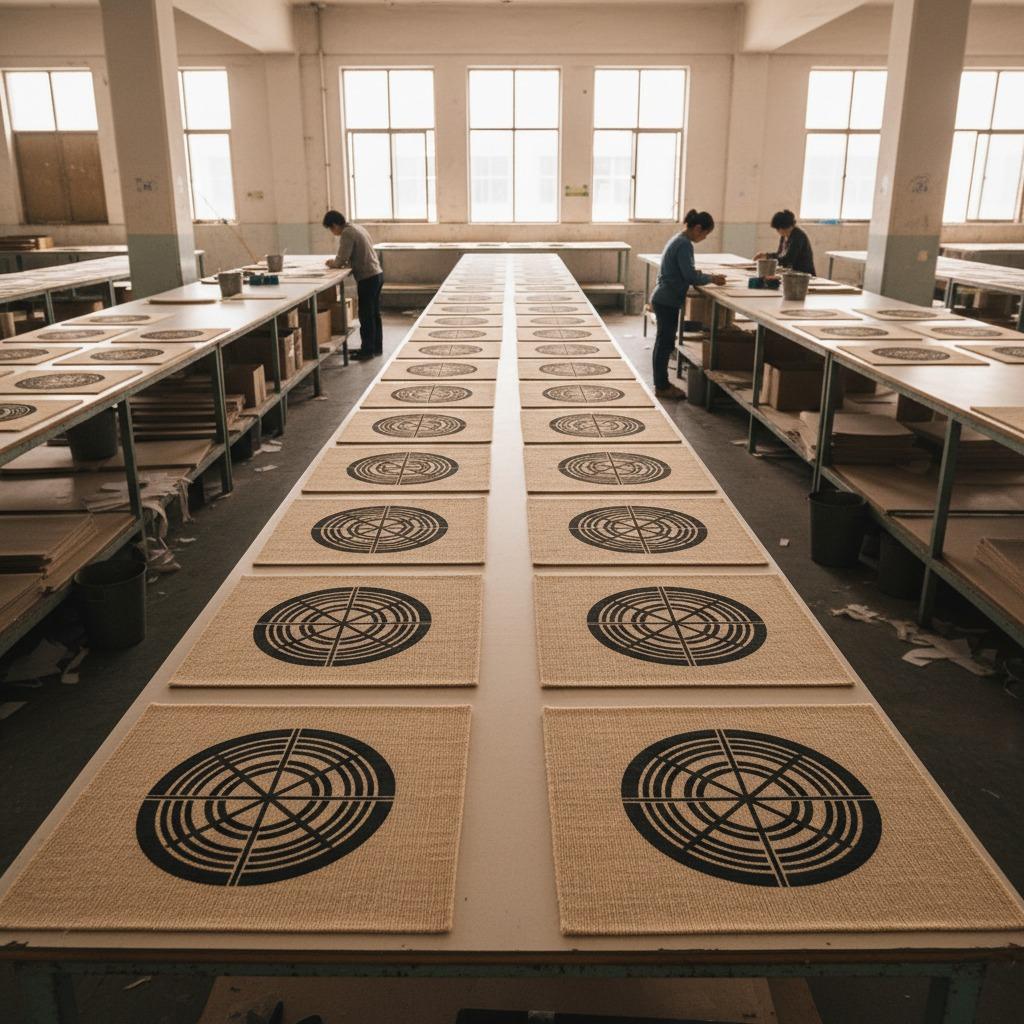
The product category in front of us appears to be flat rectangular woven sheets with a brown or tan base and a dark semicircular geometric motif. The surface looks matte and textured, closer to natural fiber than to smooth paper or coated board. That puts the job in a slightly tricky lane: decorative graphics must work with the weave rather than fight it. If the substrate is uneven, thin lines can break up, and dense fills can look patchy. Buyers tend to underestimate that part.
Why the substrate changes the print decision
On a woven surface, the choice between offset printing, digital printing, commercial printing, or a more specialized flat-bed process is not just a cost discussion. It is a fit-for-material discussion. Offset printing is often associated with flat, smooth, high-volume jobs; digital printing is useful when designs change often or short runs are needed; commercial printing is a broader umbrella that may include several processes depending on the factory. But a textured mat is not the same as paper stock, and the production team has to decide how much detail the surface can actually carry.
That is why buyers should ask for a sample on the real substrate, not only a proof file. A semicircular ornament might reproduce cleanly, while a very fine border could blur at the weave intersections. The practical decision is less about the prettiest artwork and more about the print system that matches the material.
Quick reference: what matters most in production
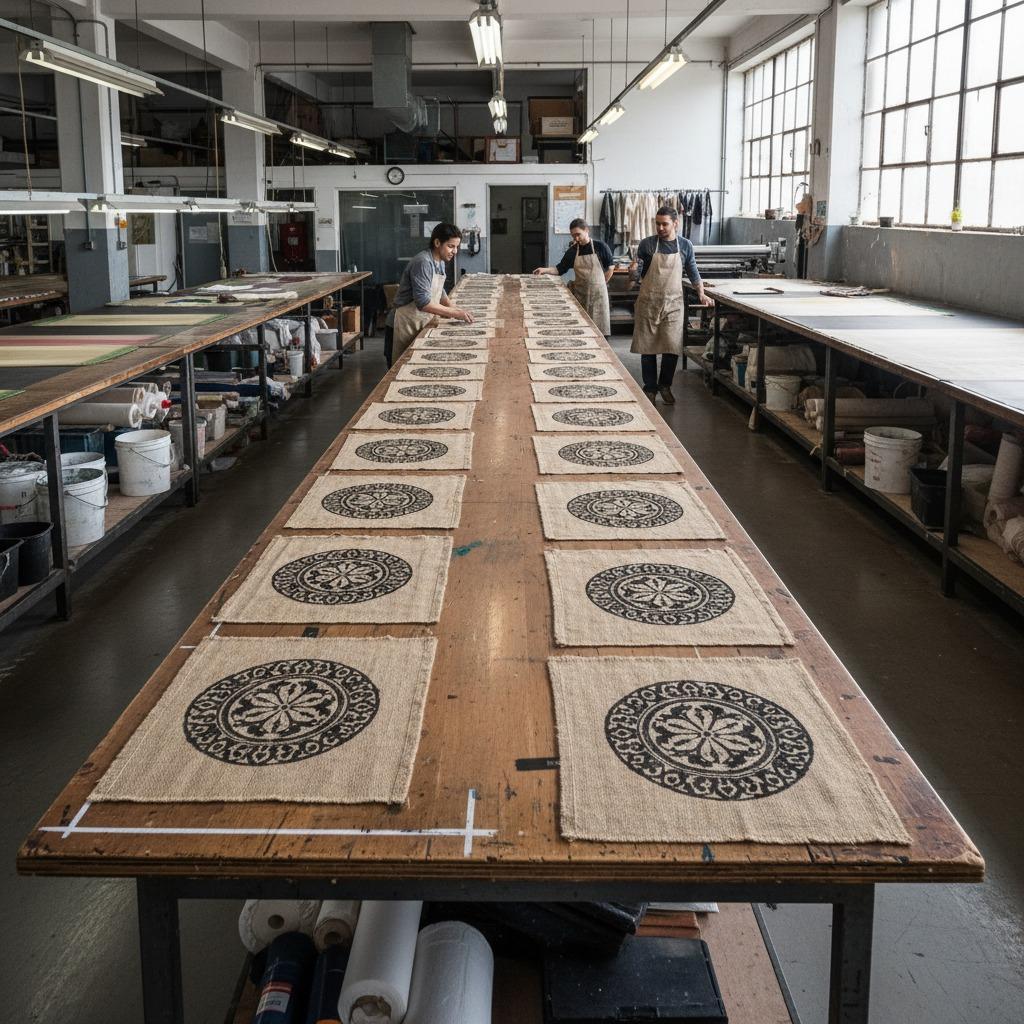
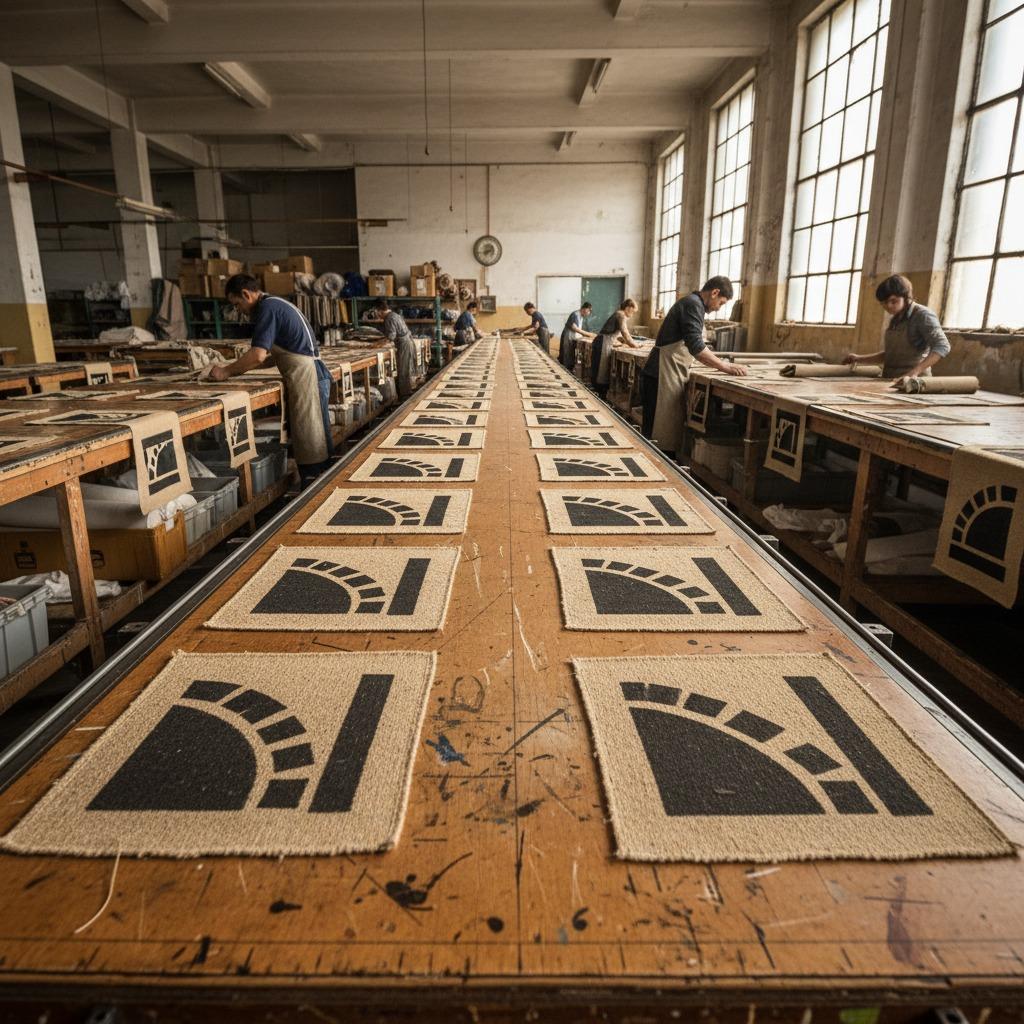
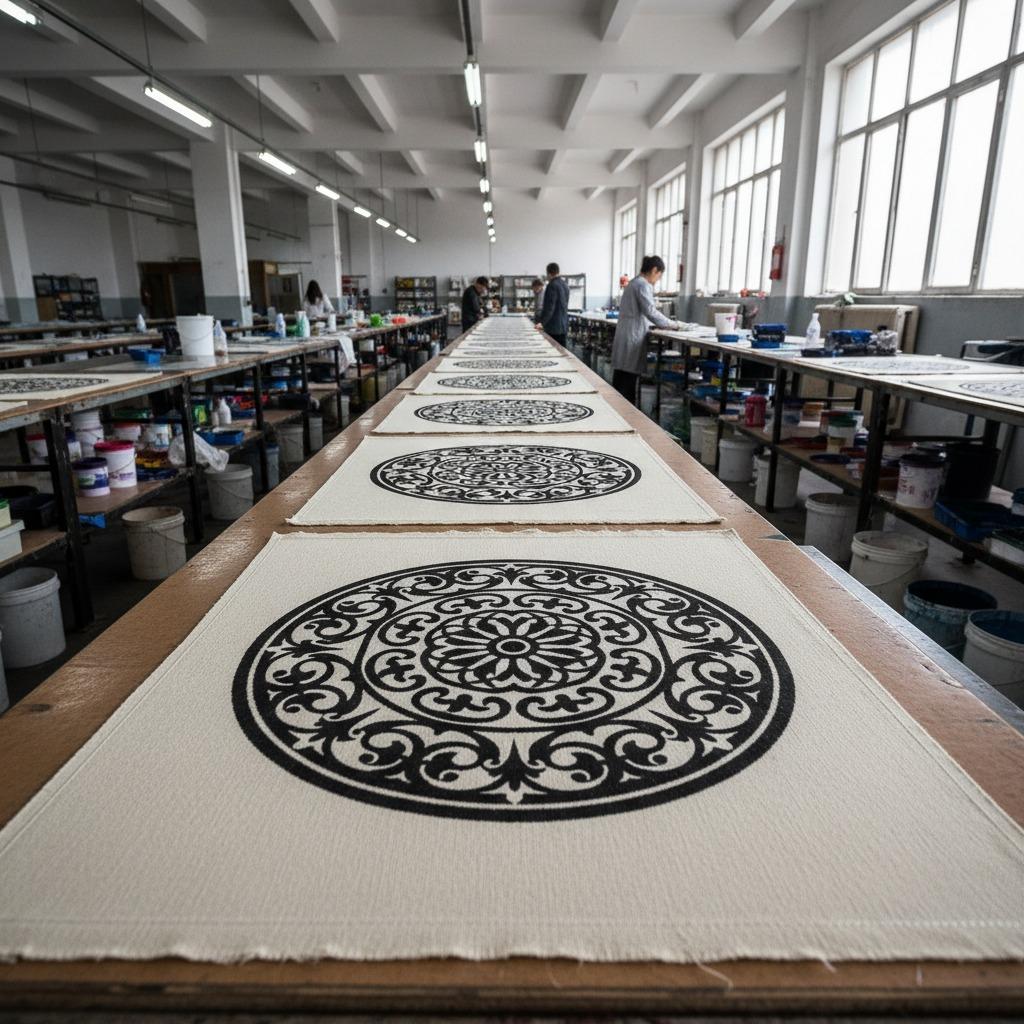
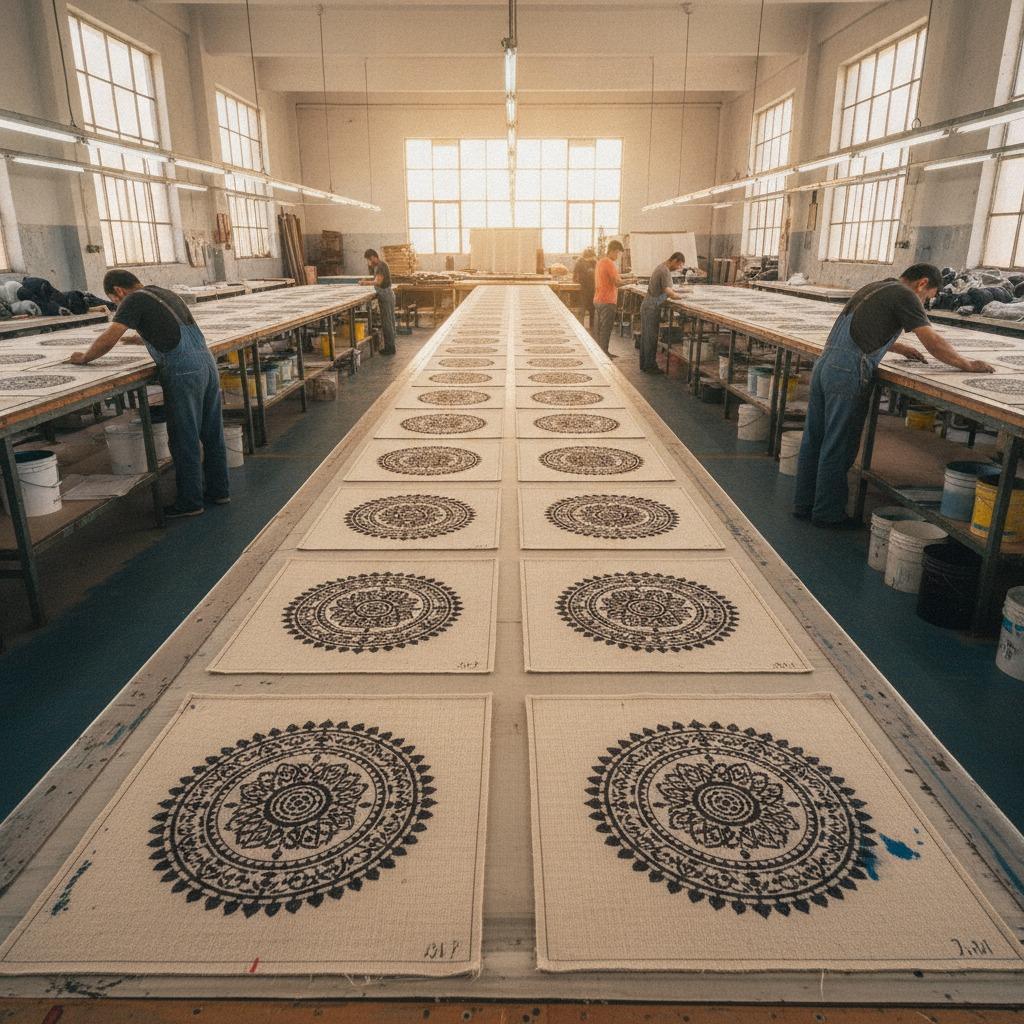
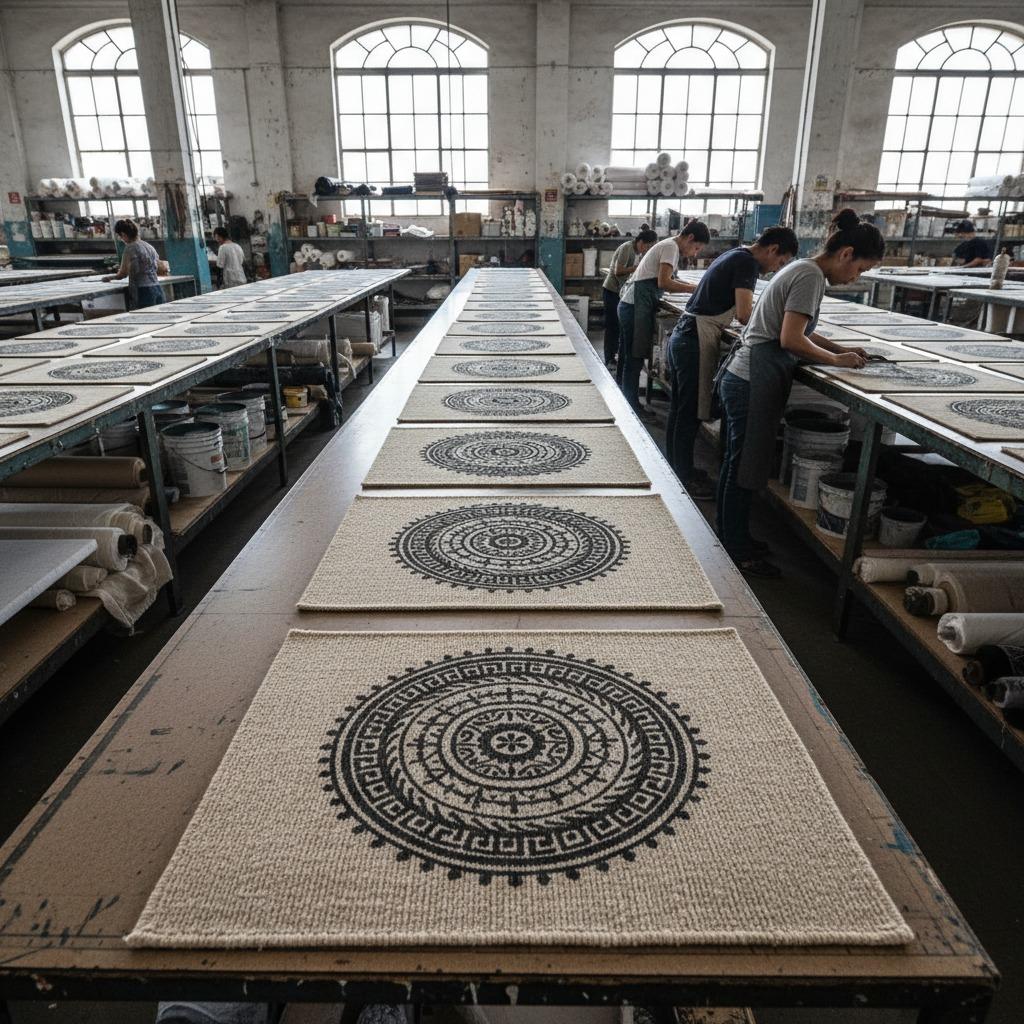
For this kind of custom printing project, three points usually drive the result: repeatability, edge clarity, and batch consistency. The image suggests repeated units laid out together, which is useful from a manufacturing standpoint because it hints at scalable production and visual consistency across multiple pieces. That is the sort of thing procurement teams want to see before placing a larger order.
High quality printing in this segment usually depends on more than ink density. Registration has to stay steady, especially if the design sits near the center of each mat or follows a symmetrical layout. Surface texture, moisture content of the substrate, and even how the sheets are stacked can affect the final look. None of that is glamorous, but it is what separates a clean run from a run that needs extra sorting.
Common manufacturing routes for woven mats
Screen printing
Screen printing is often considered when the design is bold, repeated, and not overloaded with tiny detail. It can work well on textured materials if the factory understands the surface and uses the right mesh, ink loading, and drying controls. For matte, decorative goods, it is a familiar route.
Heat transfer
Heat transfer may suit certain flat substrates, especially where a sharper decorative image is needed. Still, it is not automatically the best answer for woven goods. Some materials accept transfer well; others resist it or show uneven bonding on the raised pattern of the weave. This is where a cautious buyer asks for a pilot run instead of assuming the method will scale cleanly.
Digital printing
Digital printing has a real role when artwork changes frequently or when an online printing workflow is used to manage custom orders. It can be attractive for smaller quantities or for testing designs before committing to a larger production order. The trade-off is that not every digital setup handles textured natural-fiber-like surfaces equally well.
Selection criteria buyers should not skip
If you are sourcing placemats, retail display pieces, or other decorative mats, start with the use case. Table setting pieces in cafés or restaurants need a different durability conversation than gift items or seasonal home décor. If the product may move through hospitality channels, ask about handling resistance and cleaning expectations. If it is a retail private-label item, consistency across the batch may matter more than extreme durability.
Ask for the following, even if the supplier seems confident: a real substrate sample, a batch photo showing multiple units, and a clear statement of the printing process used. If the seller cannot explain how the artwork behaves on the woven surface, that is a warning sign. It does not mean the supplier is incapable, but it does mean the buyer is carrying too much risk.
Frequent mistakes in printed woven goods
One common mistake is approving a design that relies on fine gradients or hairline detail. Another is assuming that because the shape is uniform, the production outcome will be uniform as well. Texture and finish can shift the appearance more than many teams expect. A third mistake is skipping a pack-out review. Mat products often look acceptable on the bench and less impressive after stacking, strapping, and storage.
There is also a tendency to over-focus on price and under-focus on consistency. That can be expensive later, especially in commercial printing programs where the product is part of a coordinated table presentation or branded display.
Practical buyer advice before placing an order
Use the sample stage to answer three questions: Does the design read clearly at normal viewing distance? Does the pattern align well across repeated units? Does the surface still look clean and usable after handling? If the answer is yes, the next conversation should be about repeat production and packing method.
For online printing or custom printing programs, build a simple approval chain. One person should review image fidelity, another should review material suitability, and someone closer to operations should check how the item will be packed and shipped. That extra step often prevents headaches later. It sounds obvious, but it is routinely skipped.
What this image suggests about production readiness
The visible layout shows multiple identical pieces arranged on a work surface, which usually points to batch processing rather than one-off craft work. That is encouraging for buyers who need a repeated pattern across a larger order. The clean edges and fairly uniform alignment also suggest that the production line is aiming for consistency, even if the exact process is not confirmed from the image alone.
Next step for sourcing teams
If you are evaluating a supplier for woven placemats or similar decorative mats, ask for a substrate-specific sample and a short explanation of the printing method used. That is the fastest way to judge whether the factory can move from attractive artwork to dependable output. In this category, the details are not decorative; they are the product.