

Printing on Mat Panels: What Buyers Should Look For
Printing on flat mat panels looks simple from a distance, but anyone who has sourced textile goods knows the real challenge sits in consistency. When a batch of woven or jute-like mats is laid out across long tables for decoration or finishing, the question is not only whether the graphic looks good. It is whether the printing holds its placement, repeats cleanly from panel to panel, and survives the rest of the production chain without obvious defects.
That matters to sourcing managers and product teams because these pieces often end up in retail collections, hospitality programs, or home decor lines where first impressions carry real weight. A misaligned motif, uneven saturation, or smudged edge can turn an otherwise workable product into scrap. The buyer’s job is to judge the process, not just the image.
What the production setup suggests
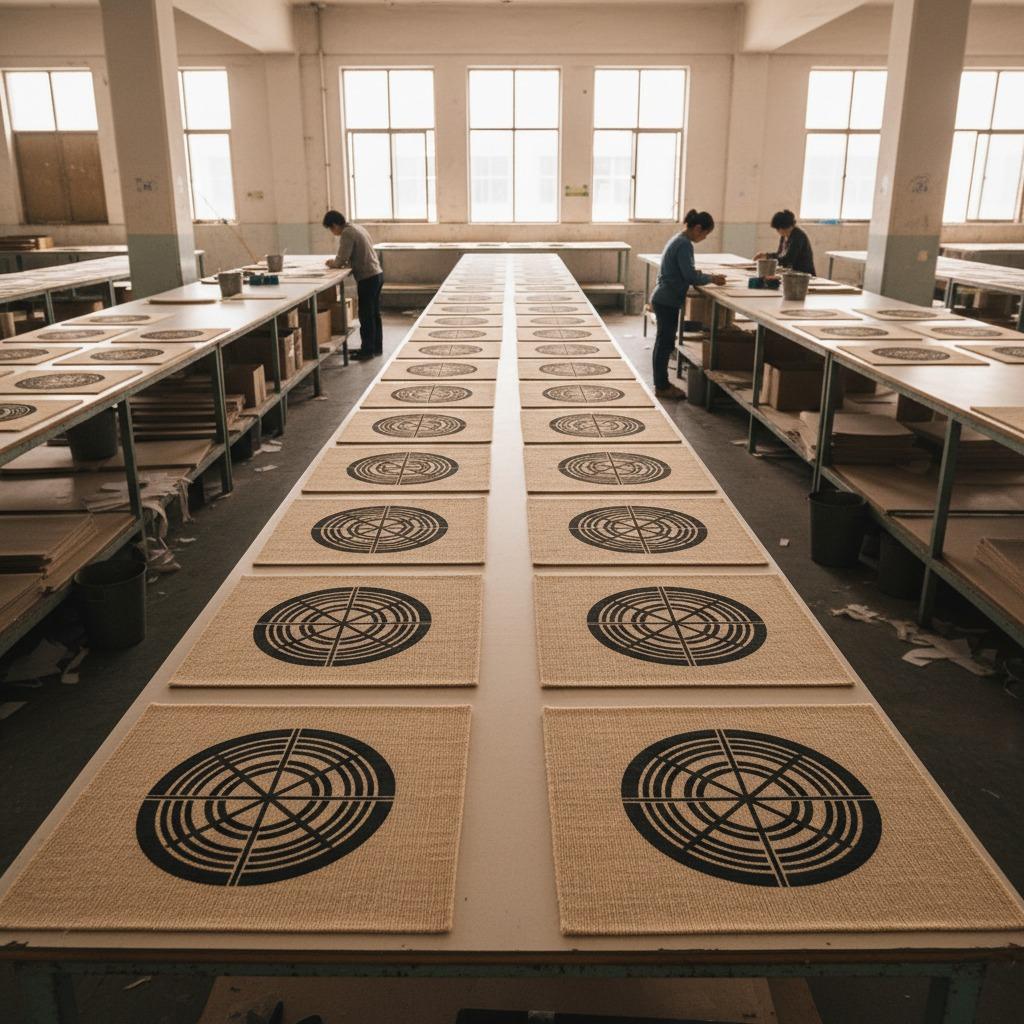
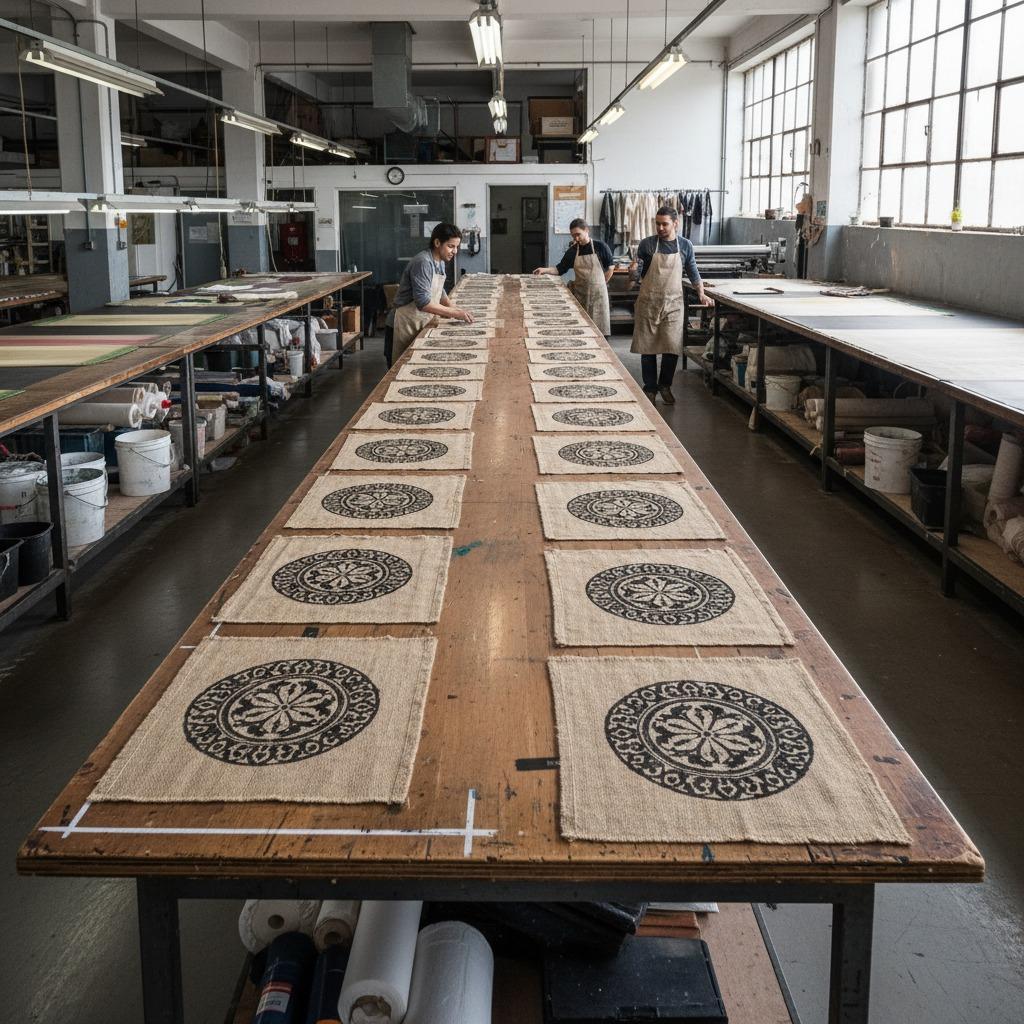
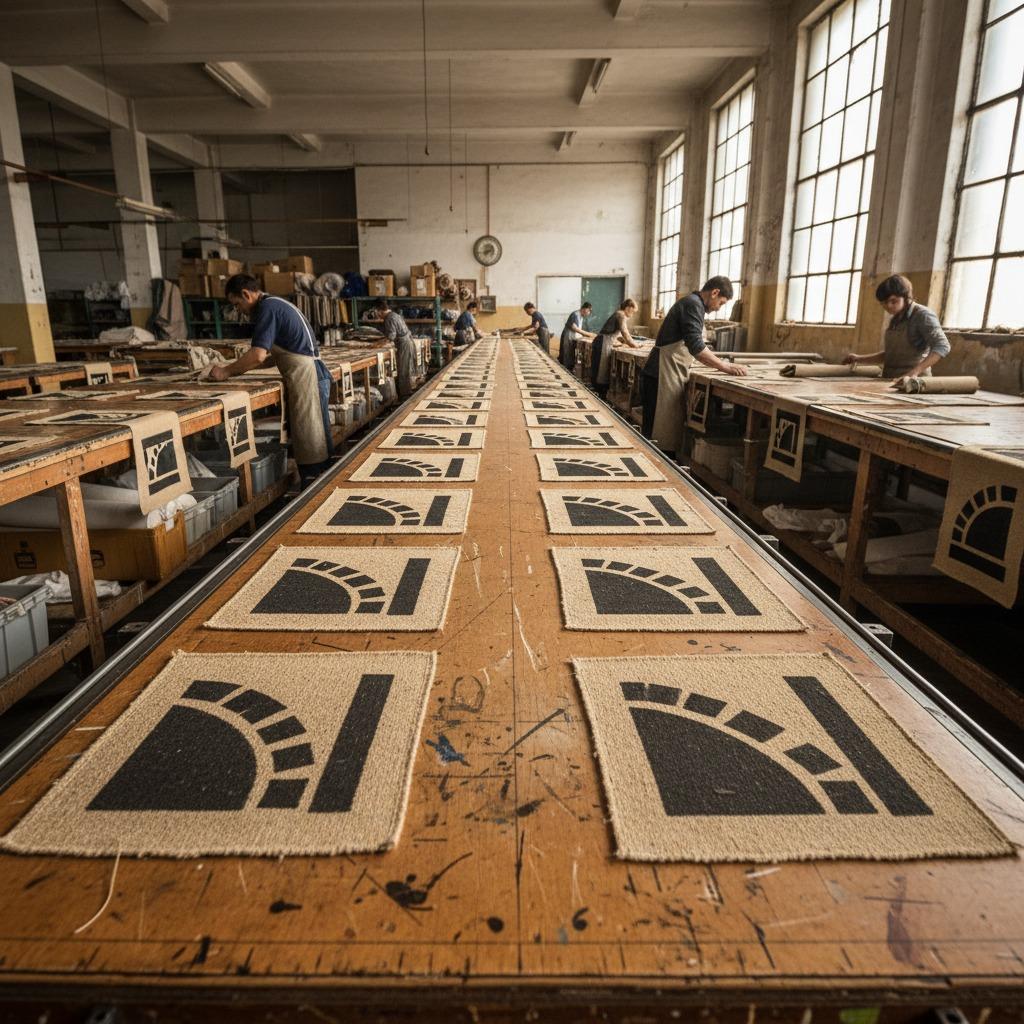
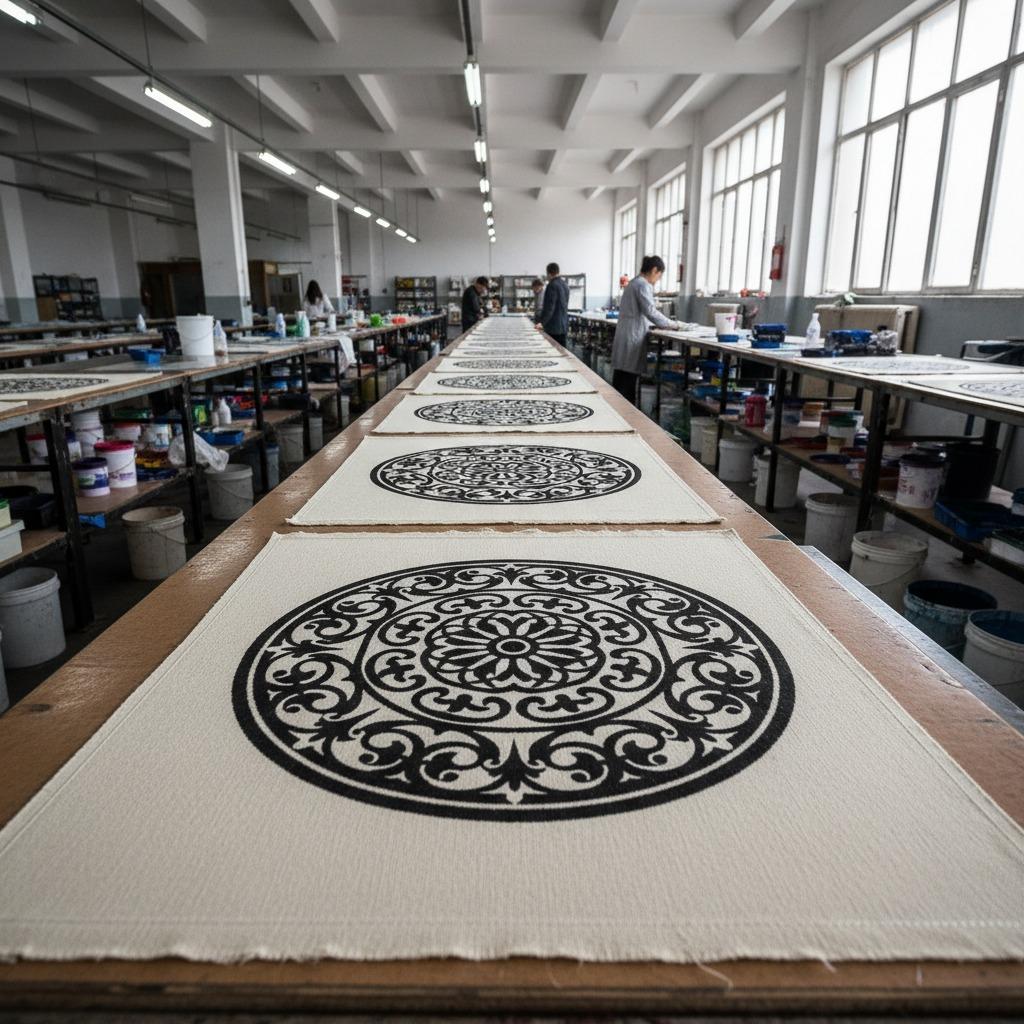
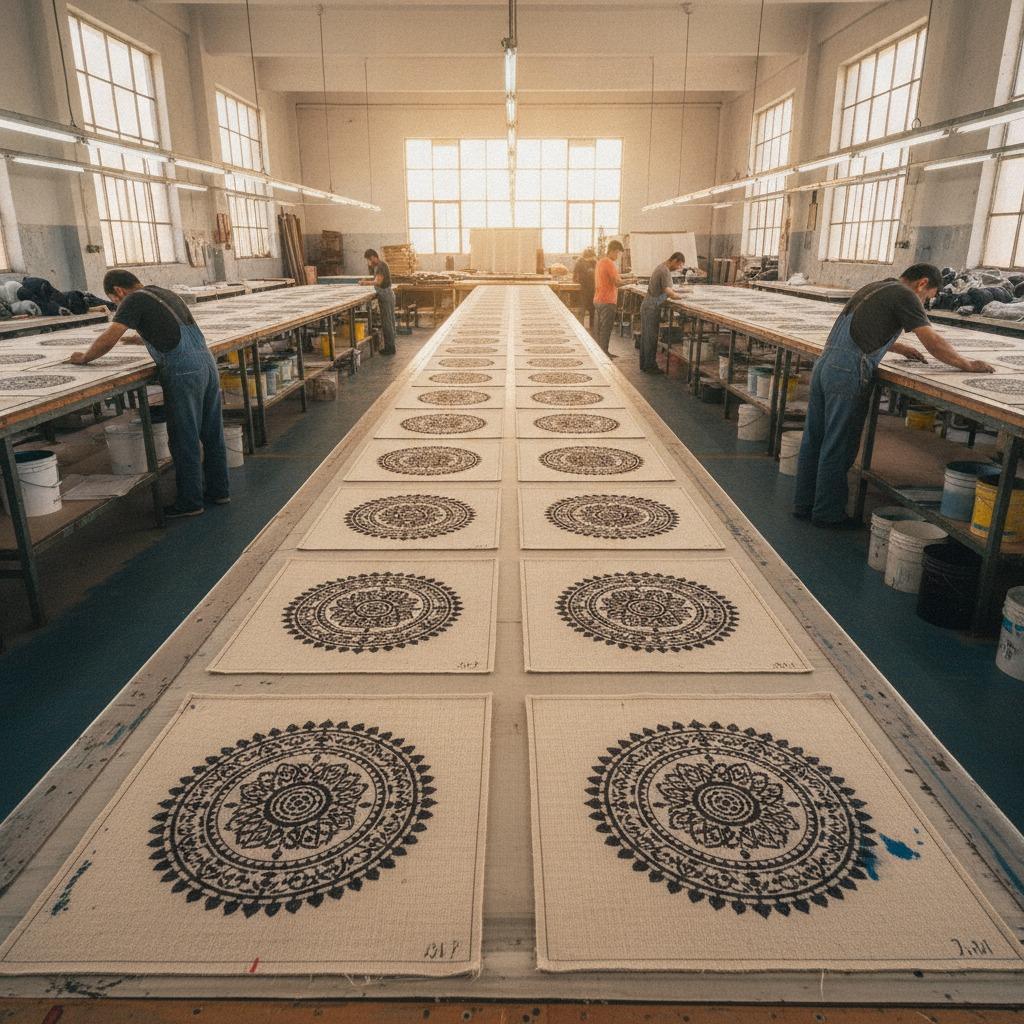
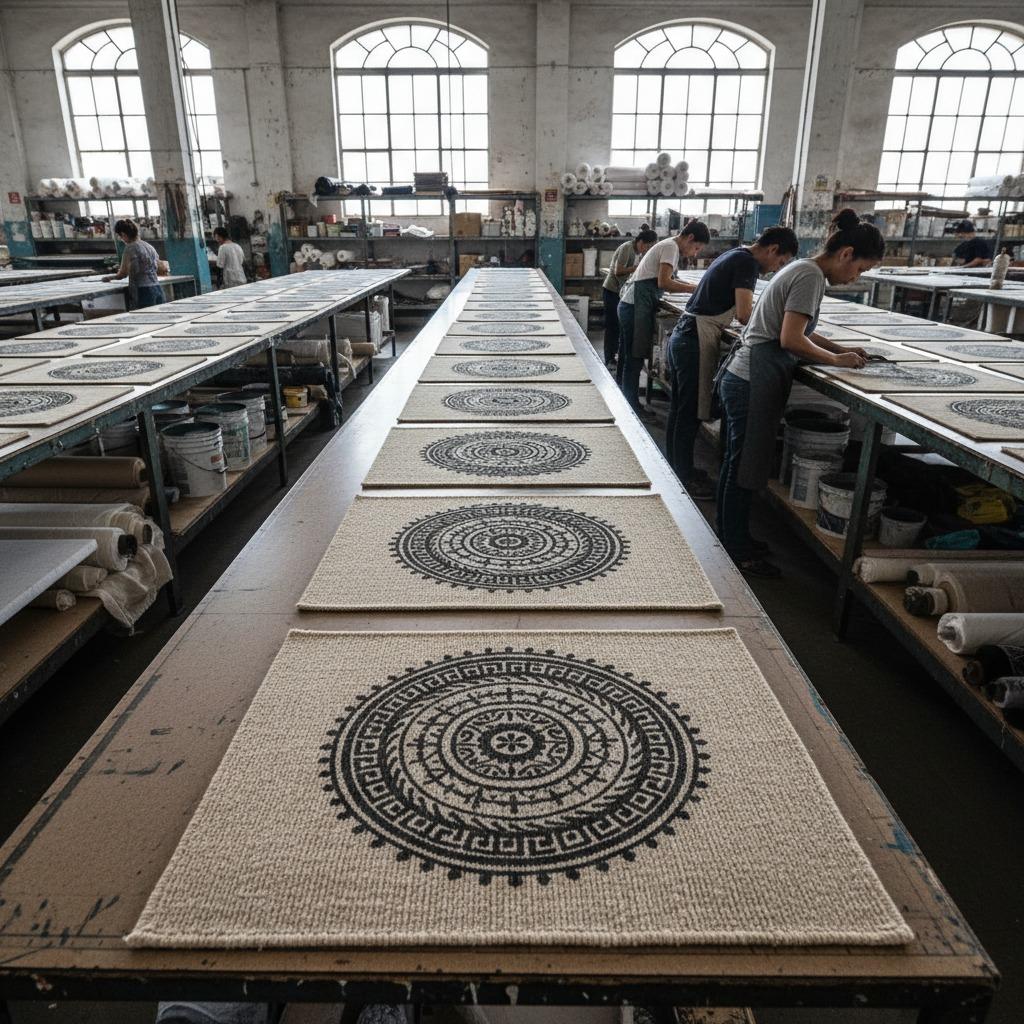
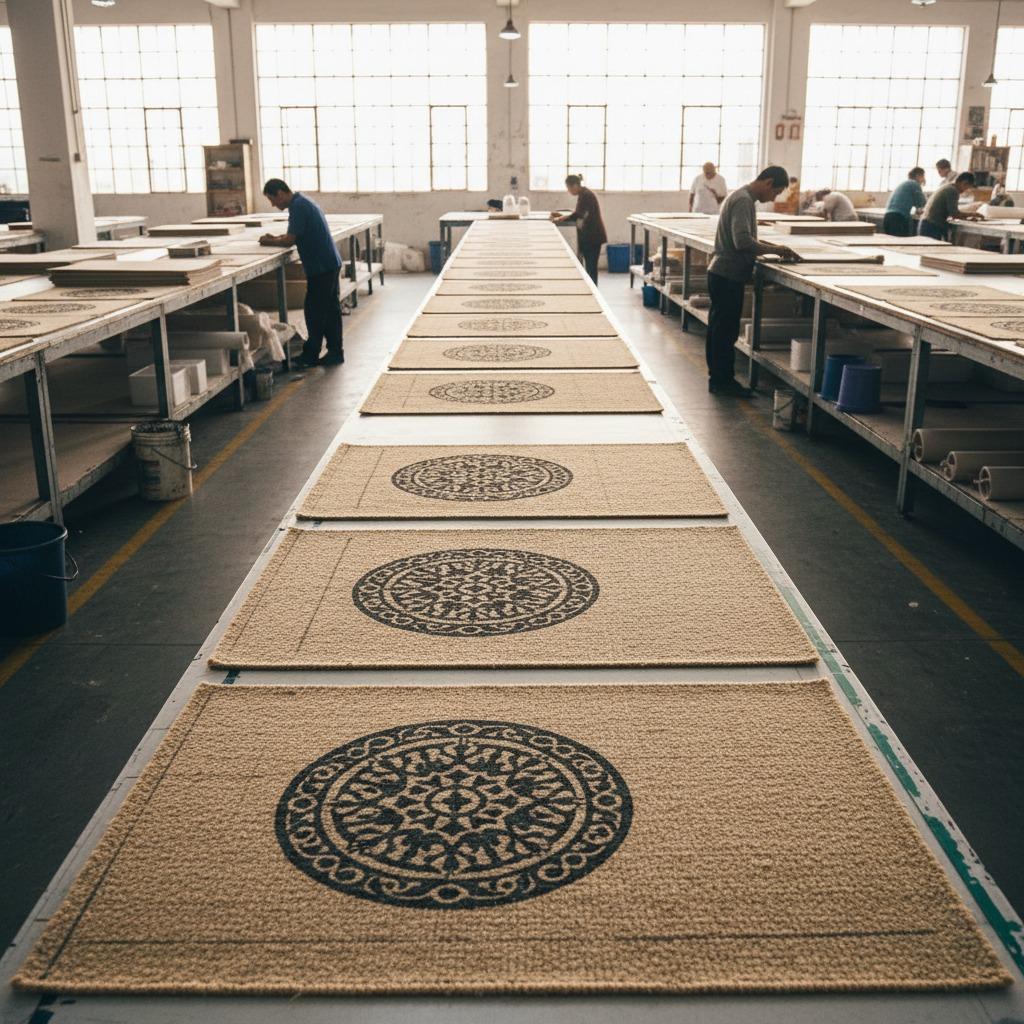
The visible workflow here points to batch handling of flat, rectangular mat panels in a factory environment. The panels appear coarse and natural-fiber-like, with a printed geometric or mandala-style motif repeated across multiple units. That kind of layout usually tells you two things: the production is built around repeatability, and the operator needs enough table space to inspect, position, or cure pieces in sequence.
For buyers comparing commercial printing methods, that is an important clue. Large flat goods can be handled through several routes, including screen-based decoration, textile surface printing, or other custom finishing steps. Without lab data or process disclosure, it is better to think in terms of outcomes: image clarity, registration, color consistency, and production efficiency.
Offset printing, digital printing, or something else?
In the broader market, people often ask whether a mat or rug panel is best served by offset printing, digital printing, or a more traditional textile method. For rigid paper goods, offset has clear advantages. For textile-like mats, especially coarse materials, the answer is less direct. Surface texture, absorbency, and final handling usually matter more than the brand name of the process.
Quick buyer’s comparison
Digital printing is attractive when the design changes often, runs are smaller, or customer-specific artwork is needed. It can support custom printing programs, but on rough substrates the operator still has to manage ink behavior carefully.
Screen printing remains common when a design is repeated across many identical pieces. It can be practical for simpler graphics and longer runs, although setup time is part of the equation.
Online printing platforms are useful for quoting and file submission, but buyers of industrial mats should not confuse ordering convenience with production quality. A clean portal does not guarantee a clean edge on the finished panel.
What makes a high-quality result
When evaluating high quality printing on floor mats or decorative panels, start with the visible basics. Is the motif centered? Do repeated pieces match one another? Are edges crisp, or do they feather into the fibers? On natural-looking woven material, some ink spread may be expected. The issue is whether that spread is controlled or simply sloppy.
Second, look at handling marks. These products are often moved by hand, which is normal, but hand contact can leave pressure points, dust, or partial smears if drying is rushed. That is one of those small factory realities that buyers sometimes overlook until the shipment arrives.
Third, ask how the printed panel will be used downstream. A mat destined for indoor decor has different performance expectations from one intended for repeated foot traffic. The same visual spec can fail in one setting and work perfectly in another.
Common sourcing mistakes
One mistake is treating every printed mat as a finished retail product. Some are blanks, some are semi-finished panels, and some are only one step away from final assembly. If the supplier’s workflow is not clear, you may be quoting the wrong stage of production.
Another mistake is assuming the material behaves like fabric from a smooth garment line. Coarse woven surfaces can make registration harder and can expose flaws that would disappear on a finer substrate. That is not a defect in itself; it is a production constraint. But it should be reflected in the artwork and acceptance criteria.
Finally, do not skip the practical questions: how many identical units can the line produce consistently, how is inspection done, and what visible variation is considered acceptable? Those questions matter more than a glossy sample sheet.
Buyer advice for sourcing custom-printed mats
If you are specifying a custom printing program, send artwork with enough margin for placement variation and ask for a pre-production sample on the actual substrate. Request a view of the production layout if possible. Large-format table arrangement, while basic, tells you something about throughput and manual control.
For brands, importers, and manufacturers, the best supplier is usually the one that can explain the process honestly. If they are unsure whether a panel is a final product or an intermediate blank, that should be clarified before the order is locked. Vague language at the sample stage often becomes expensive language at the shipment stage.
FAQ
Are these panels definitely final floor mats?
Not necessarily. The visible form suggests mat or rug panels, but they could also be intermediate pieces in a larger finishing workflow.
Which printing method is best?
It depends on the substrate, run size, and design complexity. For coarse mat surfaces, buyers usually care more about repeat quality than the method name.
What should I ask before ordering?
Ask about substrate type, print placement tolerance, repeat consistency, inspection steps, and whether the item is finished or semi-finished.
Next step
If you are sourcing printed mats or decorative rug panels, build your RFQ around process clarity, not just artwork. Ask for sample confirmation on the real material, then compare suppliers on consistency, handling, and acceptable variation. That is where a useful production partner shows up, and where a rushed vendor usually gives itself away.