

Printing for Mat and Rug Production: What Buyers and Factory Teams Should Pay Attention To
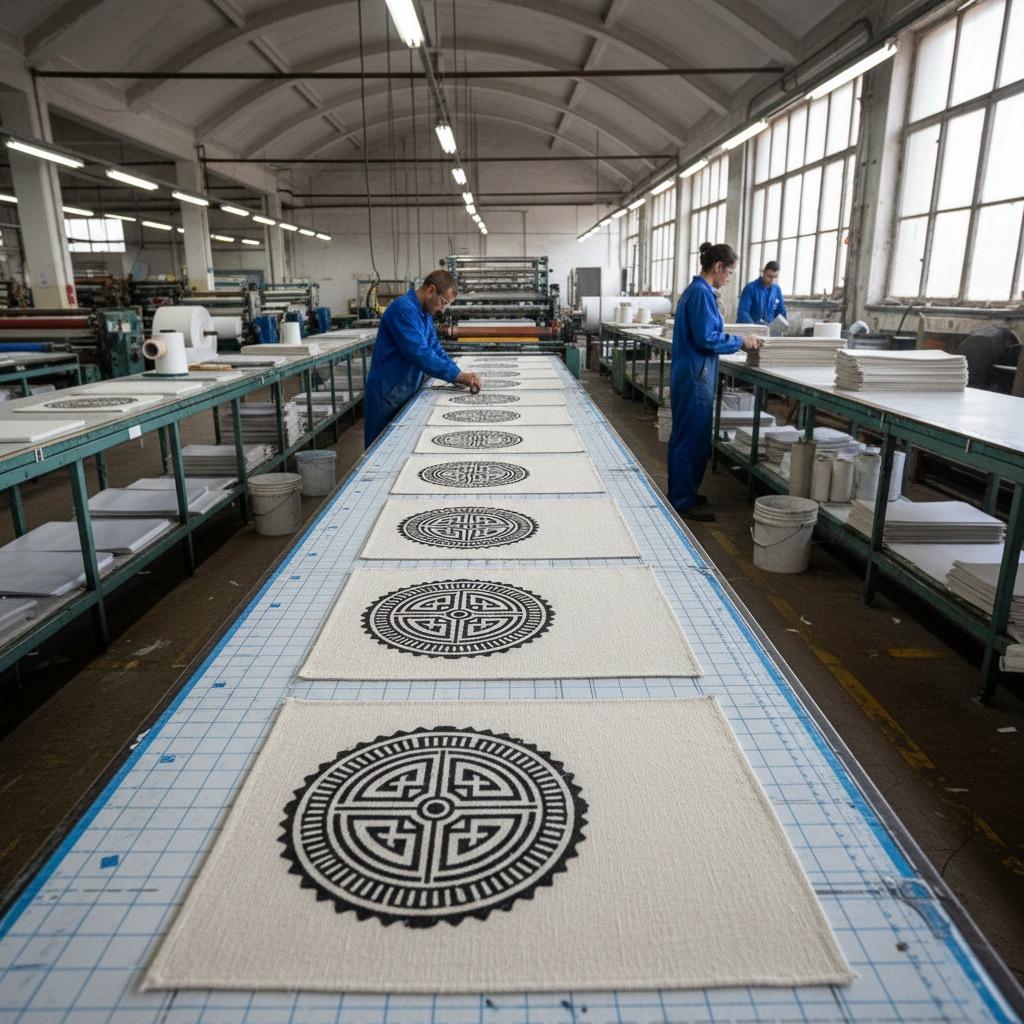
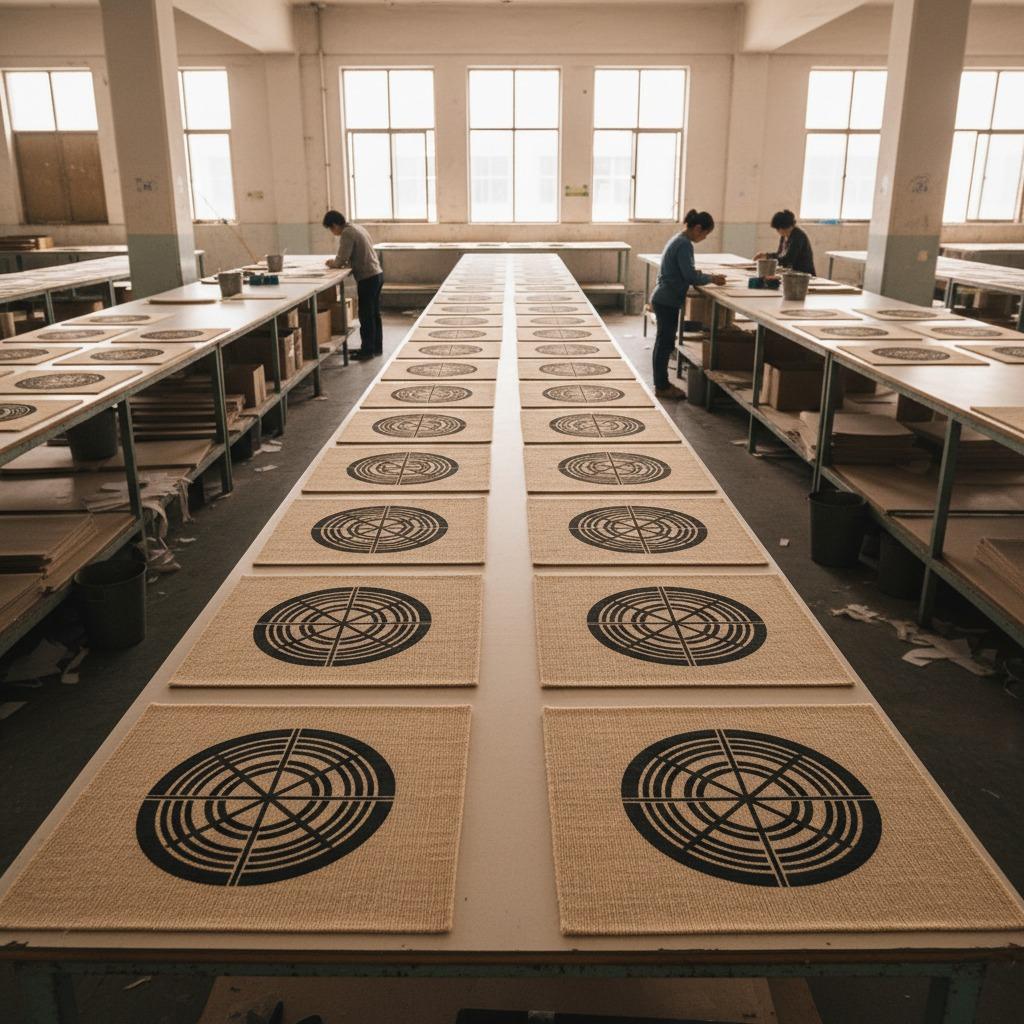
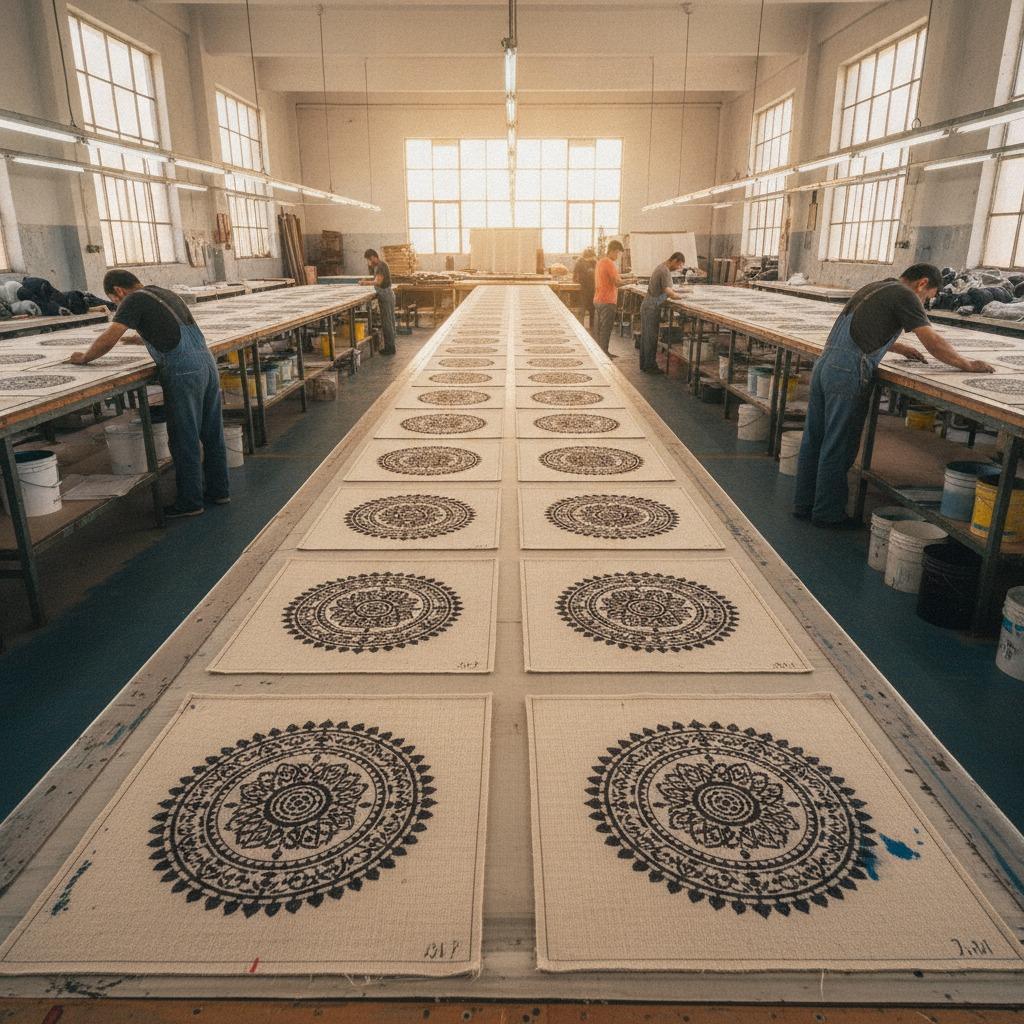
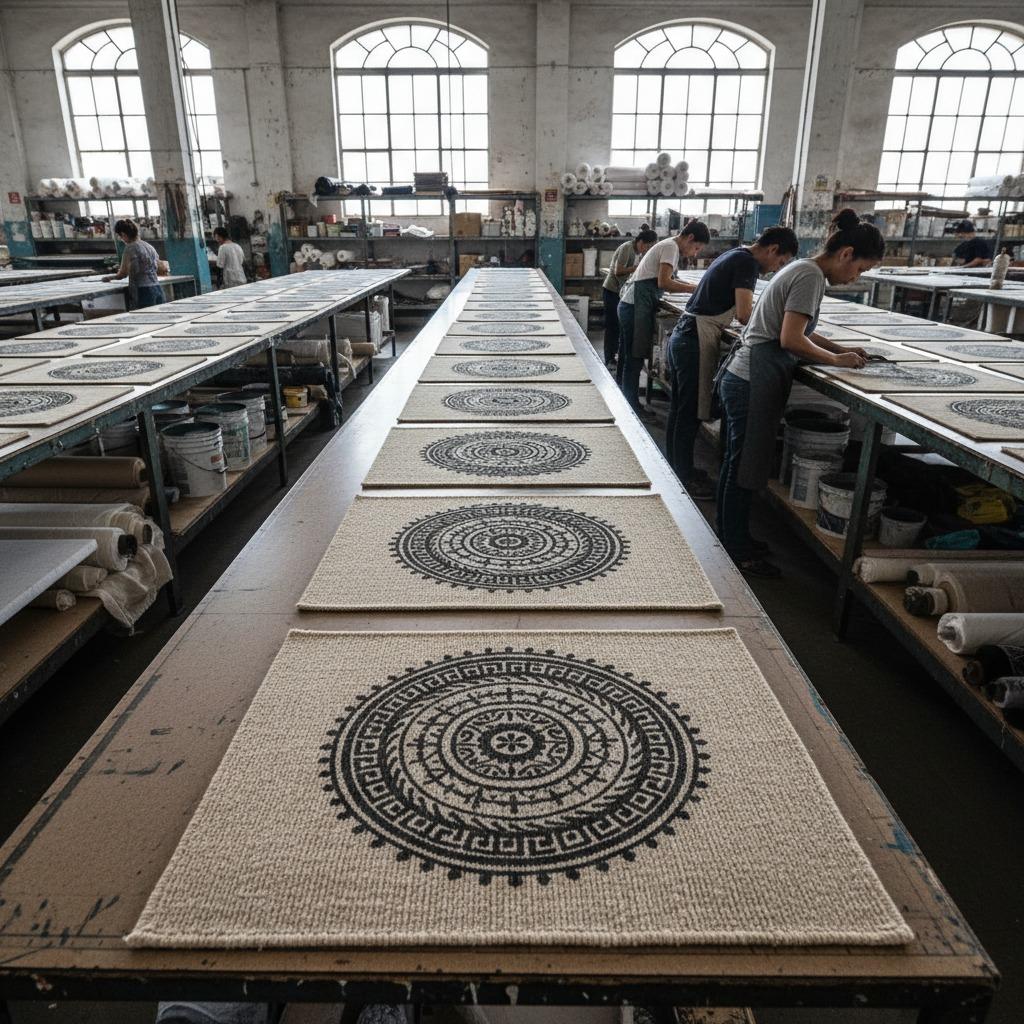
If you are sourcing mats, rugs, or floor-covering panels, printing is not just a decoration step. It affects how the product looks on the shelf, how consistent a batch appears in a showroom, and whether a run is practical for factory handling. The image behind this brief shows repeated rectangular pieces laid out in rows, each with a similar dark arc motif near one end. That kind of setup points to batch production, where uniform placement and drying or inspection discipline matter just as much as the artwork itself.
For sourcing managers and product teams, the real question is usually not “Can it be printed?” but “Which printing route fits the material, volume, and finish we need?” That is where the decision gets commercial rather than cosmetic.
Why printing matters in floor-product manufacturing
Printed mats and printed rug panels sit in an awkward middle ground. They need to look attractive enough for retail or hospitality use, but they also have to survive manufacturing realities: flat-lay drying, handling, stacking, trimming, and packing. A design that looks crisp on a sample can shift or blur when applied across a long production run.
That is why buyers should look beyond the artwork proof. Print registration, repeat consistency, and the way the surface accepts ink or coating can all change the final appearance. On textured or woven-looking surfaces, the coarse structure can soften detail. Sometimes that is acceptable; sometimes it makes a brand mark or border motif look less deliberate than intended.
Common printing approaches and where they tend to fit
Offset printing
Offset printing is often associated with paper and packaging, but the term also comes up in broader commercial printing discussions. For floor products, it may be relevant in upstream packaging or label work rather than direct decoration on the mat itself. If a supplier mentions offset printing, it is worth asking exactly which layer or component they mean.
Digital printing
Digital printing is usually the more flexible choice for short runs, design changes, or seasonal graphics. It is useful when a buyer wants to test multiple patterns without committing to large inventory. The trade-off is that the surface and substrate compatibility need close attention. Not every woven or fibrous material accepts digital printing cleanly, and a sample on one batch may not fully predict another batch.
Commercial printing for product runs
Commercial printing is the broad umbrella many factories use when they are handling repeat production for retail or wholesale orders. In practice, this can include different inks, coatings, drying methods, and inspection routines. For floor mats and decorative panels, the important point is repeatability: same size, same placement, same visual density from piece to piece.
What the factory layout in the image suggests
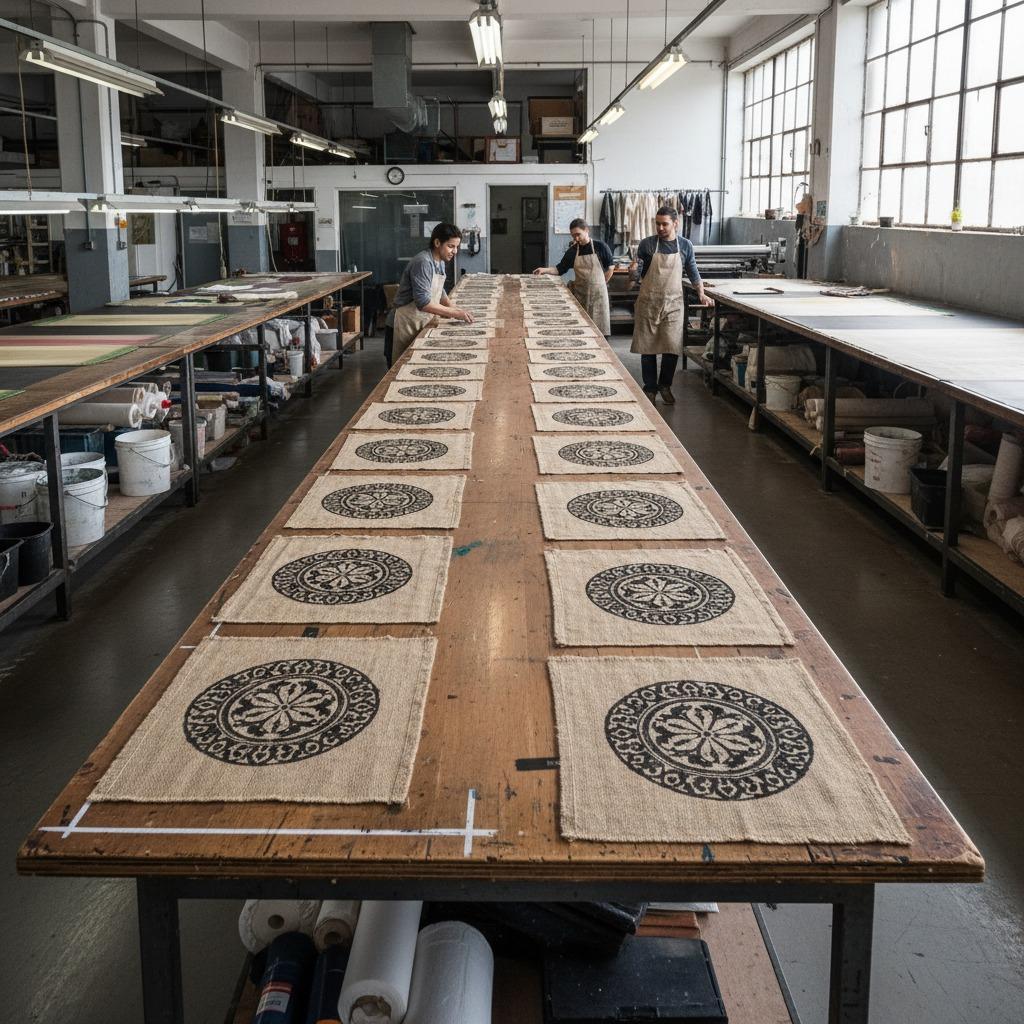
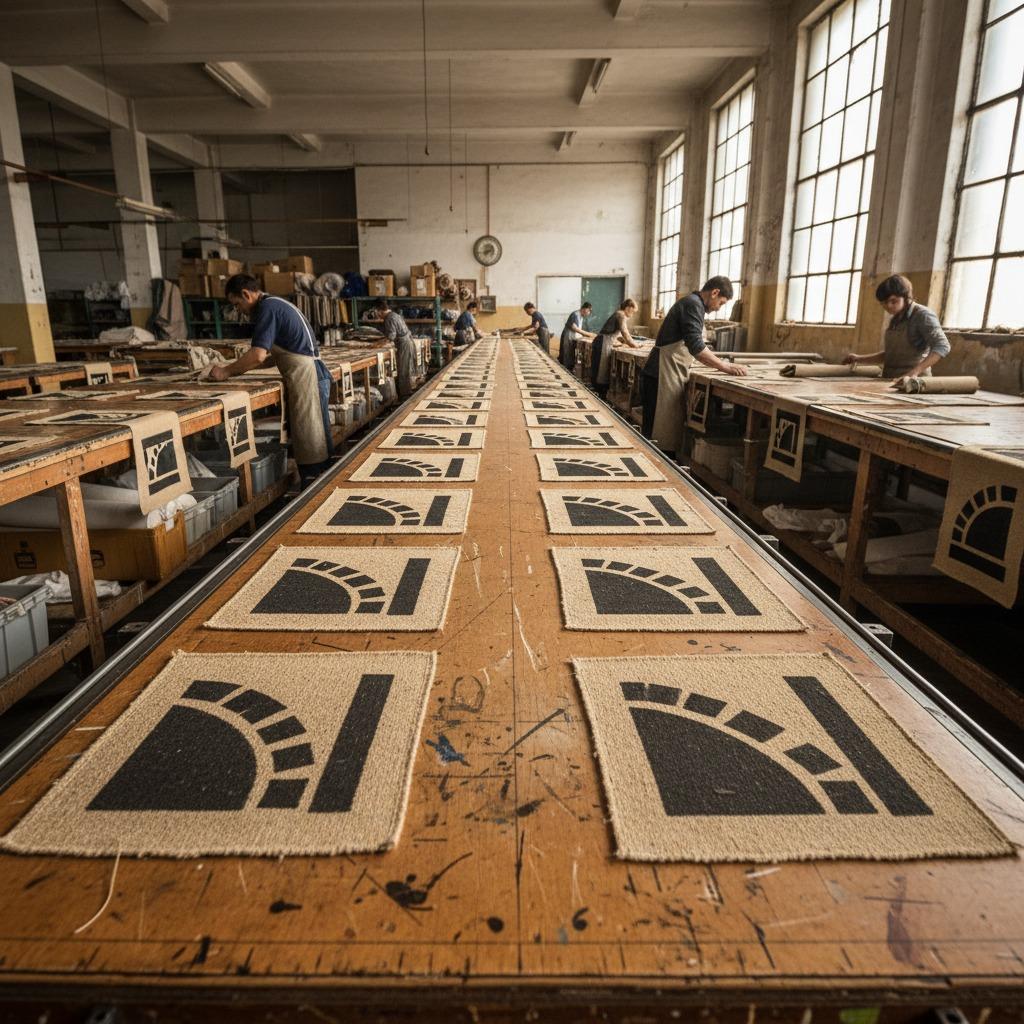
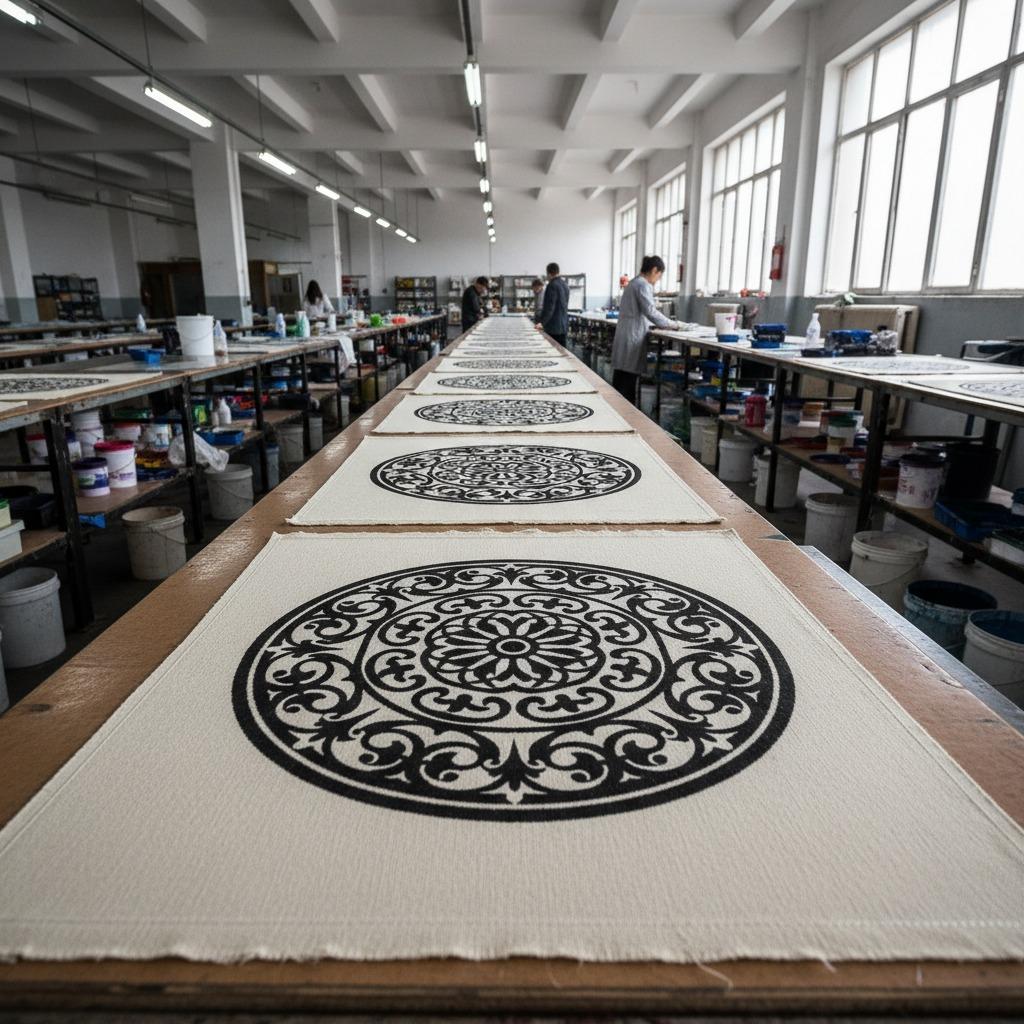
The rows of identical pieces arranged on long tables suggest a controlled process. That can mean printing, curing, drying, or visual inspection. The layout itself is a clue that the manufacturer is trying to preserve spacing and avoid smudging or deformation before the pieces move to the next step.
For buyers, this is worth noting because it tells you something about production discipline. A supplier that handles flat products in orderly lanes may be better prepared for consistent batch output than one that treats the items like loose hand-finished craft goods. That is not a guarantee, of course, but it is a useful signal.
How to choose a printing method for mats and rugs
The right choice depends on a few practical questions:
What surface are you printing on: woven, fibrous, coated, or something else?
How many SKUs do you need, and how often will the design change?
Is the product meant for entry use, decorative use, or light commercial display?
Do you need sharp logo edges, or is a softer decorative pattern acceptable?
Will the product be sold through online printing channels, retail packs, or wholesale catalog orders?
These questions matter because a beautiful sample can still become a poor buying decision if the process is not matched to the use case. A decorative semicircular motif, for example, may be easy to place consistently on one product size, but harder to scale if the substrate is not stable.
Buyer cautions that are easy to miss
One common mistake is assuming that high quality printing means the same thing across all materials. On paper, “high quality printing” usually means image fidelity and sharpness. On floor products, it also means surface adhesion, visual durability, and whether the printed area remains legible after handling.
Another trap is over-specifying a design before checking the production method. A buyer may ask for a fine-line logo or dense pattern, then discover that the woven texture makes the image lose definition. It is better to request a realistic production sample and inspect it under normal lighting, not just on a screen.
Practical questions to ask a supplier
Ask what type of printing process is being used and whether the finish is applied directly to the mat surface or as part of a coating stage.
Ask how consistency is checked across multiple units, especially when the pieces are arranged in repeated rows like the ones in the image.
Ask whether the supplier can support custom printing if you need private-label designs, restaurant branding, or seasonal collections.
Ask how the product is handled during drying, curing, or inspection, because flat products can distort if the process is rushed.
A simple next step for sourcing teams
Before placing a larger order, request a production sample and a brief process description. If the supplier cannot clearly explain how the print is applied, dried, and checked, that is a warning sign. If they can, you have a better basis for comparing options across digital printing, commercial printing, or other production routes.
For mats and rugs, the best decision is rarely the flashiest one. It is the method that gives you repeatable appearance, sensible handling, and a product your customer will actually keep at the door instead of sending back.