

The real cost of wholesale packaging is the sum of development, tooling, samples, production, inspection, packing, freight volume, storage, defects and obsolete inventory. PackMK separates these accounts before comparing suppliers so a low unit price does not hide expensive operational risk.
A useful total-cost model does not need perfect forecasting. It needs the same scope, assumptions and risk categories for every option.
Account 1: normalize the quoted unit price
Confirm material, size, print, finishing, assembly, quantity, inner packing and carton quantity. Ask which taxes, delivery terms or services are excluded. Two unit prices are comparable only when they describe the same output.
Record price breaks by quantity, but do not assume the largest tier is automatically economical.
Account 2: spread tooling over useful volume
Dielines, print plates, molds and fixtures may be one-time costs, but they are useful only while the structure and artwork remain valid. Divide tooling cost across the realistic number of units expected before a change.
Clarify ownership, storage, maintenance and replacement conditions for every tool.
Account 3: value samples by the risk they remove
A blank structure sample can prevent fit failure. A printed proof can prevent color or hierarchy errors. A production-equivalent sample can reveal assembly and packing problems. Compare sample cost with the decision it protects.
Unplanned sample rounds often signal an incomplete brief or combined approvals that should have been separated.
Account 4: include quality and defect cost
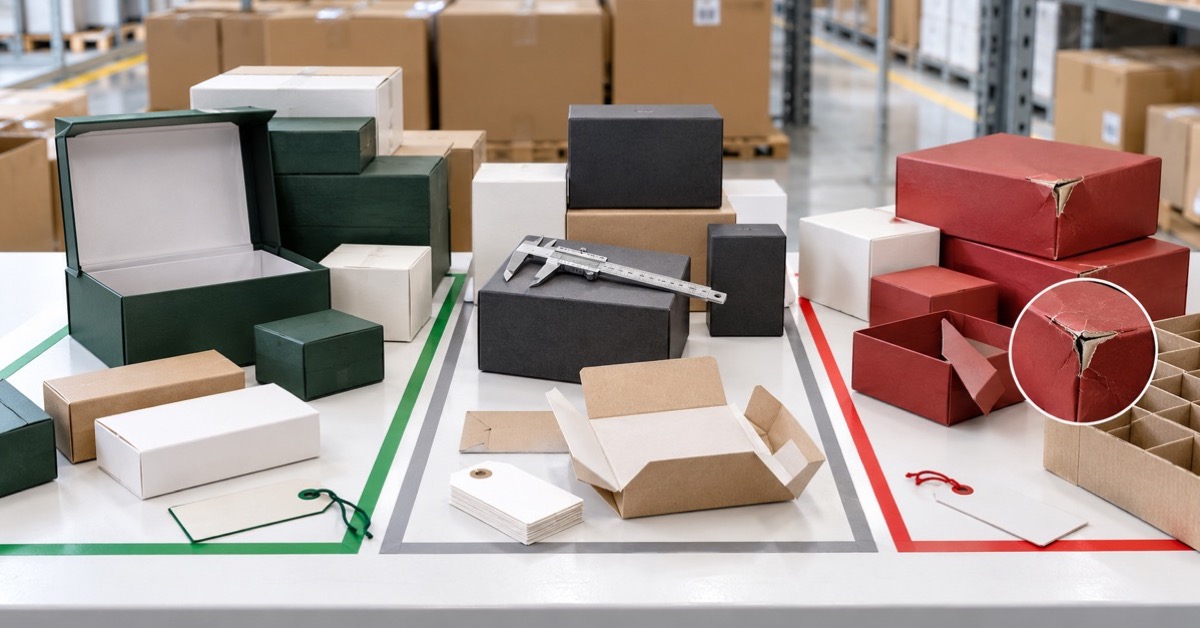
Quality inspection has a visible cost; uncontrolled defects have a larger hidden cost. Include sorting, rework, repacking, replacement freight, product damage, launch delay and customer service.
The ISO quality management principles provide process context. Use project-specific criteria to estimate which failures deserve prevention spending.
Build a total-cost worksheet
| Cost account | One-time | Recurring | Risk if omitted |
|---|---|---|---|
| Development and artwork adaptation | Often | On revisions | Unplanned design delay |
| Tooling | Usually | Replacement possible | Misleading unit comparison |
| Production | No | Yes | Incomplete quote scope |
| Inspection | Plan setup | Yes | Defects reach shipment |
| Packing and freight volume | Test setup | Yes | High landed cost |
| Obsolete stock | No | Risk reserve | Inventory write-off |
Account 5: measure packing labor
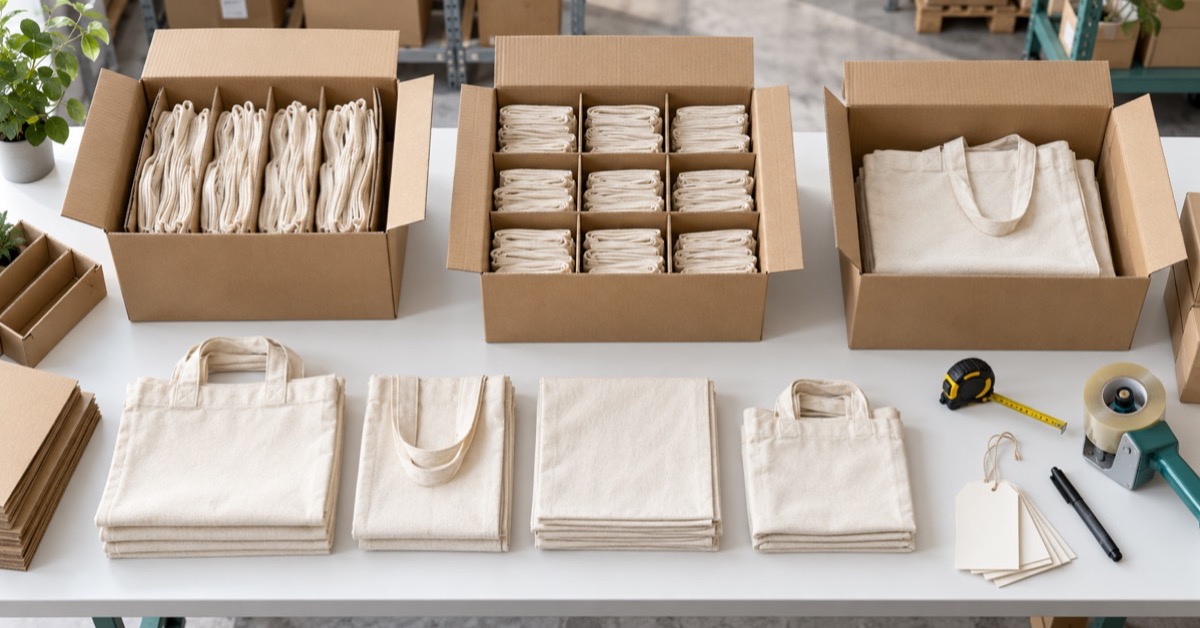
Boxes may require folding, inserts, tissue, labels or sealing. Bags may need opening and product arrangement. Time a realistic packing sequence and include labor, workspace and training in the decision.
A slightly higher-cost structure can be cheaper when it reduces repeated assembly errors or seconds per order.
Account 6: calculate storage cost by volume
Storage cost depends on carton dimensions, pallet use, stock duration, humidity control and how many packaging versions must be separated. Flat-packed and nested structures may reduce space but can add assembly or surface risk.
Track slow-moving seasonal packaging separately from permanent stock.
Account 7: treat freight volume as a design input
Review pieces per carton, carton dimensions, gross weight and whether a product ships flat or assembled. Test material reduction only when protection and presentation remain acceptable.
The EPA materials management hierarchy offers broad context for reduction decisions. Practical design must still protect the product.
Account 8: reserve for obsolete stock
Artwork, regulations, product dimensions, promotions and SKU strategy can change before packaging is consumed. Estimate the probability and value of leftover stock. Use flexible labels, sleeves or inserts when they preserve a stable core structure.
A high MOQ can improve unit price while making total cost worse if demand is uncertain.
Compare quantity scenarios, not one order size
| Scenario | Unit price | Cash and storage | Obsolescence | Best when |
|---|---|---|---|---|
| Pilot quantity | Higher | Low | Low | Design or demand is new |
| Routine batch | Balanced | Moderate | Manageable | Demand is stable |
| Large annual buy | Lower | High | High | Specification and demand are durable |
| Scheduled releases | Negotiated | Shared over time | Moderate | Supplier and forecast are reliable |
Account 9: price supplier coordination
Multiple bags, boxes, labels and inserts create version, schedule and packing dependencies. Coordination may appear as a service cost or as buyer labor. Count artwork alignment, sample reviews, consolidated inspection and shared shipment planning.
Supplier coordination is valuable only when responsibilities and records are clear.
Account 10: protect the reorder
A reorder risk appears when specifications live in email, physical references are missing or material substitutions are not controlled. Retain artwork, dielines, materials, samples, inspection criteria and carton details.
Use the same total cost categories when reviewing a repeat order, especially after freight, material or quantity changes.
Use PackMK to model wholesale packaging cost
PackMK can coordinate wholesale packaging across bags, boxes, labels and printed components, separating tooling, samples, production, inspection and packing in a project-based quotation.
Send the complete packaging list, quantities, variants, delivery plan and storage constraints so the decision can be based on total cost rather than unit price alone.
- Explore PackMK wholesale packaging formats
- Review PackMK integrated packaging support
- Request a wholesale packaging cost breakdown
Account 11: include cash and payment timing
Wholesale purchasing ties up cash before packaging creates revenue. Model deposits, balance payments, transit time and inventory holding. A larger order may lower unit price while increasing the time cash remains unavailable.
Compare payment timing with realistic sales or consumption rather than treating all quantities as financially equivalent.
Account 12: quantify shortage and emergency cost
Ordering too little can trigger expedited production, air freight, temporary generic packaging or missed sales. Estimate the cost of a stockout alongside obsolete stock risk. The correct buffer depends on demand variation and replenishment lead time.
Set reorder points for each component because labels, boxes and bags may be consumed at different rates.
Account 13: compare consolidated and separate sourcing
One supplier may coordinate several formats, while specialized suppliers may offer deeper capability in each category. Count duplicated sampling, version control, inspections, shipments and buyer communication when comparing the models.
Consolidation creates value when one owner controls interfaces; it creates risk when category expertise or transparency is weak.
Run a sensitivity check before choosing quantity
Change demand, freight volume, defect rate and artwork life in the total cost worksheet. If a small forecast change reverses the preferred option, use a smaller batch or scheduled releases instead of committing to one annual quantity.
A sensitivity check makes uncertainty visible and prevents false precision in wholesale packaging planning.
Review actual cost after delivery
Compare forecast with real production price, packing labor, freight volume, receiving defects, storage and remaining inventory. Record the variance and update assumptions before the next wholesale packaging order.
PackMK can use these results to adjust structure, carton packing, inspection or order size while retaining successful specifications.
Account 14: include approval and management time
Buyer teams spend time preparing specifications, reviewing proofs, coordinating departments, answering supplier questions and approving deviations. Estimate this effort for each sourcing option. A fragmented project with many small suppliers may consume more management time even when individual quotes look attractive.
Reduce this cost through one controlled brief, scheduled approval gates and clear owners for artwork, quality, logistics and payment.
Account 15: model the cost of delayed launch
A late package can hold finished products, force partial shipments or miss a promotion. Estimate the value of delay by day or week and identify which approvals or components control the critical path. Paying for an earlier sample or reserved material may be rational when it protects a high-value launch.
Do not treat every requested date as equally important; link schedule spending to a documented business consequence.
Review the critical path after every artwork, material or quantity change. A decision that appears cosmetic can restart proofing, tooling or procurement and move the delivery date. Record the revised cost before approval.
Wholesale packaging cost questions
What is included in wholesale packaging cost?
Total cost can include development, tooling, samples, unit production, inspection, inner packing, cartons, freight volume, storage, defects and obsolete stock.
Why can the lowest unit price cost more overall?
A low quote may exclude needed controls or create higher freight, labor, defect, shortage or inventory costs later in the project.
How does MOQ affect packaging cost?
Higher quantities may reduce unit cost but increase cash exposure, storage and obsolescence risk. The best quantity matches realistic demand and lead time.
Should tooling be included in unit price comparisons?
Yes. Separate one-time and recurring costs, then allocate tooling across the expected useful order volume for a fair comparison.
How can packaging reduce freight cost?
Review assembled versus flat packing, carton dimensions, nesting, pieces per carton, protection and whether material can be reduced without weakening performance.
What is packaging obsolescence cost?
It is the value of packaging that can no longer be used after artwork, regulation, product dimensions, campaigns or SKU plans change.
How should defect cost be estimated?
Include rejected units, sorting, rework, repacking, product damage, launch delays, replacements and customer service effects, not only supplier credit.
Can several products share wholesale packaging?
Yes, when structures and protection needs are compatible. Inserts, labels, sleeves or controlled artwork versions can manage variation.
What information improves a wholesale quote?
Provide dimensions, material, artwork, finishing, quantities, variants, inspection, packing, destination and delivery timing in one normalized brief.
How does PackMK help control total packaging cost?
PackMK can coordinate structures, samples, production, inspection and packing records so buyers compare complete project scope and protect repeat orders.