

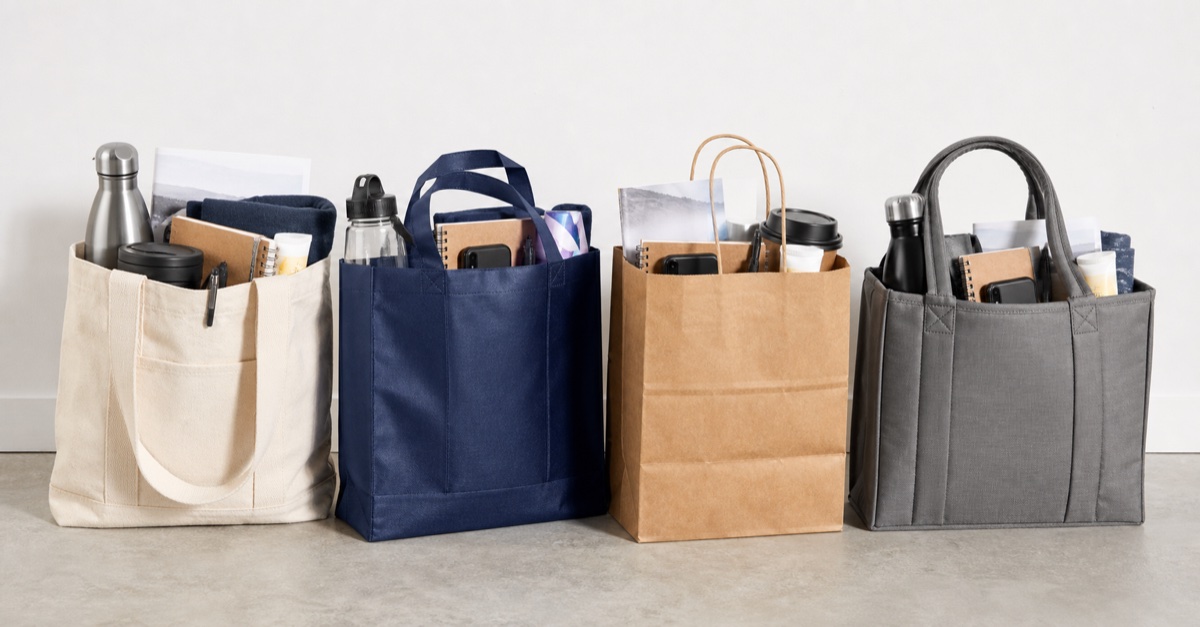
There is no single winner when someone searches for the best material for custom tote bags. A cotton tote carried from a trade booth to a train, a non-woven bag used for a short retail handoff and a canvas bag intended for repeated work use face different loads, handles and care conditions.
PackMK compares materials by route and evidence. The buyer defines what the bag carries, how long it is carried, how it is printed, where it is stored and what reuse means. The result is a tested construction, not a material adjective presented as a universal guarantee.
Direct answer: Choose the material that passes the actual load, handle, print, moisture, fold and reuse route at the required quantity and budget, then approve the finished bag rather than a loose fabric swatch.
Material choice by route
| Material | Often useful when | Check before release |
|---|---|---|
| Cotton | Soft hand and everyday reuse | Shrink, seam and print |
| Canvas | Heavier load and structure | Weight, handle and cost |
| Non-woven | Light event distribution | Seam, rub and load |
| Recycled polyester | Light, foldable carry | Print, hand and claim basis |
| Kraft paper | Short handoff and display | Moisture and crease |
PackMK treats these as starting hypotheses. The finished bag, construction and route decide whether a material remains suitable.
Describe the carry route in minutes
Write where the bag is handed over, how far it travels, what enters first, whether it sits on a floor, how it is stored and whether the recipient is likely to reuse it.
PackMK turns the route into a loaded trial. A material that feels excellent empty can become uncomfortable, unstable or visually weak after the actual items are inside.
Start with the load profile
List the lightest, typical and heaviest kit. Include sharp corners, bottles, books, devices, samples and the way the load shifts during walking.
PackMK checks base, gusset, handle attachment, seam, opening and balance on the assembled bag. Material strength alone does not explain a failure at the handle or stitch.
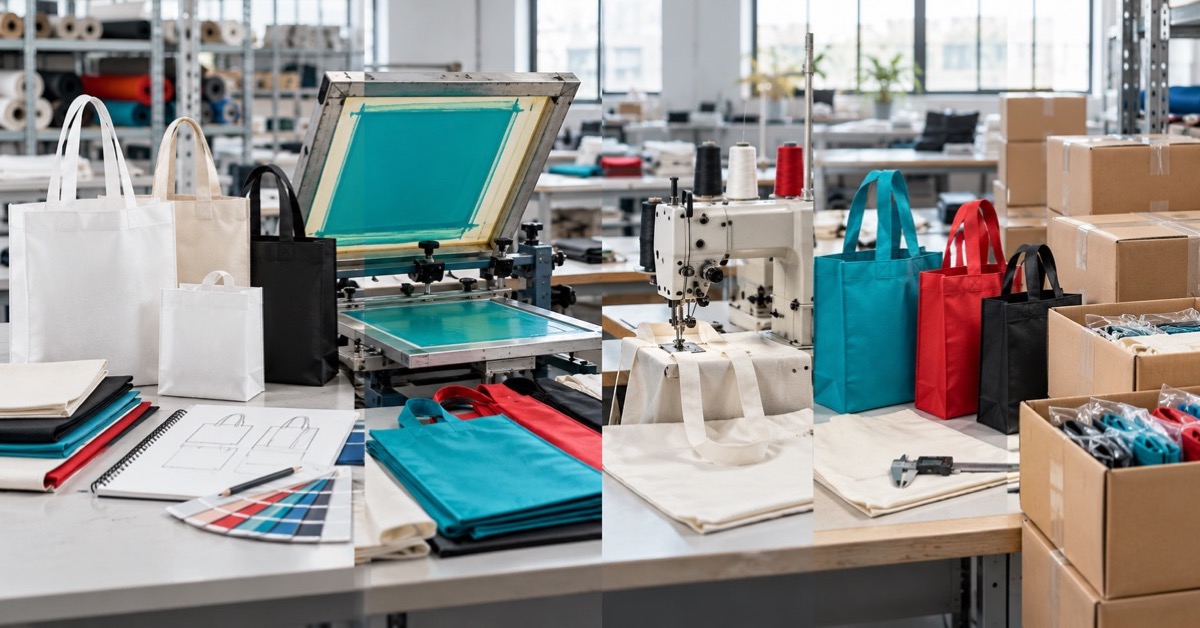
Compare a finished sample, not a swatch
Ask to see each candidate with:
- the intended dimensions and gusset;
- the actual handle length and attachment;
- production-equivalent print;
- the representative loaded kit;
- folded and stored samples;
- carton or bundle packing.
PackMK uses the finished construction to keep material, sewing, print and packing decisions connected.
Judge comfort as a route observation
Record handle width, drop, edge feel, loaded weight, shoulder contact, swing and balance over the real route. Note weather, clothing and whether the bag is carried by hand or over a shoulder.
PackMK reports observations within the trial. It avoids turning one person's preference into a universal ergonomic claim.
Make print part of the material choice
Check ink, transfer, embroidery, heat transfer or screen print against texture, color, opacity, stretch, seam placement and fold lines. Review the bag in motion and at the viewing distance that matters.
PackMK retains a printed, filled reference. A smooth swatch can hide show-through, cracking or registration changes on the finished panel.
What to observe at each bag interface
| Interface | Observation | Evidence |
|---|---|---|
| Handle | Pull, twist and comfort | Loaded carry |
| Base | Sag and tipping | Set-down trial |
| Seam | Opening or fray | Close inspection |
| Rub, fold and contrast | Printed sample | |
| Fabric | Moisture and odor | Condition note |
| Packing | Bundle and carton mix | Carton photo |
PackMK assigns each observation to the construction feature that can change it. This is more useful than selecting a fabric by name alone.
Consider moisture and care honestly
Define rain, condensation, spills, washing, drying, storage humidity and odor exposure relevant to the route. State which visible or functional change matters.
PackMK records tested behavior without calling a bag waterproof, washable or reusable beyond the stated construction and evidence.
Test folding and storage consequences
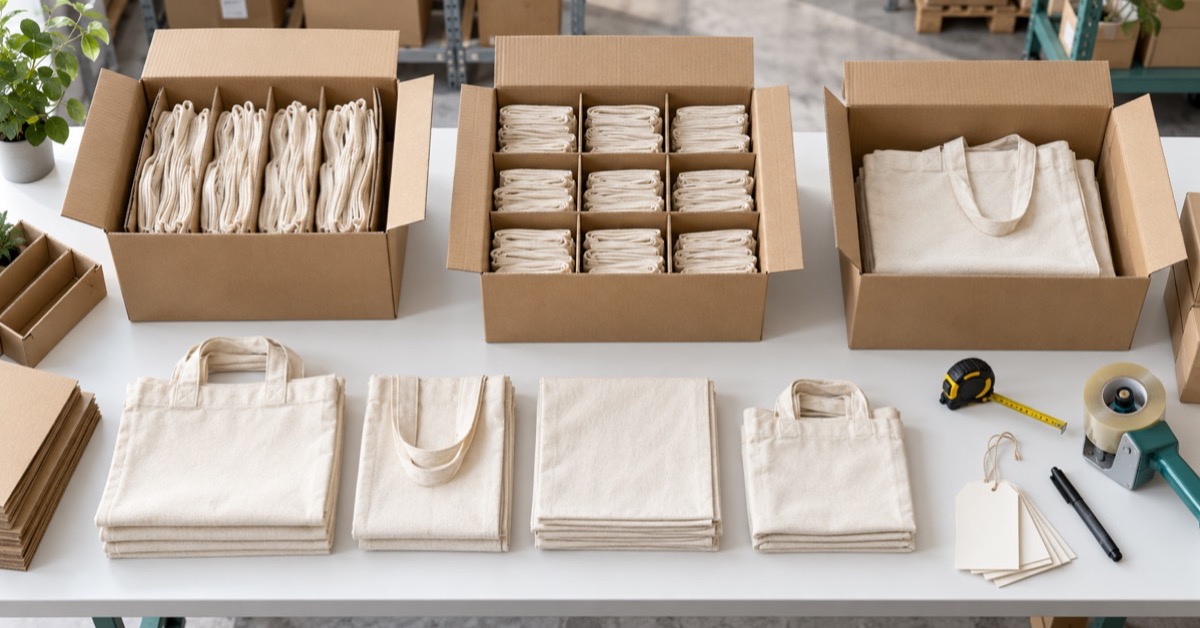
Compare flat volume, crease recovery, nesting, bundle height, dust, odor and the time needed to open and distribute the bags. A material choice affects warehouse space and labor.
PackMK includes the distribution team in the review. A robust bag that arrives compressed or difficult to separate can slow the event or store handoff.
Match the material to the brand signal
Decide whether the important moment is handoff, walking visibility, shelf reuse, unboxing or a quiet everyday carry. Choose one primary signal before adding multiple decorations.
PackMK approves that signal on the real route and in the relevant light. Texture, color and print scale can look different when the bag is loaded or folded.
Treat reuse as an intention to test
Ask what a recipient might carry next, how the bag is stored and what care is realistic. Separate the intention from a quantified service-life claim.
PackMK keeps the reuse goal beside the construction and route evidence. If the audience or load changes, the material decision may need to reopen.
Compare total quantity exposure
Request material, sewing, print, handle, packing, minimum and freight assumptions by quantity and variant. Note leftover risk when several colors or sizes share an order.
PackMK compares the full program. A low unit price can be outweighed by unusable variants, heavy freight or a handle that requires extra packing.
Freeze the bag construction code
Name material, weight, weave or non-woven grade, color, handle, stitch, gusset, print, finish, packing and approved alternatives. Keep a physical reference.
PackMK uses the code for reorders and change control. A substitute should be reviewed against the affected load, print, comfort or route evidence.
Use feedback to refine the route
Collect comments by load, comfort, print, storage, reuse and appearance. Record who used the bag, under what condition and what changed.
PackMK turns those observations into a next-trial question. The best material is the one that keeps fitting the real use, not the one with the most confident label.
Material example: a three-day conference kit
An organizer needs one bag for a notebook, bottle, sample box and jacket. Attendees walk between halls, wait outdoors and may reuse the bag for commuting.
PackMK would compare cotton, canvas, non-woven and recycled polyester as finished bags with the same handle drop and printed panel. Loaded carry, set-down, fold and moisture observations would decide which options remain.
Canvas might offer useful structure but add weight; non-woven might simplify a large quantity but require handle and seam scrutiny; polyester might fold well while needing a print and claim review.
The selected construction would be recorded with load, route, print and packing evidence. A future event with a heavier kit or different weather would reopen the affected tests rather than assume the original material is still best.
Use textile and quality references as context
Material and quality references can frame questions about construction and process, but they do not establish a universal best material or a blanket environmental claim. For general context, review ISO standards catalogue and ISO quality management principles. PackMK still bases a quotation on the buyer brief, samples, process evidence and destination requirements.
Turn best material for custom tote bags into a route brief
A decision-ready best material for custom tote bags brief should define carry route, load profile, handle attachment, fabric weight, print method, folding, moisture, comfort, reuse intention, carton packing. It should also identify PackMK, best material for custom tote bags, cotton, canvas, non-woven, recycled polyester, OEM, MOQ. PackMK turns those details into a quotation basis, approval path and evidence list shared by purchasing, quality, operations and receiving.
Ask the supplier to state assumptions, exclusions, approved alternatives, tooling, minimums, inspection scope, packing and lead-time conditions. For best material for custom tote bags, broad adjectives should become a sample question, tolerance, priced option or release gate before the order is confirmed.
Tote bag performance depends on material construction, weight, handle, sewing, print, load, route, care, climate, packing, quantity and destination. Reuse or environmental claims require evidence and responsible market review.
The best material for custom tote bags is the one that fits the tested route and business constraints. PackMK helps buyers compare finished constructions instead of relying on fabric names.
Keep a one-page decision record with the selected route, rejected alternatives, evidence reviewed, open limitations, quantity basis, owner and review date. After delivery, add receiving observations, defects, user feedback, supplier response and retained references so a reorder reopens only changed decisions.
Compare custom tote bag materials with PackMK
PackMK can support best material for custom tote bags from buyer brief and samples through production checks and export packing. Send the product or application, artwork, quantities, variants, destination and required date to request a structured quotation for best material for custom tote bags.
- Explore PackMK custom tote bag formats
- Review PackMK OEM and ODM support
- Request a tote material comparison quotation
Best material for custom tote bags questions
Is cotton always the best choice?
No. Cotton, canvas, non-woven, polyester and paper suit different loads and routes.
When is canvas useful?
It can suit a structured or heavier-load route, but weight, cost and handle construction need testing.
What should a loaded trial include?
Use the real kit, carry distance, set-down points, handle grip and movement pattern.
Can a swatch approve print?
No. Texture, seams, folds and load can change print appearance on the finished bag.
How should moisture be evaluated?
Define exposure, product state, time and visible or functional acceptance criteria.
Does reusable mean a guaranteed service life?
No. Reuse intention and quantified service life are different claims with different evidence.
What affects comfort?
Handle width, drop, loaded weight, balance, edge feel and the actual route all matter.
How can variant risk be reduced?
Share dimensions and components where possible, then mark colors, sizes and artwork clearly.
When should a material be retested?
Retest after a load, route, audience, handle, print, material, care or destination change.
How does PackMK support comparison?
PackMK compares finished samples, route evidence, quantities, packing and reorder controls.