

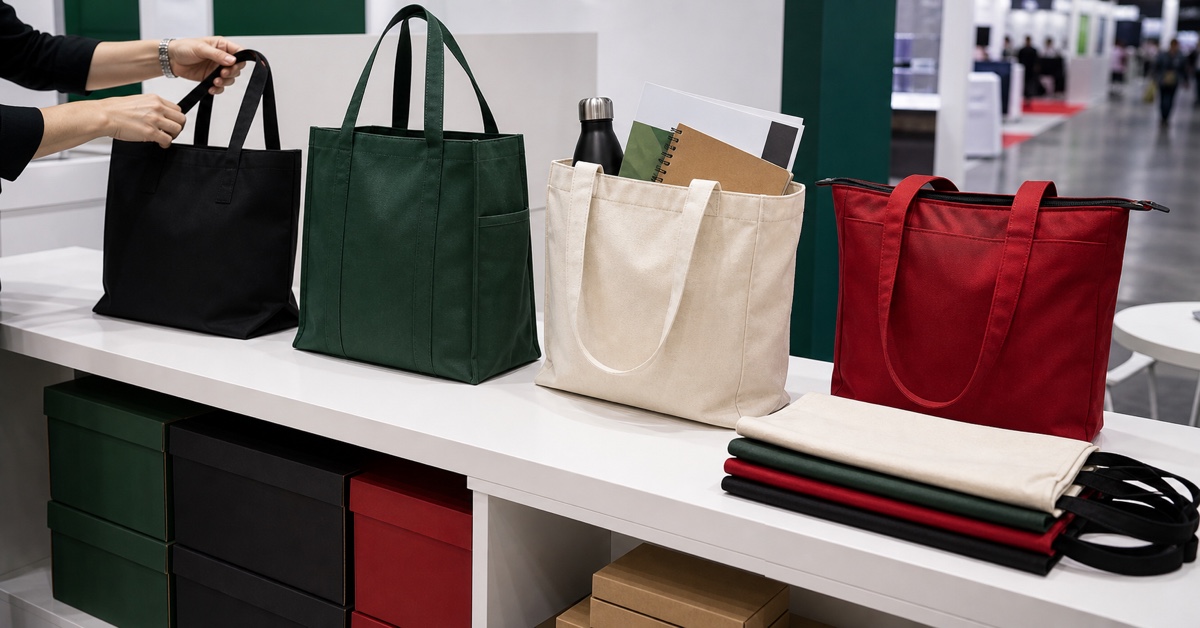
A tote at an exhibition competes with catalogs, samples, water bottles, jackets and a dozen other branded giveaways. Its performance is not decided in a product photo. Trade show tote bags should be planned for a journey that starts at booth setup and may end in an airport, office or hotel room.
PackMK maps the handoffs: export carton, venue receiving, booth storage, staff distribution, visitor carry, post-event reuse and leftover handling. That journey turns size, handles, print and packing into observable decisions instead of generic promotional preferences.
Direct answer: Choose trade show tote bags by simulating the actual event payload, booth distribution pace, carry time, brand viewing distance, freight pack-out and likely reuse after the show.
Map the tote across the event journey
| Stage | User | Main risk | Evidence |
|---|---|---|---|
| Freight | Logistics | Crush or moisture | Packed-carton sample |
| Setup | Booth staff | Slow unpacking | Replenishment trial |
| Handover | Visitor | Awkward loading | Payload test |
| Show floor | Visitor | Handle discomfort | Timed carry |
| After event | Recipient | No reuse | Use-case review |
PackMK uses the journey to decide where strength, visibility and convenience matter. One large logo cannot correct a bag that is hard to distribute or uncomfortable to carry.
Build the real event payload
List brochures, notebooks, samples, bottles, chargers, apparel and items collected from other booths. Measure the largest object and a realistic combined weight rather than designing around one catalog.
PackMK loads representative items into a sample. The trial checks opening width, usable depth, handle reach, bottom distortion and whether rigid corners damage the fabric or print.
Choose the handover moment before the bag
Decide whether the tote is pre-packed, handed over empty, earned after a meeting or reserved for qualified visitors. Each route changes the number required and the time staff can spend loading it.
PackMK simulates the booth action. A beautiful folded bag can become a bottleneck if staff must unfold, sort and load it during a busy period.
Run a five-minute booth rehearsal
Use actual staff and representative cartons to rehearse:
- opening the master carton;
- finding the correct version;
- moving a working quantity under the counter;
- loading the visitor payload;
- handing over the tote without blocking the aisle;
- reconciling leftovers after the session.
PackMK records the awkward steps. Small packing changes can improve event use without changing the bag construction.
Design print for a moving viewing distance
Check the logo and message at arm's length, across the aisle and while the tote folds around its contents. Test the least favorable fabric color and the smallest expected print.
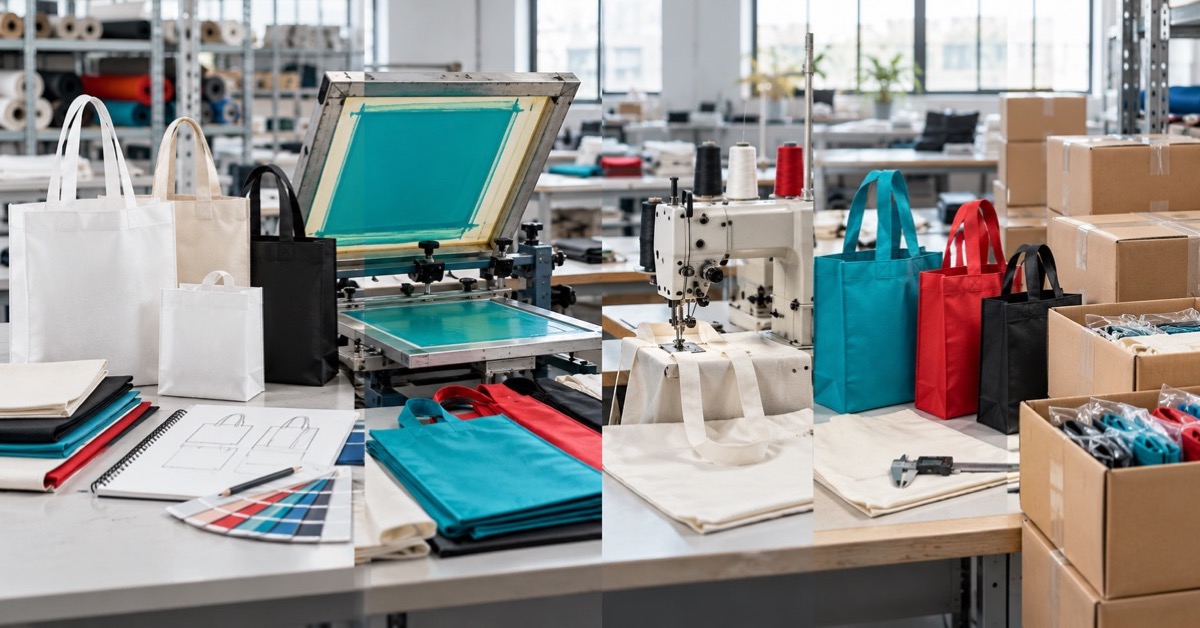
PackMK uses a filled sample, not a flat mockup. Seams, gussets, wrinkles and handles can interrupt the viewing area even when the artwork is centered on a dieline.
Treat handles as a timed experience
Specify handle material, width, length, attachment and load. Test hand carry and shoulder carry with clothing similar to the event season.
PackMK records discomfort, twisting, stretch and attachment movement after a defined carry period. A stronger handle is not automatically more comfortable, and a longer handle can let the bag strike the leg.
Compare tote routes for event priorities
| Route | Strength | Foldability | Brand surface | Best question |
|---|---|---|---|---|
| Non-woven | Light to moderate | Very compact | Broad | Will the load distort it? |
| Cotton | Moderate | Compact | Natural texture | Does the print suit the weave? |
| Canvas | Higher | Bulkier | Structured | Is the freight volume justified? |
| Recycled-content option | Construction dependent | Varies | Claim-sensitive | What evidence supports the claim? |
PackMK compares the exact construction and route. Material names alone do not establish capacity, life, environmental benefit or destination acceptance.
Plan quantities from attendance behavior
Start with event days, booth traffic assumptions, handover rule, staff allocation, VIP or press sets, damage allowance and post-event uses. Separate daily working stock from reserve stock.
PackMK creates a distribution budget by day and audience. This is more useful than matching the organizer's attendance headline, which may not reflect booth visits or qualification.
Make replenishment visible to staff
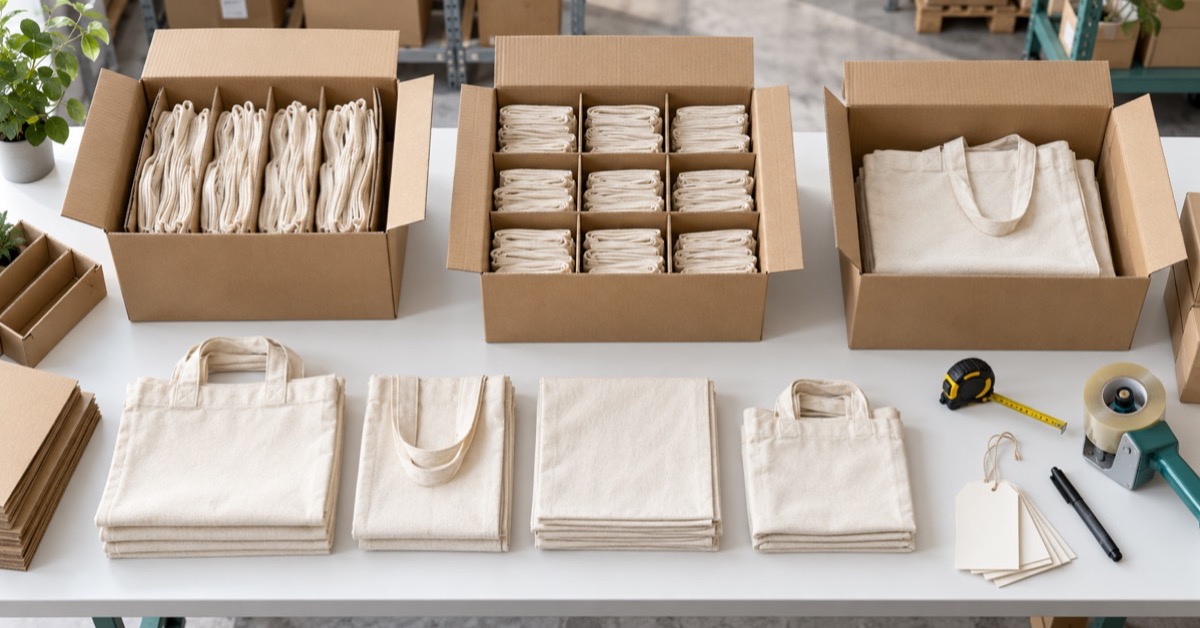
Use carton labels with event, version, color, quantity and sequence. Pack working quantities so staff can replenish without opening several master cartons or mixing campaigns.
PackMK tests the under-counter footprint and back-room path. The best master carton is the one the venue team can identify, move and open at the right moment.
Protect print during export and venue handling
Decide folding, interleaving, inner bags, moisture protection and carton fill. Test whether handles or dark prints transfer, crease or abrade during compression.
PackMK reviews the first packed case after a representative hold and movement. A pristine production sample does not prove the surface will arrive ready for display.
Be precise about reuse and environmental claims
A tote may be reused, but likely reuse depends on size, comfort, appearance, durability and recipient behavior. Claims about recycled content, recyclability or environmental benefit require evidence and destination review.
PackMK keeps a claim file separate from creative copy. A useful design can support longer service without making a universal environmental promise.
Create a plan for leftovers
Before the show, decide whether remaining bags move to sales kits, staff onboarding, distributor visits or the next event. Avoid dates, city names or campaign language that makes reuse impossible unless that specificity is valuable.
PackMK connects artwork choices to the leftover plan. Evergreen versions can absorb forecast error, while event-specific versions need tighter quantities and clearer disposition.
Collect evidence after the show
Ask staff what slowed handover, which items did not fit, whether handles were comfortable, which versions ran out and how many cartons returned. Photograph representative used bags.
PackMK adds observations to the reorder record. The next trade show tote bags order then starts from event behavior instead of a fresh mood board.
Compare the event plan with the travel-home reality
Interview a small mix of visitors and staff after they have carried the bag beyond the booth. Ask what stayed inside, what was removed, whether the tote fit under a seat or inside luggage, and which feature encouraged later use.
PackMK uses those observations to refine future trade show tote bags. This final journey check can reveal that a modest size or softer fold creates more lasting brand exposure than an oversized giveaway designed only for the show floor.
Journey example: a three-day technology exhibition
A software company gives qualified visitors a notebook, charging cable, product sheet and metal sample. The show is in another country, and booth storage is limited.
PackMK would load the full set, test shoulder carry and rehearse handover from a compact working carton. The print would be reviewed on a filled bag from the aisle, not only at a design desk.
Daily cartons would carry sequence and quantity marks. An evergreen message would allow unused stock to support later distributor meetings.
Post-event notes would compare planned and actual distribution, handle comfort, surface scuffing and leftover count. Those observations would define the next order's quantity and construction changes.
Use claims guidance without overpromising
General quality and environmental-claim guidance can help teams document evidence and limitations. For orientation, buyers can consult ISO quality management principles and FTC Green Guides. These references do not approve a specific package, claim or shipment.
Write a trade show tote bags journey brief
A decision-ready trade show tote bags brief should define event payload, booth traffic, handover rule, handle comfort, print visibility, daily replenishment, master carton, reuse plan, leftover stock. It should name PackMK, trade show, tote bag, screen printing, handle, carton, SKU where they affect the decision. PackMK uses those details to organize questions, samples, quotation assumptions and release evidence.
Ask the supplier to separate confirmed facts from assumptions, options and exclusions. Record tooling, minimums, approved alternatives, test conditions, inspection scope, packing, lead-time triggers and the person who can release a change. That record is more useful than a promise built from undefined words such as premium, durable or sustainable.
Event attendance, booth traffic and recipient behavior vary. Bag performance depends on the exact construction, load, route and test method. PackMK can support a defined project, but does not guarantee distribution, reuse, impressions or environmental outcomes.
Rehearse the event journey with PackMK
Send PackMK the event dates, audience, payload, distribution rule, artwork, quantities, destination and venue constraints. We can develop trade show tote bags around a practical sample and packing route.
Trade show tote bags questions
What size should a trade show tote be?
Choose size from the largest object and realistic combined payload, not from a generic standard.
Should bags be pre-packed?
It depends on booth flow, qualification rules, staffing and available storage.
How should logo size be checked?
Review a filled moving bag at arm's length and across the aisle.
What makes handles comfortable?
Width, length, material, attachment, load, clothing and carry time all matter.
Which tote material is best?
Compare exact constructions against load, foldability, print, freight and reuse goals.
How many bags should an event order?
Use event days, booth traffic, handover rules, reserve stock and post-event uses.
How should totes be packed?
Define folding, interleaving, moisture protection, carton count and replenishment sequence.
Can we claim the tote is sustainable?
Only make specific claims supported by evidence and reviewed for the destination.
What should happen to leftovers?
Plan approved uses such as sales kits, distributor visits or later events before ordering.
What should PackMK receive for a quote?
Provide the payload, dimensions, materials, print, quantity, pack-out, destination and date.