


A useful audit of a paper bag supplier China operation follows one hypothetical purchase order from material receipt to packed cartons. PackMK uses that order trail to test whether sales promises are supported by specifications, machines, people, records and controlled handoffs.
The showroom can demonstrate range, but it does not prove how the supplier prevents the wrong paper, artwork, handle or carton quantity from entering your order. The audit should therefore spend more time on ordinary production evidence than polished samples.
Audit stop 1: translate the buyer brief
Give the supplier a compact example covering finished size, paper, weight, printing, finish, top fold, gusset, base, handles, reinforcement, quantity, variants and packing. Ask staff to explain what is missing before they quote.
A capable team should identify product load, artwork status, color references, handle requirements, destination and delivery assumptions. Questions reveal application understanding better than a fast price.
Audit stop 2: review the specification handoff
Follow how sales information becomes an internal work order. Check units, tolerances, material codes, artwork revision, tooling references, approved sample identity and packing details. Ask who may change each field and how production sees the latest version.
Look for a clear change history. Uncontrolled spreadsheets or chat messages can allow an old dimension or artwork file to reach the line.
Audit stop 3: inspect paper identification
Review how paper type, weight, color and lot are received, labeled, stored and issued. Ask how moisture, shade variation and supplier substitutions are handled. Compare warehouse codes with the terms used on quotations and work orders.
For certified sourcing requests, the FSC chain-of-custody information helps buyers ask whether the supplier's scope and transaction evidence cover the actual order.
Audit stop 4: trace artwork to the press
Check how dielines, bleed, color layers, barcodes, white ink, varnish or foil instructions are reviewed. The production file should show a revision code that matches the approved proof. Ask how obsolete files are blocked.
Observe whether operators receive clear color references and signed samples. A digital file alone may not define appearance on kraft or coated paper.
Audit stop 5: match printing method to the job
Flexographic, offset and other routes suit different quantities, substrates, coverage and quality requirements. Ask why the proposed method fits the artwork and whether any process is outsourced. Review registration, drying, color checks and waste controls.
The audit does not need to favor one press type. It should confirm that the quoted route is visible and supported by appropriate proofing.
Follow the purchase order through the factory
| Order stage | Record to inspect | Physical evidence | Risk exposed |
|---|---|---|---|
| Brief | Requirement sheet | Product and artwork | Missing assumptions |
| Material | Issue record | Labeled paper lots | Substitution |
| Printing | Job ticket | Approved proof | Wrong revision |
| Converting | Setup check | Bag dimensions | Weak construction |
| Packing | Packing instruction | Marked cartons | Count or mix error |
Audit stop 6: examine cutting and creasing setup
Review dies, cutting position, crease behavior and setup approval. Ask how operators confirm the first acceptable sheet and monitor drift. Difficult combinations of heavy ink, lamination, folds or thick paper may crack or distort during conversion.
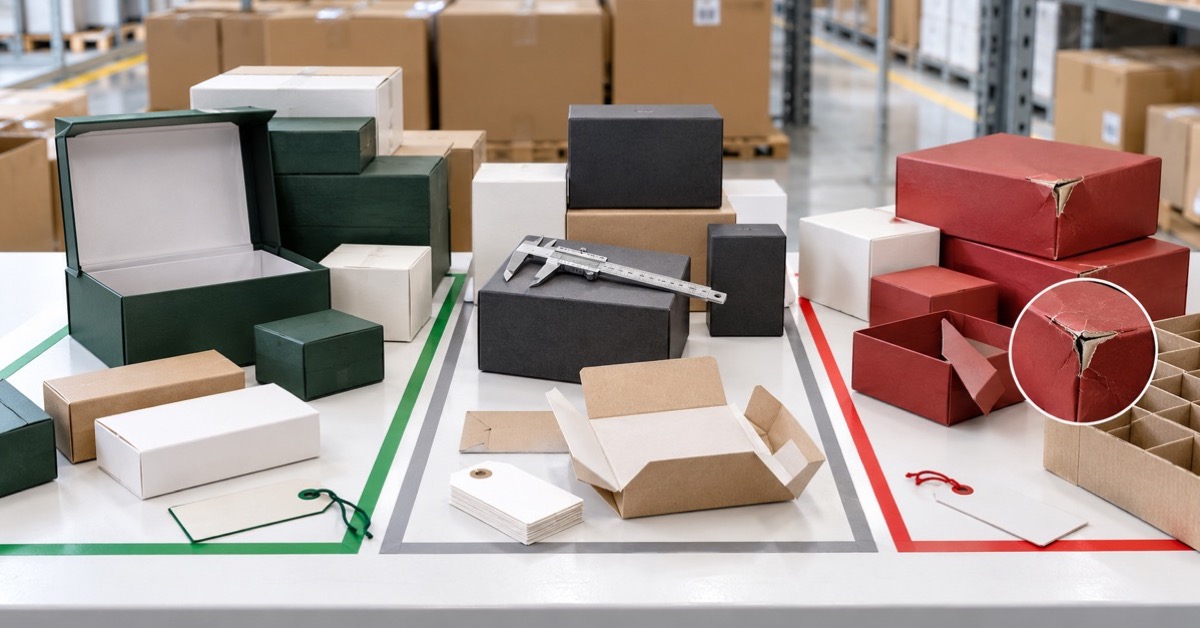
Inspect waste and rejected pieces as well as good output. Defect examples often explain process limits more clearly than selected showroom samples.
Audit stop 7: watch bag forming and gluing
Observe side seams, bottom formation, adhesive placement, squareness and curing. Ask how the line handles glue strings, open seams, blocked bags and dimensional movement. Check whether operators measure usable opening and finished size during the run.
A flat bag should also be opened and loaded. Visual inspection while closed can miss a weak base or restricted mouth.
Audit stop 8: verify handles and reinforcement
Trace handle material, length, color, knot or attachment method and reinforcement cards. Review setup checks and a realistic loaded test. Handles should align, feel consistent and transfer weight without tearing the paper.
Ask how manual work is standardized and inspected. Labor-intensive steps need clear samples, jigs or measurements rather than personal preference.
Audit stop 9: understand sample authority
Determine which sample controls bulk production: concept sample, blank structural sample, printed proof, pre-production sample or signed golden sample. Its label should identify the order, specification and artwork revision.
Ask what happens when production cannot match it exactly. A formal deviation and reapproval path is stronger than an informal call after material has already been converted.
Audit stop 10: read inspection records
Request recent anonymized examples showing checks for material, dimensions, print, workmanship, handles, load, quantity and packing. Review sampling frequency and defect disposition. A completed checklist should connect to a work order and responsible person.
The ISO quality management principles provide a useful framework; certification alone does not replace order-specific evidence.
Audit stop 11: test segregation of variants
Ask how different sizes, colors, languages and artwork versions are separated during printing, conversion and packing. Look for line-clearance checks, labeled work-in-progress and reconciliation of accepted quantities.
Mixing risk grows when similar designs run together. Carton labels should identify the exact SKU without requiring staff to open the box.
Audit stop 12: verify carton packing
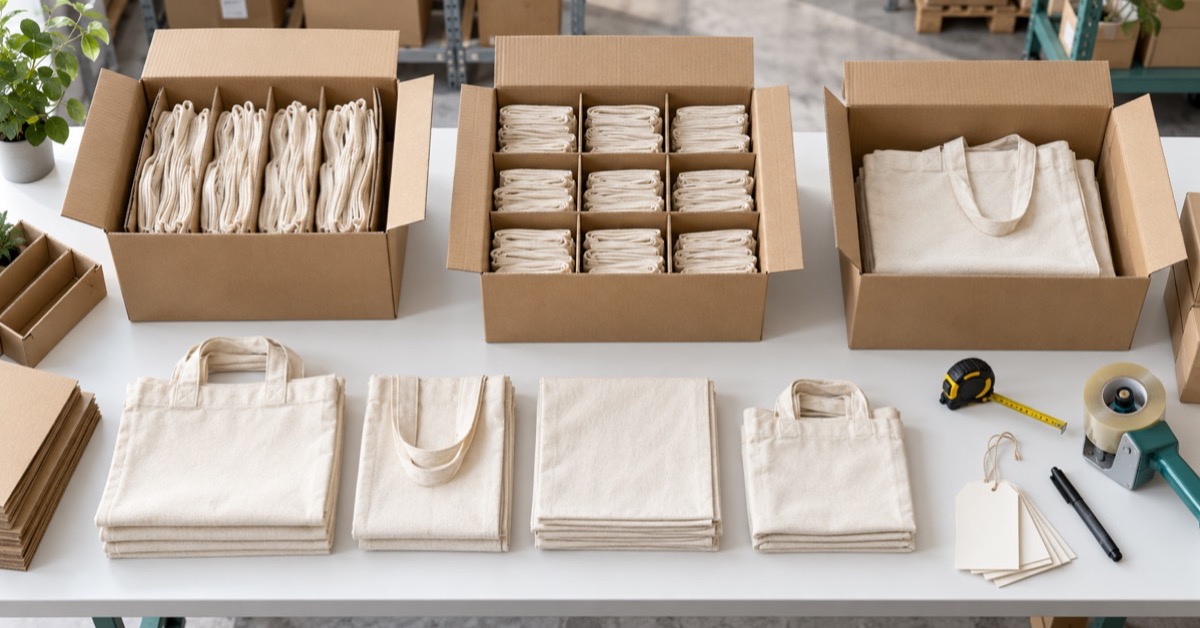
Review folding direction, handle placement, protective tissue or sleeves, pieces per inner pack and carton, moisture protection, carton strength and markings. Open a representative packed carton and inspect the condition of bags below the top layer.
Request final carton dimensions and gross weight. These values affect freight, receiving and storage, so they belong in the commercial comparison.
Audit stop 13: challenge the capacity answer
Ask for the expected route and weekly capacity for your actual specification, including outsourced finishing and manual handle work. Review other committed work during the target period and identify the bottleneck process.
A total factory output number may be irrelevant if your design depends on one press, one finishing partner or a labor-intensive assembly step.
Audit stop 14: simulate a material change
Ask what happens if the specified paper is unavailable or a raw-material lot looks different. The answer should include technical review, sample or proof requirements, buyer approval and updated records before substitution.
This scenario exposes whether change control is a working process. A promise to use something similar is not enough for brand-critical packaging.
Audit stop 15: inspect repeat-order retrieval
Choose a previous item and ask staff to retrieve the approved specification, artwork, sample identity, tooling, inspection standard and packing record. Note whether evidence can be found quickly and whether revisions are clear.
Repeatability is a core capability for a paper bag supplier China partner. Good first samples do not prove that the same controls will survive six months.
Convert observations into a weighted decision
| Audit area | Suggested weight | Strong evidence | Follow-up |
|---|---|---|---|
| Specification control | High | Versioned order trail | Close missing fields |
| Material control | High | Traceable lots | Approve substitutions |
| Process capability | High | Order-matched route | Pilot difficult finishes |
| Quality evidence | High | Recorded checks | Define acceptance |
| Commercial fit | Medium | Capacity and carton data | Confirm milestones |
Let PackMK coordinate the audit trail
PackMK can help buyers evaluate a paper bag supplier China project from specification and samples through printing, converting, handles, inspection and export packing. The goal is a traceable order, not a generic supplier ranking.
Send PackMK the bag dimensions, load, paper and handle preference, artwork, quantity, variants, destination and deadline to request a quotation and project-specific evidence review.
Write the audited process into commercial terms
The final paper specification should name paperboard or kraft paper where relevant, incoming inspection, printing process, bag converting steps, capacity check and MOQ. Identify whether flexography or offset printing is quoted and which evidence controls the result.
A credible paper bag supplier China offer should preserve those facts in the purchase order. PackMK can compare another paper bag supplier China route against the same audited scope.
- Explore PackMK paper bag and packaging formats
- Review PackMK paper packaging development support
- Request a paper bag supplier quotation
Paper bag supplier audit questions
How should buyers evaluate a paper bag supplier China operation?
Follow one sample order through specification, material, printing, conversion, handles, inspection and packing, then compare records and physical evidence with the supplier's claims.
What information is needed for a paper bag quotation?
Provide dimensions, paper type and weight, load, printing, finishes, handles, reinforcement, quantity by variant, packing, destination and required delivery timing.
Which paper bag production processes should be audited?
Review artwork, material receiving, printing, finishing, cutting, creasing, forming, gluing, handle attachment, inspection, variant segregation and carton packing as applicable.
Why should a buyer inspect work orders?
Work orders show whether the customer brief becomes controlled production instructions with correct units, material codes, artwork revision, tolerances and packing details.
How can buyers verify production capacity?
Ask for capacity on the actual process route, committed workload, outsourced steps, bottlenecks and manual assembly rather than relying on a total factory output number.
What should a paper bag sample approval contain?
It should identify dimensions, paper, construction, printing, finish, handles, reinforcement, artwork revision, test results, packing assumptions and the controlling sample status.
How are paper bag handles tested?
Load production-equivalent bags with the heaviest realistic contents, repeat carrying and set-down cycles, then inspect handles, reinforcement, paper and attachment points.
What quality records should a supplier provide?
Look for order-linked checks of material, dimensions, print, workmanship, handles, load behavior, quantity, packing and documented treatment of nonconforming product.
How should material substitutions be controlled?
The supplier should identify the change, explain its effect, provide appropriate sample or proof evidence, obtain buyer approval and update all affected production records.
What protects a repeat paper bag order?
Retain the approved specification, artwork, color and paper references, tooling, sample, tests, inspection criteria, variant codes and packing details with controlled revisions.