

Recycled content packaging is packaging whose material includes a defined share of recovered material, and that share has to be measured and evidenced rather than implied. This guide covers the EU PPWR targets that begin in 2030, how ISO 14021 treats recycled-content claims, and the documents a buyer should collect before approving a specification.
What recycled content packaging actually measures
Recycled content is the proportion of a material that comes from recovered waste instead of virgin feedstock. It is an input measure. On its own it says nothing about whether the finished box, bag or label can be recycled again in the market where it is sold.
Two definitions dominate supplier conversations. Post-consumer recycled content comes from material discarded by households or commercial end users after use. Pre-consumer recycled content comes from factory scrap that never reached a customer. ISO 14021 keeps the two separate because contamination risk, traceability and food-contact status differ.
That distinction matters commercially. A converter can legitimately advertise pre-consumer regrind while buying the same virgin polymer pellets as before. The environmental gain is real, but smaller than many buyers assume when they read a headline percentage.
A percentage without a basis is not a specification. "60% recycled" could mean 60% of the fibre, 60% of the total pack weight including adhesive and coating, or 60% across an annual production average. Those are three different products, and only one of them will satisfy an auditor reading the file.
Recycled content packaging is not the same as recyclability
Recyclability describes what happens to packaging after use: whether collection, sorting and reprocessing can turn it back into a usable material. Recycled content describes what went into it. The EU PPWR regulates both, but on different timetables and with different evidence.
Recyclability is judged against design-for-recycling criteria and, later in the decade, against actual recycling at scale. Recycled content is judged against the material balance of what entered the product. A specification that addresses only one of the two is incomplete, and a supplier that answers one question with the other is usually avoiding the harder one.
Packaging recyclability and recycled content are also audited by different people. The first is a design and testing conversation with the converter; the second is a documentation conversation with the material supplier. Keeping them separate in the project plan stops one from being signed off on the strength of the other.
For the material behaviour behind these choices, our comparison of custom fabric packaging materials sets weight, hand feel and print performance side by side.
What the EU PPWR requires of recycled content packaging, and when
Regulation (EU) 2025/40 entered into force on 11 February 2025 and applies from 12 August 2026. It repeals Directive 94/62/EC and consolidates design, labelling and recycled-content duties into a single framework. The European Commission packaging waste page tracks implementation, and the full text is published on EUR-Lex.
Recycled-content obligations are staged rather than immediate. From 1 January 2030, single-use plastic beverage bottles must contain at least 30% recycled plastic, rising to 65% by 2040. Contact-sensitive plastic packaging has separate thresholds, and the applicable percentage depends on the polymer and the product it touches.
Paper-based and composite formats are mainly addressed through recyclability and labelling duties rather than a single recycled-fibre number. That does not make the claim optional for a paper box or bag: general consumer-protection rules on environmental claims still apply, and a buyer or retailer will ask for the same evidence.
| Milestone | Date | What changes for a buyer |
|---|---|---|
| Regulation applies | 12 August 2026 | Design, labelling and reporting duties begin to apply to packaging placed on the EU market. |
| Recyclability design criteria | 2030 | Packaging must be designed to be recyclable; recycling at scale follows in a later phase. |
| Single-use PET beverage bottles | 1 January 2030 | Minimum 30% recycled plastic in the bottle. |
| Single-use PET beverage bottles | 1 January 2040 | Minimum 65% recycled plastic in the bottle. |
| Contact-sensitive plastics | 1 January 2030 | Polymer-specific thresholds apply; confirm the exact grade and end use with the converter. |
Which materials can carry recycled content today
Paper and board are the most mature route. Recycled fibre is standard in testliner, fluting and many kraft grades, and mills commonly quote recovered-fibre percentages. Constraints appear in food-contact board, where mineral oil and printing-ink residues are controlled, and in high-strength grades, where shorter fibres reduce tear and burst values.
Strength is manageable if it is designed in. A corrugated specification that moves to a high recovered-fibre liner usually compensates with a higher grammage or a different flute profile, and the board is then approved on edge crush test rather than on fibre source. The cost moves with the compensation, not with the recycled percentage.
Plastics divide sharply. PET has an established bottle-to-bottle loop, so recycled PET is widely available and well specified. Polypropylene and polyethylene collection is improving, but food-contact recycled PP remains limited and colour consistency is harder to hold. Non-woven polypropylene bags can use recycled polymer, although fibre tenacity and print opacity change with the input stream.
Glass and aluminium recycle without loss of material quality and are often supplied with high recycled shares; colour sorting is the main constraint for glass. For the failure modes that decide a material before price is discussed, see our packaging material failure tree.
Labels, adhesives and inks sit inside the same claim. A recycled-content carton closed with a non-recyclable laminate label, or printed with ink that contaminates the repulping stream, weakens the design case even though the board itself is sound. Specify the whole pack, not just the substrate.
One clarification saves time in meetings: FSC certified paper is a chain-of-custody claim about forest management. It is not a recycled-content claim, and the two are audited under different schemes with different paperwork.
Recycled content by packaging format
| Format | Typical recycled input available | Main constraint |
|---|---|---|
| Folding carton | Recycled fibre grades widely offered | Brightness, stiffness, mineral oil limits for food |
| Corrugated shipping carton | High recovered fibre in testliner and fluting | Edge crush and burst strength |
| Kraft paper bag | Recycled or virgin kraft both available | Tear strength and shade variation |
| Non-woven PP bag | Recycled PP available in several gauges | Fibre tenacity and colour consistency |
| PET bottle or sheet | rPET widely available | Food-contact approval and colour |
| PE film | Limited recycled content in thin gauges | Strength, clarity and food contact |
| Glass | High recycled share common | Colour sorting |
| Aluminium | High recycled share common | Alloy specification |
These are market-level ranges, not promises for a specific order. Confirm the actual percentage, the stream and the evidence for each production lot before the artwork is released.
How recycled content packaging is measured and declared
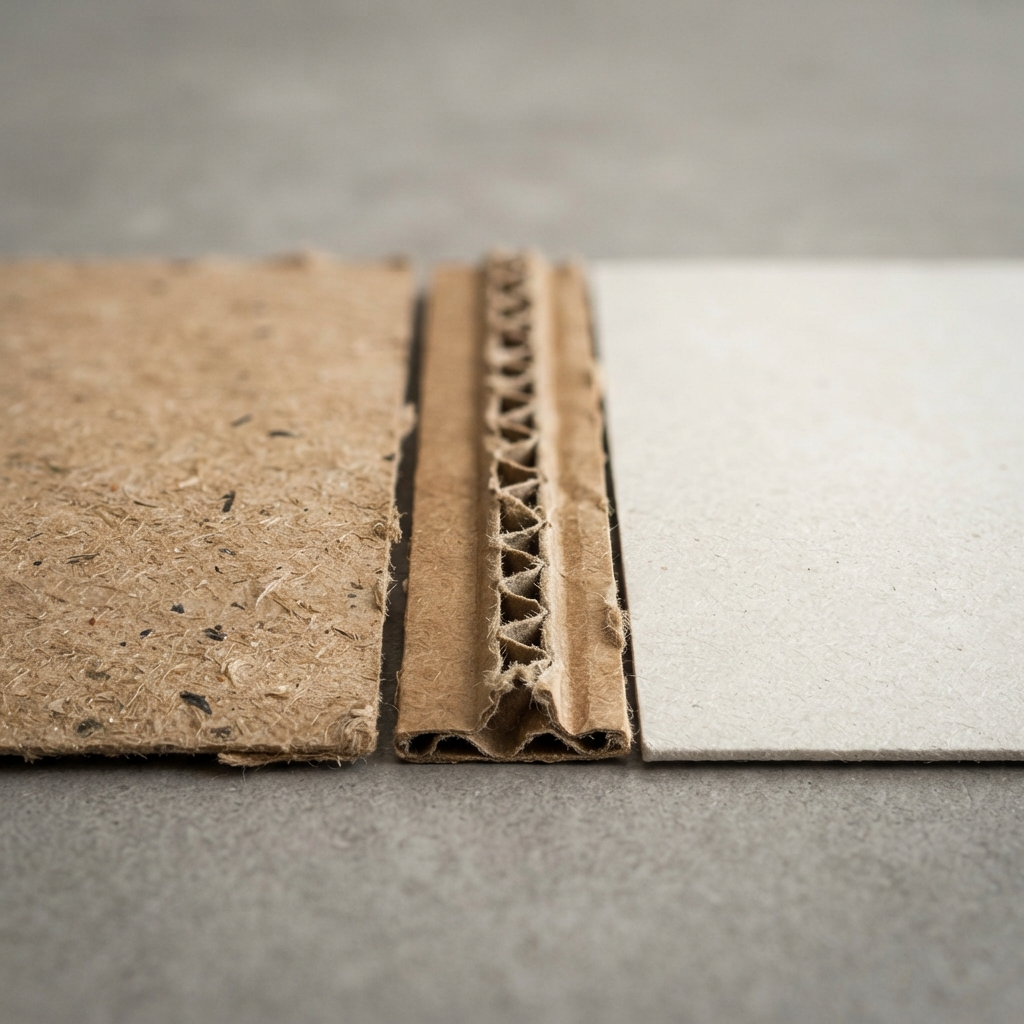
ISO 14021:2016 sets the requirements for self-declared environmental claims, including recycled content. A compliant claim is specific, substantiated and accompanied by the method used to calculate it. "Eco-friendly packaging" is not a recycled-content claim. "60% post-consumer recycled fibre, calculated per production batch" is.
The accounting method changes what the number means. Batch-level accounting ties a percentage to a specific run. Annual-average accounting spreads recycled input across a year of output. Mass balance lets recycled and virgin material mix through a supply chain as long as the records balance; it is legitimate under recognised schemes, but it is weaker evidence for any single order.
Physical segregation sits at the other end. Under a segregated chain of custody, recycled material is kept separate from virgin material at every stage, which produces the strongest evidence but usually the highest cost and the longest lead time. Most packaging claims sit somewhere between segregation and mass balance.
Ask which method applies before comparing two quotations. Two suppliers quoting "50% recycled" may be describing very different levels of traceability, and the cheaper one is often the vaguer one.
What evidence should accompany a recycled content packaging claim?
- A supplier declaration naming the recycled percentage and the material stream.
- The calculation basis: batch, annual average, mass balance or segregated custody, and the period covered.
- Chain-of-custody or transaction certificates for the recovered material.
- Test reports for food-contact, strength or print-critical grades.
- Certificate scope and validity dates, not just a logo on a brochure.
- A named contact who can answer a technical question about the grade within the order cycle.
What should you ask before approving a recycled content packaging specification?
- Which material stream is used, and is the percentage post-consumer, pre-consumer or both?
- Is the figure calculated per batch, per year, by mass balance or under segregated custody?
- Which certificate covers this exact grade, and what are its scope and expiry date?
- Does the recycled input change strength, shade or print opacity beyond the approved tolerance?
- Is the grade approved for the intended food-contact or medical use?
- What evidence arrives with each production lot, not only with the first sample?
Worked example: rebuilding a recycled content packaging claim file
Suppose a retailer receives a folding carton described as "80% recycled". The file contains a supplier email and a certificate for a different board grade. Rebuilding it takes four steps.
- Map the claim to the exact grade and supplier named on the purchase order.
- Request a certificate whose scope names that grade, with a valid date.
- Ask for the calculation basis plus one lot declaration from the run that shipped.
- Re-issue the artwork wording so the on-pack claim matches the file.
The exercise usually shows that the material was acceptable and the documentation was not, or the reverse. Either way, the outcome is a claim that can be repeated on the next order without restarting the conversation.
Where recycled content packaging claims fail in production
Most failures are not fraudulent; they are drift. A mill changes its recovered-fibre source between runs, shade shifts, and the printed brand colour no longer matches the approved proof. A bag converter switches to a recycled polymer with lower tenacity and stitch elongation changes. A distributor repeats last year's "70% recycled" wording after the grade has already changed.
The commercial risk sits with whoever publishes the claim. Under EU consumer-protection rules and ISO 14021, an unsubstantiated environmental claim is the brand owner's exposure, even when the wording came from a supplier datasheet.
Build three controls: a frozen specification, lot-level evidence, and a written change-notification clause. For the wider supplier-verification sequence, our eco-friendly packaging manufacturer evidence guide sets out what to inspect on site and which records to request.
What recycled content packaging does not fix
Recycled content does not make packaging reusable, and it does not guarantee that a local authority accepts the format. A 100% recycled-content composite laminate can still be unrecyclable because the layers cannot be separated. Adding recycled material to an oversized box also leaves the overpackaging problem untouched.
The PPWR treats these as separate duties for that reason. Recyclability, reuse and reduction are assessed on the packaging design; recycled content is assessed on the material input. A brand that buys recycled material and ignores design has improved one metric and left the other two unchanged.
How recycled content packaging changes cost and risk
Three costs move when recycled content enters a specification. Collection and sorting add to the feedstock price, particularly for food-contact streams. Quality control adds cost because incoming recycled material varies more than virgin resin or pulp. Certification and documentation add an administrative layer that someone has to own.
Offsetting those costs is a procurement benefit that is hard to quantify but real: tenders increasingly ask for a recycled-content figure, and an evidence pack shortens the answer. The risk side is less obvious. A claim that cannot be repeated on the next order creates a compliance exposure that outlasts any price advantage.
For buyers comparing quotes, the useful measure is cost per verified percentage point, not cost per box. A slightly higher unit price with lot-level evidence is often cheaper than a low price that requires rebuilding the file later.
Where the pack also carries printed environmental wording, keep it aligned with the artwork release. Our guide to food packaging label content, versions and application shows how claim text and label versions drift apart between print runs.
What belongs in a recycled content packaging purchase order
| Field | Example entry | Why it matters |
|---|---|---|
| Material and grade | Recycled folding board, food-contact grade | Anchors the claim to a purchasable item |
| Recycled percentage | 70% post-consumer fibre | Defines the claim precisely |
| Calculation basis | Batch-level, declared per lot | Makes two quotes comparable |
| Evidence | Certificate copy plus lot declaration | Supports an audit or customer query |
| Tolerance | Shade within the approved proof; strength within the agreed tolerance | Controls normal production drift |
| Change notice | Written notice before any material change | Prevents silent substitution |
How PackMK handles recycled content packaging requests
PackMK is the brand used here for Wenzhou Xinze Crafts Co., Ltd., established in 2012 and operating under ISO 9001 quality management. The factory supplies paper boxes, paper bags, labels, non-woven and woven bags, and protective packaging through OEM and ODM programmes.
Three product families matter when recycled content is part of the brief:
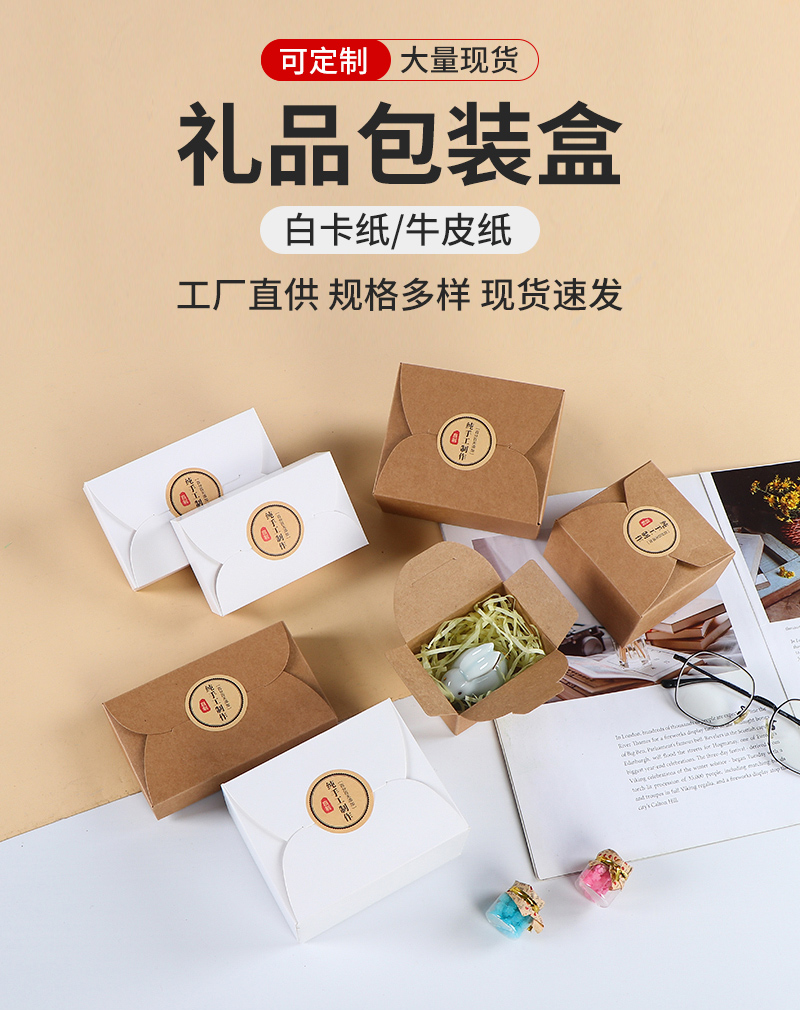
- Kraft paper box — a folding gift box made from white card and kraft paper, supplied in multiple sizes from stock, with logo printing and custom sizes.
- Custom paper advertising gift box — paperboard construction with offset, digital, UV, foil and embossed finishing options, plus material thickness choices in the OEM range.
- Custom non-woven advertising bag — non-woven polypropylene with stitched handles, described as reusable and recyclable, with fabric thickness and lamination options.
These product pages do not publish recycled-content percentages. If a claim is required, state the percentage, the stream and the evidence you need in the inquiry, so the material can be confirmed against the order instead of assumed from a generic description.
Frequently asked questions
Is recycled content packaging more expensive?
Usually slightly more for food-contact and high-strength grades, and close to parity for standard recycled paperboard and corrugated board. The premium tracks collection and sorting costs, not the recycling process itself.
Does recycled content reduce strength?
Recycled fibre shortens with each cycle, so tear and burst values can fall unless the grade is engineered for it. Corrugated board is specified by edge crush test rather than fibre source, which keeps the comparison honest.
Can paper packaging be 100% recycled content?
Yes for many non-food cartons and corrugated formats. Food-contact and high-brightness grades usually blend recycled and virgin fibre to control mineral oil, brightness and strength.
Is recycled content allowed in food packaging?
It can be, but the grade must be approved for the specific food type and conditions of use. Recycled paper and recycled plastic both carry migration requirements that a general-purpose grade does not meet.
What is the difference between post-consumer and pre-consumer recycled content?
Post-consumer material was used by an end customer and discarded. Pre-consumer material is factory scrap that never reached a customer. Post-consumer content is harder to secure and generally carries the stronger environmental story.
Does the EU PPWR apply to packaging imported into the EU?
Yes. The obligations attach to packaging placed on the EU market, wherever it was manufactured, so an exporter needs the same design and evidence as an EU converter.
How do I verify a recycled content packaging claim?
Request the certificate, the calculation basis and a lot-level declaration, then check that the certificate scope names the grade you are buying. A logo without a scope statement is not verification.
What is mass balance in recycled content accounting?
Mass balance allows recycled and virgin material to be mixed through a supply chain while the recorded quantities stay balanced. It is a recognised method, but it does not prove that a specific box contains recycled material.
Conclusion
Recycled content packaging is a specification problem before it is a marketing one. Define the percentage and the stream, agree the accounting method, and require lot-level evidence that matches the certificate. A claim built that way survives a reorder, an audit and a customer question.
If you are building a recycled-content specification for a paper box, bag or label programme, send the requirement through our contact page with the material, target market and evidence you need.