

For custom printed paper bags, start with the job the bag has to do. A counter bag and a bag that rides in a delivery crate are not the same purchase, and the stock that looks best under shop lights can scuff before it reaches the till. What will your buyer judge first: the brand mark, the feel in the hand, or how the bag survives a damp stockroom? Buy for that. One finish, chosen well, usually beats three applied to hide a weak material choice.
Ink behaviour is where cheap decisions show. The same brand red lands differently on an uncoated sheet than on a coated one, and warm shop lighting widens the gap. Ask to see the print on the exact stock you're buying, not a generic swatch, and check a second lot if the bags will sit through a humid season. The published weather and season performance matrix for bulk kraft paper bagsis a useful starting point.
Kraft vs Art Paper: Which Stock Suits Your Custom Printed Paper Bags?
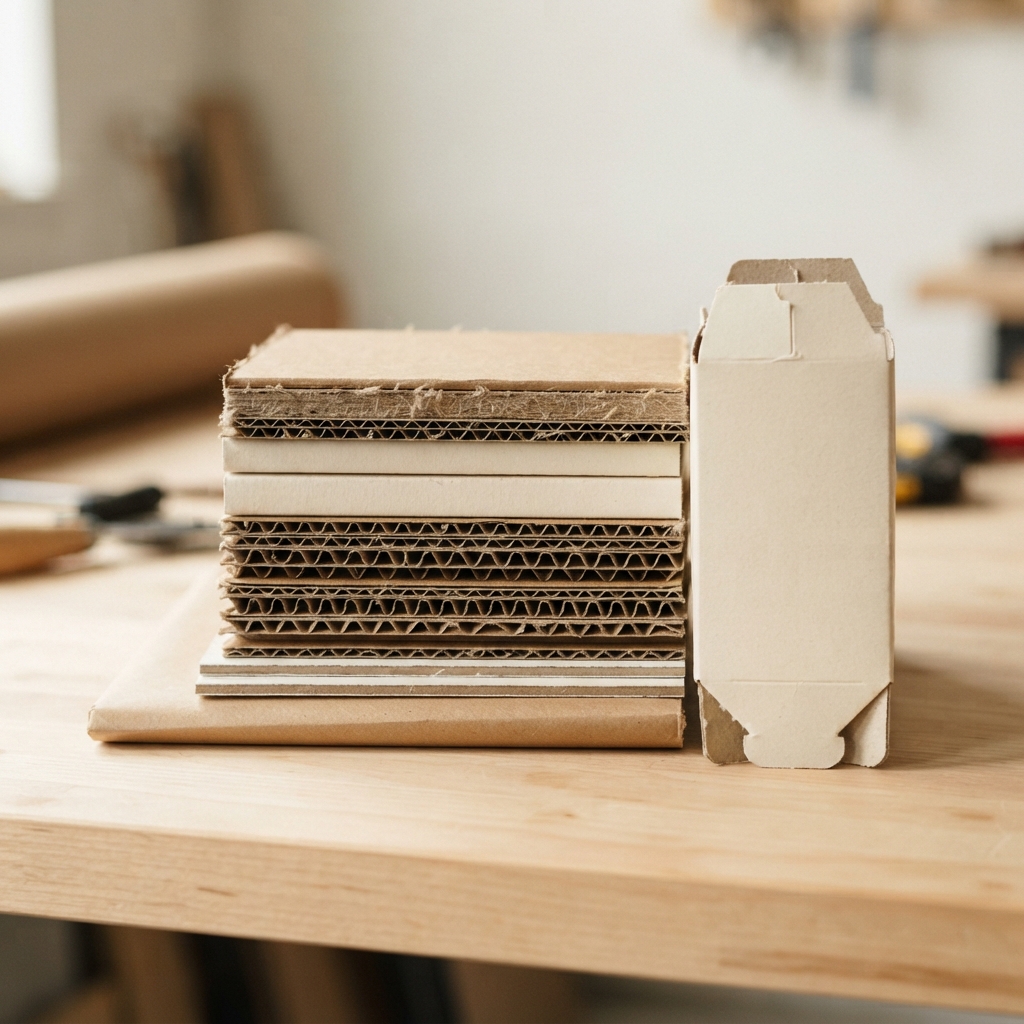
The kraft vs art paper bags decision comes down to one manufacturing step: the clay coating. That single layer decides print receptivity, stiffness and how the bag still looks after a month in a stockroom.
| Criterion | Kraft paper | Coated art paper |
|---|---|---|
| Print result | Ink soaks into uncoated fibre; colours read a shade darker, dots gain and small type softens. | Coating holds a sharp halftone dot, clean whites and 6 pt type. |
| Stiffness | High bulk at low grammage, so it feels firm in the hand. Tight creases can crack the fibre. | Denser sheet, folds crisply. Needs more weight to match kraft's hand-feel. |
| Texture | Visible fibre, matte, warm. You feel the paper through the print. | Smooth and neutral; lamination lies flat without orange-peel. |
| Moisture behaviour | Drinks humidity, softens at the gusset and cockles (the sheet ripples and loses flatness as it takes up moisture). Unheated storage hurts it. | Coating sheds surface water, edges still wick; lamination slows the rest. |
| Best end use | Eco friendly packaging, grocery, takeaway, natural-look gift boxes. | Retail counters, cosmetics, photo-heavy artwork and matched brand colour. |
Outside evidence exists for both rows, and where it comes from matters. FSC-STD-40-004, the chain-of-custody standard from the Forest Stewardship Council, carries a certified fibre claim from pulp mill to merchant to printer to the finished bag. Break one link and the claim stops there.
Suppliers quote a certificate code readily enough. FSC keeps a public database, so check that code against the certificate holder's stated scope before you print a logo. Ask for the CoC code, or for the certified-paper purchase traceable back to the merchant, and verify it yourself. No supplier's word beats a lookup.
The recycling half of the eco-friendly argument is plainer. Fibre gets recovered, re-pulped and run again, and Two Sides' Paper Recycling Facts(2023) tracks those recovery rates market by market. Audited fibre and a working recovery stream are two different claims, and buyers blur them constantly.
For coating and print, the references are test methods rather than marketing.
ISO 3783:2006measures pick resistance on an IGT-type tester: how easily fibres or coating lift onto the blanket under ink tack. Run tackier ink or more speed and a weak surface shows up first. That is the test sitting behind the print-result row above.
ISO 535:2023, the Cobb method, measures water absorptiveness over a set time. It's the quantity behind the moisture row, and the one that separates a bag that lives through a damp stockroom from one that cockles at the gusset.
Both only mean something on stock conditioned to 23 °C and 50 % relative humidity, per ISO 187. Worth asking about. Plenty of mill data sheets quietly leave the conditioning line off.
Treat the two standards as the yardstick your sample is measured against. Never as a test result someone hands you. Standards set the method; the lab sheet, the conditioning and the date are what you actually read.
Kraft wins for grocery, takeaway and any eco-positioned programme, and it's the cheaper proof to approve when your logo is one colour. Skip it if the artwork carries skin tones, gradients or a Pantone to hit. And if your stockroom runs cold, the site's bulk kraft paper bagsweather matrix tracks what a season does to stiffness, seams and print.
Which Paper Weight and Bottom Construction Fit Your Product?
For custom printed paper bags, paper weight follows the load, not the logo size. Grammage is measured in gsm — grams per square metre, the weight of one square metre of paper — and ISO 536 is the test method behind that figure. Two suppliers both quoting "150 gsm" ought to mean the same board. In practice, get the number onto the quote in writing, then feel the scored sample before you commit.
The trade works to roughly these bands: 100–120 gsm for jewellery, cosmetics and light apparel; 150–200 gsm for a bottle or a folded shirt; 210–250 gsm when the bag has to hold its shape on a shelf.
Take them as a starting point for the conversation. Mill to mill, the same nominal weight can feel like two different papers.
And the honest answer is the one you can bend in your hand.
Heavier stock resists bulging. It also resists folding. The crease is where that shows up.
Bend a scored sample along the fold line, open and close it a dozen times, then look at the print over the crease. Cracking there depends on score depth and surface coating as much as on gsm, so test it on the stock your supplier actually proposes.
If the crease whitens, ask what they can change (deeper score, different liner, lighter board) before the run is signed off.
- Side gusset:expands to the product depth and folds flat in the stockroom. Bottles and boxed goods fit without a bag that looks empty.
- Box bottom bag:stands unaided, so staff can pack with both hands. It uses more board and more assembly time.
- Small gusset on a light load:stops a small item sliding around and keeps the bag from sagging.
Bottom construction and paper weight also fight each other. Press the sample flat on a table, let go, and watch whether it stays up: a box bottom in a firm stock tends to hold, and the same construction in a light sheet tends to slump. That five-second test tells you more about counter performance than any weight figure on a page. Same with the small gusset — cut it in flimsy stock and it just folds over.
What Handle Type Should You Choose for Custom Printed Paper Bags?
Match the handle to the weight the bag actually carries, then accept the assembly time it adds. There are five paper bag handle types in normal use, and each one has a load ceiling.
| Handle | What it carries | Assembly and cost |
|---|---|---|
| Twisted paper handle | Apparel, cosmetics, small gift sets — the default retail choice | Machine-applied, fast, lowest added cost |
| Flat paper handle | Same loads, but spreads weight over a wider footprint | Slightly slower glue-up than twisted |
| Die-cut handle | One or two light items. Skip it for anything heavy or sharp-cornered | No handle to attach, so cheapest — but nothing to re-use |
| Cotton rope handle | Bottles, books, boxed gift sets | Knotted or eyeleted by hand; longest assembly time |
| Ribbon | Lightweight gift and boutique bags | Hand-tied, slowest per unit |
Handle attachment is the first failure point on a loaded bag. So the patch or card reinforcement behind it matters as much as the handle itself — specify both, or the neatest cotton rope handle will still pull out of the panel.
Which Finishes Belong on Custom Printed Paper Bags?
More finish doesn't mean more premium. A bag buried under three layers of gloss reads cheap from across the aisle. So which finishing option actually earns its cost?
- UV printing.Ink cured in a second under UV lamps, sitting on the sheet instead of soaking into it. Colour stays sharp, with a faint raised sheen you can feel with a thumb. On uncoated kraft that film can look glassy against the fibre, so judge it on your stock, never on a white proof. Xinze Crafts lists double-sided UV printing among its design-led items.
- Patterned printing.An all-over repeat hides scuffs and fingerprints better than one centred logo, which matters for anything handed across a shop doorway. Registration is where it fails: a pattern that crosses a gusset fold breaks unless the dieline was drawn for it.
- Engraving.The mark is cut into the sheet, so you feel it before you see it. No glare, and it takes handling well. Thin script and small type fill in, though, so skip engraving if your logo lives on hairlines.
One finish, run cleanly, beats three stacked.
Ask at quotation which of those processes the plant runs in house and which it subcontracts. That answer sets your sample rounds and where colour approval actually happens — your printer's own proofing table, or a third party's. ISO9001 tells you the quality system is audited. It says nothing about who owns the UV line.
And don't assume one bag can carry UV, pattern and engraving together. Mixed processes on a single custom printed paper bag need confirming at quotation, in writing, against the stock you have chosen.
Map every place your branding appears on a bagbefore you choose. Front panel, gusset, base, handle card: same ink, four different surfaces.
How Stock, Handles and Finishes Change the Cost of Custom Printed Paper Bags
The cost of custom printed paper bags breaks into a short list: stock grade, paper weight, print colours, lamination area, foil coverage, handle assembly, and the quantity band you order in. Ask for that build, not one unit price. A number without the build behind it tells you nothing.
Stock and weight move material cost and machine time together. Heavier paper costs more per sheet, and it can slow creasing and gluing down.
Print is charged by colour. Every extra colour means another pass through the press.
Lamination is priced by area, not by the word "matte". A full-wrap film costs more than a 40 mm band behind the logo. Foil behaves the same way: stamped area decides, never the phrase "a foil finish".
Handles are labour, mostly. Twisted paper goes on fast. Cotton rope and ribbon take longer, and you see it in the unit cost.
Then there's make-ready, the setup you pay for before a single saleable bag exists. Plates mounted, dies fitted, ink mixed and matched to your Pantone reference, the press run up to register, the gluer dialled in for your handle and bag style. Sheets spoiled during that run-up are waste, and they land on your invoice too. All of it is fixed cost.
Fixed costs don't behave like the rest. Spread them over a long run and each bag carries a small share; over a short one, each bag carries a lot. That's why bigger quantities usually pull the unit price down. How far it drops depends on your artwork, the colour count and how the work is batched on the press. Treat any rule of thumb about doubling quantity as an assumption to test, not a promise.
Want a real number? Send the spec, or ask for a sample first if you'd rather feel the paper and check the print before committing to a run. Xinze Crafts runs OEM and ODM custom manufacturing, so a build that isn't sitting in a catalogue is still on the table; ODM packaging solutions sit alongside the standard custom line. Minimum quantity, sample timing and sample cost are confirmed at quotation, and so are payment terms.
Request a quotation Ask for a sample
Vague specs come back as vague prices, so put these in one message:
- Size: finished dimensions, or a dieline if you already have one
- Paper stock and gsm: the grade you want and its weight
- Print: number of colours, plus the Pantone reference for each
- Quantity: per size, if the order covers more than one
- Handle type
- Finish and coverage: where the lamination or foil sits, and how much area it covers
- Delivery: the city or port the cartons ship to
Send it all at once and the quote comes back quicker. One more thing worth doing: mark which of those points are fixed and which are flexible. That single note often saves more money than haggling over the unit price.
How Do You Plan Quantities, SKU Mix and Cartons for Custom Printed Paper Bags?
Start with the calendar, not a gut number. Count promotion weeks, add a reorder buffer, then let shelf space cap the total.
- Campaign length:cover 8–12 weeks, because a size that sells out mid-promotion costs more than a modest leftover.
- Sizes per store:split units by door; if small bags do the heavy lifting, weight the sku mixthat way and skip slow sizes in test stores.
- Carton planning:fix units per carton before the PO goes out, since odd counts slow receiving. Use a planning sheet for bulk ordersto map this cleanly.
- Storage:measure pallet height first. Cartons stacked past reach get crushed.
- Wholesale rounding:wholesale or multi-store orders should round to full cartons, because open boxes add handling; a step-by-step ordering walkthroughkeeps the sequence straight.
Planning Scenario: Three Sizes of Custom Printed Paper Bags, from Dieline to Carton
Treat this as a planning scenario, not a project record. No client is named. What matters is the order of decisions, because that's where a three-size run gets cheap or gets expensive.
Small, medium, large. Same artwork, different bags. The first approval isn't print. It's the dieline, the flat cutting template showing every fold, glue tab and handle anchor.
One template will not cover three sizes. Gusset depth, handle anchor points and the top fold all shift with the bag, so sign off three separate cutting files before anyone scales the artwork.
Then samples. Round one proves structure, not colour. Fold a medium bag, load it with the product it will actually carry, and watch where the handle sits against the hand. Round two should change only what failed: glue tab, crease depth, ink density. Never the whole design. Approvals get slow and costly when every round restarts the artwork from zero.
Handle strength earns its own line on the approval sheet. Ask for the pull-test figure in kilograms, and ask which attachment it was measured on. Two handles on the same bag can fail differently. Which one does the number cover?
Colour is the other figure to pin down. Agree a tolerance in writing before plates are cut, then check the sheet under the light the bag will be seen in. A shade that passes in an inspection room can look wrong under warm shop LEDs. Suppliers who keep measured readings from past runs should be willing to show them.
If the factory confirms a multi-size run, the three sizes share press setup instead of each paying its own. That's a question for the quote, not an assumption. Get it confirmed size by size, with quantity per size spelled out.
Bulk production starts against the signed proof. Cartons get counted by size, not mixed, so a receiving team can stack them straight off the truck. The SKU and carton planning sheethandles that counting; our guide to what each sample round should changegoes deeper on the approval sequence.
How Is Quality Checked on a Run of Custom Printed Paper Bags?
Ask for the inspection record before bulk starts, not after the pallet lands. Paper bag quality gets settled at four points, and each one should leave a line a buyer can point at three months later.
- Colour:specify a signed, dated physical proof, and that the run is matched to it under the same light.
- Handle pull strength:specify the load in kilograms on the order. "Strong handle" isn't a spec.
- Glue seams and folds:ask for the bottom and side seams squeezed, and creases checked for cracked print.
- Count and cartons:ask for carton quantity against the packing list, plus carton condition noted before the pallet is wrapped.
Colour is approved on paper, not on a screen
Ask to see the proof that counts: a printed sheet, run on the stock your bags will actually use, signed and dated by whoever owns the brand. One copy to the press, one in the job file. That sheet is what any later argument gets settled against.
When the run starts, the operator should pull a sheet and hold it against the signed proof in a viewing booth, same light source both times. Print booths are normally set to the ISO 3664 graphic arts condition. The point is simple. A bag that matches under office strip lights and turns muddy in a supermarket isn't approved — it's a complaint in transit.
Sunlight through a window is not a check. Neither is your monitor. Plenty of buyers still sign off from a JPEG and then meet the real red on the first carton.
Handles get pulled to a number
"Strong handle" means nothing on a spec sheet. Specify the working load in kilograms, get it written on the order, and the check finally has a target.
Ask that the pull happen on a finished bag, handle attached exactly as it ships, spring scale in line, load applied slowly by hand until it holds or gives. Where it gives matters more than the final number: the handle pulling out of the card, the punched hole tearing through, the glue line creeping. A handle that survives a gentle tug and tears at the hole on the second one fails. No average hides that.
Load, handle type, result and initials belong on the lot sheet.
Seams, creases and the paper trail
Bottom seam first. Press it flat, peel it by hand at both corners, look for a continuous glue bead with squeeze-out along the fold and no dry patch in the middle. Side seams and the top fold get the same treatment. Then fold and look along the crease for cracked print.
Counts come last, and that's the step buyers skip: carton quantity against the packing list, carton condition noted (crush, damp, split tape) before anyone wraps the pallet.
All of it on one sheet per lot, please: job number, date, proof reference, the agreed handle load, the result at each of the four points, the inspector's initials, a photo of the first-off bag. Specify that the sheet travels with the job rather than living in someone's inbox.
If you want AQL sampling on the run, say so at quotation and agree the level then, not after the first carton is opened. Lot-by-lot inspection by attributes is set out in ISO 2859-1:1999 (Amendment 1:2011), and the general inspection level plus the AQL you pick together change the sample size and the accept/reject number, so both go into the PO. Then confirm before ordering that the factory actually works to it. Plenty will nod at "AQL 2.5" and count by eye.
One filled-in sheet from a previous run tells you more in two minutes than any badge on a website. Ask for it.
When Are Custom Printed Paper Bags the Wrong Choice for the Load?
Paper bags are one-trip packaging, and most of the time that's the point. They become the wrong choice when the load is heavy, when the bag will sit in a damp boot overnight, or when the buyer expects it back next season. None of that shows up in the bag style. It shows up at the handle and in the board behind it.
Watch what fails first. Fill a production sample to the weight you actually expect, hang it from a single handle, and let it swing for a few seconds. Usually the glued handle patch lifts before the paper body tears. A twisted-paper handle with a punched and glued foot peels off the top edge in much the same way. That's a spec problem, not a style problem, and no print finish rescues it.
Board choice decides how much of that the bag survives. A stiffer sheet spreads the handle load instead of letting the top edge bow, and a turned-over top gives the patch more surface to grip. The base deserves the same thought: a flat glued base seam carries weight better than a satchel fold, and a wider gusset stops the load bulging out and dragging on the side seams. Push the board too stiff and you pay somewhere else. Tight folds crack along the crease, corners scuff white, and the crisp look you wanted goes first.
Wet is the other quiet failure. Paper loses strength fast once it takes on water, and a bag that gets rained on between the shop door and the car is a write-off regardless of how the handle is attached. Our weather and season performance matrixsets out how kraft behaves across damp, dry and cold conditions.
So how far does the bag travel before it's set down? If it's shop to kitchen table, paper is fine. If it has to come back for a second shopping trip, that's a different product rather than a paper tweak: a reusable fabric tote carries more and lives longer, and it solves a problem the board never could.
Key Takeaways
Five decisions carry the whole order of custom printed paper bags.
- Stock:kraft forgives scuffs and creases, art paper holds a sharper brand colour — pick by where the bag gets handled.
- Handle:match it to loaded weight, because a twisted paper handle on heavy jars fails at the crimp (the twisted or glued joint where a paper handle meets the bag).
- Finishes:one finish done well beats three stacked; lamination softens paper texture and bills per side.
- Quantity:size by campaign length and per-store facing — cartons you can't store are dead money.
- Quality:sign a physical proof and keep it, so colour arguments end there.
Frequently Asked Questions
Should I use kraft paper or art paper?
Kraft if the bag should look like paper. Art paper if the logo has to hit a brand colour or carry fine type. Pick the sheet before anyone opens the artwork file: the same ink reads flat and greyish on brown kraft and crisp on coated art.
Which handle should I pick?
Twisted paper is the cheap default, fine for light loads. Flat paper and cotton rope carry more weight and take longer to assemble. And the handle is usually the first part of a bag to fail, so match it to what goes inside, not to the photo you liked.
Why do quotes for the same bag come back so far apart?
Four things move the number: stock grade and weight, print colours, how much of the surface gets laminated, and handle assembly. Setup is a fixed cost, and on a short run it gets spread across fewer bags. The quantity band matters as much as the spec.
What's the minimum order?
A firm MOQ is quoted per exact spec, so there's no headline figure that covers the range. Ask for it in units and in cartons. Carton count is the number buyers forget, and it decides whether a short run is practical at all.
The quotation should state both figures against your bag size with gusset, stock, print colours, handle style, quantity per size, artwork status and in-store date. Send those details and you get a number you can build a purchase order on, not a range you have to guess at.
How long will my order take?
The run moves in a fixed sequence. Artwork and dieline approval come first, then a physical sample round, then bulk printing and conversion, then inspection, then shipping. Nothing goes on press until the dieline is signed, and a late artwork change resets every stage behind it.
Each stage carries its own working days, and the total shifts with print colours, finishes and how loaded the factory is that month. Days are confirmed at quotation against your spec, so ask for the schedule in writing with the price and count backwards from your launch date.
Can I mix sizes in one order?
Only if the factory confirms a multi-size run. Worth asking, because one run usually beats splitting into two orders on setup. Each size still needs its own dieline, its own proof and its own carton count, so keep the list short enough to check.
Are premium finishes worth paying for?
Only when the finish does a job. Matte lamination cuts glare and deepens colour; a spot UV pulls the eye to one mark on the bag. Gloss over a busy design buys shine, fingerprints and nothing else.
How should I store a bulk delivery?
In the carton, on pallets or shelving, off concrete and off damp walls. Kraft takes up moisture and cockles; laminated art paper resists it better but still wants a dry room. Rotate oldest stock to the front.
What's the biggest first-order mistake?
Approving a screen proof when you should be holding a physical sample. Ink on kraft shifts, and a crease that looks clean on a monitor can crack along the fold. Ask for the pre-production sample, fold it, fill it and hang it from the handle before you sign.
Wenzhou Xinze Crafts holds ISO 9001 certification, per the company profile. Ask for the current certificate and its scope before anything goes into your supplier audit file.
Request a quote or a sample
Put the bag size (width × height × gusset), stock, print colours, handle style, quantity per size, artwork status and delivery date into the form, and pricing plus a schedule come back against that spec. Sample lead time, sample fee and payment terms are confirmed at quotation. ODM packaging solutions run alongside OEM/custom manufacturing, which suits private-label buyers who'd rather start from a structure than a blank dieline. And if colour on kraft worries you, ask for a physical sample of the exact stock and handle first: it settles more than a rendered mockup ever will.