

Product Overview
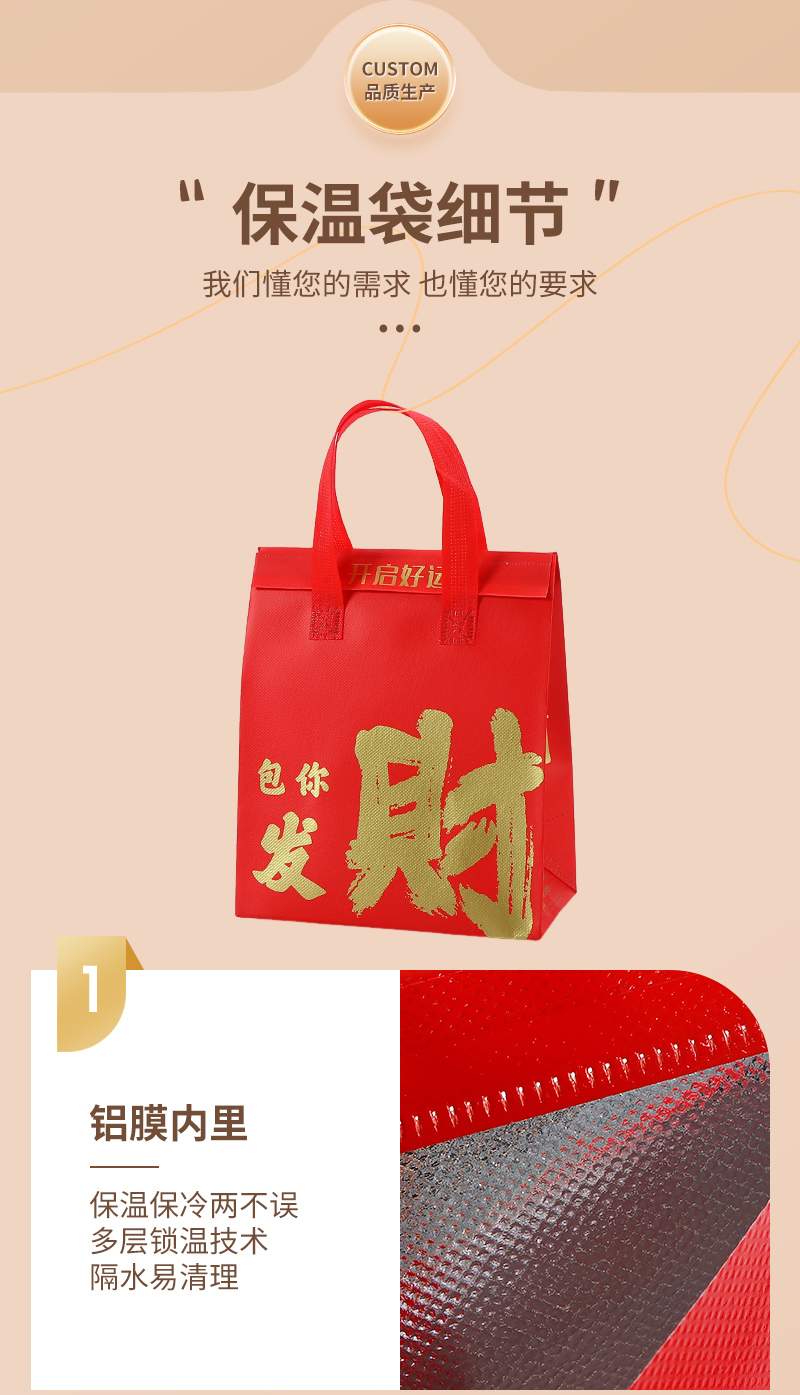
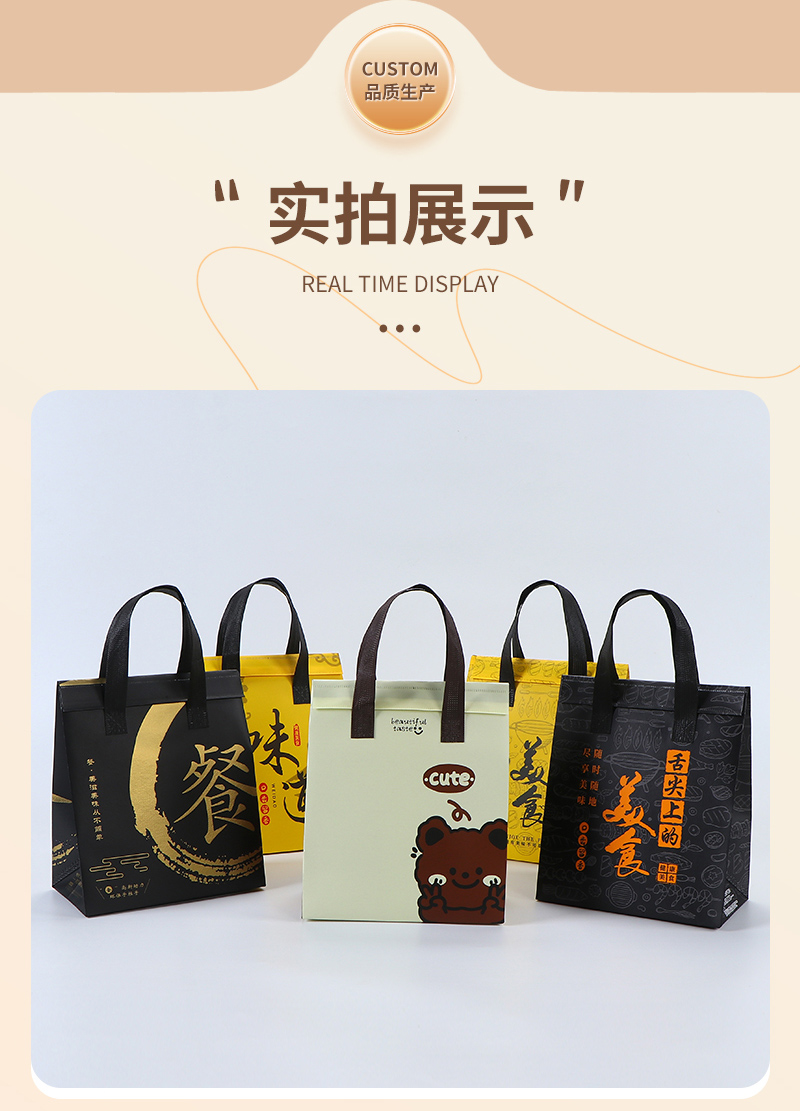
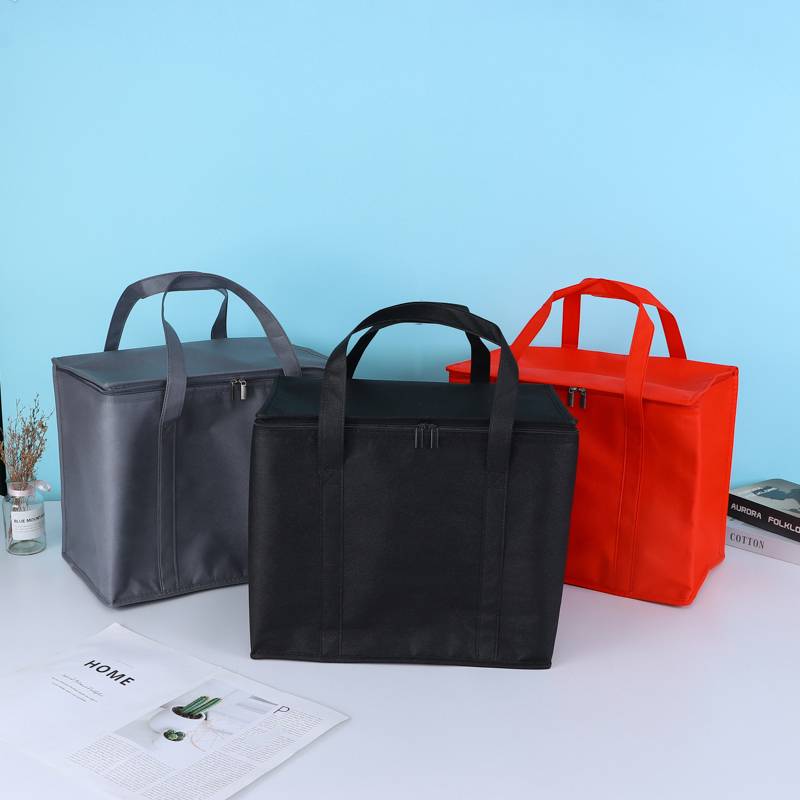
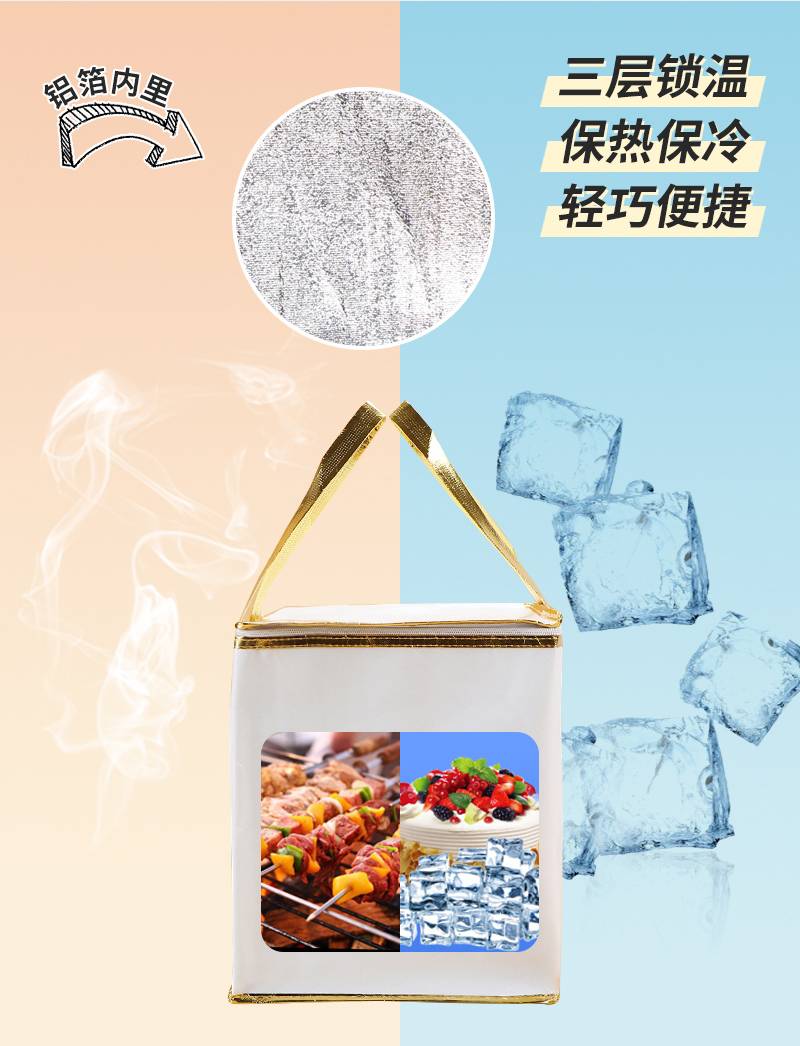
A takeout food insulation packaging bag is designed to solve a practical problem for restaurants, cafés, dessert shops, and delivery sellers: how to keep food organized and temperature-protected while it moves from kitchen to customer. Compared with a plain carry bag, this type of insulated tote-style packaging helps reduce heat loss or temperature rise during short-distance transport, while also giving the order a cleaner branded presentation. Based on the supplied product information, the bag uses a boxy upright structure with handles, printed exterior panels, and a laminated nonwoven-style body with aluminum foil lining.
The visible design makes it suitable for takeaway meals, fruit boxes, desserts, milk tea, and other packaged food items that need a stable carrier. It also works as retail packaging or a promotional tote when buyers want both function and visual branding in one package.
Key Features and Structure
Boxy tote shape
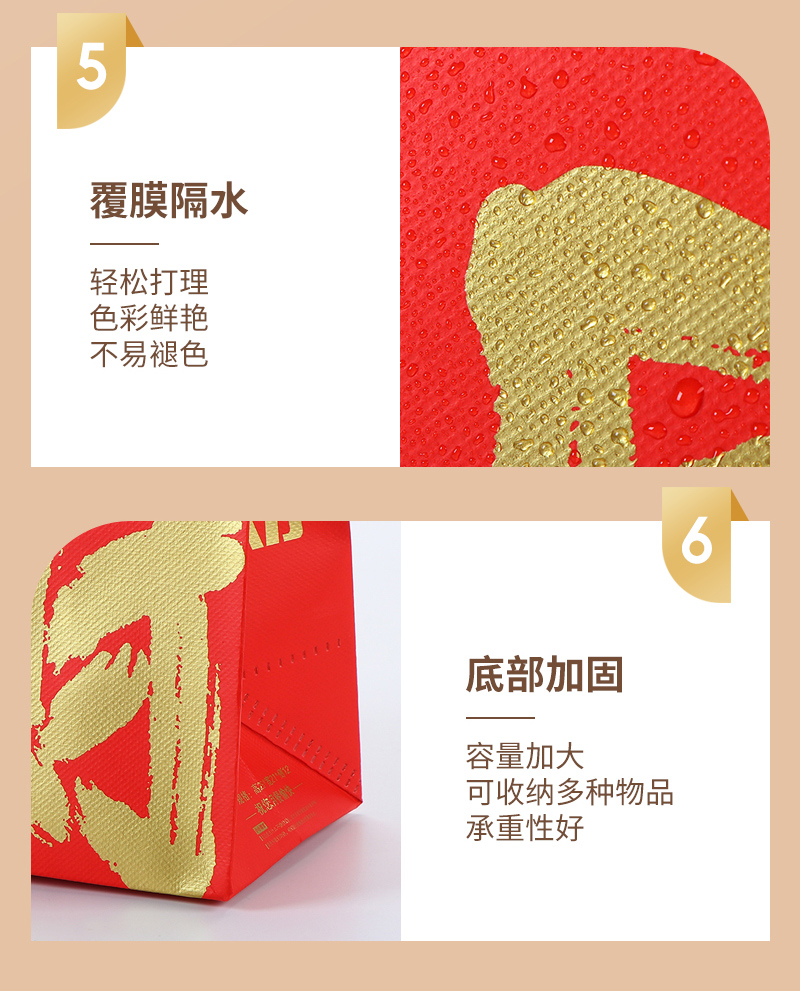
The bag uses a rectangular, upright form with a flat bottom and gusseted sides. This helps it stand on counters more easily and gives packaged food a more stable interior space than a soft pouch-style bag.
Insulated construction
The supplied data describes a laminated nonwoven exterior with aluminum foil lining. That combination is commonly used in thermal food packaging because it adds an insulating layer and can help separate the contents from the outside environment. Exact insulation performance is not provided, so buyers should confirm the required holding time before placing an order.
Carry-friendly handles
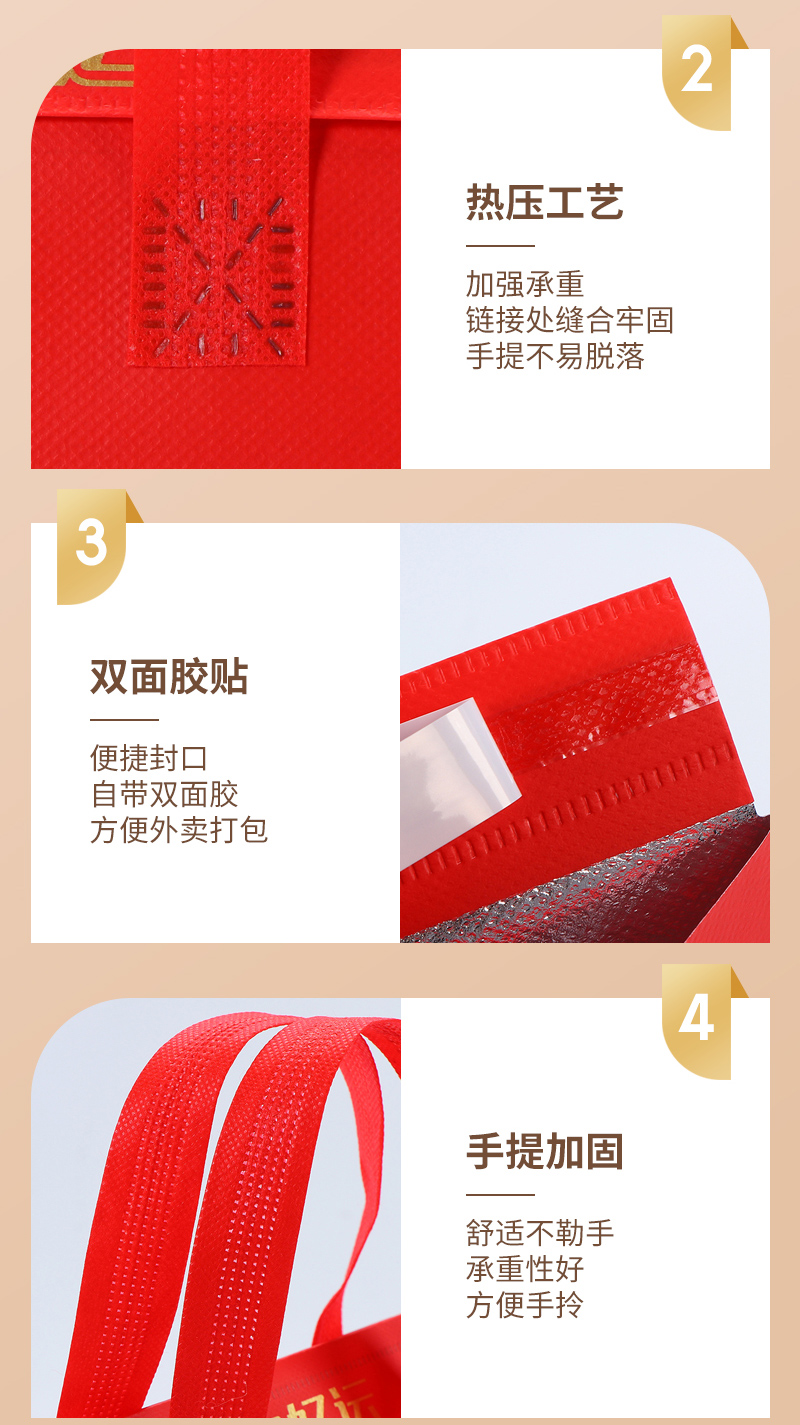
Two short black handles are visible on the top edge. This makes the bag easier to carry for takeaway orders, delivery handoff, and event packaging. The reinforced top edge also suggests the bag is intended for repeated opening and closing during routine service use.
Multiple size options
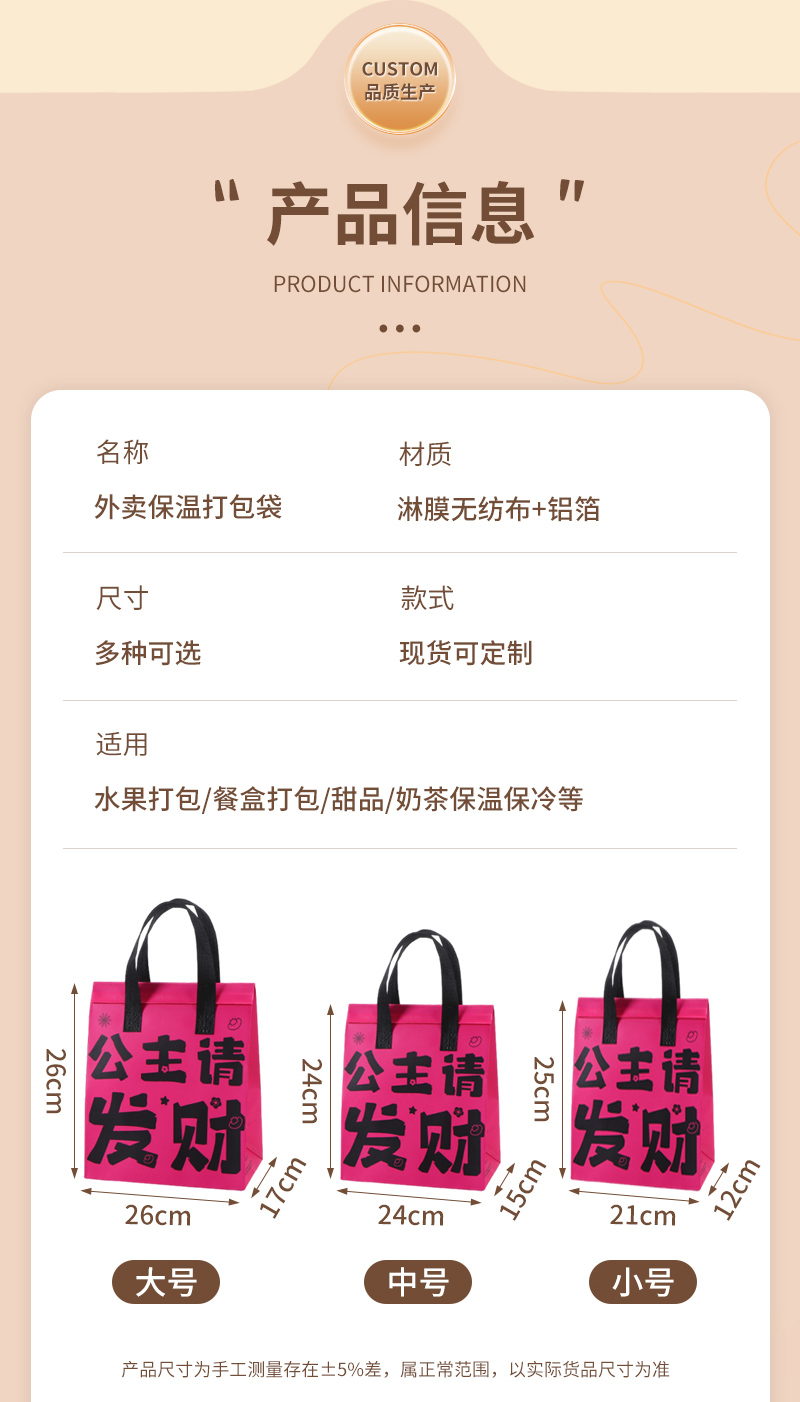
The visible samples show three sizes: large about 26 x 26 x 17 cm, medium about 24 x 24 x 15 cm, and small about 25 x 21 x 12 cm. A manual measurement tolerance of +/-5% is noted. These size choices help buyers match the bag to different food containers or bundled sets.
Materials and Finish Options
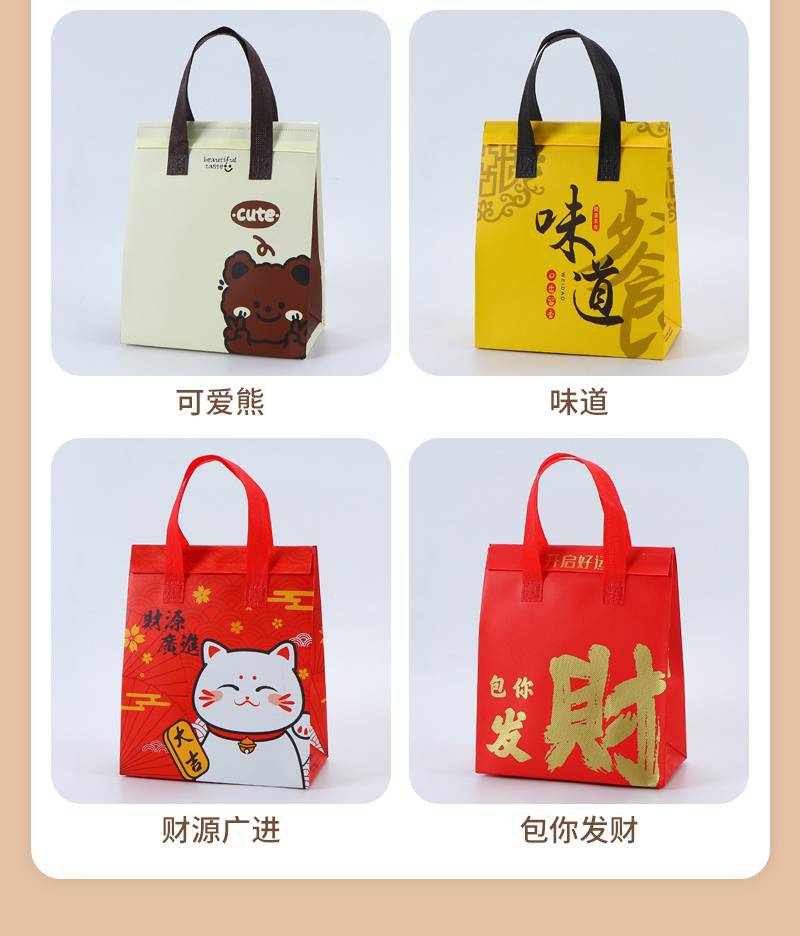
From the supplied information, the exterior appears to be a matte-to-semi-gloss printed surface, but the exact substrate is not fully verifiable from the image. The described material is laminated nonwoven fabric with a foil-lined interior. In similar packaging categories, buyers may request different print colors, logo placement, and surface presentation depending on brand style. Since exact finish options are not confirmed here, it is best to discuss artwork and material requirements during inquiry.
Manufacturing and Customization
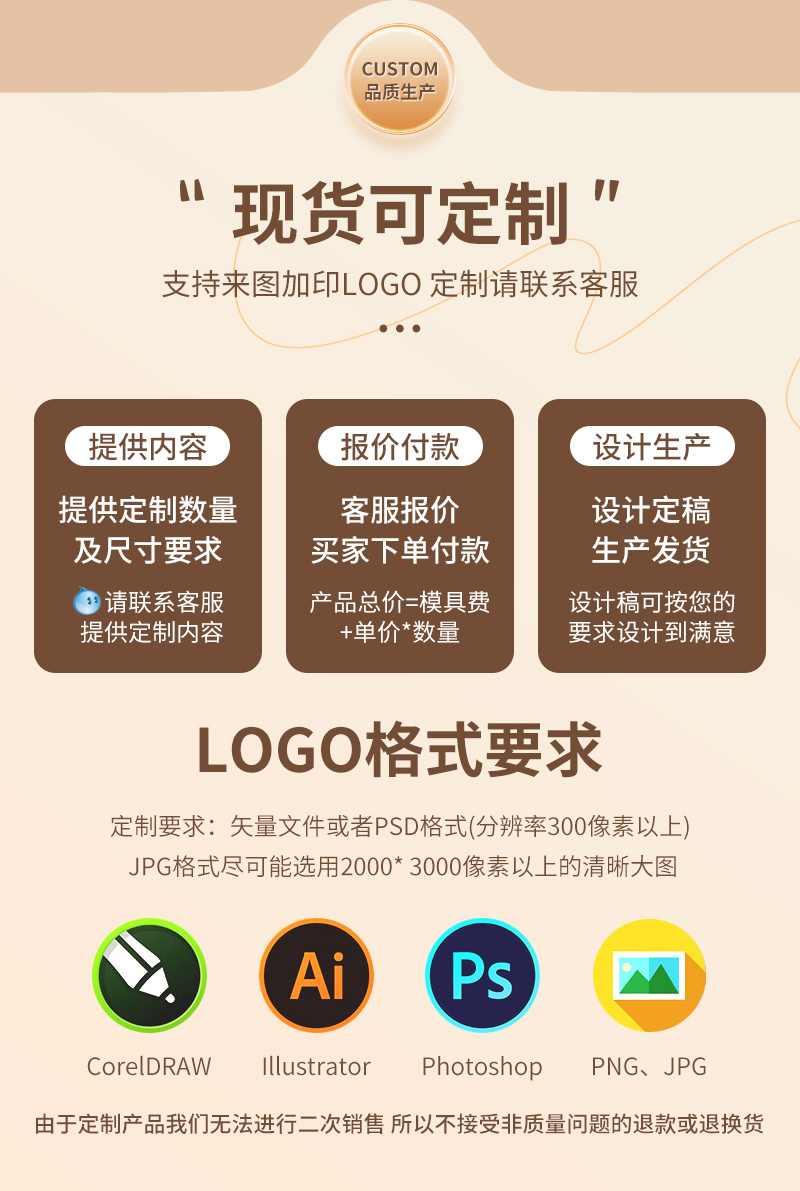
The likely production route includes cutting, lamination, forming, handle attachment, and surface printing. Because the product is positioned as stock available with customization, the workflow may support customer-supplied artwork and logo printing. The preparation data indicates support for vector files or high-resolution image files, including CorelDRAW, Illustrator, Photoshop PSD, PNG, and JPG formats. Clear artwork is important for sharp logo reproduction.
For buyers preparing files, a practical rule is to send clean vector artwork when possible, or large raster images with sufficient resolution. This reduces the risk of blurry text, broken lines, or color mismatch during printing.
Typical Application Scenarios
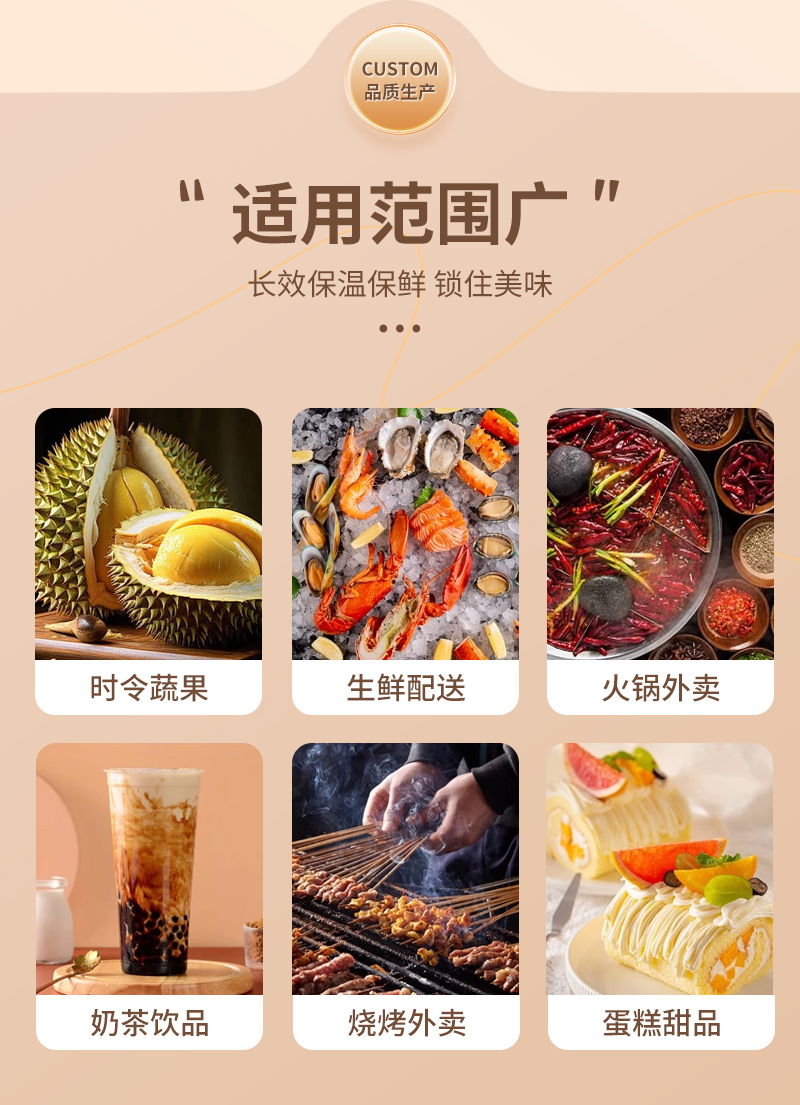
This type of insulated takeaway bag fits a wide range of food-service and retail uses. Common applications include restaurant takeaway, food delivery handoff, fruit packaging, bakery boxes, dessert orders, and milk tea transport. It can also be used for holiday promotions, boutique retail carry-outs, branded giveaways, and event packaging where both presentation and basic thermal protection matter.
Quality Control Points Buyers Should Check
Before ordering, buyers should confirm the material, bag dimensions, handle reinforcement, printing area, and packaging method. Because the image does not show exact load capacity, waterproofing, or thermal retention values, those items should be validated separately if they are important to your operation. For food use, it is also wise to check whether the bag suits hot, chilled, or mixed-temperature items.
How to Choose the Right Version
The right takeout food insulation packaging bag depends on the container size, order mix, and branding need. Small dessert shops may prefer a compact version for cakes, pastries, or beverages. Restaurants with larger meal boxes may need the bigger size to avoid crowding and deformation. If the bag will be used for visible customer handoff, print clarity and color placement become more important. If it will be used mainly for delivery, structure stability and easy carrying may matter more than decorative graphics.
When comparing options, ask whether the bag is designed for single-use or repeated reuse, whether the bottom is stiff enough to hold boxed meals, and whether the handles are comfortable for staff and customers.
Request Custom Packaging
If you need a branded insulated food bag for takeaway service, send your logo, preferred size, and expected usage scenario. A clear specification helps the supplier recommend the best structure and print layout. For custom logo printing or tailored packaging, it is usually best to prepare the artwork first, then confirm material and size before production.