

A heavier fabric does not automatically make wholesale cotton bags stronger. PackMK evaluates the complete load path from contents through the base, side seams, handles and reinforcement, then checks how printing, washing expectations and carton packing affect the finished product.
The most useful specification combines material evidence with production-equivalent tests. This approach gives buyers a better comparison than fabric weight or a supplier's strength adjective alone.
PackMK records every final decision with an owner, approval date and retained evidence.
Test claim 1: fabric weight predicts hand feel
Fabric weight can influence opacity, body and perceived substance, but the result also depends on yarn, weave and finishing. Compare labeled swatches under the same conditions and keep the selected reference.
Use weight as one specification input rather than a complete performance promise. Ask how acceptable variation will be controlled.
Test claim 2: weave changes print and structure
A tighter, smoother weave may support finer artwork, while visible texture changes ink edges and hand feel. Weave density and yarn variation can also affect shape. Review the fabric under normal use and lighting.
Print the proposed artwork at actual size on the chosen material before approving fine detail.
Test claim 3: pattern geometry directs the load
Panel proportions, gussets, corners and base construction determine how contents settle. Concentrated loads can pull seams even when the fabric itself remains intact. Build the pattern around the real product set.
Mark grain or fabric direction where it matters and verify finished dimensions on a sewn sample.
Test claim 4: seams can be the limiting component
Specify stitch type, stitch density, thread, seam allowance, binding and reinforcement. Inspect whether the seam opens, puckers or shifts under load. Decorative neatness does not confirm structural performance.
Cutting and sewing consistency should be checked across samples, not inferred from one selected bag.
Test claim 5: handles need their own specification
Record material, width, length, drop, layer count and attachment. Test hand and shoulder carry if both are intended. Wider handles may improve comfort but change appearance and carton packing.
Inspect the complete attachment zone after cycles, including reinforcement and nearby fabric.
Separate material claims from finished-bag evidence
| Claim | Material evidence | Finished-bag test | Decision |
|---|---|---|---|
| Heavier fabric | Weight record | Loaded carry | Is added weight useful? |
| Tight weave | Swatch comparison | Print proof | Does artwork improve? |
| Strong seam | Construction spec | Cycle test | Where does movement begin? |
| Comfortable handle | Width and drop | User carry | Does load feel acceptable? |
| Stable shape | Pattern | Filled set-down | Does the bag stand? |
Test claim 6: reinforcement must follow stress
Box stitches, cross stitches, patches and doubled fabric should sit where loads enter the bag. More reinforcement is not always better if it adds bulk without supporting the actual path.
Photograph the approved method inside and outside the sample so production and inspection can identify it.
Test claim 7: the heaviest realistic load matters
Define contents and maximum intended weight. Fill the bag, carry it over a representative distance, set it down, reopen it and repeat. Record cycles and inspect seams, handles, base, print and shape.
A brief static hang can supplement but should not replace realistic movement where comfort and shifting loads matter.
Test claim 8: size affects strength perception
An oversized bag lets contents move and can concentrate force during walking. A narrow opening may require operators to strain seams while loading. Measure the complete product arrangement and access path.
Test the smallest and largest intended load if one size serves several use cases.
Test claim 9: printing can change fabric behavior
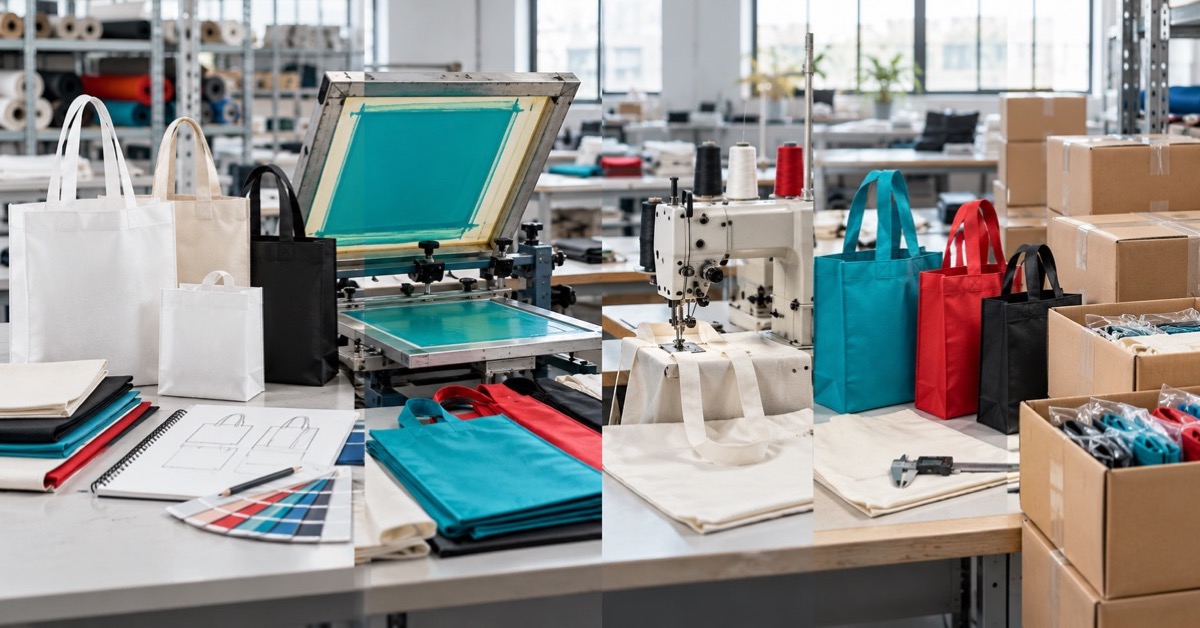
Screen printing, transfer and other methods differ in coverage, opacity, feel and flexibility. Large ink films may behave differently across folds or washing. Keep critical artwork away from seams and abrasion zones.
Approve color and detail on the production fabric, not on a smooth paper simulation.
Test claim 10: shrinkage expectations must be explicit
If washing or moisture exposure is expected, define the care method and acceptable dimensional or appearance change. Test a finished bag because fabric, print, thread and trims interact.
If washing is not part of intended use, avoid implying performance that has not been specified and verified.
Test claim 11: natural variation needs boundaries
Cotton color, texture and minor fiber variation may differ between lots. Define which characteristics are functional, aesthetic and acceptable. Use a controlled sample or range where uniform appearance matters.
The Textile Exchange materials resources can support sourcing discussions, while the order still needs exact evidence.
Test claim 12: bulk inspection must include function
Check fabric, weight, dimensions, weave, color, construction, seams, handles, print, loaded behavior, quantity and packing. The ISO quality management principles provide process context.
Load representative units from different cartons and production periods.
Test claim 13: dense packing can distort the result
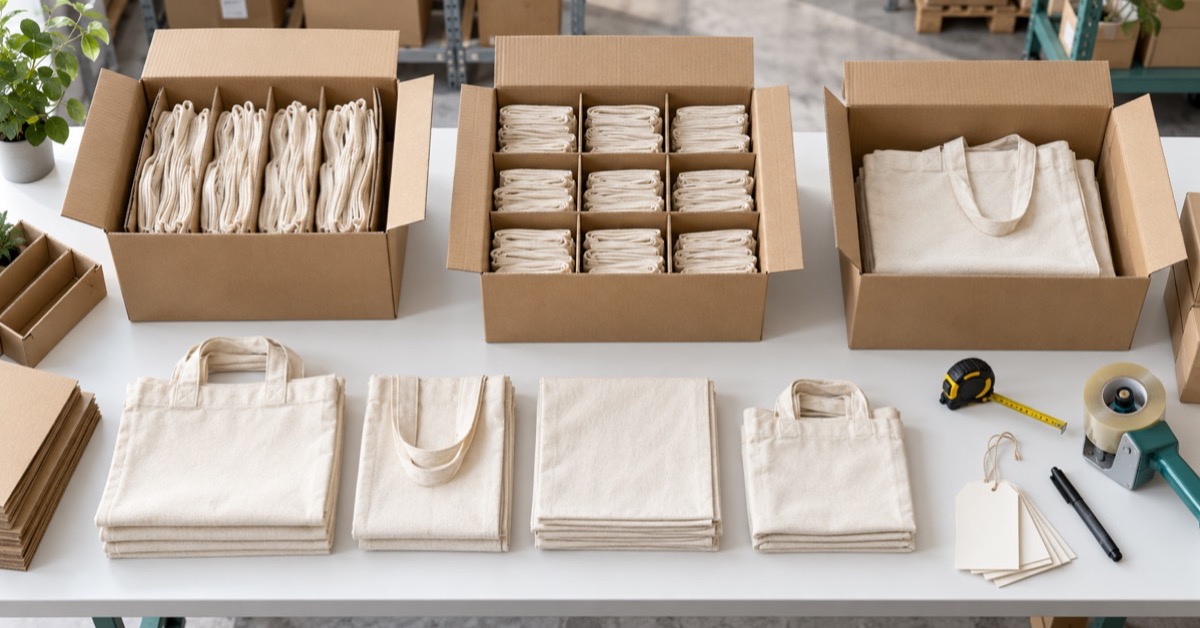
Approve folding, handle position, inner bundles, pieces per carton, moisture protection and shape recovery. Thick fabrics and reinforcement create carton volume. Request final dimensions and gross weight.
Open cartons after a representative storage or transport period and check creases, print rubbing and handle marks.
Test claim 14: price must compare equivalent construction
Normalize fabric, weight, weave, dimensions, seams, thread, handles, reinforcement, printing, quantity, inspection and cartons. State MOQ by color, size and artwork.
A heavier fabric quote may still omit stronger attachment or inspection. Compare the complete bag and landed scope.
Test claim 15: repeatability needs retained records
Keep fabric weight, weave density, seam allowance, stitch construction, handle attachment, load path, printing method, shrinkage test, quality inspection and carton packing. Retain cotton or canvas samples, screen printing proof, MOQ and carton data.
These records protect repeat wholesale cotton bags.
Use one falsifiable test for every important claim
Write what result would cause rejection or redesign before testing. A clear criterion prevents teams from accepting a visually attractive sample despite seam movement, uncomfortable handles or print cracking.
This evidence-first rule gives wholesale cotton bags a defensible approval path.
Develop wholesale cotton bags with PackMK
PackMK can develop wholesale cotton bags with controlled fabric, patterns, sewing, handles, printing, loaded tests, inspection and export packing.
Send PackMK the intended contents and load, size, artwork, quantity, destination and care expectations to request a quotation for wholesale cotton bags.
Repeat the load test after print and packing
Run the first test on a production-equivalent printed bag, then repeat it after samples have remained folded in the approved carton arrangement. Printing, heat, folding and compression can change hand feel, creasing and apparent shape even when seam strength remains acceptable.
Compare results with the initial development sample. If performance or presentation shifts, determine whether the cause is material, conversion or packing before changing the fabric weight.
Use failure location to improve the specification
When a sample moves or fails, record the first visible change and its location. Handle stitching, upper corners, side seams and the base indicate different load-path problems. Photograph inside and outside surfaces before repairing anything.
Change the relevant construction and repeat the same test. This controlled cycle produces stronger evidence than increasing every material or reinforcement at once, and it protects cost, carton efficiency and the approved hand feel.
Build the final evidence matrix
| Feature | Specification | Test | Retained record |
|---|---|---|---|
| Fabric | Weight and weave | Swatch comparison | Material reference |
| Construction | Seam and thread | Loaded cycles | Inside photos |
| Handles | Width and drop | Carry trial | Attachment sample |
| Method and coverage | Physical proof | Artwork version | |
| Packing | Fold and carton | Recovery check | Carton data |
- Explore PackMK cotton and fabric bag formats
- Review PackMK textile bag development
- Request a wholesale cotton bag quotation
Wholesale cotton bag test questions
What specifications are needed for wholesale cotton bags?
Provide fabric type and weight, dimensions, gusset, seams, handles, reinforcement, artwork, print method, intended load, quantity, packing and destination.
Does fabric weight determine cotton bag strength?
No. Weight influences body, but yarn, weave, pattern, seams, thread, reinforcement, handles and load distribution determine finished performance together.
How should cotton bag seams be specified?
Define stitch type and density, thread, seam allowance, binding and reinforcement, then verify construction under a realistic loaded cycle test.
How are cotton bag handles tested?
Fill the bag with realistic contents, repeat carrying and set-down cycles, then inspect comfort, handle material, attachment, reinforcement and adjacent fabric.
Which printing method works on cotton bags?
The appropriate method depends on fabric texture and color, artwork detail, coverage, quantity, desired hand feel and durability expectations.
Should cotton bag shrinkage be tested?
Test it when washing or moisture exposure is part of expected use, using a defined care method and acceptable dimensional and appearance change.
What natural cotton variation is acceptable?
Buyers should define acceptable shade, texture and fiber variation using approved references while separating harmless visual variation from functional defects.
How are wholesale cotton bags inspected?
Inspect fabric, weight, dimensions, construction, seams, handles, reinforcement, printing, loaded function, quantity, inner packs and cartons.
How does carton packing affect cotton bags?
Folding, handle position, compression and moisture can create creases, rubbing or shape changes, so packing and recovery should be approved.
What should be saved for repeat cotton bag production?
Keep the material reference, pattern, construction, thread, handles, artwork, proof, loaded and shrinkage tests, inspection criteria and carton specification.