

Whether a non woven bags MOQ is reasonable depends on the launch stage, demand confidence, number of variants and cost of leftover stock. PackMK separates product validation, first launch, repeat replenishment and mature programs because each stage can carry a different inventory risk.
The supplier minimum is a production constraint, not automatically the buyer's ideal quantity. A useful decision connects setup economics with realistic consumption and a controlled bag specification.
PackMK records every final decision with an owner, approval date and retained evidence.
Stage 1: validate the bag before negotiating volume
Confirm dimensions, material, handles, seams or welds, printing and loaded behavior with a representative sample. Do not accept a large quantity to solve price while the product is still uncertain.
List which elements remain open and what evidence will close them. Validation risk can be more expensive than a higher small-order unit cost.
Stage 2: forecast the first launch as a range
Create low, expected and high consumption scenarios by store, event, week or packed product. Separate staff, sample and replacement use. Record the assumptions beside each number.
A range shows downside and shortage exposure more honestly than one precise forecast built without sales history.
Stage 3: identify what creates the supplier minimum
Ask whether the minimum comes from raw-material color, cutting, welding or sewing, printing setup, bag size, artwork or packing. One total number can hide several constraints.
Understanding the driver allows a targeted alternative, such as sharing a base color while keeping separate artwork quantities.
Stage 4: split the order into true variants
List every material color, size, handle, artwork and language as a SKU. Confirm the minimum and price for each combination. Excess stock of one version may not solve shortage of another.
Use codes on proofs, inner bundles, cartons and warehouse records so the quantity plan remains operational.
Stage 5: compare MOQ with the launch window
Estimate demand during total lead time, including approval, material, production, inspection and transit. Add a named safety allowance. Compare the result with supplier minimum and the useful life of current artwork.
If MOQ greatly exceeds expected use before a likely change, the unit saving may create obsolete inventory.
Choose the launch-stage response
| Stage | Demand confidence | Primary risk | MOQ response | Evidence |
|---|---|---|---|---|
| Validation | Low | Wrong specification | Sample or pilot | Loaded test |
| First launch | Medium-low | Excess stock | Conservative quantity | Scenario forecast |
| Replenishment | Medium-high | Shortage | Lead-time coverage | Usage history |
| Mature program | High | Efficiency | Planned volume | Stable consumption |
| Artwork transition | Mixed | Obsolescence | Split or delay | Use-down plan |
Stage 6: calculate excess-stock exposure
Multiply units above expected consumption by complete landed cost, then add storage, handling, damage and potential write-off. Note the date when artwork, campaign or product changes could make stock unusable.
Compare this exposure with the savings gained from the larger quantity. The cheapest unit is not always the lowest-risk purchase.
Stage 7: calculate shortage exposure
Estimate lost distribution, emergency production, expedited freight, staff work and campaign disruption if stock runs out. This exposure may justify safety stock for stable programs or fixed events.
Name the uncertainty covered by the reserve so it can be reviewed after the order.
Stage 8: test material-color consolidation
Using one base material color across several campaigns may reduce fragmentation. Check whether shared color supports the brand and intended use. Keep printing versions controlled.
Ask whether the supplier can run one material lot and divide later processes without weakening version separation.
Stage 9: test size consolidation
One size can simplify cutting, production and inventory, but it must fit the smallest and largest intended contents. Oversized bags can waste material and distort loads.
Run loaded trials for each SKU assigned to the shared size and record the approved map.
Stage 10: simplify artwork setup carefully
Reduce color count, print positions or coverage only when brand visibility remains acceptable. Approve artwork on the selected non-woven material because texture and base color affect detail.
A standard bag with versioned labels or inserts may work for some programs, but the complete customer experience must be tested.
Stage 11: round with carton quantities
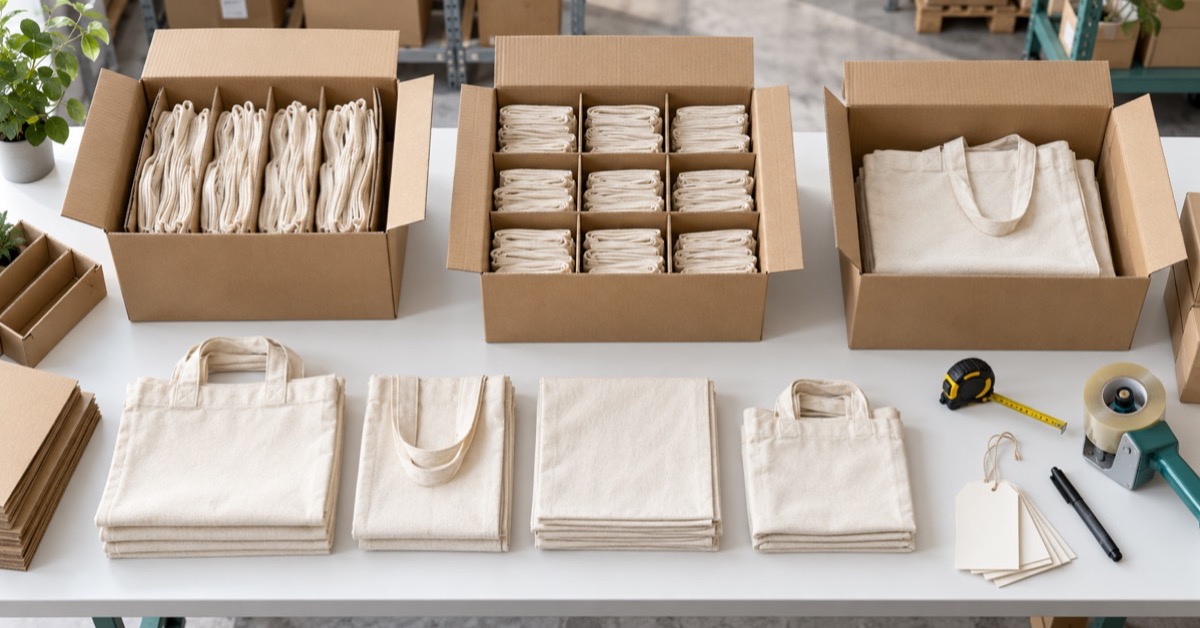
Request inner bundle and carton quantities before finalizing the purchase order. Rounding to full cartons can improve receiving, counts and storage. Confirm carton dimensions and gross weight.
A carton-efficient quantity should not override the demand and obsolete-stock analysis; it is the final rounding step.
Stage 12: negotiate timing as well as quantity
Ask whether material can be reserved, production split, deliveries scheduled or blanket orders used without unclear ownership and payment risk. Record commitments and limitations in writing.
Do not assume every supplier can store finished goods or guarantee future material color without a formal agreement.
Stage 13: protect quality at lower quantities
Small runs still need a complete specification and inspection proportionate to risk. Check material, dimensions, construction, handles, print, loaded function, counts and packing.
The ISO quality management principles support process discipline, but acceptance remains order-specific.
Stage 14: review environmental language
Polypropylene non-woven construction does not by itself establish reuse, recyclability or disposal outcomes. Claims depend on design, evidence and local systems. The US EPA's recycling resources explain that accepted materials vary.
Keep statements accurate for the actual bag and destination.
Stage 15: set a reorder point after launch
Track opening stock, receipts, consumption, adjustments and closing stock by SKU. Reorder when expected lead-time demand plus safety stock approaches available inventory, accounting for open orders.
Use actual consumption and supplier performance to replace early launch assumptions.
Stage 16: record the MOQ decision
Write the minimum order quantity, launch forecast, material color, size variant, artwork version, production setup, carton quantity, safety stock, reorder point and obsolete inventory risk. Include polypropylene, non-woven, MOQ, SKU and carton references.
This makes the next non woven bags MOQ review traceable.
Use a no, yes or conditional decision
Reject the minimum when excess risk is unacceptable, accept it when demand and specification are stable, or accept conditionally with consolidated variants, split deliveries or an approved use-down plan.
The decision should explain why the non woven bags MOQ fits the current stage.
Plan non-woven bag quantities with PackMK
PackMK can quote non woven bags MOQ options with controlled material, sizes, handles, artwork versions, samples, inspection and cartons.
Send PackMK the bag specification, forecast range, variant mix, destination and required date to request a staged quotation and reorder plan for non woven bags MOQ.
Review the decision at fixed calendar gates
Set review dates before sample approval, material purchase, print release and the next reorder. At each gate, update demand, open inventory, artwork changes, lead time and unresolved quality risks. Do not let an old forecast remain active merely because the supplier quotation has not expired.
A dated review makes quantity decisions responsive without allowing uncontrolled late changes.
Close the first order with actual numbers
After receipt, compare forecast and consumption, planned and actual lead time, ordered and accepted quantity, carton data, defect reserve and remaining stock by SKU. Explain major differences and update the next reorder model.
This closeout turns the first purchase into evidence, allowing the next minimum decision to rely less on assumptions and more on observed demand, inventory age and supplier performance.
Score the final quantity decision
| Factor | Low-risk signal | High-risk signal | Action |
|---|---|---|---|
| Specification | Approved and tested | Still changing | Delay volume |
| Demand | Repeat history | New estimate | Use scenarios |
| Variants | Few and stable | Many small SKUs | Consolidate |
| Lead time | Measured | Uncertain | Add named reserve |
| Obsolescence | Low | Artwork changes soon | Reduce or split |
- Explore PackMK non-woven bag formats
- Review PackMK custom bag development support
- Request a non-woven bag MOQ quotation
Non-woven bag MOQ questions
What determines non woven bags MOQ?
Minimums may be driven by material color, bag size, cutting, welding or sewing, printing setup, artwork version and supplier production planning.
Should a first launch accept the full supplier MOQ?
Only after comparing demand scenarios, specification confidence, lead time, unit savings, storage and the risk that products or artwork change.
Can several designs share one MOQ?
Possibly when they share material and construction, but printing setup, version quantities, segregation and supplier rules determine whether consolidation is practical.
Can one bag size reduce the minimum?
It can simplify production and inventory if the smallest and largest contents both pass fit, loading, presentation and loaded-performance tests.
How should MOQ savings be evaluated?
Compare unit-price savings with complete excess-stock cost, including cash, freight, storage, damage, handling and possible obsolete inventory.
What is safety stock for non-woven bags?
It is additional inventory covering named demand or supply uncertainty, such as promotions, transport delays, inspection sorting or emergency replacements.
Why do carton quantities matter?
Full-carton quantities simplify receiving and counts, while carton dimensions and weight affect freight, warehouse space and handling.
Can suppliers split production or delivery?
Some may, but material reservation, ownership, payment, storage, delivery timing and version control should be agreed explicitly in writing.
When should non-woven bags be reordered?
Use expected demand during total replenishment lead time plus safety stock, then account for current inventory, open orders and variant balance.
How can PackMK help with MOQ decisions?
PackMK can connect quantities with materials, variants, samples, production setup, inspection, cartons and reorder timing so tradeoffs remain visible.