

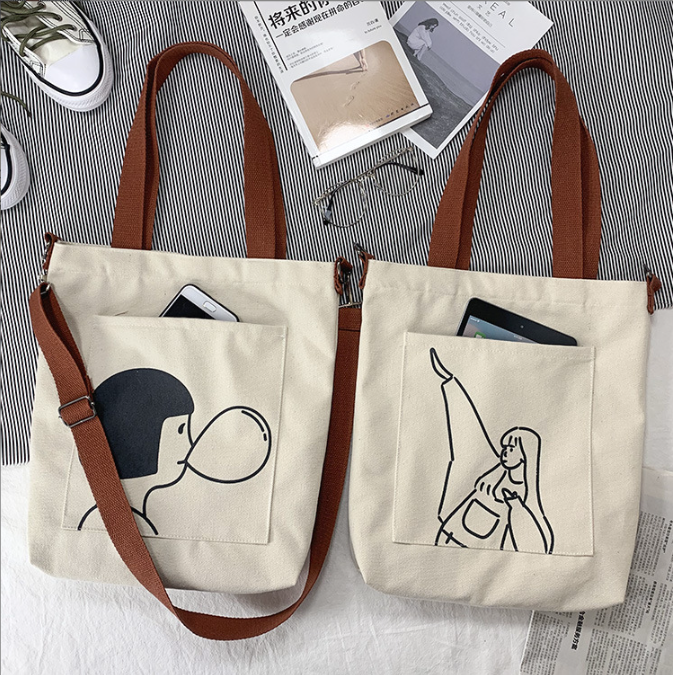
To specify custom tote bags that survive daily use, begin with the loaded use case rather than fabric color or logo size. PackMK maps the contents, carrying method, frequency, environment and packing route before fixing material, handles, seams and printing.
A useful specification lets a supplier build the same bag twice. It states what will be carried, where loads move through the construction, how the sample will be tested and which physical reference governs repeat production.
Start with the heaviest realistic load
List typical contents and the heaviest combination that users can reasonably place in the bag. Include hard corners, bottles, books or equipment that may concentrate pressure. Decide whether the bag is carried briefly from a store, used every day or distributed as merchandise.
Trace the load path from the base into the side seams and through the handles. This simple exercise identifies where reinforcement matters and prevents a strong fabric from being paired with weak attachments.
Calculate bag size from packed contents
Arrange the contents as they will sit in use, then measure occupied width, depth and height. Add clearance for loading and removal without leaving so much empty volume that the bag collapses or the contents shift.
A gusset changes usable volume and standing behavior. Test flat, bottom and side-gusset formats with real products rather than selecting dimensions from a competitor sample.
Write a one-page tote bag specification
| Specification | Buyer decision | Approval evidence |
|---|---|---|
| Finished size | Width, height and gusset | Filled sample |
| Material | Fiber, weave, fabric weight and color | Fabric reference |
| Handles | Width, handle drop and reinforcement | Loaded carry test |
| Construction | Panels, seam construction and base | Inside-out inspection |
| Printing | Method, colors, size and position | Physical color proof |
| Packing | Fold, inner pack and carton quantity | Packing sample |
Choose fabric weight and structure together
Fabric weight alone does not define strength. Fiber, weave, coating, panel direction, seams and reinforcement work as a system. Ask for a fabric reference and confirm whether the bag should feel soft, stand upright or fold into compact storage.
The Textile Exchange materials resources provide broader sourcing context. Actual performance still requires a production-equivalent bag test.
Compare common tote materials by use
| Material profile | Typical feel | Useful for | Risk to test | Cost pattern |
|---|---|---|---|---|
| Cotton | Soft and familiar | Retail, events and light merchandise | Shrinkage, color and print | Medium |
| Canvas | Heavier and structured | Repeated loads and branded merchandise | Bulk, seams and print texture | Medium to high |
| Non-woven | Light and shapeable | Volume programs and retail | Seam method and load | Low to medium |
| Oxford cloth | Structured or coated | Equipment, kits and repeated handling | Coating, creasing and edges | Medium to high |
Set handle drop from the carrying method
Hand carry, shoulder carry and over-the-arm use need different handle drop. Test the filled bag on users wearing normal clothing and observe whether the bag hangs comfortably without striking the ground.
Handle width affects comfort, while attachment area controls load transfer. Define reinforcement, stitch pattern and acceptable distortion around the top edge.
Inspect the construction from the inside
Turn samples inside out where possible. Check thread ends, stitch spacing, backstitching, seam allowance, binding and corner transitions. Look for points where a product edge can rub directly against a seam.
For lined bags, inspect how the lining is anchored and whether it bunches during loading. A polished exterior can hide inconsistent internal workmanship.
Match the print method to fabric and artwork
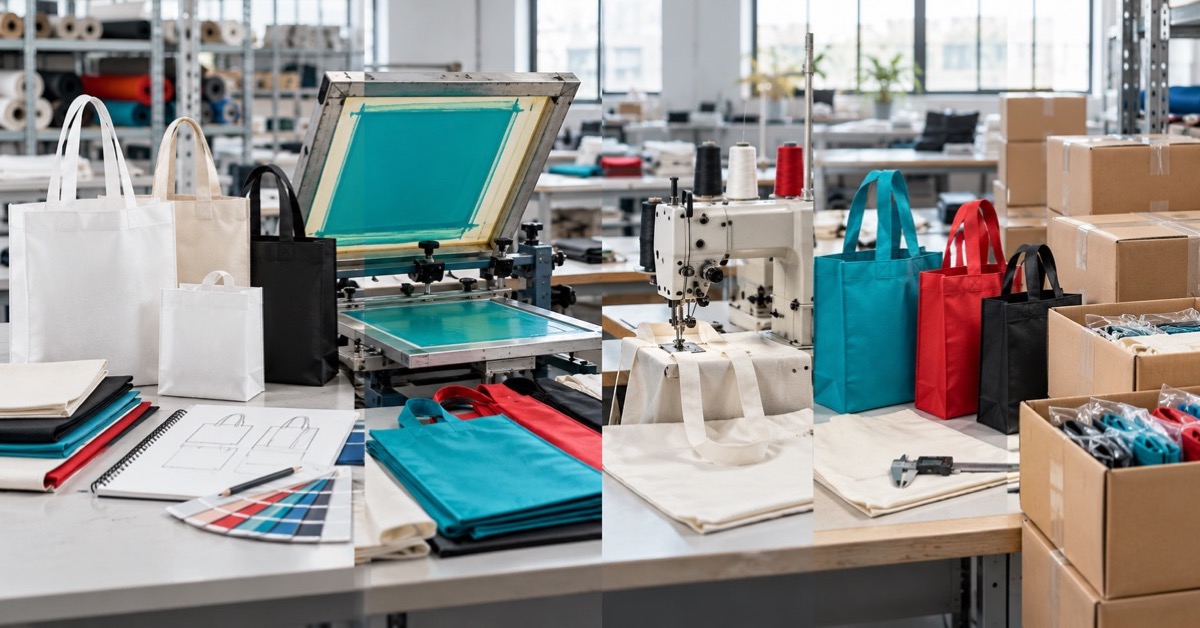
Screen printing, transfer and other methods behave differently on fabric texture and color. Keep fine lines and small reverse text at a size the chosen process can reproduce. Approve color on the actual fabric.
Place artwork away from seams, folds and high-friction areas. A print method should be judged after the bag is folded, filled and carried, not only when the panel lies flat.
Run a loaded sample protocol
Fill the loaded sample with the maximum intended contents. Carry it, set it down, open it, repack it and repeat. Record base sag, handle stretch, seam movement, print abrasion and whether the bag still presents correctly.
Photograph the approved condition and retain the contents list. This creates repeatable evidence instead of a vague statement that the bag felt strong.
Turn quality expectations into a checklist
Check dimensions, fabric weight, color, construction, handles, print position, visible contamination, quantity and carton packing. The ISO quality management principles support process control, while the purchase specification defines the actual acceptance criteria.
Mark critical failures such as wrong artwork, unsafe handle attachment or severe size error separately from tolerable cosmetic variation.
Plan sampling, capacity and lead time
Separate artwork proofing, fabric procurement, sample sewing, print approval, bulk cutting, sewing, inspection and packing. Confirm which approval is required before material is committed.
For several bag sizes or colors, create a version matrix. Capacity should be reviewed against the actual mix, not a theoretical output for one simple style.
Control cost without weakening the load path
Cost can be adjusted through size, fabric use, panel count, print coverage, handle material, accessories and packing. Re-test every structural change. Removing reinforcement or narrowing a handle may save material but create a much larger failure cost.
Compare complete scope, including sample level, inspection and carton packing, before choosing a quote.
Release custom tote bags through PackMK
PackMK can develop custom tote bags from a one-page use brief through fabric approval, printed samples, loaded testing and repeat-order records. The final handover should identify every material, dimension, seam and packing decision that matters.
Send PackMK the intended contents, load, size, fabric preference, artwork, quantity and delivery market to receive a project-based quotation.
- Explore PackMK tote bag and packaging formats
- Review PackMK OEM and ODM bag support
- Request a custom tote bag quotation
Decide who the tote is not designed for
A clear limit protects the specification. State whether the bag is unsuitable for sharp tools, wet products, prolonged outdoor use, machine washing or loads above the approved test. These boundaries help sales teams and users avoid treating one format as universal.
When a second use case is important, test it separately instead of expanding the original claim without evidence.
Use a pilot order before a large rollout
A pilot quantity of custom tote bags can test production variation, loaded performance, print behavior, folding and user response. Select samples from different cartons and repeat the same load protocol used during development.
Record any difference between the approved sample and pilot output before increasing volume. A pilot is most useful when the acceptance rules are written in advance.
Plan MOQ around demand and change risk
MOQ affects unit price, but it also controls cash, storage and obsolete inventory. Choose a quantity that fits realistic distribution, artwork stability and supplier lead time. Several colors or sizes may divide production efficiency even when the total order looks large.
Ask how a material purchase, print setup or construction change affects the minimum quantity for each version.
Create a receiving quality checklist
The receiving quality checklist should confirm carton identity, count, dimensions, fabric, handles, seams, printing, odor, contamination and loaded performance. Inspect the way bags recover after being folded in cartons, especially structured or coated formats.
Keep defect photographs and carton references so feedback identifies a production pattern rather than an isolated complaint.
Protect the repeat order from silent substitutions
A repeat order should use the retained fabric, color, artwork, pattern, handle and carton references. Require written approval for a new fabric source, weight, thread, ink or packing method. Even a similar-looking substitution can change hand feel, strength or print color.
PackMK can compare the new production sample with the approved custom tote bags record before bulk release.
Custom tote bag specification questions
What information is needed to quote custom tote bags?
Provide finished size, expected contents and load, fabric preference, handles, gusset, printing, quantity, packing method and delivery market.
Which fabric is best for a tote bag?
The best fabric depends on load, desired structure, surface feel, print detail, washing expectations, budget and intended useful life.
How should tote bag size be calculated?
Arrange the typical contents, measure their occupied space and add only the clearance needed for loading, closure and comfortable carrying.
What handle drop should a tote bag use?
Handle drop should match hand or shoulder carry, user clothing, bag height and filled weight. Test it on a loaded production-equivalent sample.
How can buyers test tote bag strength?
Load the bag with the heaviest realistic contents, carry and set it down repeatedly, then inspect handles, seams, base and shape.
Can fine artwork be printed on fabric tote bags?
Possibly, but fabric texture, color, ink, print method and artwork size affect detail. Approve physical output at final size.
What causes tote bag seams to fail?
Failures may come from insufficient reinforcement, unsuitable stitch construction, weak thread, concentrated loads or dimensions that distort the bag.
What affects custom tote bag cost?
Fabric, weight, size, construction, handles, print coverage, accessories, quantity, inspection and carton packing all influence cost.
How should tote bags be packed for export?
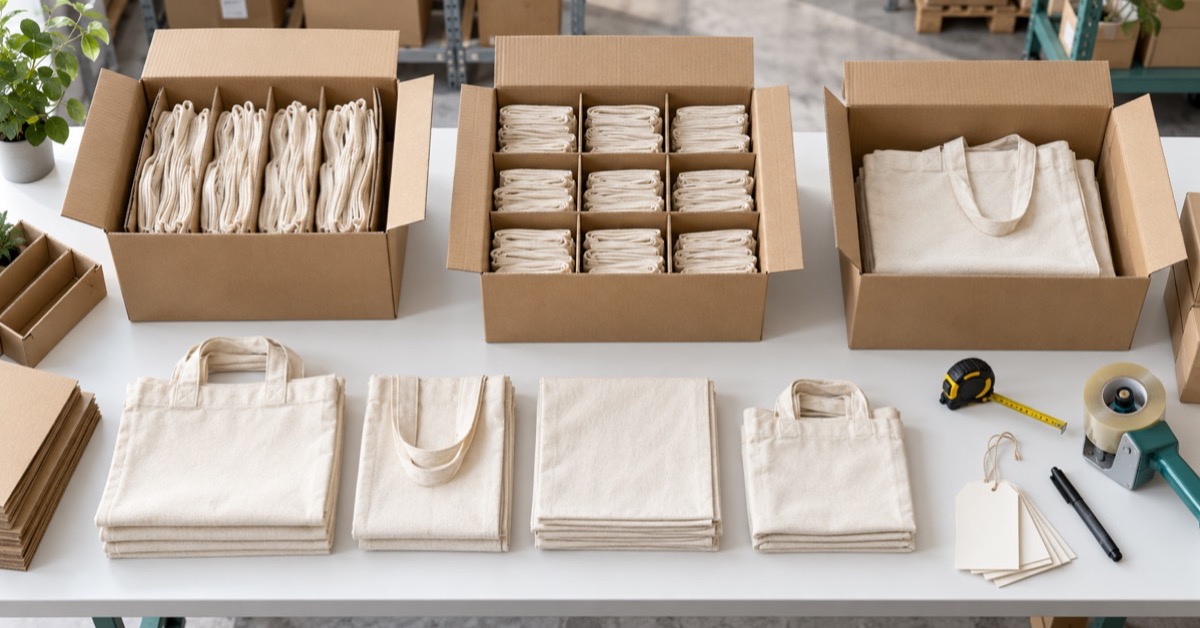
Control folding, handle position, inner packs, pieces per carton, moisture protection and shape recovery after unpacking.
What should be saved for a repeat tote bag order?
Keep the approved artwork, fabric reference, dimensions, construction details, loaded sample results, inspection rules and carton specification.