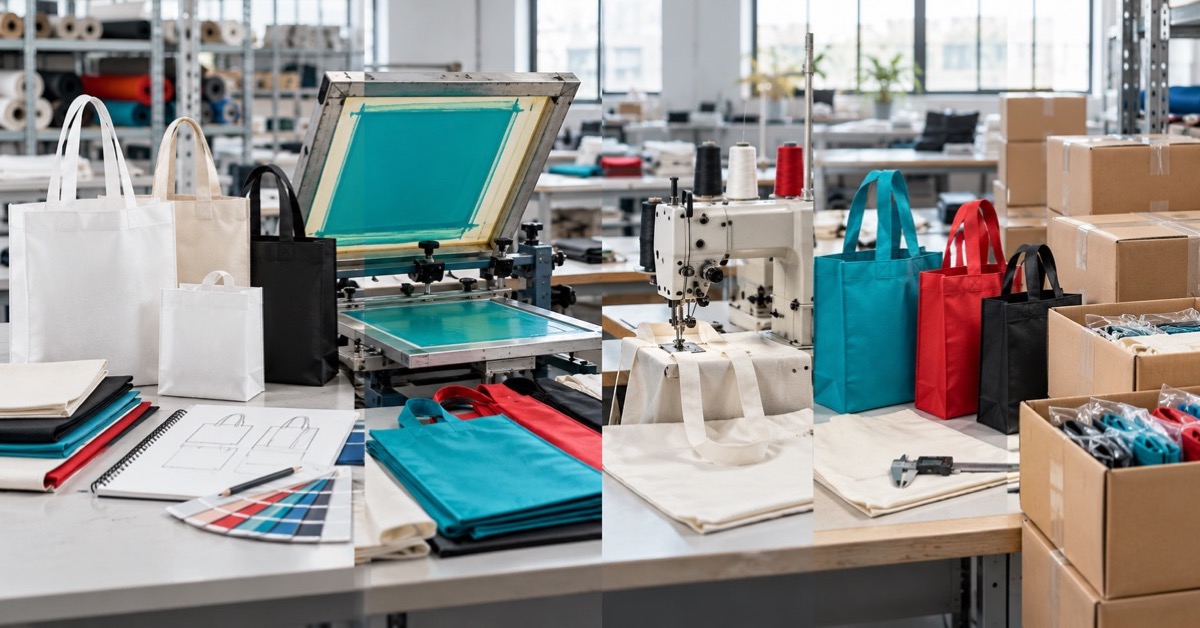


A polished sample proves that one bag can be made. It does not prove the line can repeat fabric shade, cutting, print placement, seams, handles and packing at commercial volume. A custom tote bag factory China evaluation should follow the transfer from sample room to production.
PackMK uses a sample-to-scale audit. The buyer sees where knowledge changes hands, which steps are outsourced, how a pilot run exposes constraints and what evidence supports containment and reorders.
PackMK begins with the buyer's operating question, the physical reference and the decision owner. The working brief records assumptions, tolerances, open risks and the evidence needed before quantity, price or schedule is treated as firm.
Scale gate 1: reconcile the buyer brief
Compare the quotation, specification, artwork, signed sample, quantities, variants, packing and delivery plan. PackMK asks for evidence from the proposed production route, not a showroom sample or an unrelated line, and assigns an owner to every open risk.
Ask production staff to explain the active instruction and escalation path for missing fields. This reduces sales assumptions becoming factory defaults. Store the result beside the live specification so quotation, sampling, production, inspection and reorders use the same basis.
Scale gate 2: trace fabric identity
Define construction, weight, width, color, finish, shrinkage need, lot and approved alternatives. PackMK asks for evidence from the proposed production route, not a showroom sample or an unrelated line, and assigns an owner to every open risk.
Trace a selected roll from receiving record through storage and cutting bundle. This reduces generic fabric names hiding lot changes. Store the result beside the live specification so quotation, sampling, production, inspection and reorders use the same basis.
Scale gate 3: control patterns
Code panels, gussets, pockets, linings, handles, seam allowances and print placements by revision. PackMK asks for evidence from the proposed production route, not a showroom sample or an unrelated line, and assigns an owner to every open risk.
Retrieve current and obsolete patterns and verify how production access is controlled. This reduces sample-room geometry failing to transfer. Store the result beside the live specification so quotation, sampling, production, inspection and reorders use the same basis.
Scale gate 4: test cutting yield
Review marker layout, grain or direction, usable width, defect zones, ply height and bundle size. PackMK asks for evidence from the proposed production route, not a showroom sample or an unrelated line, and assigns an owner to every open risk.
Compare quoted consumption with the exact size and construction under production conditions. This reduces yield pressure changing orientation or dimensions. Store the result beside the live specification so quotation, sampling, production, inspection and reorders use the same basis.
Scale gate 5: transfer printing
Set artwork code, method, position, color reference, coverage, curing and registration tolerance. PackMK asks for evidence from the proposed production route, not a showroom sample or an unrelated line, and assigns an owner to every open risk.
Approve a first printed panel on production fabric and inspect later panels across time. This reduces a perfect sample-room print hiding run drift. Store the result beside the live specification so quotation, sampling, production, inspection and reorders use the same basis.
Scale gate 6: balance sewing operations
Map every seam, reinforcement, handle attachment, pocket, lining, closure and finishing step to equipment and skill. PackMK asks for evidence from the proposed production route, not a showroom sample or an unrelated line, and assigns an owner to every open risk.
Observe work allocation and compare the slowest operation with the target output. This reduces one bottleneck creating rushed workmanship downstream. Store the result beside the live specification so quotation, sampling, production, inspection and reorders use the same basis.
Scale gate 7: define handle evidence
Specify material, width, length, drop, fold, attachment and reinforcement for the intended load. PackMK asks for evidence from the proposed production route, not a showroom sample or an unrelated line, and assigns an owner to every open risk.
Run loaded carry cycles on pilot pieces from different operators. This reduces strong body panels failing at attachments. Store the result beside the live specification so quotation, sampling, production, inspection and reorders use the same basis.
Scale gate 8: run a pilot batch
Choose a quantity large enough to exercise material handling, printing, sewing, finishing, inspection and packing. PackMK asks for evidence from the proposed production route, not a showroom sample or an unrelated line, and assigns an owner to every open risk.
Reconcile input, accepted output, defects, rework, time and learning before volume release. This reduces one golden sample concealing repeatability problems. Store the result beside the live specification so quotation, sampling, production, inspection and reorders use the same basis.
Scale gate 9: verify capacity by process
Review current workload, shift pattern, output, changeovers, outsourced steps and manual constraints for the exact design. PackMK asks for evidence from the proposed production route, not a showroom sample or an unrelated line, and assigns an owner to every open risk.
Build dates from the constrained operation rather than total factory headcount. This reduces nominal factory scale creating an unrealistic schedule. Store the result beside the live specification so quotation, sampling, production, inspection and reorders use the same basis.
Scale gate 10: release the first article
Check current fabric, patterns, artwork, dimensions, seams, handles, function, labels and packing marks. PackMK asks for evidence from the proposed production route, not a showroom sample or an unrelated line, and assigns an owner to every open risk.
Record measurements, photos, approvers and conditions that reopen approval. This reduces pilot learning failing to control the production setup. Store the result beside the live specification so quotation, sampling, production, inspection and reorders use the same basis.
Scale gate 11: monitor variation
Sample across bundles, operators, machines, shifts, colors and print versions using named defects. PackMK asks for evidence from the proposed production route, not a showroom sample or an unrelated line, and assigns an owner to every open risk.
Set stop rules for critical construction, identity or loaded-function failures. This reduces drift continuing until final inspection. Store the result beside the live specification so quotation, sampling, production, inspection and reorders use the same basis.
Scale gate 12: inspect subcontracted steps
Identify printing, coating, embroidery, washing, testing or packing performed outside the main site. PackMK asks for evidence from the proposed production route, not a showroom sample or an unrelated line, and assigns an owner to every open risk.
Trace material, instructions, turnaround, inspection and lot identity through the external route. This reduces outsourcing breaking specification control. Store the result beside the live specification so quotation, sampling, production, inspection and reorders use the same basis.
Scale gate 13: validate export packing
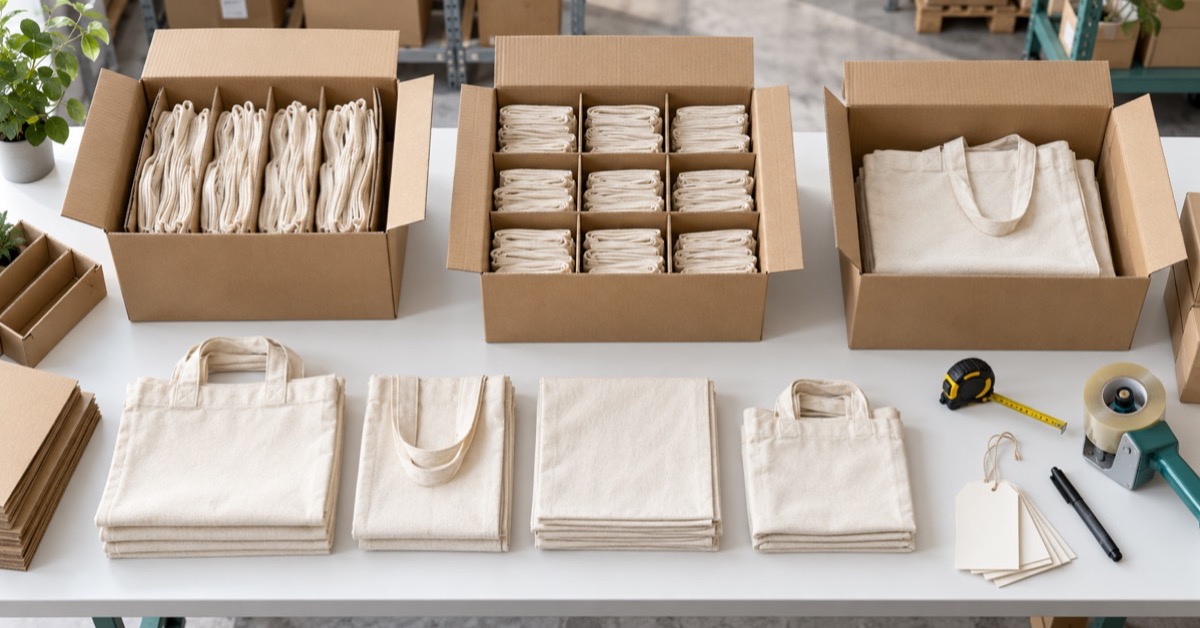
Set folding, inner count, moisture protection, carton strength, marks, pallet layout and receiving method. PackMK asks for evidence from the proposed production route, not a showroom sample or an unrelated line, and assigns an owner to every open risk.
Pack pilot output and inspect compression, print transfer, creasing, count and unpacking time. This reduces acceptable bags being damaged or mixed in transit. Store the result beside the live specification so quotation, sampling, production, inspection and reorders use the same basis.
Scale gate 14: test corrective action
Define containment, affected-lot trace, cause, correction, verification, replacement and communication owners. PackMK asks for evidence from the proposed production route, not a showroom sample or an unrelated line, and assigns an owner to every open risk.
Use one pilot defect to follow the record through closure and the updated work instruction. This reduces factory response beginning only after shipment. Store the result beside the live specification so quotation, sampling, production, inspection and reorders use the same basis.
Move evidence from sample to scale
| Gate | Question | Evidence |
|---|---|---|
| Material | Same input? | Lot trace |
| Pattern | Same geometry? | Revision record |
| Process | Repeatable route? | Pilot data |
| Run | Stable output? | Periodic checks |
| Recovery | Contained issue? | Closed action |
Verify capacity at the constraint
| Process | Capacity field | Risk |
|---|---|---|
| Cutting | Layers and bundles | Size drift |
| Printing | Changeovers and cure | Color delay |
| Sewing | Slowest operation | Queue |
| Inspection | Check rate | Late discovery |
| Packing | Cartons per hour | Dispatch delay |
Use textile and quality guidance carefully
Standards improve terminology and management questions, while the exact tote, proposed line, pilot run and traceable records decide factory approval. Use Textile Exchange standards overview and ISO quality management principles as context. The actual product, signed sample, production records and buyer-approved conditions remain the release evidence in the PackMK file.
Audit a custom tote bag factory China for scale
For custom tote bag factory China, define fabric lot, pattern revision, cutting bundle, print registration, sewing balance, handle reinforcement, pilot run, production capacity, final inspection, corrective action. The controlled record also identifies PackMK, China, tote bag, cotton, canvas, non-woven, MOQ, carton. These fields turn a search phrase into a quotation and inspection language that different teams can apply consistently.
Require suppliers to state exclusions, approved alternatives, minimums, tooling, setup, testing, packing and lead-time assumptions. A vague item should become a priced option, a sampling question or a release condition rather than remain an informal promise.
Match every proof to the risk it can actually answer. A material swatch can support color or hand-feel review, but it does not prove finished construction, application, run consistency, transit protection or receiving accuracy. Assign the later check before approving the sample.
After the first shipment, compare receiving results with the signed sample and inspection record. Document what predicted the result, what changed and which field should be revised. PackMK moves that learning into the next controlled brief rather than leaving it in separate messages.
This buyer-question method keeps custom tote bag factory China useful across sourcing, marketing, quality and operations. It makes tradeoffs visible, gives every decision an owner and creates a recovery route when artwork, material, quantity, destination or timing changes.
Move a tote-bag sample into production with PackMK
PackMK can develop custom tote bag factory China from buyer brief and physical samples through production checks and export packing. Send PackMK the intended use, contents or surface, artwork, quantity, variants, destination and required date to request a structured quotation for custom tote bag factory China.
- Explore PackMK custom tote bag formats
- Review PackMK OEM and ODM support
- Request a custom tote bag factory China quotation
Custom tote factory scale-up questions
What should buyers send before a tote factory audit?
Send the specification, fabric, construction, artwork, signed sample, quantities, variants, quality plan, packing and delivery target.
Does a good sample prove volume capability?
No. A pilot run, production transfer, capacity evidence, periodic checks, packing and corrective action show repeatability.
How is fabric identity controlled?
Use construction, weight, width, color, finish, lot, physical reference, incoming checks and approved substitution rules.
Why are pattern revisions important?
Panels, seam allowances, handles and print placements can change; coded access prevents obsolete geometry from returning.
What should a pilot run measure?
Measure material use, time, accepted output, defect categories, rework, operator variation, function and packing performance.
How should capacity be verified?
Review the exact cutting, printing, sewing, inspection and packing route, current workload, changeovers and slowest operation.
How are outsourced steps audited?
Trace material identity, instructions, turnaround, inspection, transport and records through the subcontractor route.
What belongs in final inspection?
Check fabric, dimensions, seams, handles, decoration, loaded function, cleanliness, quantity, variants, bundles and cartons.
What protects a repeat order?
Keep fabric and color references, patterns, artwork, signed samples, pilot data, inspection, deviations and packing.
How does PackMK support factory scale-up?
PackMK connects the buyer brief with factory evidence, pilot runs, production checks, export packing and retained reorder records.