

Why buyers ask for a custom printed Tyvek bag with logo
A custom printed Tyvek bag with logo sits in a useful middle ground between a paper gift bag and a reusable tote. It looks more premium than a disposable carrier, holds its shape better than many soft shopping bags, and gives brands a large, uninterrupted surface for graphics. That matters whether you are planning a trade show handout, a retail package, a fan-merch drop, or a conference swag bag. In practice, the question is rarely just “Can we print a logo?” It is more often: will the bag stand up to daily handling, will the artwork reproduce cleanly, and does the material feel right for the brand story?
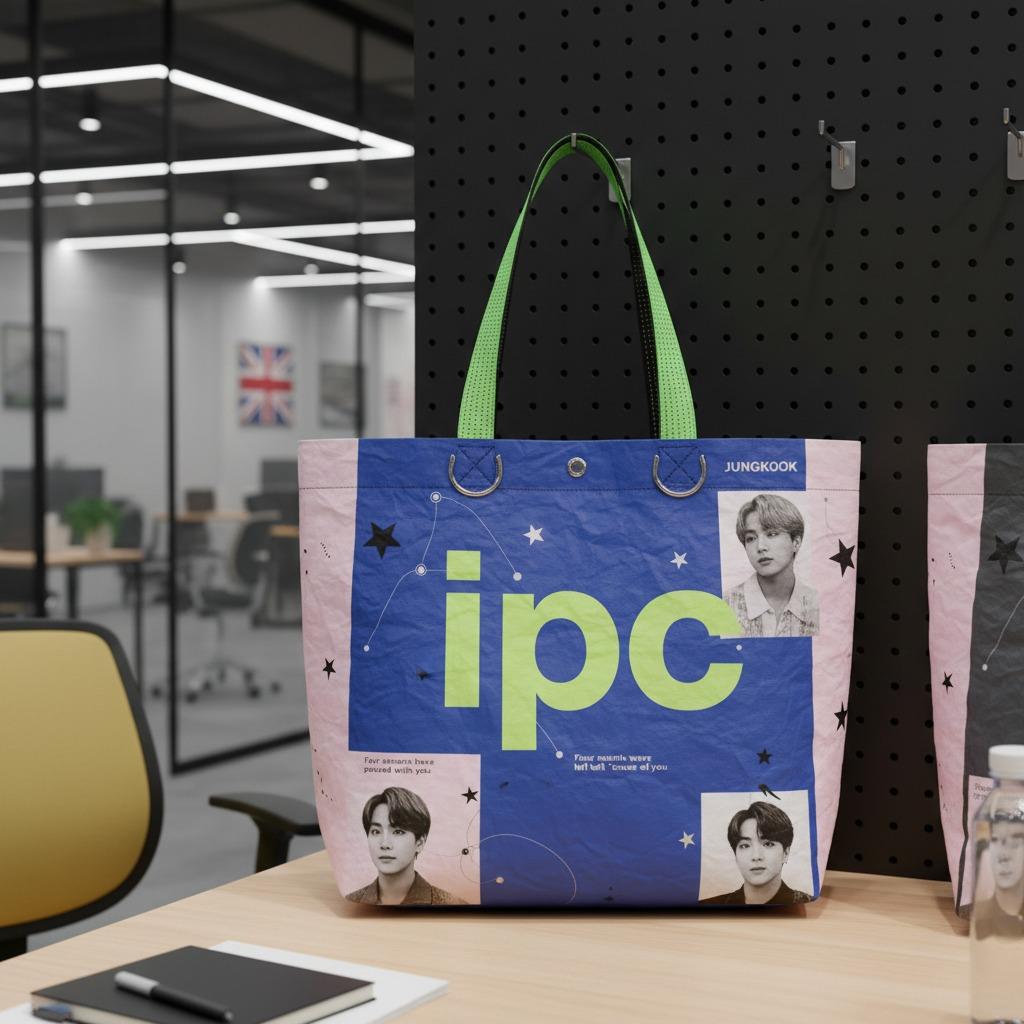
Tyvek-style bags are often chosen because they combine a crisp visual effect with a lightweight feel. Some versions have a frosted or translucent appearance; others show the familiar crinkle texture associated with DuPont paper-style materials. The exact material and construction can vary, so buyers should treat samples carefully and confirm what they are ordering rather than assuming every Tyvek-look bag is built the same way.
What these bags are used for
In real purchasing terms, these bags tend to fall into a few categories. A custom printed tote may be used for exhibition kits, light retail purchases, brand events, or as a collector item. The product examples provided also point to fan merchandise, where the visual design is as important as the function. That is not a small detail. For that kind of use, the bag is not just packaging; it becomes part of the product experience.
Common buyer priorities include a good print area, a structure that lets the bag stand upright on a table, and handles that feel secure when carrying books, documents, or daily items. A boxy open-top tote with reinforced top edges and stitched or sealed seams usually serves this purpose well. A softer body can work too, especially when the goal is light carry and a more relaxed exhibition bag style.
Tyvek-style tote formats: quick comparison
Structured tote
Best for retail presentation, fan items, and premium giveaways. The boxy silhouette looks tidy and can display graphics more clearly when the bag is standing upright.
Soft exhibition bag
Better for brochures, samples, and event handouts. It is usually lighter in appearance and easier to pack flat, though it may not hold its shape as neatly.
Graphic-forward merch bag
Useful when the print itself is the main value. The examples supplied show large portrait artwork, inset photos, star motifs, and prominent text. In that case, the bag is carrying a message as much as a load.
What to check before you order
First, confirm the actual substrate. “Tyvek,” “DuPont paper,” and “Tyvek-like synthetic paper” are not always used with the same precision by every supplier. That is a practical caution, not a semantic one. The hand feel, wrinkle behavior, and print finish can differ. Ask for a physical sample if the bag will represent your brand in public.
Second, look at the handles and attachment points. The product data mentions black woven webbing handles, metal ring hardware, and reinforced top edges on some versions. Those details matter more than people think, especially for event bags that will be grabbed quickly and carried all day.
Third, inspect the print layout. A large front graphic works well on a Tyvek shipping bag with logo or exhibition tote, but busy artwork needs clean registration and enough contrast to read from a distance. If the design uses full-bleed color, ask how seams, folds, and gussets affect the image.
Common mistakes buyers make
One frequent mistake is choosing a bag only for its visual novelty. A translucent or frosted surface can look impressive, but if the seams, handle reinforcements, or base construction are weak, the bag will disappoint fast. Another issue is underestimating how much the finish influences the brand impression. Matte crinkle texture feels very different from semi-gloss synthetic sheet material, even when the bag dimensions are similar.
Buyers also sometimes over-specify the artwork and under-specify the use case. If the bag is for documents and brochures, clarity and structure matter most. If it is for fan merchandise or retail display, the print area and color fidelity may deserve priority. Set that order early, otherwise the sample review becomes a guessing game.
Practical buyer advice
If you are sourcing logo printed Tyvek bags for an event, start by deciding how the bag will be judged: by appearance on a table, by carrying comfort, or by how well it photographs. That one decision usually shapes the rest. For trade shows, a larger rectangular tote with a flat bottom is often the safer choice. For retail packaging, a more structured bag may better support the product reveal. For brand campaigns, the printing surface and color contrast may be the main selling point.
Ask for samples that show both the bag body and the handle assembly. If the supplier cannot clearly explain the construction, treat that as a warning sign. And if the bag must be reused several times, confirm the real-world handling expectations instead of relying on a generic promise. A tyvek shipping bag with logo can look sturdy in a photo and still behave very differently once filled.
FAQ: short answers buyers usually need
Can these bags be customized with large graphics? Yes, that is one of their main strengths. The supplied product examples show full-surface printing and logo-heavy artwork.
Are they good for light daily carry? Generally yes, especially for books, documents, and shopping goods, provided the construction matches the intended use.
Do all Tyvek-style bags feel the same? No. Surface texture, stiffness, and finish can differ depending on the material grade and production method.
Where to go from here
If you are sourcing a custom printed Tyvek bag with logo, the most useful next step is to narrow the bag by purpose, then compare samples side by side. Focus on the material feel, print clarity, handle attachment, and whether the shape fits the way your customers or event attendees actually carry things. That is usually where the real difference shows up, not in a product description.
For brands that want a reusable, visually distinctive bag with a large print field, Tyvek-style totes are worth serious consideration. Just keep the brief practical, and ask the supplier to prove the details that matter.