

Why buyers keep looking for a custom packaging manufacturer
When a product has to do more than sit in a carton, the search usually starts with a custom packaging manufacturer. Brands want packaging that protects the item, carries the logo clearly, and looks good enough to hold its own on a shelf or in a gift handoff. That is especially true for tea, specialty food, seasonal gifts, and retail sets, where the box or bag is part of the product experience, not just a shipping accessory.
For sourcing teams, the decision is not only about appearance. It is about how the packaging will print, fold, carry, display, and survive normal handling. A sturdy paperboard gift box can elevate a premium tea assortment. A handled paper gift bag can make a fruit promotion feel deliberate rather than improvised. The right format depends on what the customer sees first and what happens to the package after the sale.

What the visible packaging formats suggest
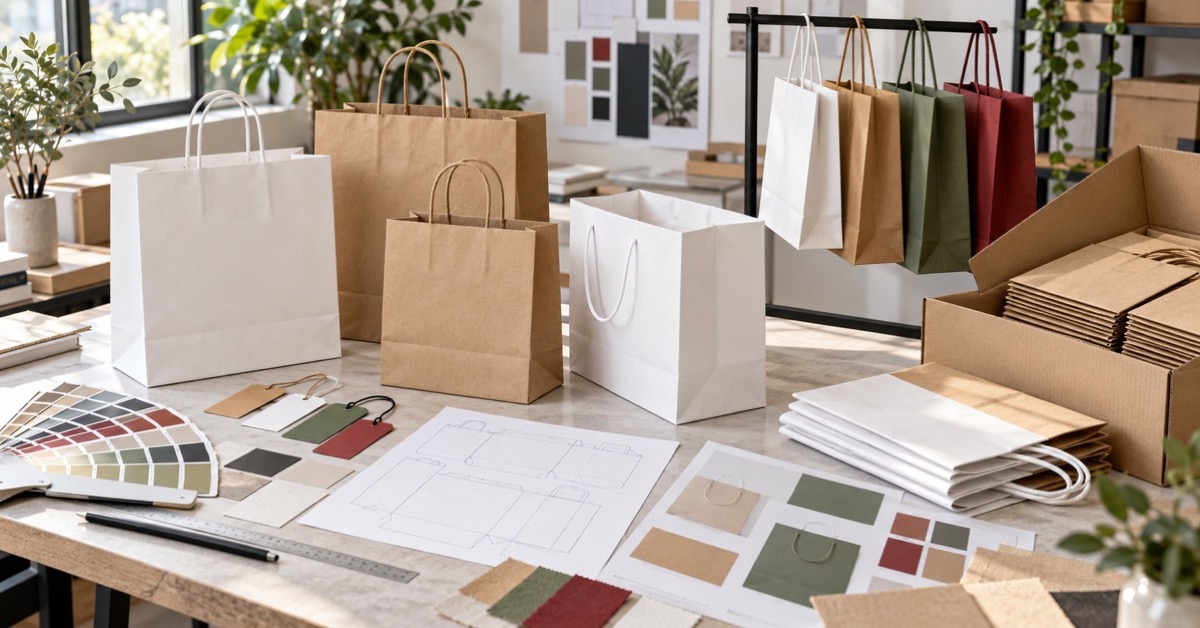
The product examples here point to two common retail formats: rigid paper gift boxes or handled paper gift bags. Both are paper-based, both support full-color branding, and both can be built for shelf presentation. They also share a practical advantage: flat panel surfaces make printing cleaner, which matters when a brand wants artwork, product names, and promotional graphics to read quickly.
One visible style uses bright, seasonal graphics with large text and a festive illustration. That kind of custom printed box is often chosen for holiday fruit, gift sets, or promotional retail campaigns where the packaging needs to announce the theme at a glance. Another style appears more restrained, with a window-like decorative front panel or cutout-style detail. That approach can help buyers see a hint of the contents or simply soften the look of an otherwise square package.
What matters here is not the aesthetic alone. These packages are designed to stand upright, carry weight comfortably for short distances, and stack neatly in retail environments. Those are small advantages until they are missing.
How a custom box manufacturer typically builds this kind of packaging
In most cases, this category starts with printed paperboard or rigid board, then moves through die-cutting, folding, gluing, and surface finishing. Some versions include lamination or coating to improve print durability and give the artwork a glossier or more protected finish. Handle attachment, when used, is usually a separate step involving punched holes and cord or rope threading.
That process sounds straightforward, but the details can change the outcome more than buyers expect. A handled box that looks fine in photos may feel awkward in the hand if the gussets are weak or the handle placement is off. Likewise, a beautiful print job can disappoint if the board profile does not hold its shape after assembly. A good supplier will be able to discuss the construction, not just the artwork.
Key points buyers should compare
Before approving a design, ask how the package will perform in the real use case: retail display, takeaway carrying, corporate gifting, or e-commerce presentation. Then compare the printed surface quality, structural rigidity, handle style, and how the format closes. Exact dimensions, board thickness, and load capacity should be confirmed directly, because those details are often product-specific and should not be guessed from a sample image.
Where custom packaging adds value
The business case for custom packaging is simple enough. Packaging can support brand recognition, improve perceived value, and reduce the gap between a commodity item and a giftable one. For tea and specialty food brands, that premium effect can be decisive. For seasonal promotions, it can be the difference between a generic sale and a campaign people remember.
Custom packaging also helps when a product needs to stand out in crowded retail channels. Bright color blocking, bold typography, and consistent panel graphics make the package easier to spot. That visibility is not cosmetic fluff; it is a sales tool. Buyers scanning a shelf or gift table often make decisions in seconds.
Selection criteria that save time later
When evaluating a custom packaging manufacturer, focus on practical fit rather than broad promises. Check whether the supplier can handle full-color printing, die-cut structures, and handle integration in one workflow or through coordinated steps. Ask for samples that show the final surface finish, not just flat printed sheets.
Also think about the contents. A tea set, a box of snacks, and a fruit gift each place different demands on the package. The style may be similar, but the internal support, closure method, and carrying comfort may need to change. If the packaging will be used in food-related applications, confirm any food-contact or lining requirements separately rather than assuming them.
Common mistakes buyers make
One common mistake is choosing a package for its front-panel appearance and ignoring the side and top panels, which often carry the seams, folds, and handle points. Another is overfocusing on print color and underfocusing on structure. A box that crushes or a bag that feels flimsy will erase the benefit of the graphics quickly.
Buyers also sometimes assume that “custom packaging” means fully reusable, moisture-resistant, or food-safe by default. Those claims need verification. If a supplier does not state them, ask. It is a small step that prevents bigger problems later.
Why these retail formats work for sourcing teams
From a sourcing perspective, paperboard gift packaging offers a useful balance of presentation and manufacturability. It is widely adaptable, suitable for branded campaigns, and easier to coordinate across product lines than many rigid alternatives. A custom box manufacturer that understands folding carton and gift box construction can help a brand keep artwork consistent while changing size, handle format, or opening style as needed.
That flexibility matters for companies running multiple seasonal promotions or gift programs. A package for oranges may need a different visual language from one for tea, but the manufacturing logic can remain similar. That makes reordering and line extension easier, provided the supplier keeps the specs organized.
What to ask before you place an order
Start with the basics: what board is being used, what printing method is planned, whether coating or lamination is included, and how the handles are attached. Then ask for a prototype or pre-production sample if the project is important. A flat mockup rarely tells the whole story.
Finally, request clear confirmation of what is and is not included. If the image shows a decorative window, treat that as a design feature, not proof of an inner insert or closure system. If the package looks glossy, verify whether that comes from coating, lamination, or simply the print finish. Precision here keeps purchasing and production aligned.
A practical next step
If your current packaging is doing the job mechanically but not helping the product sell, it may be time to brief a custom packaging manufacturer with clearer goals: better shelf impact, easier carrying, stronger gifting appeal, and a format that matches the product category. Bring the item dimensions, the target channel, and one or two reference styles. That is usually enough to start a useful discussion and avoid vague, expensive revisions later.