

Why buyers look for a custom packaging manufacturer in the first place

When packaging starts carrying the brand story as much as the product, a custom packaging manufacturer stops being a commodity supplier and becomes part of the sales team. That is especially true for retail gifting, fruit presentation, seasonal promotions, and branded takeaway sets, where the package is often the first thing a customer touches. A plain carrier may move a product from point A to point B, but custom packaging has to do more: protect the contents, present them cleanly, and make the purchase feel deliberate.
For sourcing managers and product teams, the real question is usually not whether to customize. It is how far to go without creating a packaging spec that is expensive, awkward to assemble, or fragile in the field. That decision matters because the wrong format can raise freight costs, create packing delays, or make a premium product look oddly improvised on the shelf.
What the right format can do for retail and gifting
The packaging examples here point to paper-based handled bags and gift-style box bags with a boxy, self-standing shape. That structure is useful because it gives the package more presence than a flat shopping bag. A reinforced base, gusseted sides, and a wide printable panel make it easier to brand and easier to display. Twisted rope handles, where used, add carrying convenience and also signal a more premium position than a basic folded bag.
For citrus gifts, festive food bundles, and retail promotions, the visual job is clear: the package should look intentional from several angles. The red-orange seasonal artwork, bold text, and mascot-style graphics suggest a package designed to do part of the merchandising on its own. That is not a small point. In many retail environments, packaging has to create the first impression before a salesperson says a word.
Quick reference: when custom packaging makes sense
Good fit
- Seasonal gift packaging
- Fruit and specialty food presentation
- Promotional retail bundles
- Branded takeaway or carry-out sets
- Wholesale packaging that needs shelf appeal
Less suitable
- Very heavy products that need rigid structural testing
- Items requiring precise moisture or barrier performance
- Supply chains that need standard unprinted cartons only
Common construction choices buyers should ask about
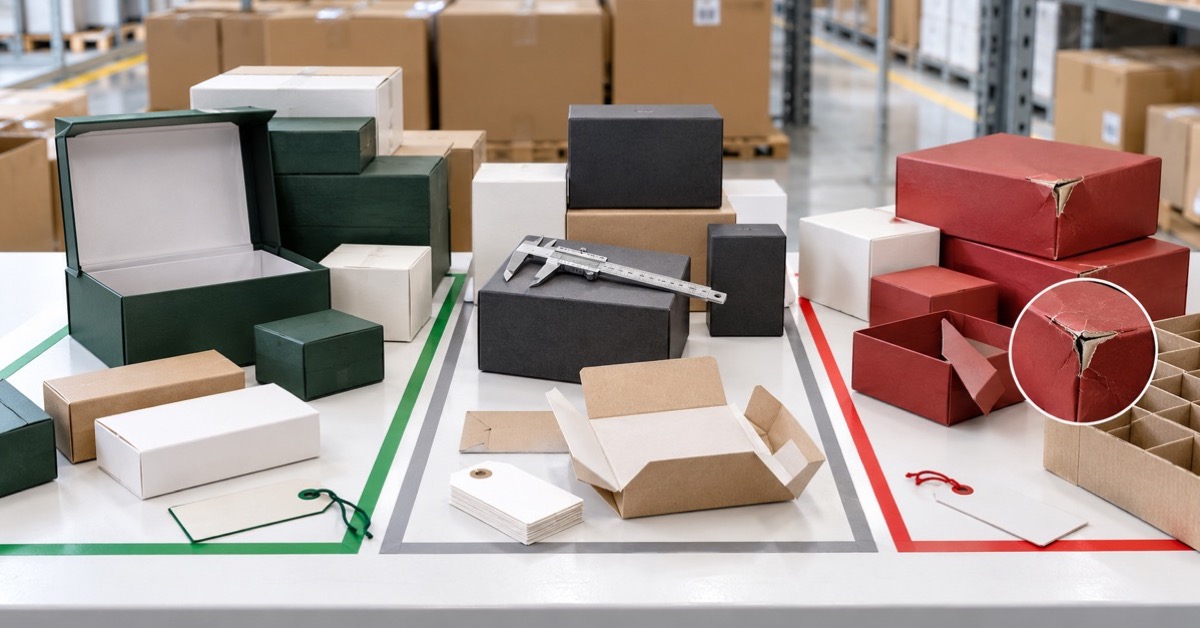
A competent custom packaging manufacturer should be able to explain the difference between a simple paper bag, a folded paperboard presentation bag, and a more rigid box-bag hybrid. That distinction matters because the same printed outer look can hide very different engineering.
With handled paper packaging, buyers should pay attention to the base style, the gusset depth, the handle attachment method, and whether the exterior print will stay crisp after folding and assembly. In the examples provided, the visible surfaces suggest full-color branding across multiple panels, with a self-standing rectangular form. That is helpful for presentation, but it also means print registration and folding accuracy have to be managed carefully.
If you are comparing a custom box manufacturer against a bag converter, do not assume they are interchangeable. A box shop may be excellent at rigid cartons but less experienced with handle reinforcement or paper bag assembly. Conversely, a bag converter may offer efficient forming and handle attachment but less flexibility on intricate structural inserts.
Materials and finishes: practical rather than flashy
From the images and product notes, the substrate appears to be printed paperboard or coated paper with a matte to semi-gloss appearance. That is a common choice for retail gifting because it balances print quality with a reasonably polished look. For orange-themed seasonal packaging, coated stock can help colors appear richer, though heavy gloss is not always the best choice if the brand wants a warmer, more premium feel.
A small caution here: buyers often over-focus on print impact and under-focus on handling. A brilliant surface can look great in a render and then scuff too easily in distribution. It is worth asking how the finish behaves in transit, especially if the package will be stacked, bagged, or carried by customers for more than a few minutes.
What to specify before requesting samples
A good custom packaging brief should not stop at artwork. It should define the product type, the required presentation style, how the package will be filled, and whether the package must stand upright on its own. If the package uses rope handles, clarify whether the handle is decorative, load-bearing, or both. That sounds obvious, but it is often left vague until a prototype is already on the table.
Ask for sample structures that match the actual use case. A boxy handled gift bag for oranges is not the same thing as a general shopping bag, even if both are made from paper and both carry branding. The buyer should also confirm whether the package will ship flat, how it is assembled, and who does the final packing.
Common mistakes in packaging sourcing
The most common mistake is treating custom packaging as pure artwork. It is not. It is a manufacturing component with folding lines, glue points, handles, print surfaces, and shipping constraints. Another easy error is ordering a structure that looks premium but takes too long to fill on the line. A third is ignoring the difference between empty-package presentation and real-world customer handling.
There is also a branding trap. Too many graphics can weaken the message. The citrus-themed red package works because it is visually anchored by one clear idea. Buyers who try to say everything at once often end up with packaging that says nothing clearly.
How to choose the right supplier
When evaluating a custom packaging manufacturer, look for evidence that they understand both print and conversion. You want a supplier that can discuss folding sequence, handle attachment, glue strength, and panel consistency, not just color output. If they also offer custom printed boxes, that is useful, but only if they can keep the structural quality consistent across formats.
Practical buyers should ask for three things: a sample that matches the intended structure, clear artwork guidance, and a production discussion that covers assembly, packing method, and transport protection. If the supplier is vague about any of those, pause. Packaging problems tend to multiply after approval, not before.
What a strong next step looks like
If you are sourcing custom packaging for seasonal retail, food gifts, or promotional kits, start with the end use rather than the artwork. Define the product size, handling conditions, and brand positioning first. Then ask for a structure recommendation, not just a quote.
A capable packaging partner should be able to guide you toward the right format, whether that ends up being a handled paper bag, a box-style gift carrier, or another paper-based structure. The best outcome is packaging that looks good on the table, travels well in the hand, and does not create headaches in production.