

Why custom packaging matters when the product is carrying the brand, not just the goods
If you are evaluating a custom packaging manufacturer, you are usually not buying a carton in isolation. You are trying to solve a retail problem: how to move a product, protect it enough for the trip, and make it look intentional when it reaches the customer’s hand. That is especially true for custom packaging used in gift retail, seasonal promotions, tea, snacks, fruit gifts, and boutique carry-out presentations. The packaging has to do more than hold shape. It has to sell the item before anyone opens it.
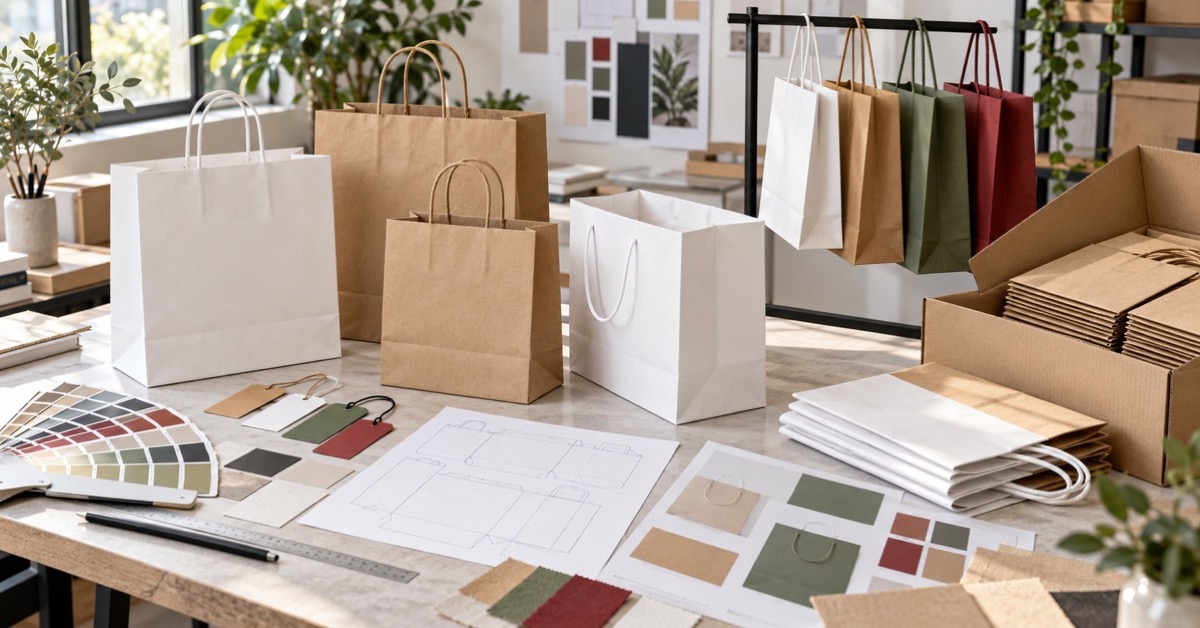
The paper gift bags and printed paper boxes in the supplied material point to exactly that kind of use case. They are upright, gusseted, visually branded, and built with handles for carry convenience. In other words, they are designed for presentation first, transport second. For sourcing teams, that distinction matters. A bag that looks premium on a counter may still be a poor choice if the load is too heavy, the handle attachment is weak, or the print scuffs too easily in shipment.

What the visible structure tells a buyer
The packaging shown appears to be made from folded paperboard or thick coated paper, with printed exterior graphics and a matte or semi-gloss finish. Several units have rectangular, box-style gusseted construction, flat bottoms, and reinforced handle attachments. That combination usually gives the package a stable footprint, which is useful in retail display and gift presentation.
Some versions also show rope or twisted paper handles, while others seem to use die-cut handle openings. That is a small detail, but a meaningful one. Handle style affects not just appearance, but also assembly complexity, carrying comfort, and unit cost. Buyers often focus on graphics and overlook the handle system until a sample arrives and the bag feels less sturdy than expected. A custom box manufacturer or packaging partner should be able to discuss those tradeoffs clearly before production starts.
Common applications: where this format makes sense
This packaging format fits several commercial scenarios. It works well for branded gift packaging, premium retail shopping bags, festive food packaging, corporate gifting, and takeaway presentation packaging. The orange-themed packaging in the materials is a good example of a seasonal or product-specific application. Bright color, product illustration, and short sales copy on the front panel help it function as a shelf display as much as a carrier.
That dual role is valuable for fruit gifts and specialty food packs. A supermarket, orchard, or regional brand may want packaging that signals freshness and celebration at the same time. Likewise, a tea brand or confectionery producer may use custom printed boxes or handled paper bags to create a more giftable feel without moving to a rigid luxury carton.
Selection criteria that should drive the sourcing decision
When comparing suppliers, start with the basics: structure, print quality, handle method, and assembly consistency. Then move to the questions that tend to be forgotten in early discussions. Will the package stand upright during packing and display? Will the printed surfaces align cleanly across panels? Does the handle reinforcement match the intended use? If the package is for food or fruit gifting, is there enough confidence in the construction to survive short-distance retail handling without collapsing or creasing badly?
It also helps to ask whether the supplier acts as a custom packaging manufacturer or simply a converter working from supplied artwork. That difference affects how much support you get on dielines, structural adjustments, and print readiness. A capable partner should be comfortable with printing, die-cutting, folding, gluing, and handle assembly, even if the exact production method varies by job.
Practical cautions buyers should not ignore
Do not assume that a visually strong sample automatically translates into durable production. Paper packaging can look rigid on a table and still be vulnerable at the corners, the handle holes, or the fold lines. Also, vivid graphics can hide alignment problems until the first bulk run. For custom printed boxes and paper bags, a pre-production proof is often worth the time, even when schedules are tight.
Another small but important warning: if the packaging will carry fresh food, fruit, or anything with condensation risk, do not guess at performance. The visible materials do not tell you whether the board is suitable for moisture exposure. If that matters to your use case, ask directly and verify before placing a full order.
How to brief a supplier so you get a usable result
Good packaging briefs are specific without becoming bloated. Start with product size, intended contents, carrying expectations, and the retail environment. Add artwork requirements, number of print sides, handle preference, and whether the package must stand upright for display. If you need several formats in one program, say so early; the image set suggests that a family of related shapes and sizes can be produced for different gifting scenarios.
For teams comparing custom packaging and custom box manufacturer options, the cleanest approach is to request samples that reflect your real use case, not just a generic showcase piece. A gift bag for boutique retail, for example, is not the same as a carry package for oranges or a premium box for festive food. The difference is small on paper and obvious in the warehouse.
FAQ buyers usually ask before ordering
Can this style be used for food gifts? Potentially, yes, but food-contact suitability should be verified separately. The visible images alone do not confirm compliance.
Are these bags reusable? That cannot be assumed from appearance alone. Reusability depends on paper grade, handle attachment, and how the bag is used.
Is the print method known? No exact print method is visible here. The finish suggests standard color printing on paper packaging, but that is as far as the evidence goes.
What is the main advantage over a plain carrier? Branding, presentation, and perceived product value. In many retail settings, that extra visual impact is the reason the package exists in the first place.
A better next step for sourcing teams
If you are building a seasonal pack, a fruit gift line, or branded retail packaging, the next move is not to ask for the most decorated sample. It is to ask for a structure that matches the actual item, then test the artwork, handle style, and carrying behavior together. A good custom packaging manufacturer should help you balance those pieces instead of treating them as separate decisions.
That is usually where the best packaging programs are won: not by making the loudest box, but by choosing a format that arrives intact, stands well on shelf, and still feels worth gifting when the customer picks it up.