

Why a custom gift box decision matters in snack packaging
A custom gift box sounds like a straightforward branding exercise, but in food retail it does more than carry a logo. It changes how a product is presented, how easy it is to pick up on a shelf, and whether the buyer reads it as a casual snack or a gift-worthy item. For brands selling nuts, dried fruit, candies, tea, or small baked snacks, that difference can affect conversion long before taste does. In practice, the right custom gift box helps a product look deliberate instead of generic, and that is often what buyers are actually trying to solve.
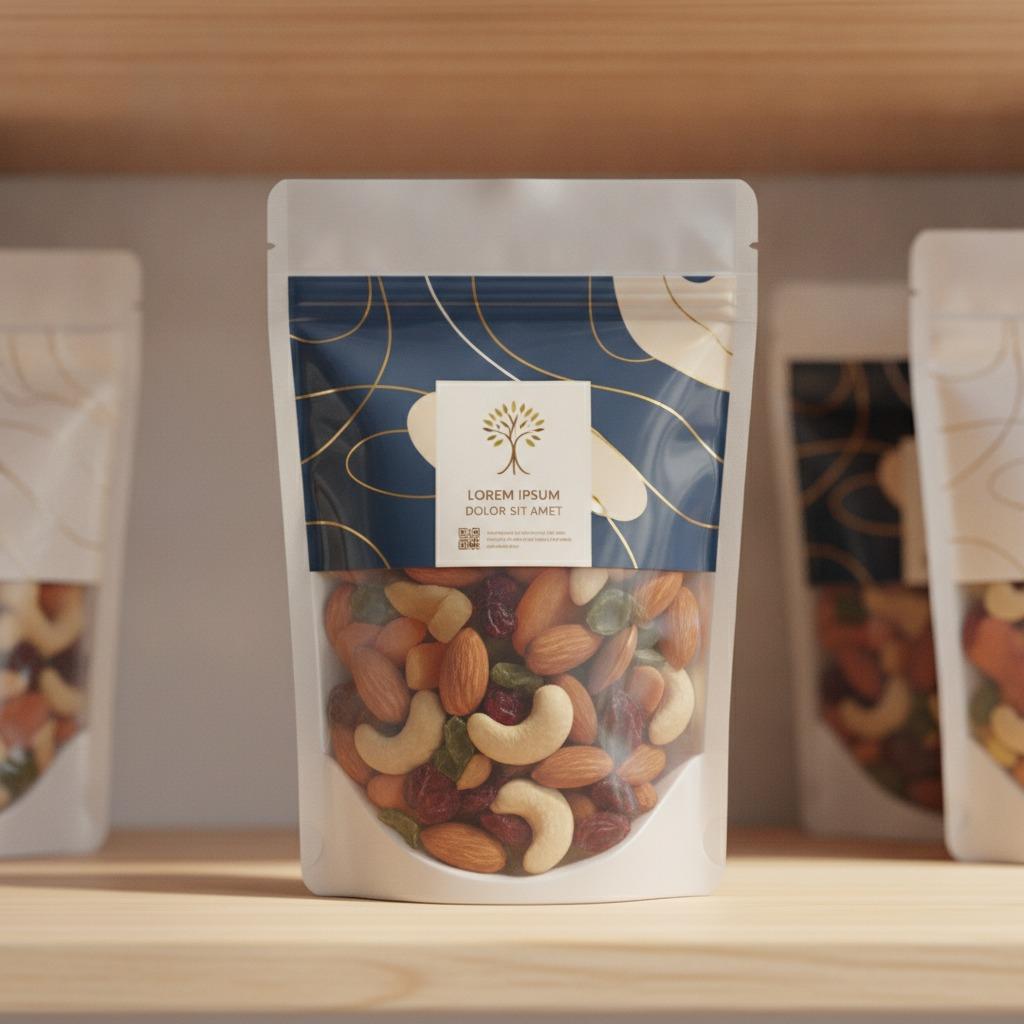
The packaging style described here sits somewhere between retail snack pack and presentation packaging: a resealable stand-up pouch or flat-bottom-style bag with a clear lower body and a glossy printed upper panel. That mix is useful because it gives the shopper a view of the product while leaving enough printable space for brand graphics, ingredients, QR code details, and seasonal messaging.
What buyers usually need from a custom printed gift box format
Many teams start by asking for a custom printed gift box when they really need a flexible package that can do three jobs at once: display the product, protect it during handling, and carry branding that looks gift-ready. The visible pouch format described in the product data does exactly that in a lightweight way.
The clear lower section lets the contents speak for themselves, which matters for snacks where texture and color are part of the appeal. The printed upper panel, meanwhile, gives the designer a clean field for artwork. For seasonal promotions, that upper area can carry a tighter visual theme without changing the entire package structure. A logo custom gift box approach works best when the package is recognizable from a distance and still readable up close.
Quick buyer takeaway
If the product is meant for shelf display, takeaway gifting, or premium snack retail, the question is not only “Can we print our brand?” It is also “Will the packaging help the item look worth giving?” That is where structure matters as much as graphics.
Material and structure: what can be inferred, and what should not be assumed
Based on the supplied product information, the pack appears to be made from plastic film packaging, likely a laminated or composite film, with heat-sealed pouch forming after printing. The bag shows a zip or press-seal closure at the top and a formed base that allows it to stand upright. Those are practical features for dry foods because they support repeated opening and a cleaner retail presentation.
That said, buyers should be careful not to confuse visible structure with confirmed specification. The exact film layers, barrier performance, thickness, seal strength, and food-contact compliance are not provided here, so they should be verified directly with the supplier. For food packaging, that is not a minor detail. It affects product freshness, transport behavior, and whether the package is suitable for the intended market.
A custom cardboard gift box can be the right answer for rigid presentation, but when the product itself benefits from visibility, a printed flexible pouch may be the smarter commercial choice. It is lighter, usually easier to ship in quantity, and often better suited to the kind of high-volume retail use the product data suggests.
How to choose the right structure for your brand
The first choice is presentation style. If the snack should look premium and visible, a clear-front or partial-clear pouch makes sense. If you want a more formal gift image, you may need a carton-style secondary pack or a different bag format with heavier graphics.
The second choice is functionality. A resealable closure is useful when the contents will not be consumed at once. For loose snacks, that can be a real selling point because it reduces the “open and rush” feeling some buyers dislike.
The third choice is artwork strategy. A custom printed gift box or printed pouch should leave enough controlled space for branding without overcrowding the pack. QR code printing can be useful here, especially for product traceability, recipe ideas, brand storytelling, or a short promotion page.
Common mistakes when ordering a logo custom gift box style package
One common mistake is designing for appearance only and forgetting handling. A beautiful front panel does little good if the pack does not stand properly or the closure is awkward for the customer.
Another is assuming all flexible packaging behaves the same. It does not. Two pouches that look nearly identical can differ in barrier, seal performance, or print quality. If the pack is going to hold oily snacks, fragile baked items, or aromatic tea, those differences become visible quickly.
A third mistake is overcomplicating the print layout. A crowded front panel can make a product look cheaper, not richer. In gifting, restraint usually ages better.
When urgent orders and quantity supply matter
The supplied graphic claims urgent orders are accepted, quantity is available, and factory direct supply is offered. Those claims are useful signals for buyers who need replenishment speed or a stable production channel, but they still need to be confirmed during sourcing. If the order is time-sensitive, ask about artwork approval timing, print method, bag conversion schedule, and whether the design can be repeated reliably across batches.
For sourcing managers, that is often the real issue: not whether the sample looks good, but whether the package can be reproduced without drift in color or structure.
Practical selection checklist
Before approving a custom gift box format for snacks, check the following:
The package size suits the fill weight and display plan.
The closure is easy for consumers to use.
The clear and printed areas support the brand story.
The structure stands well on retail shelves.
The supplier can confirm print method, material structure, and compliance documents.
The design leaves room for required labeling without clutter.
FAQ: a few questions buyers usually ask
Is a custom gift box always a rigid carton?
No. In food packaging, the phrase is often used broadly. It may refer to a printed pouch, a carton, or a secondary gift-style package.
Can the same format work for nuts, candy, and tea?
Often yes, provided the size, sealing method, and material are matched to the product type. Dry goods are the usual fit for this structure.
What should I confirm before placing an order?
Confirm the material build, print method, bag dimensions, closure type, and whether the package meets your market’s food-packaging requirements.
Next step for sourcing teams
If you are evaluating a custom gift box for retail snacks, start with the product first and the artwork second. Ask the supplier for structure details, confirm how the pouch will be formed, and test whether the package actually improves shelf presence. A package that looks attractive on screen is useful only if it survives production and still feels right in the customer’s hand.
For branded snack lines, that is usually the real measure of success: not just whether the logo prints cleanly, but whether the package helps the product sell itself.