

Cotton, canvas and Oxford cloth can all support custom fabric packaging, but they solve different problems. PackMK selects material after defining product load, desired structure, surface feel, closure, printing, cleaning expectations and the number of handling cycles.
The comparison below is not a universal ranking. It shows which evidence buyers should request so a material name becomes a usable production specification.
Who benefits from fabric packaging
Fabric packaging can work for apparel, jewelry, gifts, equipment kits, promotional products and reusable retail systems. It is less suitable when a rigid barrier, sealed product protection or a highly controlled flat print surface is the primary requirement.
Define whether the fabric piece is a protective inner pouch, customer-facing package, carrying bag or reusable product. That role changes every later decision.
Use a material decision map
| Buyer priority | Likely starting point | Question to test |
|---|---|---|
| Soft natural hand | Cotton fabric | Does it hold shape and print clearly enough? |
| Heavier structure | Canvas structure | Is bulk acceptable for packing and shipping? |
| Wipeable organized form | Oxford cloth | Does coating and seam construction match use? |
| Volume lightweight program | Non-woven fabric | Does the seam method pass the load test? |
| Compact product enclosure | Drawstring pouch | Does the closure retain the product? |
Cotton: soft presentation with variable structure
Cotton can provide a familiar hand and flexible form. Specify fabric weight, weave, color and whether the natural surface variation is acceptable. Test shrinkage or cleaning expectations only when they are part of intended use.
Light cotton may show contents or lose shape, while heavier cotton increases material and freight weight. The complete bag construction matters more than a fiber name.
Canvas: structure for repeated handling
Canvas often provides more body and a substantial merchandise feel. It can suit totes, organizers and presentation bags that need stronger panels. Inspect thick seam transitions, handle attachment and how the fabric folds into cartons.
Fabric texture can affect small print detail. Approve artwork on the exact canvas color and weight.
Oxford: coating, shape and edge control
Oxford cloth may be selected for structured kits, equipment bags or wipeable surfaces. Specify the base fabric, coating feel, desired stiffness and exposure limits. Avoid calling a bag waterproof unless the full construction and seams support that claim.
Check creasing, binding, zipper attachment and shape recovery after export packing.
Non-woven: volume efficiency with clear limits
Non-woven fabric can support high-volume retail and promotional formats. Define weight, lamination if used, handle style, seam or welding method and maximum intended load.
A low unit price does not replace a loaded sample. The bag should be tested with the actual distribution and carrying pattern.
Compare materials in one project matrix
| Material | Structure | Print surface | Packing volume | Main risk |
|---|---|---|---|---|
| Cotton | Soft to medium | Textured natural surface | Low to medium | Shape and variation |
| Canvas | Medium to high | More visible texture | Medium to high | Bulk and thick seams |
| Oxford | Configurable | Depends on coating | Medium | Creasing and edge work |
| Non-woven | Light to structured | Process-dependent | Efficient | Load and seam method |
Choose the format after the material
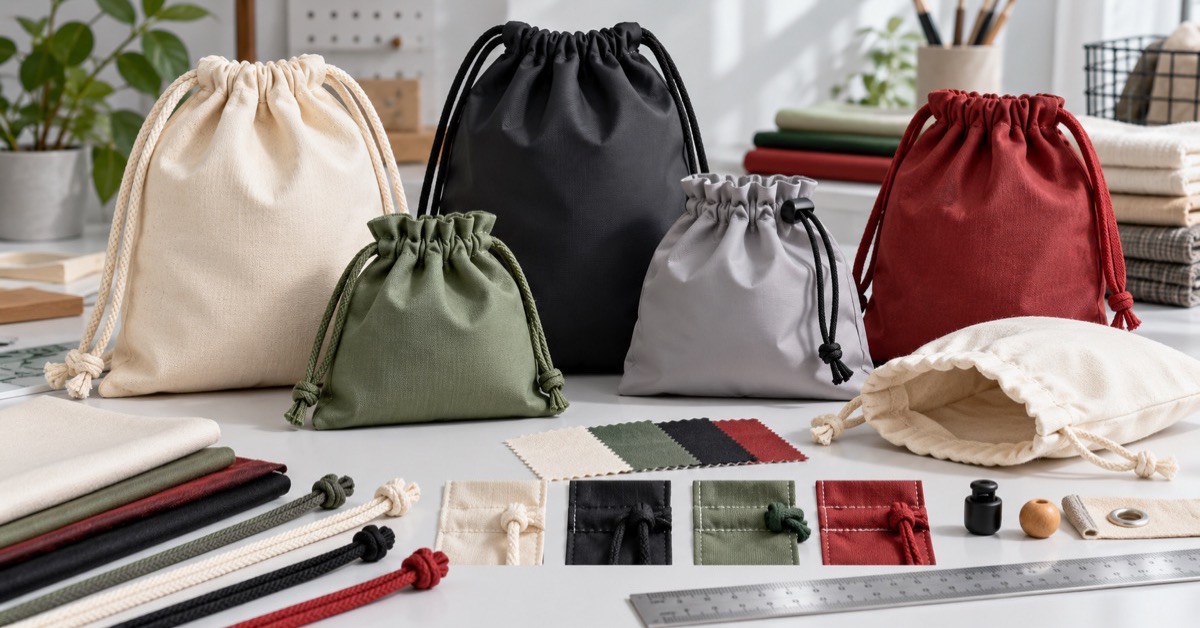
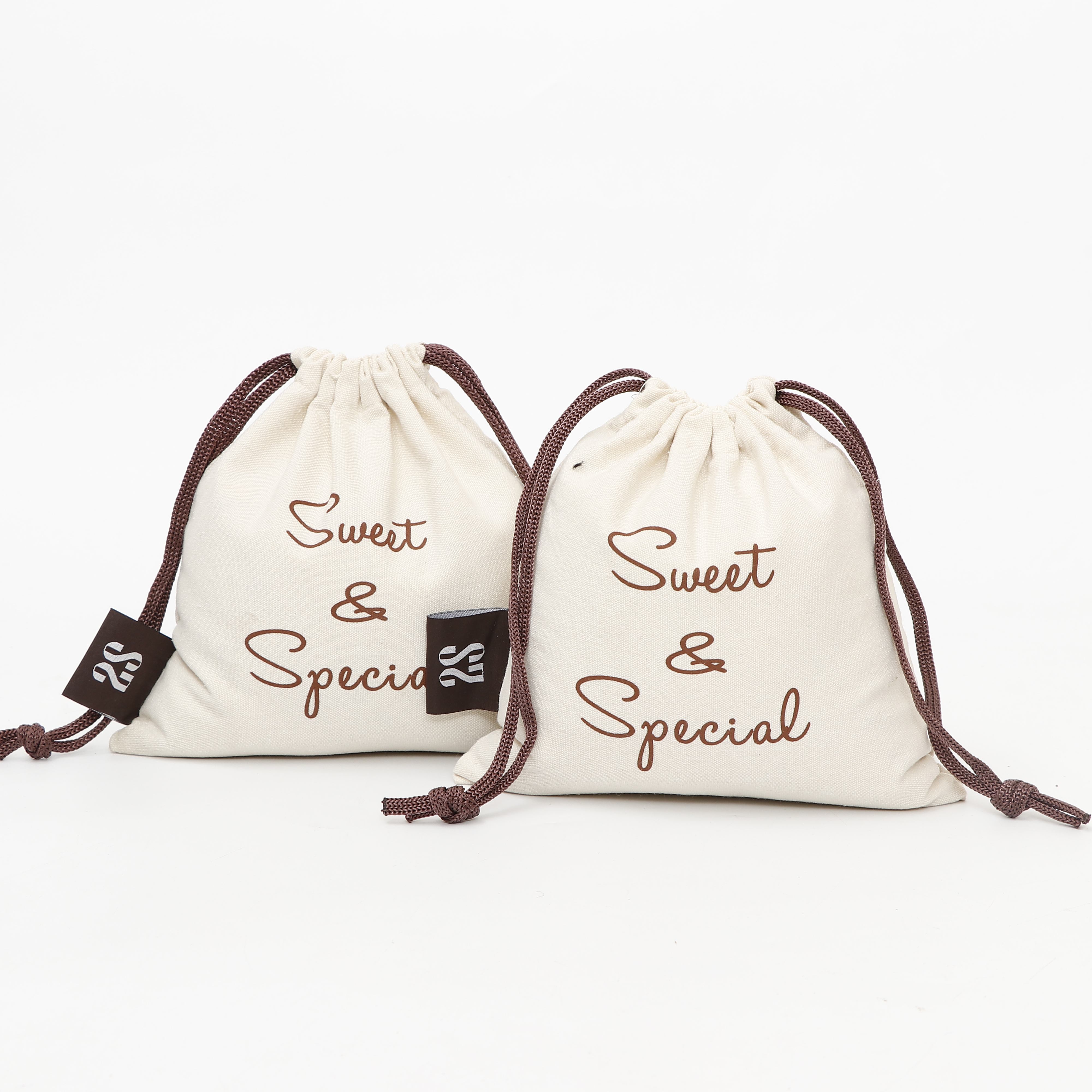
A drawstring pouch, flat sleeve, tote, zip bag and lined organizer place different demands on the same fabric. Measure the product, loading route and closure path before drawing the pattern.
For a drawstring pouch, reserve top height for the cord channel. For a tote, trace the load into the handles and base.
Match fabric printing to artwork
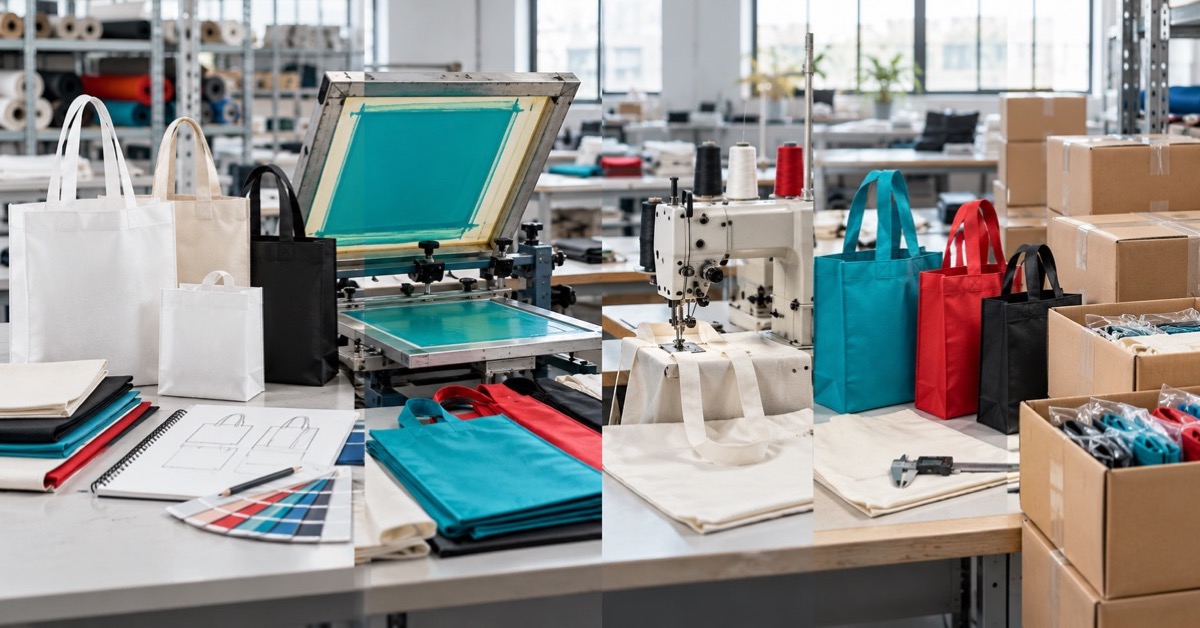
Screen, transfer and other fabric printing methods differ in opacity, detail and feel. Keep important artwork away from seams, folds and abrasion zones. Test color on the final fabric because texture and base color influence the result.
The Textile Exchange materials resources can support sourcing discussions, but the selected construction still needs project testing.
Specify seam reinforcement and trims
Inspect stitch spacing, thread, seam allowance, binding, corners, handles, cords, zippers and lining attachment. Reinforcement should follow the load path, not be added decoratively.
For metal or plastic accessories, check product contact, noise, abrasion and packing marks.
Use one realistic load test
Fill the sample, close it, carry or handle it repeatedly, set it down and reopen it. Record load test results for seams, shape, closure, print and product protection. Photograph the approved result.
The ISO quality management principles provide process context; the project defines exact acceptance criteria.
Compare cost and export packing
Material weight, panel count, lining, closures, printing and hand assembly influence price. Packing volume can change the total landed cost, especially for structured or thick canvas products.
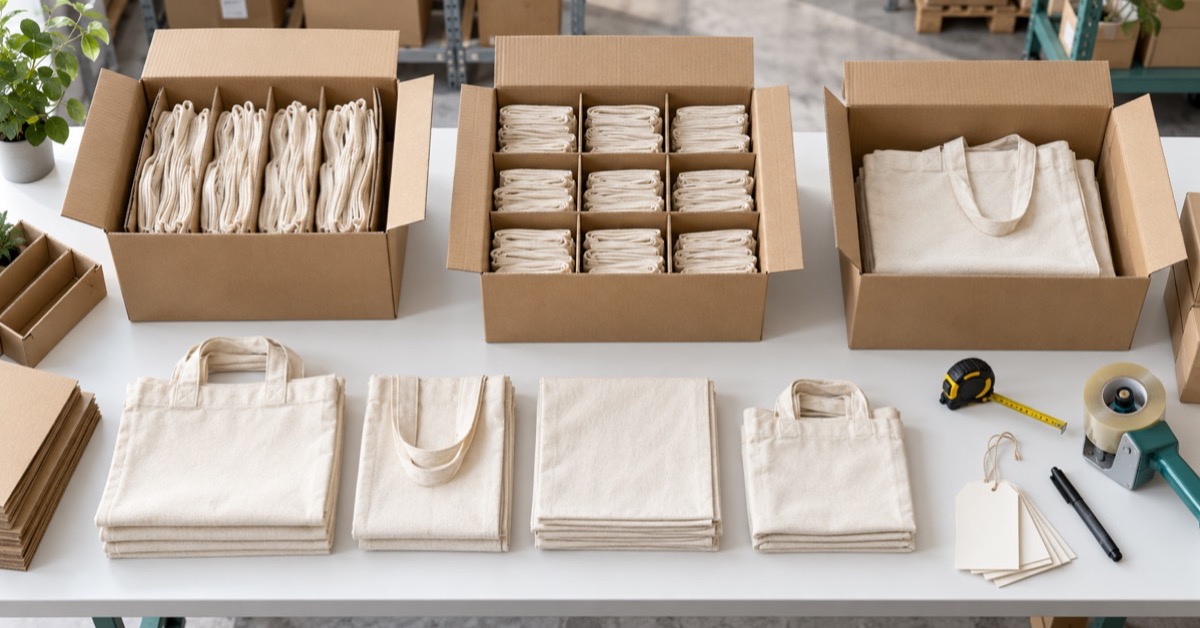
Approve folding, inner protection, carton quantity and shape recovery. Do not allow a cost change to alter material or construction without a new sample.
Build custom fabric packaging with PackMK
PackMK can develop custom fabric packaging across cotton, canvas, Oxford and non-woven formats with controlled patterns, printing, trims, testing and export packing.
Send PackMK the product, intended role, load, desired feel, artwork, quantity and market so the material comparison can lead to a practical sample and quotation.
- Explore PackMK fabric packaging formats
- Review PackMK fabric product development
- Request a fabric packaging material comparison
Decide whether lining adds real value
A lining can hide seams, protect delicate products or create a cleaner interior, but it also adds material, assembly and possible bunching. Test how the lining is anchored, whether it catches during loading and how it changes folding volume.
For light products, a well-finished unlined construction may be simpler and easier to inspect.
Define cleaning and care without vague promises
State whether the package is intended for light wiping, occasional hand care or no cleaning claim. Material, ink, trim and construction must all support the stated method. Test color transfer, shrinkage, coating and shape only under the intended care conditions.
Clear limitations are more trustworthy than calling every fabric package washable.
Test the package with target users
Give filled samples to the people who will open, carry, store or reuse them. Observe whether the closure is obvious, cords are comfortable, handles fit and the product is easy to remove. Record behavior instead of asking only whether the sample looks attractive.
User testing can reveal format problems that a material comparison alone cannot show.
Inspect incoming fabric and cut panels
Before sewing, compare fabric color, weight, width, coating and visible defects with the approved reference. Check cut-panel direction and pattern placement when weave, print or nap affects appearance.
Early material control prevents inconsistent panels from becoming finished goods that are more expensive to sort or rework.
Release repeat custom fabric packaging
The repeat-production file should connect material source, approved swatch, pattern, seam reinforcement, trims, fabric printing, load test and export packing. Require a new sample when any of these elements changes.
PackMK can use this record to reproduce custom fabric packaging while preserving the properties that buyers and users actually approved.
Plan color ranges and natural variation
Natural fibers, dye lots, coatings and textured surfaces may produce visible variation. Decide whether the project needs a narrow color target or can accept a documented range. Compare panels under consistent lighting and keep the approved swatch with the finished sample.
For multi-component designs, confirm that cords, handles, lining and printed ink remain coordinated across production lots.
Audit carton recovery before distribution
Leave packed samples in the final folding and carton arrangement for a realistic period, then unpack them as a warehouse or store would. Record creases, odor, coating marks, handle position and how quickly the product regains its intended shape.
If recovery requires steaming, reshaping or long airing, include that labor and space in the distribution plan rather than assuming it is free.
Custom fabric packaging questions
What products work well with custom fabric packaging?
Fabric formats can suit gifts, apparel, accessories, promotional kits, reusable retail packaging and product protection when the material matches the load and handling.
Is cotton or canvas better for packaging?
Cotton can provide a softer hand, while canvas usually offers more structure. The correct choice depends on weight, construction, print and desired experience.
When is Oxford cloth useful?
Oxford cloth can support structured, wipeable or higher-handling applications, depending on fabric construction, coating, seams and reinforcement.
What is non-woven fabric packaging best for?
Non-woven formats can suit volume retail, events and promotional distribution when specifications and intended reuse are clearly defined.
Which printing method works on fabric?
The answer depends on fabric texture, color, artwork detail, print coverage, quantity and durability expectations. Test the selected process physically.
How should a drawstring pouch be sized?
Measure the product and closure path, then allow enough top area for the drawstring to close without compressing or exposing the contents.
How are fabric seams tested?
Load the final product, repeat carrying or opening cycles and inspect seam movement, thread, reinforcement, corners and handle or cord attachment.
What affects fabric packaging price?
Material type and weight, dimensions, panels, lining, closures, handles, printing, quantity, inspection and packing affect the price.
Can fabric packaging support certified material claims?
Potentially, but buyers must confirm the applicable program, supplier evidence and claim rules for the actual material and order.
What should be kept for repeat production?
Retain the fabric reference, color, pattern, construction, trim, artwork, approved sample, test method and packing specification.