


An exporter can make a convincing sample and still fail at the points where responsibility changes hands. Fabric moves to cutting, panels move to printing, components move to sewing, finished bags move to inspection, cartons move to freight and documents move to the buyer. A cotton tote bag exporter China should be evaluated through those handoffs.
PackMK uses a shipment dossier that follows one identity from the approved brief to receiving. The dossier does not replace physical inspection; it connects the sample, production records, carton list and shipping documents so the buyer can see whether the right tote is being transferred at every stage.
Direct answer: Evaluate the exporter by asking whether each handoff has a defined input, owner, acceptance evidence and traceable output from fabric approval through destination receipt.
Handoff one: translate the buyer brief into measurable fields
Record finished dimensions, gusset, fabric construction, color, handle width and drop, seams, reinforcement, print method, artwork placement, load, quantities, variants, packing and destination.
PackMK asks the exporter to mark assumptions and alternatives before pricing. This prevents a broad description such as cotton tote from becoming several different technical interpretations across the supply chain.
Build the dossier around transfer points
| Transfer | Input | Acceptance evidence |
|---|---|---|
| Material to cutting | Approved fabric | Lot and measurement |
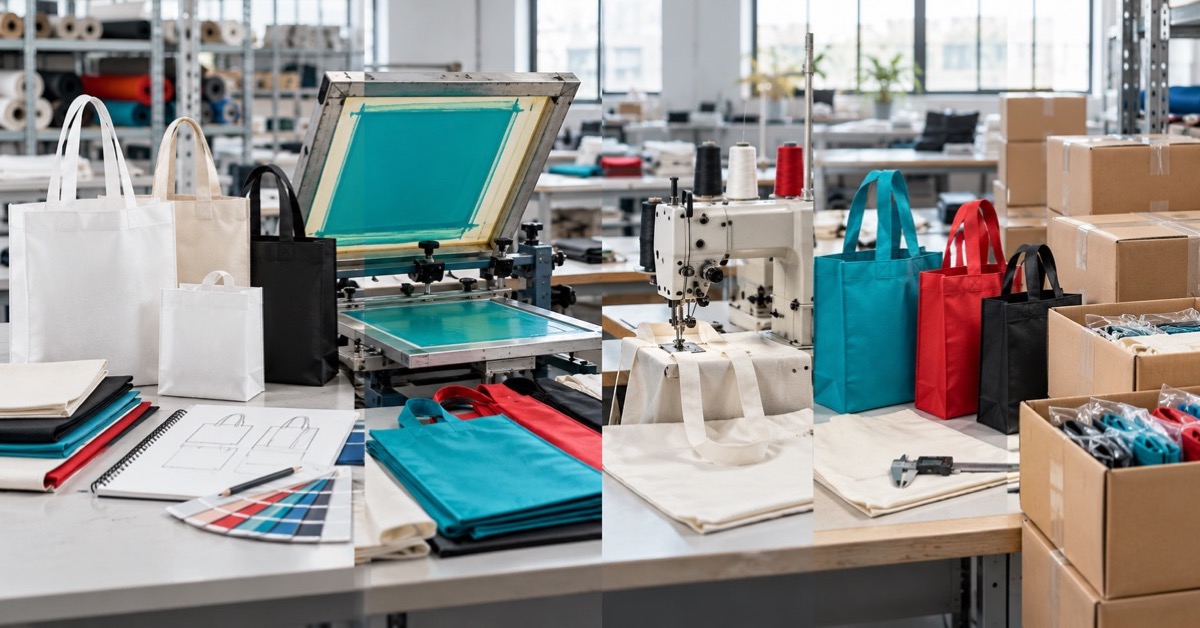
| Cut panels to print | Released artwork | First printed panel |
| Sewing to inspection | Construction spec | First article |
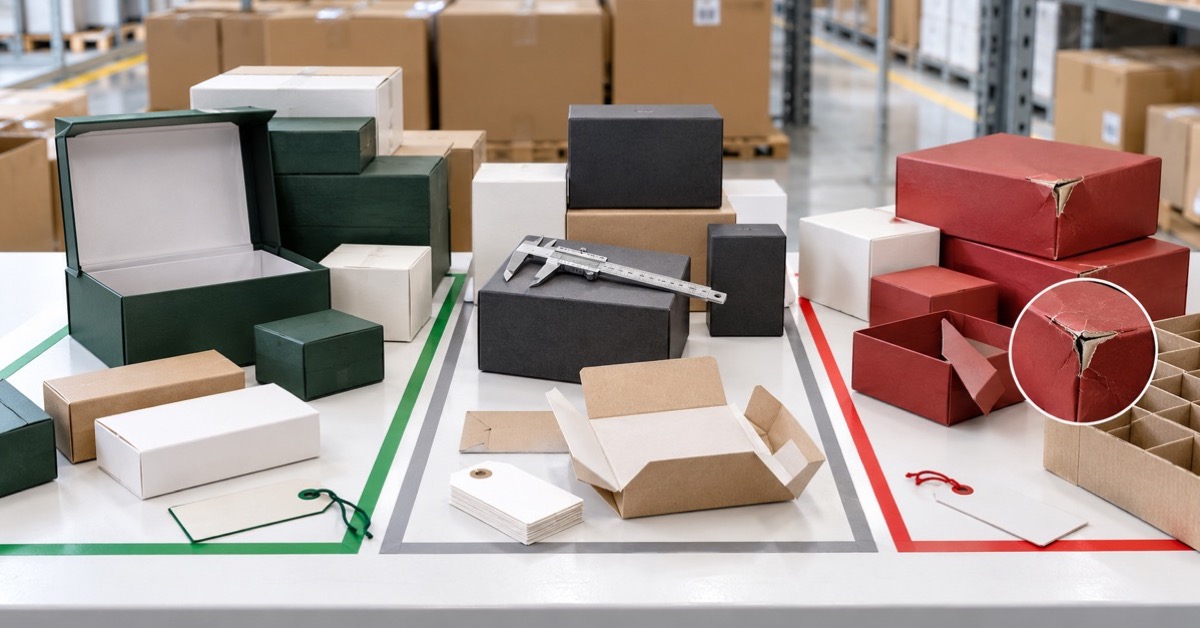
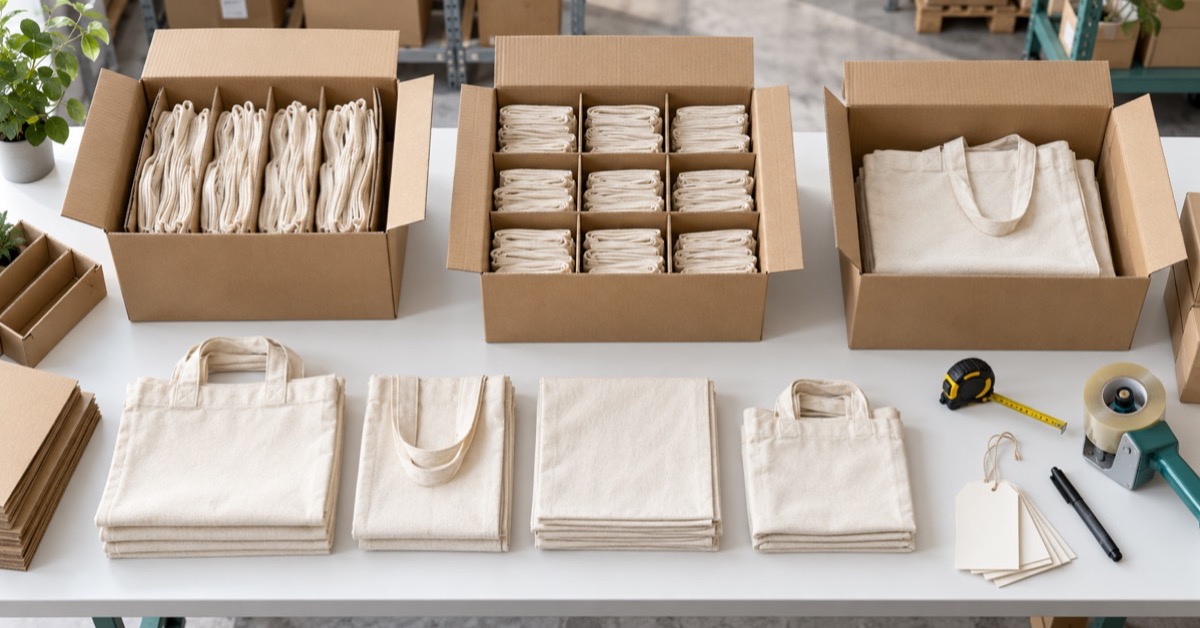
| Packing to export | Allocation and marks | Carton reconciliation |
| Shipment to buyer | Document set | Receiving record |
The dossier should make a missing or inconsistent handoff visible before it becomes a destination problem.
Handoff two: identify cotton fabric beyond a generic name
Specify fiber claim ownership, weave or knit construction, weight reference, width, color, finish, shrink considerations and approved alternatives. Trace bulk lots to the order.
PackMK compares the physical reference with incoming records and production output. A soft sample and a stiff bulk lot may both be called cotton unless the buyer defines what must be repeated.
Handoff three: release patterns and cutting controls
Connect the approved dimensions and tolerances to pattern revision, seam allowance, fabric direction and cutting plan. Check top, middle and bottom pieces from representative lays where movement may occur.
PackMK uses first-piece measurements before panels disperse into printing and sewing. Early containment is more efficient than discovering dimensional variation in finished packed bags.
Handoff four: make artwork transferable to production
The production artwork record should show:
- file and revision identity;
- final print size and position;
- color reference and print route;
- bleed, safe area and small-detail limits;
- bag side and orientation;
- approver and release date.
PackMK compares the first production panel with this record and the approved sample before the full print quantity is released.
Handoff five: prove printing on the production fabric
Print results depend on fabric texture, color, pretreatment, ink, mesh or transfer conditions, curing and handling. Review registration, coverage, edge quality, hand feel and resistance appropriate to the use.
A sample-room panel may not represent the bulk route. PackMK asks for a first article using production-equivalent fabric and settings, then retains a signed reference.
Handoff six: carry construction into the sewing line
Define seam type, stitch density, thread, edge finish, gusset formation, handle position and reinforcement. Show operators the approved construction and critical measurements.
PackMK inspects first articles from the actual line. This checks whether the sample specification survived the transfer from development to repeat production.
Use evidence that matches the failure being controlled
| Risk | Evidence | Limitation |
|---|---|---|
| Fabric variation | Lot reference and measurements | Does not prove sewing |
| Print mismatch | Production panel | Does not prove load |
| Handle failure | Loaded carry test | Method must be stated |
| Mixed variants | Carton reconciliation | Depends on identity |
| Transit damage | Pack-out review | Route conditions vary |
No single certificate, sample or report proves the complete order. PackMK keeps evidence beside the specific decision it supports.
Handoff seven: test the loaded tote
Use representative contents and an agreed load. Observe handle comfort, attachment, seam opening, base shape, balance and print distortion during credible carry or cycle testing.
PackMK records the method, sample count and acceptance. The result applies to the tested construction and condition; it should not become an unlimited strength claim.
Handoff eight: release bulk with first-article evidence
Compare fabric, dimensions, seams, handles, print, function and packing against approved references. Identify any deviation and decide whether it requires correction, concession or a new sample.
PackMK keeps the release decision in the dossier. Production should not continue merely because the schedule is tight when a critical mismatch remains unresolved.
Handoff nine: inspect across time and variation
Sample bags from different production periods, operators, print positions and variants. Check critical, major and minor defects using stated tolerances and acceptance rules.
PackMK links findings to lots and cartons. This makes containment possible when one print batch, sewing line or material lot creates a concentrated issue.
Handoff ten: reconcile pieces, bundles and cartons
Connect purchase-order quantities to accepted pieces, rework, rejects, bundles, cartons and any allowed overage. Mark cartons with SKU, variant, count, destination and sequence.
A shipment total can be correct while one version is short or mixed. PackMK performs a forward and backward count on representative cartons before release.
Handoff eleven: align carton packing with the route
Review folding, bundle pressure, moisture protection, inner packing, carton strength, dimensions, marks and pallet or loose-load method. Consider how long bags remain compressed and how receiving opens them.
PackMK checks presentation after a representative packed interval where creasing or transfer is a concern. Export packing should protect both product and identification.
Handoff twelve: reconcile shipping documents before loading
Check product descriptions, quantities, weights, carton counts, marks, buyer references and destination details across the approved commercial and logistics records. Assign an owner for final review.
PackMK treats document consistency as a shipment gate. Correct physical goods can still be delayed or misreceived when paperwork and carton identity disagree.
Handoff thirteen: bring receiving evidence back to the exporter
Record carton condition, quantity, variant accuracy, creasing, odor, moisture, print transfer, dimensional issues and user feedback. Photograph traceable examples and retain carton identity.
PackMK connects receiving results to the production dossier. The exporter can then contain the affected route and improve the next order with evidence rather than a vague complaint.
Export case: the bags pass inspection but cartons do not reconcile
A two-version tote order passes final appearance and load checks. During carton review, the total quantity matches the purchase order, but several cartons carry the old variant code and the inner bundles are not separately identified.
PackMK would hold shipment release, trace the approved artwork and packing allocation, then open representative cartons to establish the actual mix. The exporter could relabel only after physical reconciliation proves which version each carton contains.
The corrective action would add inner-bundle identity and a second-person count at packing. The dossier turns a clerical-looking mismatch into a controlled shipment decision before it reaches the buyer's warehouse.
Use trade-process and quality resources as context
Business education and quality principles can improve exporter evaluation, while order-specific samples and records control acceptance. Use CPSC business education resources and ISO quality management principles as question-building context. PackMK still releases an order against the approved buyer brief, physical evidence, production records and destination-specific review.
Brief a cotton tote bag exporter China by handoff
A decision-ready cotton tote bag exporter China brief should define export handoff, fabric specification, artwork release, pre-production sample, production trace, load test, final inspection, carton reconciliation, shipping document, receiving feedback. It should also identify PackMK, cotton tote bag exporter China, cotton, canvas, screen printing, OEM, export carton, MOQ. PackMK turns those fields into a quotation scope, approval route and evidence list that purchasing, quality, logistics and receiving teams can read in the same way.
Ask the supplier to state assumptions, exclusions, approved alternatives, tooling, minimums, inspection scope, packing method and lead-time conditions. For cotton tote bag exporter China, a broad promise should become a sample question, a priced option, a measurable tolerance or a release condition before the purchase order is confirmed.
Fiber claims, product rules, documents, carton marks, customs requirements and transport conditions vary by destination and shipment. This framework is not legal, customs or compliance advice.
A capable exporter makes the product and the evidence travel together. PackMK helps buyers see each transfer before a missed identity, quantity or document stops the shipment.
Before approval, PackMK recommends a one-page decision record naming the selected route, rejected alternatives, evidence reviewed, open limitations, quantity basis, owner and review date. After delivery, add receiving results, user feedback, defects, supplier response and retained references. This keeps the next order from restarting as an unstructured search and lets the team reopen only the decisions affected by a new SKU, market, material, pack-out or delivery route.
Build an export handoff dossier with PackMK
PackMK can support cotton tote bag exporter China from buyer brief and samples through production checks and export packing. Send the application, artwork, quantities, variants, destination and required date to request a structured quotation for cotton tote bag exporter China.
- Explore PackMK cotton tote bag formats
- Review PackMK OEM and ODM support
- Request a cotton tote bag exporter China quotation
Exporter handoff questions for cotton tote bags
What should the buyer brief include?
Include dimensions, fabric, handles, seams, print, load, variants, packing, destination, documents and required date.
What proves the bulk fabric matches?
Use identified lots, physical references, measurements and traceability to the production order.
Why inspect a first printed panel?
It confirms that released artwork and production fabric produce the approved size, position, color and detail.
What should a tote load test record?
Record contents or load, method, duration or cycles, sample count, defects and acceptance.
How should final inspection be sampled?
Cover different times, lots, operators, print positions, variants and packed cartons.
What does carton reconciliation prevent?
It prevents shortages, mixed variants, unclear overage and receiving errors hidden by a correct total.
Which shipping fields should agree?
Product description, quantity, weight, carton count, marks, buyer reference and destination should agree.
What if the exporter outsources printing?
Map the handoff, owner, first-article approval, traceability and corrective-action responsibility.
What should receiving report back?
Report carton condition, quantity, identity, creasing, moisture, odor, print and construction issues with traceable evidence.
How does PackMK support export orders?
PackMK coordinates the brief, material, artwork, first articles, inspection, packing, documents and receiving feedback.