

A coffee label often contains information that changes faster than the bag design. Origin, roast, process, weight, batch and date can vary while the logo remains constant. Useful coffee packaging labels separate stable brand elements from variable production data so teams can update one without rebuilding everything.
Build the label from stable and variable layers
Put the brand system, required fixed copy and permanent graphics on one controlled artwork layer. Reserve clearly sized areas for roast name, origin, date, batch code or barcode. This keeps short production runs manageable and reduces the chance of an old version being used.
| Information type | Likely update frequency | Production option |
|---|---|---|
| Logo and brand colors | Low | Preprinted base label |
| Blend or roast name | Medium | Versioned printed label |
| Origin and process notes | Medium to high | Variable label area or short run |
| Roast date and batch | Every production run | On-demand code or overprint |
| Barcode and retail data | By SKU or channel | Controlled SKU-specific version |
Test the label on the filled coffee bag
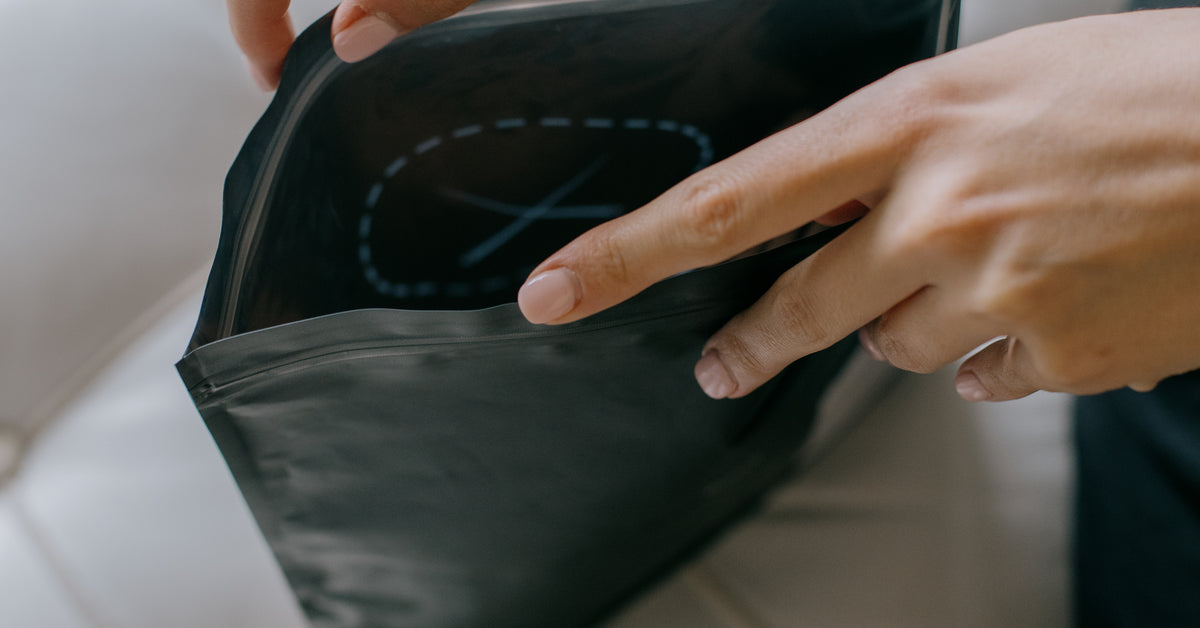
Flexible pouches curve, wrinkle and become firmer after filling. Apply the label to production-equivalent bags containing the expected coffee weight. Check whether text crosses a fold, the barcode sits flat and the label avoids the valve or closure.
Oil and surface films affect adhesion
Ask whether the bag surface is matte, glossy, paper-like or textured and whether oil can reach the application area. Clean samples and realistic filled-product handling reveal more than testing on an empty flat pouch.
Keep coding equipment in the artwork discussion
Roast dates and batch numbers need enough contrast and a surface compatible with the coder. Test the exact ribbon, ink or marking process. A beautiful dark panel is not useful if the production code cannot be read.
Check food labeling requirements before print release
Requirements vary by market and product. For U.S. context, the FDA food labeling and nutrition resource provides official information. Confirm current requirements and claims with qualified advisers before printing.
Use one version register for every coffee SKU
List the artwork revision, product name, weight, barcode, label material and effective date. Retire old stock when copy changes. A version register helps purchasing, roasting and packing teams identify the correct coffee packaging labels without relying on file names alone.
Run an application trial during a normal packing shift
Measure how quickly staff can peel, position and press the label. Inspect skew, bubbles and edge lift. If application is automated, confirm roll direction, core, gap and orientation before the bulk order.
- View PackMK custom adhesive labels
- Explore PackMK special printed labels
- Discuss a coffee label system
Reliable coffee packaging labels make changing product data easy to control while remaining readable, scannable and firmly attached to the actual filled package.
Coffee label questions
What information is commonly planned on coffee packaging labels?
Brands often plan product identity, origin, roast, weight, date, batch, barcode and required market-specific information.
Can one label design work for several coffee origins?
Yes, if the stable design includes a controlled variable area large enough for the changing origin and process information.
Why should labels be tested on filled coffee bags?
Filling changes the pouch shape and reveals folds, curves, valve conflicts, barcode problems and edge lift.
What roll details are needed for automatic labeling?
Confirm finished size, gap, core, roll diameter, winding direction, label orientation and application speed.