

Why card printing for tarot decks has become a serious packaging decision
Card printing is no longer just about getting ink onto paper. For tarot decks, it sits at the intersection of branding, product presentation, and repeat sales. A deck has to do several jobs at once: look good on a shelf, feel credible in the hand, and survive enough shuffling, handling, and shipping to keep buyers satisfied. That is why buyers comparing business card printing, custom card printing, or broader professional card printing services often end up asking a harder question than they expected: what kind of print and finish choices will make the product sell, not just exist?
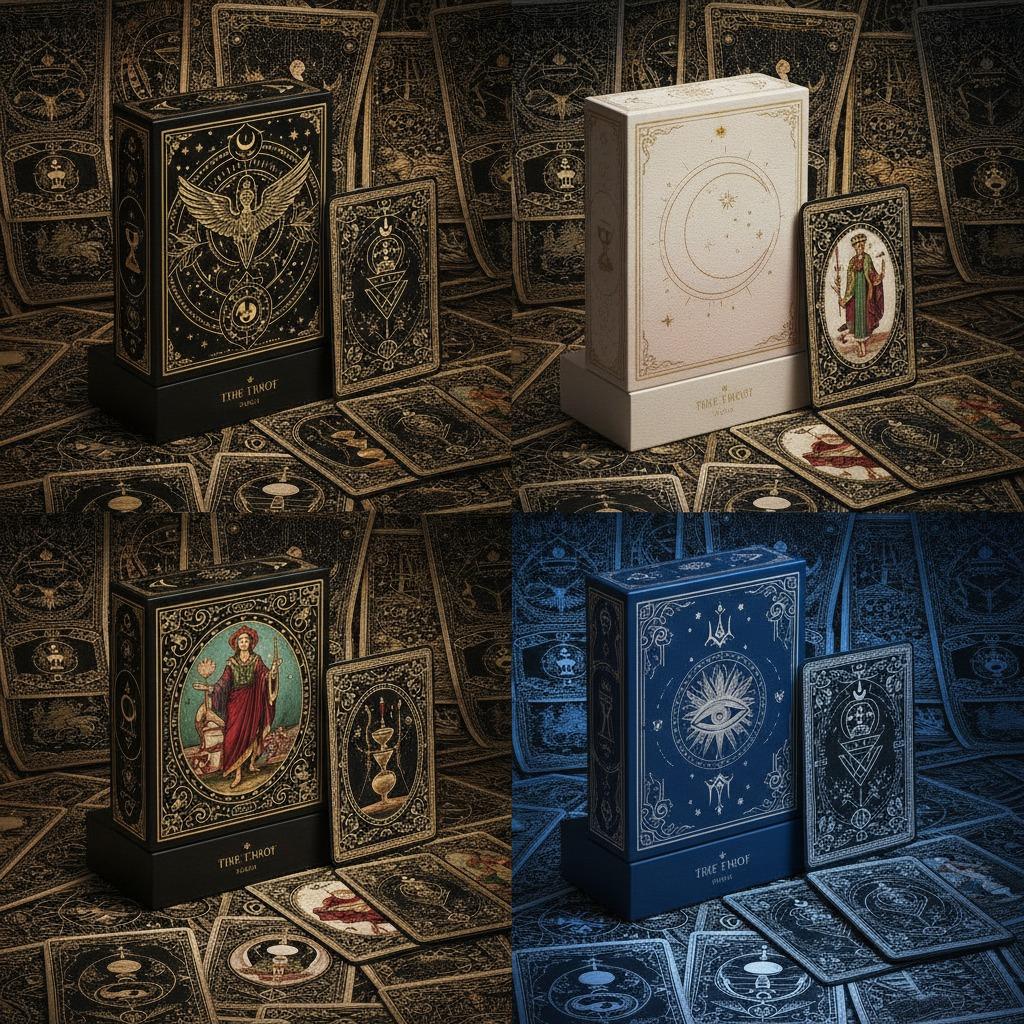
The tarot card decks shown here make that point clearly. They are packaged in compact tuck boxes, use detailed full-color artwork, and rely on strong visual themes to differentiate one edition from another. For retailers, collectors, and online sellers, that visual distinction is part of the product itself. A deck is not only a set of cards; it is a gift item, a display item, and often a repeat-purchase item if multiple variants are offered.
What matters most in a tarot deck print package
When people talk about high quality card printing, they usually focus on image sharpness. That matters, but it is only one part of the job. The deck needs consistent color across the cards and the box, clean edges, and a finish that suits the intended market. A matte black deck box sends a different signal than a cream or metallic-looking one. If the artwork is rich in line detail, the printer has to preserve that detail without muddying the background tones.
For decks displayed in retail or e-commerce listings, the packaging carries a lot of weight. Buyers often make a judgment from the front of the box before they ever touch the cards. That means typography, box structure, and artwork placement should be planned together, not treated as separate steps. In practice, this is where custom card printing often outperforms generic stock-style production: the deck can be designed as a complete object rather than a loose stack of printed sheets.
Key production elements buyers should review
1. Card face and back artwork
The visible decks show illustrated fronts and patterned backs. That kind of design is standard for tarot, but it creates production demands. The front art must remain legible at card size, and the backs need to align cleanly so the deck looks intentional even when fanned out. If the back design is too busy, slight print variation can become visible faster than expected.
2. Packaging structure
The decks appear in printed tuck boxes, which is a practical choice for retail presentation and shipping. Tuck boxes are compact and familiar, but they also need decent structural integrity. A box that opens too loosely or crushes in transit can make an otherwise attractive deck look cheap. That is a detail buyers sometimes overlook when comparing business card printing vendors with packaging-focused suppliers.
3. Special finishes
Some of the visible editions appear to use metallic or foil-like effects, and others lean into matte or decorative printed surfaces. It is fair to say that specialty finishes can elevate a deck, but only if they suit the artwork. Excessive gloss on a highly detailed deck can create glare. Embossing or spot gloss may add value, though they should be used with restraint. More finish is not automatically more premium.
How to choose the right print approach for your deck
If you are sourcing a tarot deck for retail, gifting, or brand merchandising, start by deciding what kind of buyer you are serving. Collectors may care more about artwork variation and packaging detail. Gift buyers may respond to box appearance and shelf appeal. Esoteric shops may want a durable deck that presents well in small display quantities. The right decision is usually a balance between image quality, tactile feel, and unit economics.
Professional card printing should also be judged by consistency across runs. A single sample can look impressive, but a retail product needs repeatable color and predictable packaging. That matters especially if you plan to offer multiple deck designs in the same series. Matching box colors, card artwork, and finishing style helps a product line look coherent rather than random.
Common mistakes buyers make
One common mistake is designing for the unboxed image only. A deck might look strong as a flat mockup and still fail once it is boxed, stacked, or photographed under store lighting. Another is specifying too many effects at once. Foil, embossing, and heavy gloss can compete with the illustration, especially on small-format cards. It is usually better to let one feature lead.
Another practical caution: do not assume every supplier experienced in business card printing is equally suited to card decks with retail packaging. Tarot decks are closer to a consumer product line than a simple printed insert. They need artwork handling, box production, and assembly discipline. That is a different manufacturing mindset.
FAQ: What buyers usually want to know
Can tarot decks be produced as custom card printing projects?
Yes. Tarot decks are a natural fit for custom card printing because the artwork, box design, and deck theme usually need to work as one package.
Is a premium finish always worth it?
Not always. High quality card printing should serve the artwork and the sales channel. A premium effect can help on a collector deck, but a cleaner, more restrained finish may be better for broader retail use.
What should buyers request from a supplier?
At minimum, ask for samples, finish options, packaging details, and a clear explanation of how the cards and tuck boxes will be printed and assembled. If the supplier cannot explain those basics clearly, that is a warning sign.
A practical next step for sourcing teams
Before you approve a tarot deck order, compare the print method, packaging style, and finishing options against the intended market. The best card printing choice is not the flashiest one; it is the one that supports the artwork, protects the product, and makes the deck feel worth buying the first time someone picks it up.