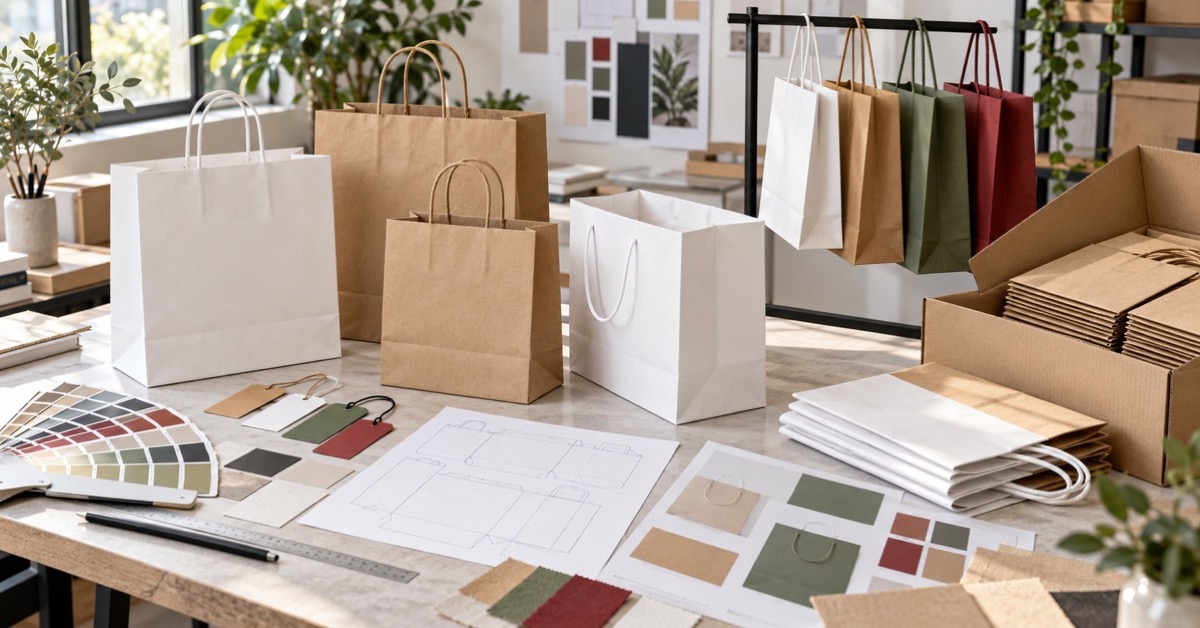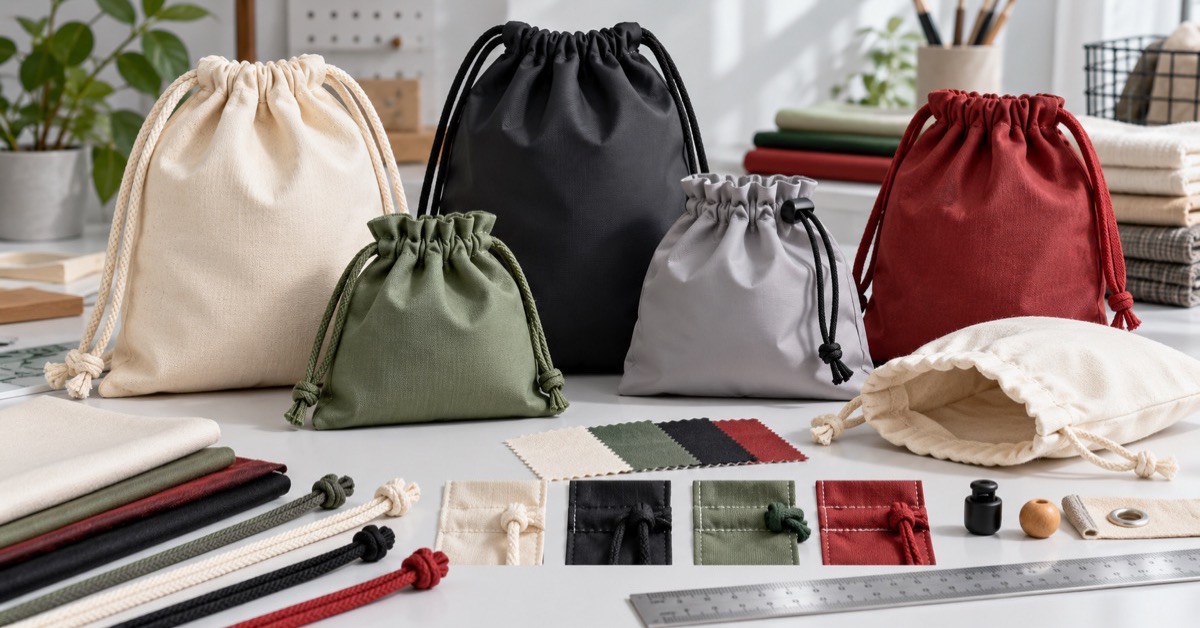


Bakery packaging is chosen in a meeting but judged in a rush. Staff select a size, open it, load a warm or delicate product, close it, identify it and hand it over while a queue moves. Bakery paper bags should be tested inside that short service window, not only as empty samples on a desk.
PackMK uses a counter test that follows the bag from storage slot to customer handoff. The method separates food-contact and regulatory decisions from operational evidence while making size logic, barrier needs, speed, closure, print and replenishment visible.
Direct answer: Build a small bag assortment around real menu families, then time representative staff as they select, open, fill, close, identify and hand off each format under realistic product temperature and grease conditions.
Begin with menu families, not bag dimensions
| Menu family | Packaging stress | Trial question |
|---|---|---|
| Crusty bread | Length and abrasion | Does the bag load cleanly? |
| Pastry | Grease and decoration | Does presentation survive? |
| Warm item | Steam and handling | What closure is appropriate? |
| Mixed order | Weight and identity | Can staff separate items? |
| Take-home box | Outer carry | Does the bag support the box? |
PackMK maps actual products to a manageable assortment before selecting paper weight or print coverage.
The first clock starts at the storage slot
Observe how bags arrive, bundle, stand, separate and refill at the counter. Record the available footprint, orientation, stack height and whether formats are visually distinguishable.
PackMK treats storage as part of usability. A bag that performs well after opening can still slow service if staff pick two at once or search for the correct size.
The second clock measures opening and loading
Ask representative operators to open and fill bags while wearing any usual gloves or using tongs. Include the widest, longest, most fragile and warmest products assigned to each format.
PackMK records snags, tearing, crushed toppings, contact with printed areas and awkward hand changes. The goal is a repeatable sequence, not a staged demonstration.
Build a counter-test kit from real variables
Include these items in the trial:
- production-equivalent bag samples;
- representative products at service temperature;
- labels, seals or receipts used for identity;
- tongs, gloves and counter equipment;
- timing sheet and observation codes;
- filled-bag carry and hold route.
PackMK keeps the test small enough to repeat after a construction or size change.
The third clock belongs to grease and moisture
Define the product condition, contact time, hold time and visible acceptance rule. Observe staining, softening, transfer, seam behavior and how the bag feels to the customer.
PackMK reports observed performance for the tested construction. Food-contact suitability, claims and destination obligations require documentation and review by qualified responsible parties.
The fourth clock tests closure without crushing
Compare folds, stickers, tabs or other closure routes using the actual headspace and product profile. A secure-looking fold can press against toppings or trap unwanted steam.
PackMK records closure time, reopen behavior, evidence of tampering where relevant and the space left for product identity. The selected route should match the service model.
Score the ninety-second handoff as a sequence
| Step | Observation | Failure signal |
|---|---|---|
| Select | Correct format chosen | Search or mix-up |
| Open | One clean motion | Blocking or tear |
| Load | Product clears edges | Snag or crush |
| Close | Stable and suitable | Reopen or pressure |
| Identify | Order remains clear | Label has no zone |
| Carry | Grip and base hold | Tilt, stain or split |
The ninety seconds are a working lens, not a universal standard. PackMK uses the buyer's actual service target.
Reserve an identity zone before artwork expands
Mark where order labels, flavor stickers, handwritten notes, date information or receipts must sit. Test adhesion and readability on the selected paper and printed coverage.
PackMK prevents decorative artwork from consuming the operational zone. Fixed brand print and variable store information need separate owners and version rules.
Use carrying behavior to set structure
Load the heaviest assigned product or box, grip the bag as customers do and follow the intended counter-to-car route. Observe base, gusset, handle area, folds and product movement.
PackMK does not infer load performance from paper weight alone. Size, grain, seams, construction and handling all contribute to the observed result.
Choose print coverage with food presentation in view
Review ink coverage, inside-outside boundaries, rub, odor concerns, color variation and how warm products or grease alter appearance. Approve the printed bag with representative contents.
PackMK connects artwork to process and material evidence. Environmental or food-related claims are not added unless the buyer supplies substantiation and approval.
Simplify the assortment before adding sizes
Track which formats genuinely reduce damage, speed service or support a distinct order. If two sizes perform the same job, compare storage, purchasing and training costs before keeping both.
PackMK uses menu coverage rather than a bag catalog to control SKU count. Fewer well-defined formats often improve ordering and counter accuracy.
Replenishment begins with counter consumption
Record bags used by daypart, menu mix, store type, promotion and waste. Define bundle count, carton identity, storage limit and the trigger for reordering each format.
PackMK connects forecast assumptions to carton labels and receiving counts. This makes overstock, shortages and format substitution easier to diagnose.
Reopen bakery paper bags after a menu change
New oils, fillings, temperatures, product dimensions, labels, closure methods or service routes can change the result. Name the representative item that must re-enter the counter test.
PackMK preserves approved evidence while reopening only the affected decisions. This keeps seasonal launches fast without treating old assumptions as permanent.
Counter example: one bag family for three store formats
A bakery group wants one visual identity across kiosk, neighborhood and flagship stores. The menu overlaps, but product mix, counter space and order size differ.
PackMK would map products into common families, then run timed trials in the smallest workspace and with the widest mixed order. Staff observations would be recorded alongside grease, closure and carry results.
The kiosk might need fewer sizes and clearer bundle identity, while the flagship may justify a larger format for boxed products. Shared print can remain consistent even when structural SKUs differ.
A pilot carton for each store type would test receiving, storage and refill. Consumption data would then inform the opening order instead of applying one ratio to every location.
The approval record would distinguish the visual system from the operational assortment. A seasonal pastry would reopen only the fit and exposure tests related to that product.
Frame food-packaging questions with official guidance
General food-contact and quality resources help teams assign documentation questions without making an order-specific compliance promise. Review FDA food-contact substances resources and ISO quality management principles as general context. PackMK still releases an order only against the buyer brief, approved samples, production evidence and destination-specific decisions.
Write the bakery paper bags brief around the service clock
A decision-ready bakery paper bags brief should define service window, product fit, grease exposure, steam release, fold closure, label zone, carry test, counter storage, SKU assortment, replenishment plan. It should also identify PackMK, bakery paper bags, bakery counter, kraft paper, glassine, FDA, OEM, MOQ. PackMK converts those fields into a quotation basis, approval route and evidence list that purchasing, quality, operations and receiving teams can read consistently.
Ask the supplier to state assumptions, exclusions, approved alternatives, tooling, minimums, inspection scope, packing and lead-time conditions. For bakery paper bags, every broad promise should become a physical sample question, measurable tolerance, priced option or release gate before the purchase order is confirmed.
Performance varies by paper, coatings, seams, product composition, temperature, contact time, closure, storage and handling. Food-contact suitability, labeling and environmental statements require product- and destination-specific evidence.
Useful bakery paper bags protect the product without slowing the counter. PackMK turns the short handoff into a visible set of design and purchasing decisions.
Before approval, PackMK recommends a one-page decision record naming the selected route, rejected alternatives, evidence reviewed, open limitations, quantity basis, owner and review date. After delivery, add receiving observations, defects, user feedback, supplier response and retained references. This learning record prevents the next reorder from relying on memory or an unidentified old sample.
Run a bakery counter test with PackMK
PackMK can support bakery paper bags from buyer brief and physical samples through production checks and export packing. Send the product or application, artwork, quantities, variants, destination and required date to request a structured quotation for bakery paper bags.
- Explore PackMK paper bags and retail packaging
- Review PackMK OEM and ODM support
- Request a bakery bag assortment quotation
Bakery paper bag purchasing questions
How many bag sizes should a bakery start with?
Start from menu families and service routes, then keep only sizes that solve a distinct operational problem.
Should warm products be tested?
Yes. Use representative product temperature and hold time when warmth or steam may affect the bag.
How is grease resistance evaluated?
Define the product, contact time, observation conditions and visible acceptance rule for the chosen construction.
Can printed coverage affect label adhesion?
Yes. Test the operational label or seal on the actual printed surface and finish.
Are all kraft papers suitable for food contact?
Do not infer suitability from color or name; review order-specific documentation with responsible specialists.
What should the counter trial time?
Time selection, opening, loading, closure, identity and handoff under a realistic workflow.
How should mixed orders be packed?
Assign formats and separation rules that protect products and preserve order identity.
What belongs on carton labels?
Include purchase order, bag SKU, size, artwork version, bundle count, carton quantity and handling needs.
When should a menu change trigger retesting?
Retest when dimensions, oil, filling, temperature, closure, labeling or carry route changes materially.
How does PackMK support bakery programs?
PackMK develops the assortment, samples, counter trial, print approval, inspection, packing and replenishment record.