

Lunch Bag for Everyday Meal Carry
A lunch bag is a practical answer for people who need to move meals, fruit, and drinks without crushing containers or letting food warm up too quickly. For office commuting, school runs, short trips, or food delivery tasks, a compact insulated lunch bag helps keep packed items organized, easy to carry, and better protected from bumps and spills than an ordinary tote.
Product Overview
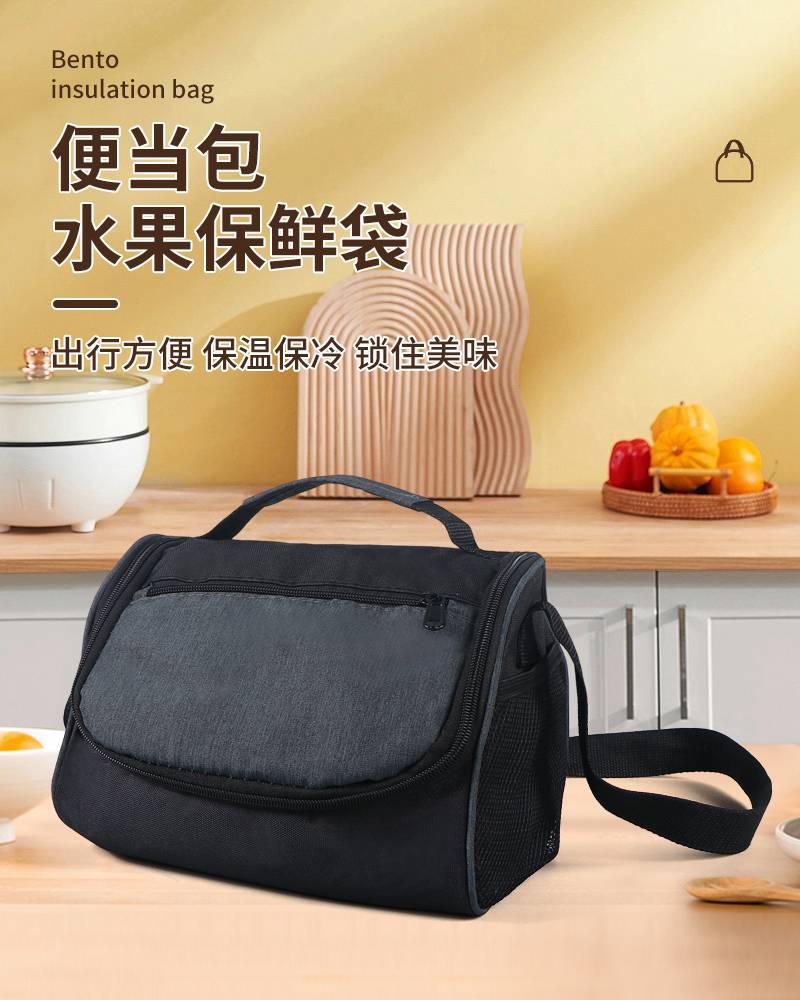
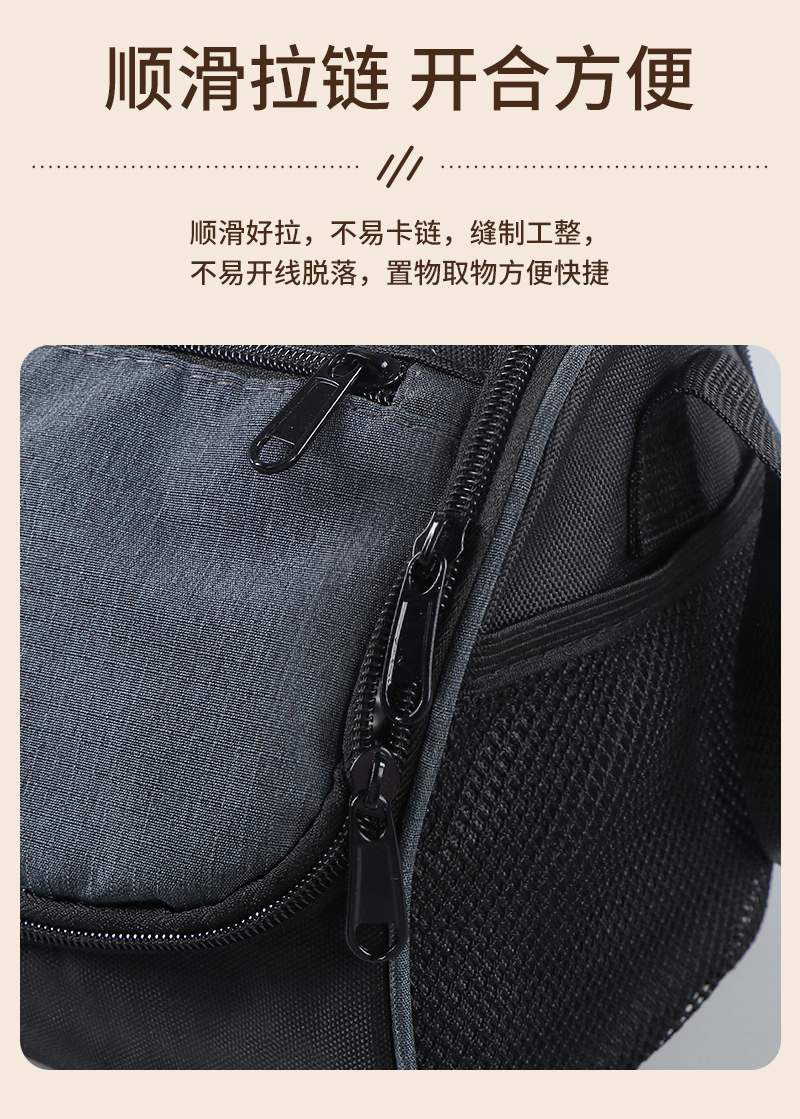
This style of insulated lunch bag is a soft-sided, boxy carry bag designed around daily food transport. The visible structure includes a top handle, a shoulder strap, a full-zip main compartment, a front zip pocket, and side pocket(s). That layout gives buyers two useful carrying options and enough separation for small items such as napkins, utensils, keys, or condiments.
The bag shown has a black and dark gray textile exterior with rounded edges and reinforced seams. The overall format is compact and portable, making it suitable for a packed lunch rather than bulky picnic storage. The product is also presented in a way that suggests easy daily use: open, pack, zip closed, and carry by hand or over the shoulder.
Key Specifications and Functional Features
Visible structure
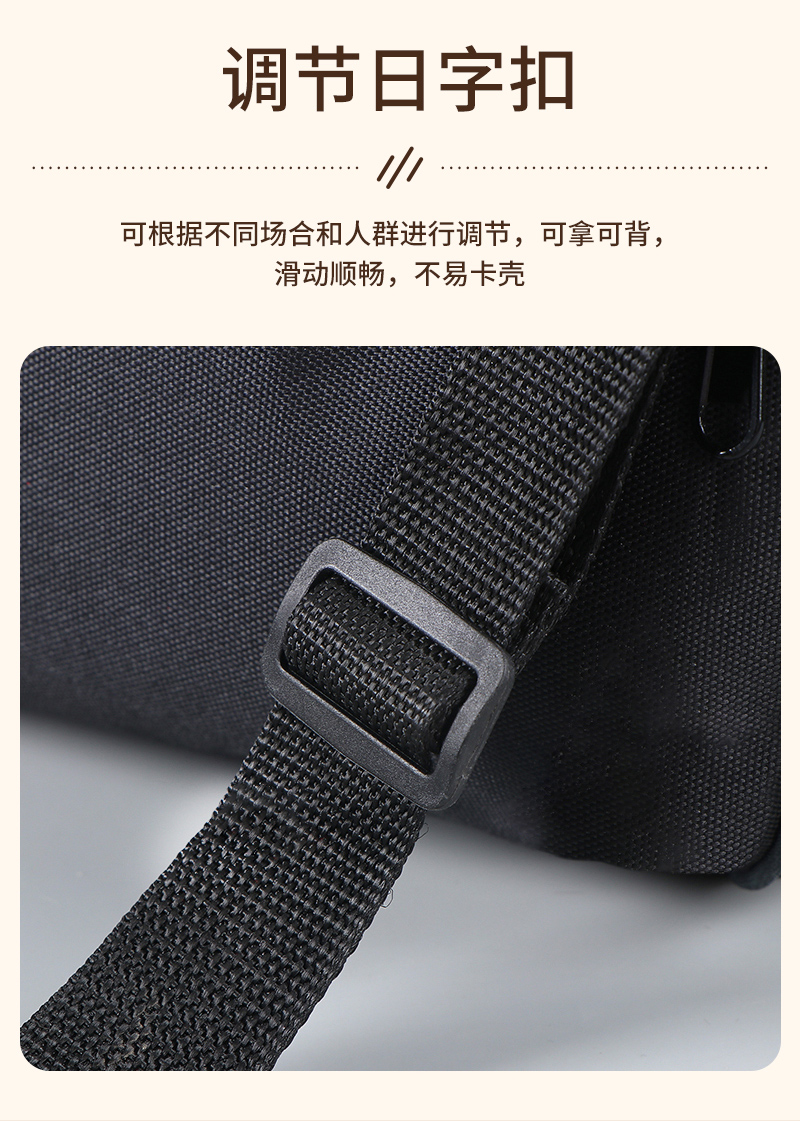
Based on the supplied information, the bag includes a top carry handle, an adjustable-looking shoulder strap, a main zip opening, a front pocket with zipper, and side pocket(s). The rectangular profile helps keep lunch boxes upright and makes the bag easier to place on desks, in lockers, or in vehicle footwells.
Size and portability
The lunch bag size is listed as approximately 25 × 17.5 × 18 cm. That makes it a compact lunch-size carrier for one person's meal, snacks, and a drink. It is not presented as a large cooler bag, so it works best for everyday customers who want a lightweight option instead of a high-capacity picnic tote.
Insulated design
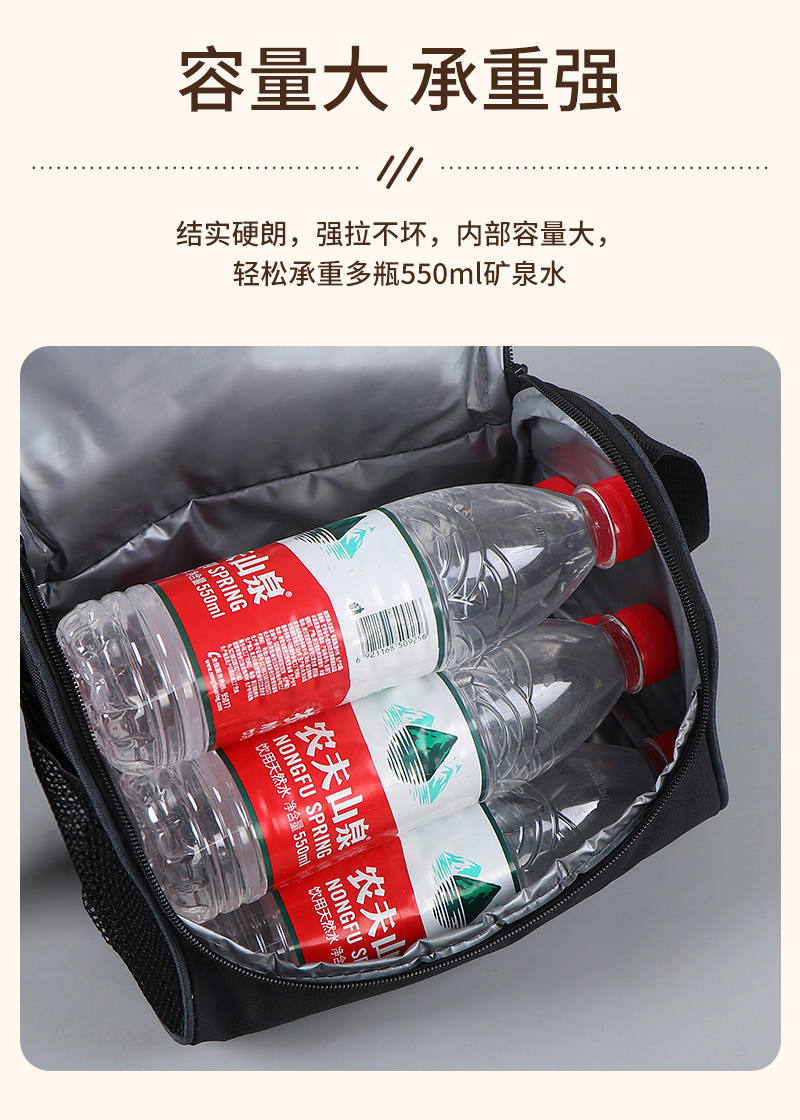
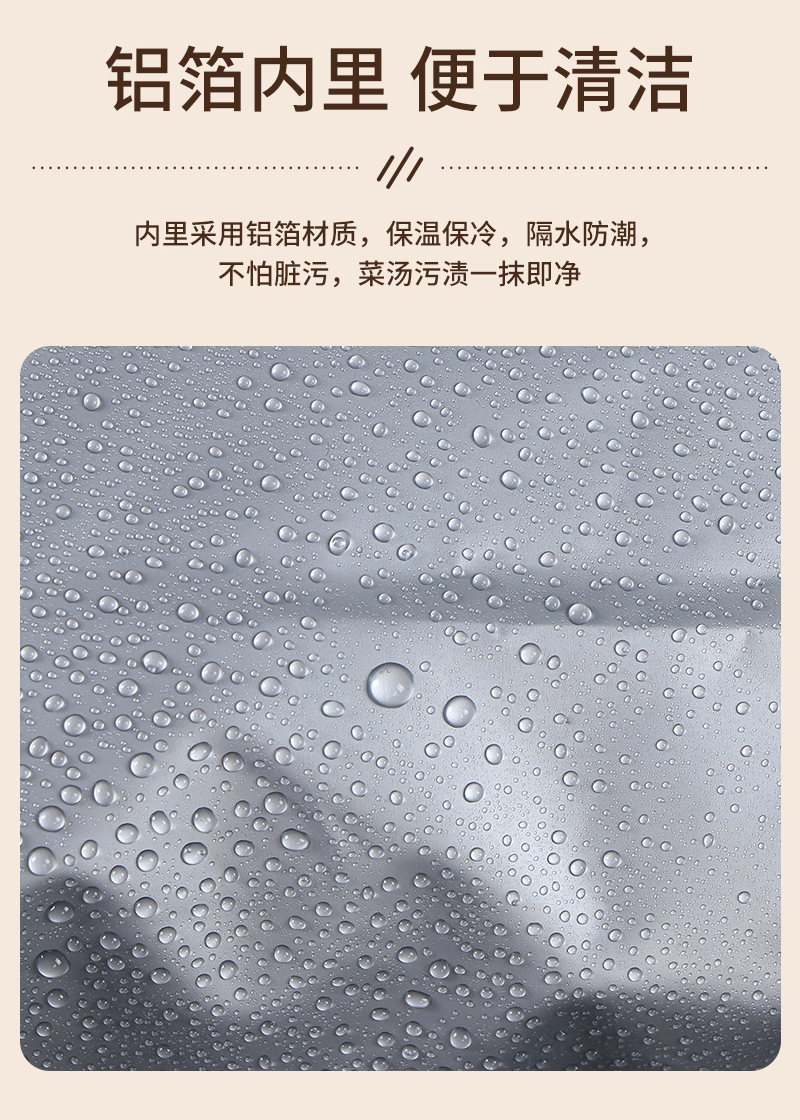
The product is described as an insulated lunch/carry bag or small portable cooler bag. The listed material note mentions Oxford cloth plus aluminum foil, which typically points to a textile outer shell with thermal lining inside. Exact insulation thickness and thermal retention time are not provided, so the safest reading is that it is intended to help with freshness and short-term temperature holding, not to promise long-duration performance.
Materials and Finish Options
The visible outer surface appears to be synthetic woven fabric, likely polyester or nylon-based textile, with smooth black trim and zip tape. The darker textured panel and soft shell construction give the bag a practical everyday look. A water-drop graphic in the supplied data suggests a water-resistant or easy-wipe surface, but that should be treated as an indication rather than a verified waterproof rating.
For buyers comparing materials, the important point is that textile insulated bags are usually chosen for light weight, flexible storage, and straightforward cleaning. The exact inner lining, foam layer, and laminate structure are not specified, so those details should be confirmed before placing an order.
Manufacturing and Construction
This product belongs to the cut-and-sew bag category. Typical production involves fabric cutting, panel stitching, zipper assembly, seam reinforcement, and interior insulation layering. The visible seams and zipper pulls suggest a standard sewn textile process rather than a molded hard-shell cooler. That construction style is common for lunch bags because it balances portability with basic thermal function.
Application Scenarios
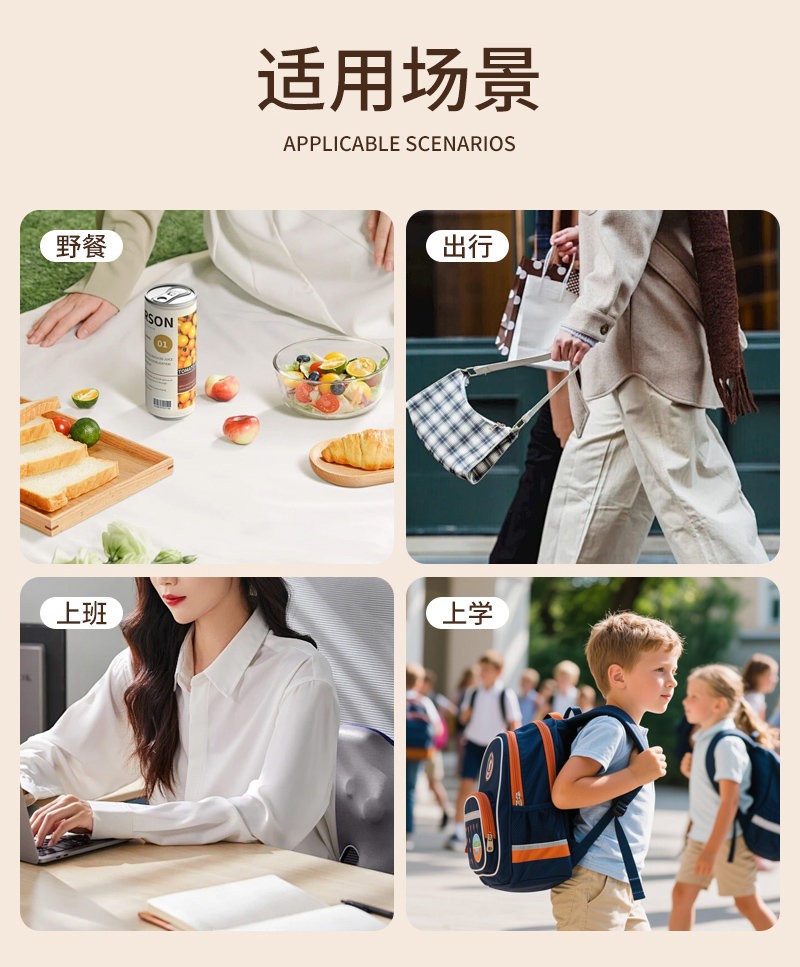
The lunch bag suits office workers carrying lunch from home, students bringing snacks and fruit, commuters who need a compact food carrier, and travelers looking for a small meal bag for the road. It can also be used for short outings, picnic side storage, or organized transport of small temperature-sensitive items.
Because it has separate pockets, the bag may also work well for people who want to keep non-food items apart from the main compartment. For example, a phone, tissues, a spoon, or wipes can be stored in the front pocket while the main space holds a lunch container.
Quality Control Considerations
When evaluating a lunch bag for B2B purchase, buyers usually check seam consistency, zipper smoothness, strap attachment strength, pocket stitching, and lining integrity. A soft-sided insulated bag should open and close cleanly without snagging and should keep its shape well enough to hold containers upright. If the product will be used daily, the reinforcement around handles and strap connection points becomes especially important.
Customization and Buyer Decision Factors
For procurement teams and brand buyers, the main decision factors are size, pocket layout, carrying style, material finish, and the expected level of insulation. If the bag is being sourced for promotional, retail, or private-label use, it is also worth confirming logo placement, color options, zipper pulls, and whether the shoulder strap can be adjusted or removed. Since exact dimensions and performance data are not fully provided here, those points should be verified in samples before final approval.
Buyers looking for an insulated lunch bag should also think about what the end user carries most often. A worker with one lunch box and a drink needs different internal space than a student carrying fruit, snacks, and utensils. Choosing the right capacity reduces returns and improves everyday usability.
Request More Product Details
If you need this lunch bag for wholesale sourcing, private label development, or custom branding, please request sample photos, lining details, and construction specifications before production. Confirming the exact material build and carry features will help ensure the final product matches your market, use case, and packaging needs.