


A cotton tote bag factory China search produces plenty of photographs and very little comparable evidence. A catalogue can show a finished tote; it cannot show whether the same handle stitch, fabric weight and packing count will appear on your order.
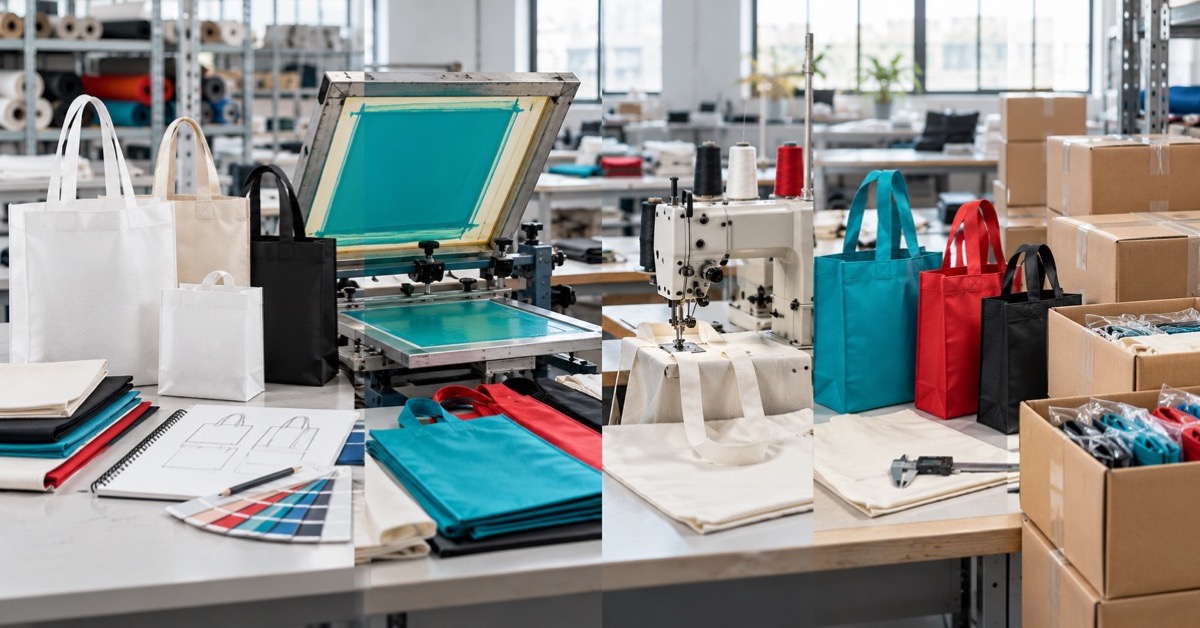
PackMK uses an evidence tour that follows the product through the factory: incoming cloth, cutting, printing, sewing, inspection and packing. The point is not to reward the most impressive room. It is to connect each buyer promise to a place where it can be checked.
Short answer: Evaluate a cotton tote bag factory China candidate by tracing five evidence points: material receipt, cut-panel control, print approval, sewing inspection and carton release. Ask for records tied to your specification rather than generic factory photos.
Begin with the buyer's evidence list
A factory visit is useful only when the buyer knows what must be proved. Start with the tote specification, the intended load, the artwork, the quantity and the packing rule, then turn each into a question that can be answered on the floor.
PackMK sends the evidence list before a call so a factory can prepare the right records. A visit that begins with a showroom and ends before packing leaves the most commercial risks untouched.
The evidence tour in six stops
Each stop should produce one record, one sample or one observation that can be compared with the quotation.
| Stop | What to verify | Evidence to request |
|---|---|---|
| Material receipt | Cloth weight, colour and lot | Incoming record and roll label |
| Cutting | Panel dimensions and shrinkage allowance | Cut plan and first cut panel |
| Printing | Artwork, ink route and first-off | Signed strike-off or print approval |
| Sewing | Handle attachment and seam control | In-process sample and stitch check |
| Inspection | Defects, count and rework | Inspection sheet tied to the order |
| Packing | Carton count, marks and loading | Packing list and carton photograph |
The evidence is valuable because it is specific to the run. A generic certificate can support a system claim, but it cannot replace a record for your tote order.
Stop one: trace the cloth to the roll
A tote bag's cloth is the first answer to the buyer's load question. Look for the roll label, weight or construction record, colour lot and the way the factory separates approved material from material waiting for review.
PackMK asks for one roll reference to follow into cutting. If the factory cannot connect the material received to the panels cut for the order, a later quality conversation becomes an argument about which fabric was actually used.
Stop two: watch the first cut panel
Cutting is where a nominal dimension becomes a real component. Grain direction, shrinkage allowance and panel nesting all affect whether a run stays within size tolerance and whether the print box will land where the drawing says it should.
Ask to see the first cut panel beside the pattern, not only the finished bag. PackMK records the panel dimensions and the reference edges so a second size can be checked without assuming that all panels were cut from the same setting.
Stop three: connect print to an approval
A print room can be busy and still lack a usable approval trail. The important question is whether the first-off is signed, dated and linked to the artwork file and the chosen cloth.
Check the print method, ink or pigment route, colour reference and cure or drying assumption. PackMK keeps the physical strike-off with the order record so a finished tote can be compared to something more exact than a digital preview.
Questions to ask at the sewing station
Sewing evidence should focus on load paths rather than on a neat table photograph.
- Where is the handle attachment point measured from?
- How many bartacks or reinforcement stitches are required?
- What happens when a seam is outside tolerance?
- How are mixed sizes separated on the line?
- Who signs the first piece before the line continues?
A factory that can answer these questions with an in-process record is easier to manage than one that answers only with a finished sample.
A practical first-piece inspection
Use a first-piece sheet that connects appearance and performance.
| Feature | Check | Record |
|---|---|---|
| Fabric | Weight and lot match | Gsm or construction plus roll ID |
| Dimensions | Width, height and base | Measured values and tolerance |
| Handles | Length, attachment and bartacks | Measurement and stitch count |
| Position, colour and cure | Approval reference and result | |
| Seams | Skipped stitch, fray or puckering | Defect count and disposition |
PackMK asks for the first-piece sheet before approving the full run because it is the cheapest moment to correct a repeatable defect.
Stop five: inspect the inspection system
A factory may have inspectors and still miss the defect that matters to your buyer. Ask what the inspection sheet counts, what sample size is used and how a rejected piece is separated from the good stock.
The goal is not to demand one universal sampling plan. It is to see whether the plan is linked to the risk: a handle attachment should be checked differently from a small print speck, and a mixed-size carton needs a different control from a single-size carton.
Stop six: release the carton, not only the bag
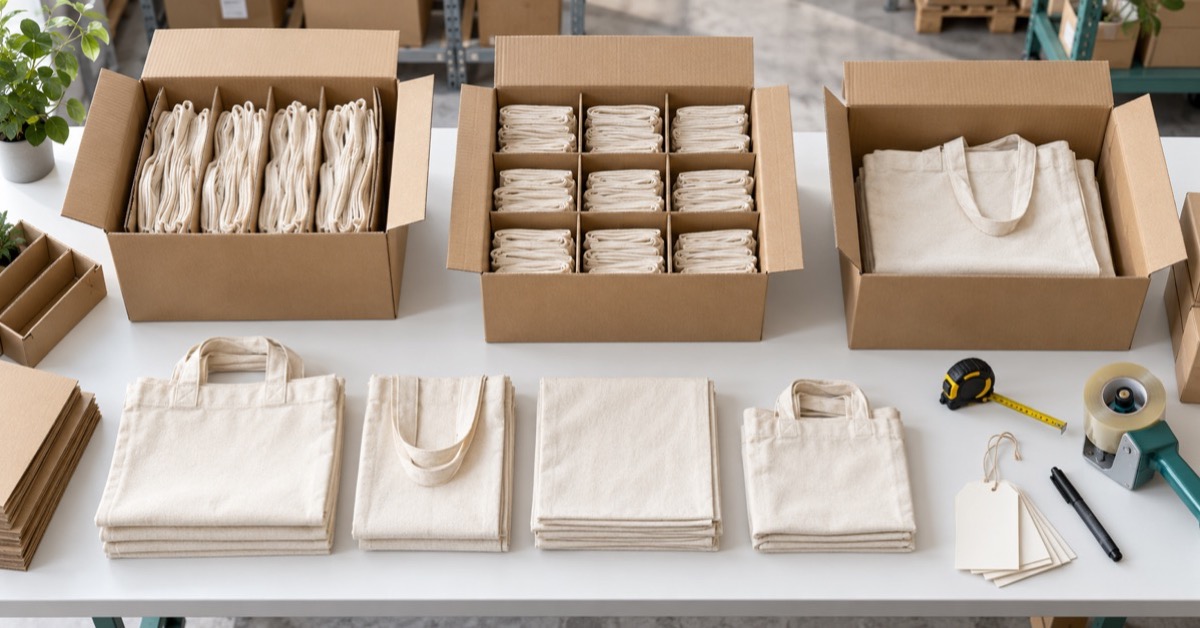
A tote order can be sewn correctly and still arrive unusable if cartons are mixed, labels are missing or the count is wrong. Packing is the final evidence stop because it controls what the warehouse receives.
PackMK reviews carton marks, inner quantity, gross weight, destination and loading photographs. The carton list is checked against the purchase file before the shipment is handed to the carrier.
Separate factory capability from order readiness
A factory can be capable of making totes without being ready for your order. Capability is shown by equipment and process; readiness is shown by a confirmed material route, a dated capacity plan and an owner for the first-piece approval.
PackMK records both. A buyer should not pay for an urgent slot merely because the factory has a sewing line, and should not accept a low price when the line has no documented plan for the required handle or print method.
Evidence that should make a buyer pause
These are not automatic failures, but each needs a written answer before an order is placed.
- The sample cannot be tied to a fabric lot.
- The print approval has no file version or date.
- Handle reinforcement is described but not measured.
- Inspection results are shown without a defect definition.
- Carton count is estimated until loading.
PackMK turns each pause into a request for order-specific evidence rather than a judgement based on the showroom.
Document the factory route after the call
A buyer does not need a long audit report for every tote order. A one-page route with the six stops, the evidence received and any open action is usually enough to make the next conversation precise.
The route also protects the second order. When a repeat run uses the same cloth, handle and print route, the buyer can compare records rather than starting the factory evaluation from a catalogue page again.
Case example: a tote buyer who checked the carton release
A retailer compared two cotton tote bag factory China candidates. The first showed a polished sample and a low price. The second showed the roll reference, a signed print strike-off and a carton photograph with the count marked.
The first factory's sample used a heavier cloth than the quotation and mixed two sizes in the first shipment. The second factory's evidence matched the specification and made the packing risk visible before the order. The retailer selected the second route even though its unit price was slightly higher.
References for factory evidence reviews
A documented process is useful when each record is tied to a decision, and shipping responsibility is clearer when delivery terms are stated with the shipment evidence. Buyers can consult ISO quality management principles and ICC Incoterms rules overview for additional context. These references do not certify a particular PackMK order.
Write a cotton tote bag factory China brief
A practical cotton tote bag factory China brief should name fabric lot, first cut panel, print strike-off, carton release. It should also identify cotton gsm, bartack, AQL, Incoterms 2020 wherever they affect approval, production, packing or delivery. PackMK uses those fields to organize samples, quotation assumptions and release evidence.
Keep the cotton tote bag factory China tour proportionate
A small repeat order may only need remote evidence at the six stops. Use a live factory tour or third-party inspection when the quantity is large, the handle carries a heavy load, the order has several sizes or the cartons go to multiple destinations.
Evaluate a cotton tote bag factory China route with PackMK
Send PackMK the tote specification, quantity, artwork and delivery plan. We will map the six evidence stops, identify the records to request and show which open answers could affect price, quality or the ship date.
Questions about choosing a cotton tote bag factory China
What should I ask a cotton tote bag factory first?
Ask how the factory will prove the cloth lot, first cut, print approval, handle reinforcement, inspection result and carton count for your order. Those answers are more useful than a generic equipment list.
How can I verify cotton bag fabric weight?
Request the roll reference and an incoming record, then compare a retained panel or measured sample with the stated gsm. Follow the same lot into cutting if the order is large.
What is a print strike-off?
It is a physical printed sample made with the intended cloth, artwork and print route. It gives the buyer a dated baseline before the full tote run begins.
How should tote handles be checked?
Measure length from attachment point to attachment point and check the reinforcement stitch or bartack under the intended load. A neat empty handle is not enough evidence.
What does AQL mean for tote bags?
It is a sampling framework for deciding how many pieces to inspect and how defects are accepted. Agree the defect definitions and the sampling basis rather than citing AQL as a guarantee.
Should I visit the factory in China?
A visit helps when the order is complex or high value, but remote evidence can work for a smaller repeat run. In either case, ask for records tied to your specification and date.
Why does carton release matter?
A correct bag can still arrive mixed, short or unidentifiable. Carton marks, inner count, destination and loading evidence make the warehouse handoff controllable.
How do I compare two factories fairly?
Give both the same specification and request the same six evidence points. Compare assumptions, records and open actions alongside the unit price.
What if a sample uses heavier cloth than the quote?
Stop the comparison and ask for a revised quote or a sample made to the quoted cloth. A sample that does not match the basis cannot prove the price.
What should a cotton tote bag factory China brief contain?
Include cloth weight, dimensions, base, handle, reinforcement, artwork, print method, inspection rule, packing count, destination and delivery term. PackMK uses those fields for the evidence tour.