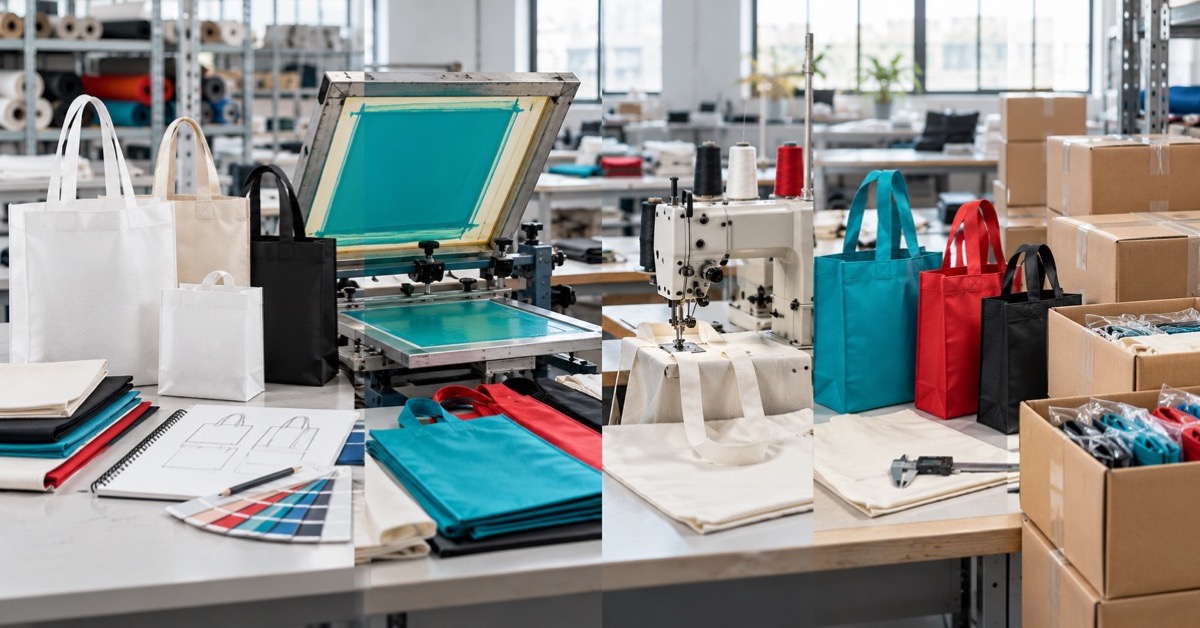



A search for a canvas tote bag manufacturer China often compares equipment photographs and unit prices. The more useful comparison is whether the factory's cutting, printing, sewing, inspection and packing capacity fits the run you actually need.
PackMK uses a capacity-fit matrix. It compares the order's material, size mix, artwork, quantity, deadline and shipment pattern with the factory route, so a buyer can see where a supplier is strong and where the proposed date depends on an untested assumption.
Short answer: Choose a canvas tote bag manufacturer China by matching your run to its capacity in six areas: material reservation, cutting, print method, sewing line, inspection and carton dispatch. A factory is a fit only when the complete route supports the quantity and date.
The capacity-fit matrix
Use the same matrix for every factory conversation so a catalogue and a production plan are compared on equal terms.
| Run requirement | Factory capacity to verify | Fit evidence |
|---|---|---|
| Fabric and gsm | Incoming material and storage | Roll record and reservation |
| Size mix | Cutting and pattern change | Cut plan and change time |
| Artwork | Print method and setup | Strike-off and line slot |
| Quantity | Sewing output by line | Daily plan and staffing |
| Deadline | Inspection and packing throughput | Release calendar and carton plan |
| Shipment | Warehouse and loading space | Carton list and booking route |
PackMK records a fit answer for each row instead of accepting a single statement that the factory has enough capacity.
Separate installed equipment from available capacity
A factory may own a printing or sewing machine and still have no open slot for the date you need. Capacity is a calendar question: what is running, what is reserved and what can be released after your sample is approved.
Ask for the planned route and the capacity assumption. PackMK treats an equipment list as background information and the dated plan as the evidence that matters for your run.
Check the material route before the sample date
Canvas tote programmes can lose time before cutting when the chosen cloth, colour or finish is not available in the required lot. A sample date that ignores material reservation is not a production date.
PackMK names the material basis, reservation status and fallback rule. If a substitute changes hand feel, shrinkage or print absorption, it becomes a new sample decision rather than an invisible rescue.
Match print method to artwork and volume
Screen print, transfer, digital print and embroidery each suit different art, quantities and surfaces. A factory may be capable of all four but not have the same setup time or colour control for each.
Send the artwork early and ask for a physical strike-off on the selected canvas. PackMK adds setup count and proof time to the capacity matrix, because the print route can decide whether the run fits the launch window.
Read sewing capacity through the bottleneck
Output is limited by the slowest repeatable operation, not by the number of sewing machines in a room. A tote with a boxed bottom, lined pocket or reinforced handle may spend more time at one station than a plain shopper.
PackMK maps the operation sequence and asks where work-in-process waits. The buyer can then compare a simple unit price with the actual line route and see whether a complex feature needs a separate capacity slot.
Capacity questions for a canvas tote bag manufacturer China
These questions reveal whether the proposed date is a plan or a sales estimate.
- Which material lot is reserved for this run?
- How many pattern or size changes are in the cut plan?
- What print method and setup count are assumed?
- Which sewing operation is the bottleneck?
- How many cartons can inspection and packing release per day?
PackMK records the answer beside the requirement it supports, making a later date change easier to diagnose.
Fit the run to the shipment
A factory can make the bags on time and still miss the shipment if carton cube or loading space was never included in the plan.
| Shipment factor | Question | Evidence |
|---|---|---|
| Carton quantity | How many bags per carton? | Packing trial and carton mark |
| Cube | Will the finished cartons fit the booking? | Dimensions and pallet plan |
| Weight | Does gross weight meet the route? | Packed weight record |
| Destinations | Are cartons split or consolidated? | Allocation and loading list |
| Term | Who carries cost and risk? | Named delivery term |
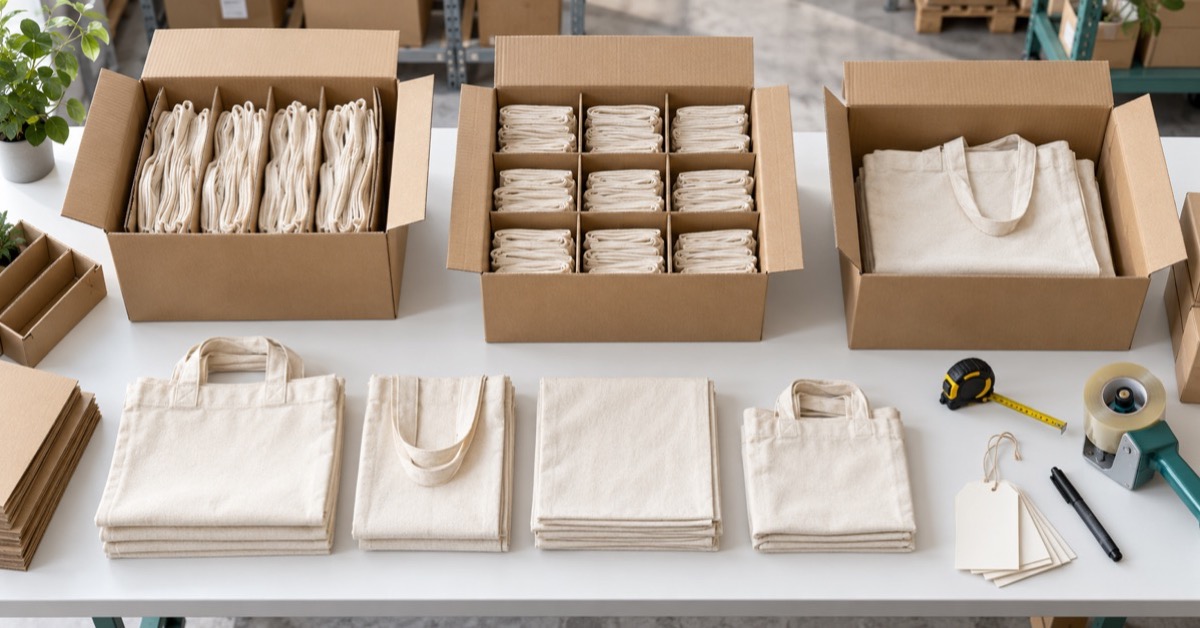
PackMK puts the packed carton into the capacity discussion because shipping is the final factory constraint.
Use a fit decision, not a universal ranking
The best manufacturer for a 5,000-piece one-size order may not be the best for 80,000 pieces across four sizes and three destinations. A fit decision explains the match for this run and this season.
PackMK records strengths, open assumptions and required controls for each candidate. That gives procurement a defensible choice without claiming that one factory is best for every tote programme.
Make inspection capacity part of the quote
Inspection is often discussed after production, but it consumes time and can become the final bottleneck. A multi-size tote run needs a clear defect definition, sample plan and release owner before cartons are booked.
PackMK places inspection in the capacity-fit matrix and ties it to the first-piece record. A low price that assumes a rushed final check is not comparable to a price that includes a controlled release.
Signals that factory capacity is not yet proven
Ask for a dated answer when any of these statements appear.
- We can add a line if needed.
- Material will be arranged after approval.
- The print department is flexible.
- Packing can work overtime.
- The ship date is still achievable.
PackMK converts each signal into a capacity assumption, owner and release condition before the order is confirmed.
Keep the matrix for the next run
A capacity-fit matrix becomes more valuable after a real order. Record actual material arrival, line output, inspection pace, carton release and any delay cause.
PackMK uses that record to improve the next quotation and to decide whether a new size or finish belongs on the same route. The goal is a repeatable fit, not a one-time promise.
Case example: a tote programme that exceeded the print slot
A buyer selected a canvas tote bag manufacturer China based on a low unit price and an impressive sewing floor. The order had four sizes and a three-colour print, but the quotation assumed one setup and did not reserve a print slot.
PackMK rebuilt the capacity matrix, separated the print batches and shifted the release calendar before cutting began. The buyer kept the factory, but changed the sequence and shipment split so the launch date was protected by a real plan.
References for capacity and shipment fit
Capacity decisions are strongest when the process and responsibility are recorded, and shipment assumptions are clearer when delivery terms and handling information are stated together. Buyers can consult ISO quality management principles and ICC Incoterms rules overview for additional context. These references do not certify a particular PackMK order.
Write a canvas tote bag manufacturer China brief
A practical canvas tote bag manufacturer China brief should name material reservation, print slot, sewing bottleneck, carton dispatch. It should also identify canvas gsm, strike-off, AQL, Incoterms 2020 wherever they affect approval, production, packing or delivery. PackMK uses those fields to organize samples, quotation assumptions and release evidence.
Keep the canvas tote bag manufacturer China matrix proportionate
A small one-size repeat order can use a short capacity confirmation. Use the full matrix when the run has several sizes, complex handles, multiple print batches, a fixed launch date or split destinations.
Find a capacity-fit canvas tote bag manufacturer China with PackMK
Send PackMK the tote specification, quantity by size, artwork, launch date, destinations and packing needs. We will map the factory capacity required at each step and expose any date that depends on an open assumption.
Common questions about a canvas tote bag manufacturer China
How do I choose a canvas tote bag manufacturer China?
Match your material, sizes, artwork, quantity, deadline and shipment pattern to the factory's full route from material receipt through carton dispatch. Equipment photographs alone do not prove capacity.
What is the difference between equipment and capacity?
Equipment is what the factory owns. Capacity is the dated, available route for your order, including material, setup, line time, inspection and packing.
Should material be reserved before sampling?
A provisional reservation can protect a date, but record the basis and expiry. A final reservation should follow an approved material route and sample when hand feel or colour matters.
How does print method affect capacity?
Each method has different setup, proof and line time. Multiple colours or sizes can create several setups, so include the artwork and batch count in the capacity plan.
What is a sewing bottleneck?
It is the slowest repeatable operation in the tote route, such as boxed bottoms, pockets or handle reinforcement. It limits output even when other machines are available.
Why include packing in a factory capacity review?
Packing consumes time and determines carton cube, weight and destination split. A finished bag is not shipment-ready until cartons can be released and booked.
What should I ask about inspection capacity?
Ask who inspects, which defects are defined, what sample plan is used and how many cartons can be released daily. Tie the answer to the quantity and size mix.
Can one factory handle small and large tote runs?
Possibly, but the best route can differ by quantity and complexity. Use the matrix to record fit for each run instead of assuming a universal factory ranking.
How should I compare two factory quotes?
Compare the same material, print, line route, inspection, packing, carton cube and delivery term. A low unit price may exclude the capacity or setup needed for your actual order.
What should a canvas tote bag manufacturer China brief contain?
Include fabric, sizes, handles, artwork, print, quantity, date, inspection, packing, destinations and term. PackMK uses those fields to build the capacity-fit matrix.