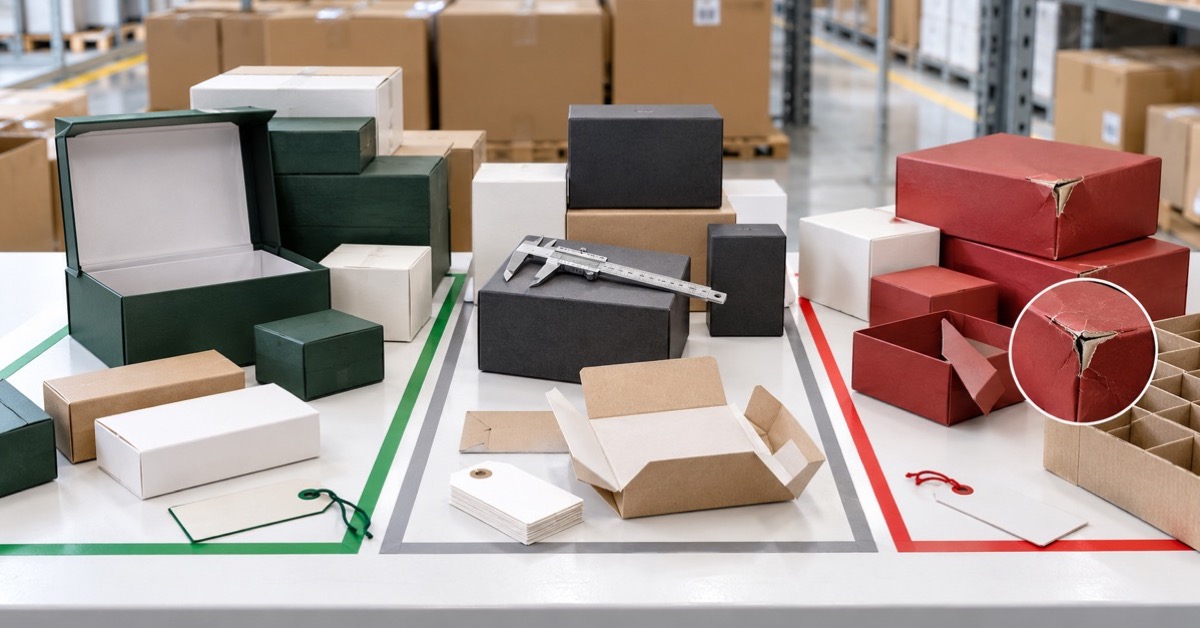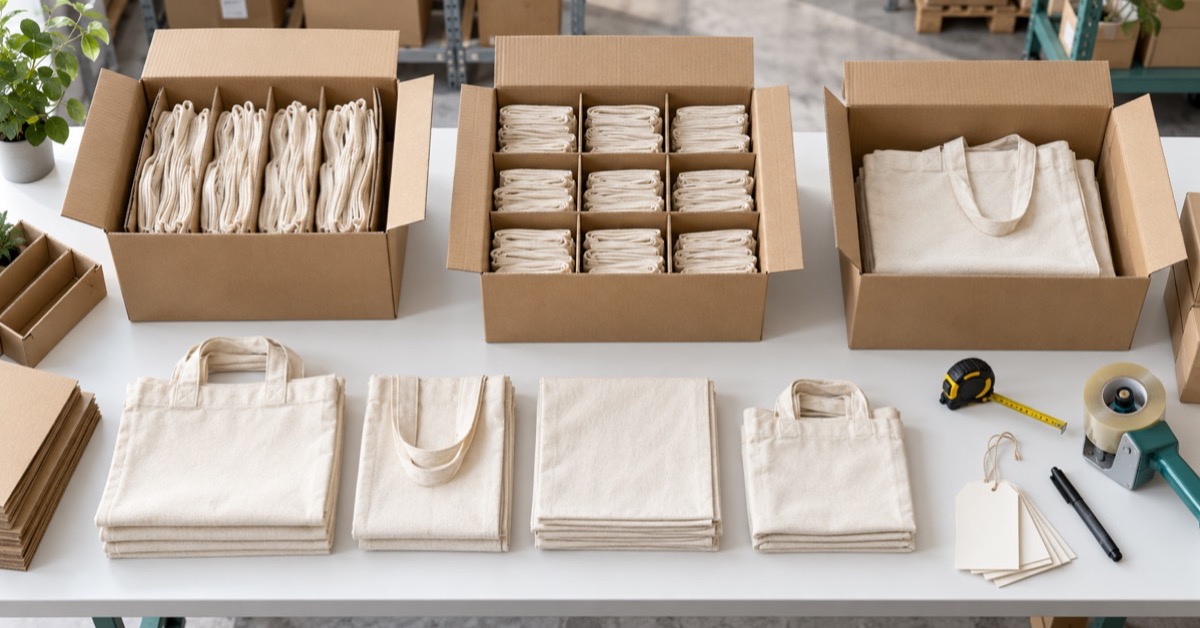


A paper box can pass a clean tabletop review and arrive with crushed corners, rubbed finishes or mixed versions. Export turns the retail box into cargo nested inside bundles, inner packs, master cartons and a handling route. A paper box exporter China should be evaluated by how that complete stack is designed and proven.
PackMK builds a cargo test from the retail box outward. The purpose is not to claim one universal transit standard; it is to make product, box, master carton, handling assumptions, documents and receiving evidence agree before shipment.
Direct answer: Evaluate the exporter by building and testing the full pack stack under representative compression, handling and storage conditions, then reconcile physical cartons with inspection and shipping records.
Step one: define the retail box's cargo boundary
State whether the paper box contains the product directly, acts as presentation packaging or sits inside another protective layer. Record product weight, orientation, fragility and vulnerable surfaces.
PackMK prevents a display box from silently becoming a shipping container. The responsibility of every layer should be explicit.
Build the pack stack from inside out
| Layer | Primary job | Evidence |
|---|---|---|
| Product contact | Protect surfaces and fit | Loaded sample |
| Retail box | Contain and present | First article |
| Inner pack | Separate and stabilize | Pack-out trial |
| Master carton | Stack and handle | Carton test |
| Shipment record | Identify and reconcile | Documents |
The stack is only as reliable as the handoff between layers.
Step two: load product range extremes
Use maximum and minimum product dimensions, weight variation, accessories and any sharp or sensitive features. Check fit, movement, removal and stress on panels or inserts.
PackMK uses real tolerances rather than one ideal sample. A tight box can deform when the largest product enters production.
Step three: protect finished surfaces from neighbors
Review face-to-face contact, foil, lamination, varnish, texture, wrapped edges and loose components. Define tissue, film, interleaving, sleeves or orientation where needed.
PackMK inspects boxes after a representative packed interval. Surface damage often appears from repeated contact rather than one impact.
Step four: write the master-carton specification
The export pack record should include:
- carton dimensions and construction;
- units, bundles and orientation;
- inner protection and empty-space control;
- weight and handling limits;
- marks, SKU and version identity;
- pallet or loose-load arrangement.
PackMK connects the specification to the packing list so physical and document identities remain aligned.
Step five: create a compression staircase
Define how cartons are stacked in storage, palletization or loading and what duration or environmental condition is relevant. Increase the challenge in controlled steps rather than jumping to an unexplained force.
PackMK observes carton deformation, retail-box corners, product fit and surface condition after unloading. The method and assumptions stay with the result.
Read damage as a route signal
| Damage | Likely route question | Evidence to inspect |
|---|---|---|
| Crushed corner | Void or stack | Pack-out and carton |
| Rubbed finish | Contact and vibration | Inner protection |
| Box bulge | Product fit | Range sample |
| Mixed SKU | Packing identity | Carton record |
| Moisture mark | Storage and barrier | Condition log |
The aim is to connect the visible symptom to the pack-stack decision that can be changed.
Step six: rehearse handling transitions
Move representative cartons through lifting, short carries, pallet transfer, opening and warehouse staging. Observe handholds, weight, closure, carton orientation and retail-box movement.
PackMK focuses on credible transitions in the actual route. A static stack can hide damage created during repeated manual handling.
Step seven: state moisture and storage assumptions
Record expected warehouse, loading and transport conditions, supplier material information and any barrier or desiccant decision. Avoid universal claims about moisture resistance.
PackMK checks how conditioning affects cartons, paper boxes, glue, warping and finish. Changes in route or season may require the question to reopen.
Step eight: release a production pack-out
Use actual production boxes, products, inner protection, carton and marks. Photograph or record layer sequence, quantities and approved exceptions.
PackMK treats the pack-out as a first article. A development sample made with different materials cannot release the final export stack.
Step nine: inspect cartons as well as retail boxes
Check product, box identity, dimensions, board, print, finish, assembly, fit and quantity, then inspect bundle, carton, marks, closure and allocation.
PackMK samples different packing periods and versions. A correct total does not prove every carton contains the right box mix.
Step ten: reconcile the physical shipment
Connect accepted boxes, rework, rejects, bundles, cartons, overage and packing-list quantities. Define how partial cartons or mixed assortments are identified.
PackMK performs a forward and backward check. Receiving should be able to start with a carton mark and find the relevant order and version record.
Step eleven: align shipping documents
Review product descriptions, quantities, weights, carton counts, marks, buyer references and destination information with responsible logistics and commercial owners.
PackMK uses document consistency as a release gate. This supports smooth handoff but does not replace qualified customs or legal review.
Step twelve: simulate receiving
Open representative cartons, count units, identify versions, inspect condition and move boxes into the expected warehouse or fulfillment process. Record how easily staff can reconcile the shipment.
PackMK uses the rehearsal to find unclear marks, difficult bundles and hidden damage before the actual destination receives the order.
Step thirteen: feed destination damage into the next stack
Collect traceable photos, carton identity, box defects, counts, storage observations and supplier response. Separate isolated handling events from repeated pack-stack patterns.
PackMK connects the evidence to the retained pack-out and inspection record. The next order can target the affected layer rather than redesigning blindly.
Cargo-test example: perfect boxes with rubbed black panels
A matte-black retail box passes factory appearance inspection. After export, broad scuff marks appear on front panels even though master cartons remain intact.
PackMK would examine face-to-face contact, bundle pressure, finish resistance, vibration and the time boxes remained compressed. A revised interleaf or orientation could be tested against the same route assumptions.
The corrective action would update the production pack-out and inspection evidence. The exporter would control the layer causing the damage rather than merely tightening retail-box color inspection.
Use quality and business resources as export context
Quality principles and business education resources help teams define traceability, responsibility and order-specific evidence. Use ISO quality management principles and CPSC business education resources as context for supplier questions. PackMK still releases the actual order against the buyer brief, approved samples, production evidence and destination-specific requirements.
Evaluate a paper box exporter China through the cargo stack
A decision-ready paper box exporter China brief should define retail box, inner pack, master carton, compression stack, handling route, moisture exposure, carton mark, packing list, shipment inspection, receiving evidence. It should also identify PackMK, paper box exporter China, paperboard, folding carton, rigid box, corrugated carton, OEM, MOQ. PackMK turns those fields into a quotation scope, approval route and evidence list that purchasing, quality, operations and receiving can interpret consistently.
Require the supplier to state assumptions, exclusions, approved alternatives, tooling, minimums, inspection scope, packing and lead-time conditions. For paper box exporter China, a broad promise should become a sample question, measurable tolerance, priced option or release gate before the purchase order is confirmed.
Transit conditions, documents, customs requirements, carton performance and product obligations vary by route and destination. This framework is not legal, customs or compliance advice.
Export quality depends on the nested system around the retail box. PackMK helps buyers make that system visible, testable and traceable from factory pack-out to destination receiving.
Before approval, PackMK recommends a one-page decision record naming the selected route, rejected alternatives, evidence reviewed, open limitations, quantity basis, owner and review date. After delivery, add receiving observations, defects, user feedback, supplier response and retained references. This creates a useful learning loop and lets the next order reopen only the decisions affected by a new SKU, material, market, application or delivery route.
Build a paper-box cargo test with PackMK
PackMK can support paper box exporter China from buyer brief and samples through production checks and export packing. Send the product or application, artwork, quantities, variants, destination and required date to request a structured quotation for paper box exporter China.
- Explore PackMK paper box and export packaging formats
- Review PackMK OEM and ODM support
- Request a paper box exporter China quotation
Cargo-test questions for paper box exporters
What belongs in the export brief?
Include product, retail box, inner protection, master carton, quantities, versions, route, marks, documents and date.
Why test range extremes?
Maximum product size or weight can deform a box that fits an ideal sample.
What is a compression staircase?
It applies controlled stack challenges with stated duration and conditions while inspecting every pack layer.
How are finished surfaces protected?
Use appropriate orientation, interleaving, tissue, sleeves or separation based on physical trials.
What should master-carton marks show?
Show order, SKU, version, quantity, destination and sequence information needed for receiving.
What should export inspection include?
Inspect products, retail boxes, bundles, cartons, marks, counts, versions and pack-out consistency.
How are mixed cartons controlled?
Use explicit allocation, inner identity and packing records that receiving can reconcile.
Which shipping fields should agree?
Descriptions, quantities, weights, carton counts, marks, buyer references and destination should agree.
What should destination receiving report?
Report carton identity, count, version, damage, storage observations and traceable photos.
How does PackMK support paper-box exports?
PackMK coordinates box development, pack-stack trials, inspection, carton reconciliation, documents and receiving feedback.