

Oxford cloth is often chosen for its structured hand and practical durability, but OEM oxford cloth bags still need a job-specific proof. A buyer carrying books, apparel or retail goods needs more than a fabric name: the specification must connect weave, coating, seams, handles, artwork and packing to the real load.
PackMK uses a buyer-question sequence: what will the bag carry, where can it fail, which sample proves the risk, and what must stay unchanged on the next order? That makes a durable-looking option measurable and comparable.
PackMK makes the active brief visible to procurement, development, production and inspection. Every recommendation below names the evidence a buyer can request before committing to volume.
Start with the load, not the fabric label
List product dimensions, filled weight, sharp corners, carry distance, moisture and expected reuse before choosing cloth.
Load the largest and most common combinations and note balance, opening, base shape and hand clearance. This prevents a material promise being mistaken for a finished performance guarantee and leaves a usable record for the next quotation or repeat order.
Separate Oxford weave from finished treatment
Name weave, yarn, weight, finish, color and coating in the controlled specification.
Compare production-equivalent swatches for stiffness, opacity, fray, hand feel and surface response. This prevents different constructions being quoted under one broad name and leaves a usable record for the next quotation or repeat order.
Define weight and tolerance together
State target fabric weight, test method, sampling points and acceptable range.
Check several positions and retain a signed swatch because weight alone does not describe uniformity. This prevents a number hiding thin zones or inconsistent lots and leaves a usable record for the next quotation or repeat order.
Treat coating as a functional choice
Record PU or other coating, appearance, water behavior, odor, hand change and approved alternatives.
Test the finished bag after folding and handling rather than accepting a coating claim from a flat swatch. This prevents a coating improving appearance while hurting flexibility or print and leaves a usable record for the next quotation or repeat order.
Map the force through the bag
Draw the path from contents to base, side seams, top edge, handles and reinforcement.
Use repeated filled lifts and inspect distortion, seam opening and bottom recovery. This prevents the panel passing while a joint carries the real stress and leaves a usable record for the next quotation or repeat order.
Freeze finished dimensions
Define width, height, gusset, opening and handle drop with a measuring condition and tolerance.
Measure relaxed and filled samples so the product clears the true usable space. This prevents flat dimensions passing while the loaded bag is cramped and leaves a usable record for the next quotation or repeat order.
Make handle attachment visible
Specify webbing or self-fabric, width, drop, stitch pattern, reinforcement and comfort.
Run a filled carry trial at the expected distance and record pressure and balance. This prevents strong handles being placed where they are uncomfortable or unstable and leaves a usable record for the next quotation or repeat order.
Approve print on the coated surface
Identify print method, ink, coverage, registration, curing and safe areas for the actual cloth.
Rub, fold and handle production-equivalent bags after curing and retain the approved reference. This prevents a digital artwork proof hiding adhesion or cracking risk and leaves a usable record for the next quotation or repeat order.
Check color under a useful light
Define physical color references, viewing light and tolerance for fabric, coating, thread and handles.
Compare bulk output against the signed reference across cartons and production times. This prevents a visually similar color changing the brand system and leaves a usable record for the next quotation or repeat order.
Test moisture and conditioning
State credible humidity, storage, rain or wipe exposure and the pass criteria.
Condition representative bags and recheck dimensions, coating, seams, print and odor. This prevents unsupported outdoor or water-resistant claims and leaves a usable record for the next quotation or repeat order.
Use a staged sample ladder
Separate swatch, blank, print trial, pre-production sample and first production article.
Give every reference a code, date, approver and superseded status. This prevents one attractive sample being stretched beyond its evidence and leaves a usable record for the next quotation or repeat order.
Inspect the run across cartons
Check cloth, dimensions, seams, handles, print, function, variants, quantity and packing at multiple points.
Use defect categories and a stop rule for critical load or attachment failures. This prevents supplier-selected top pieces hiding run variation and leaves a usable record for the next quotation or repeat order.
Make packing part of performance
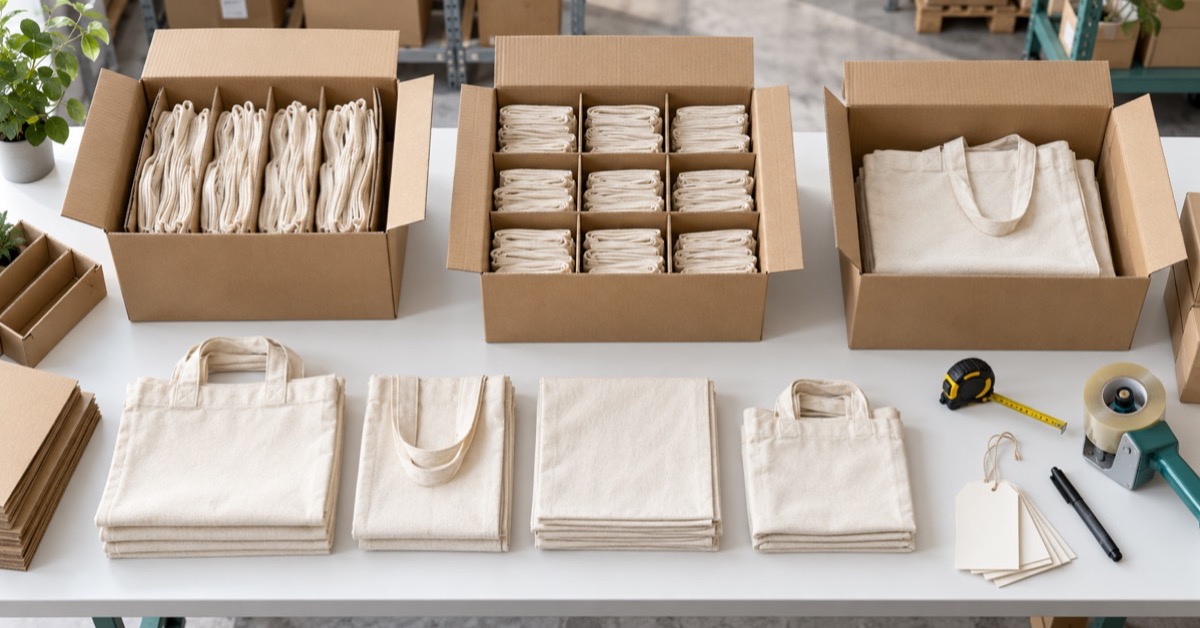
Define fold, bundle count, moisture protection, carton strength, marks and SKU separation.
Open a real carton and rehearse receiving, counting and storage before shipment. This prevents good bags arriving crushed, mixed or difficult to count and leaves a usable record for the next quotation or repeat order.
Protect the repeat-order file
Store swatches, measurements, artwork, signed sample, tests, deviations and carton plan.
Compare receiving feedback with the retained reference before changing any field. This prevents a repeat order being rebuilt from memory and leaves a usable record for the next quotation or repeat order.
The evidence behind an Oxford cloth quotation
| Field | Ask for | Acceptance evidence |
|---|---|---|
| Cloth | Weave and weight | Signed swatch and tolerance |
| Coating | Type and behavior | Finished-bag handling test |
| Strength | Load path | Repeated filled lifts |
| Method and curing | Rub and fold check | |
| Packing | Carton standard | Receiving rehearsal |
Choose the right sample for the question
| Sample | Answers | Still open |
|---|---|---|
| Swatch | Material and color | Sewn behavior |
| Blank | Fit and construction | |
| Print trial | Artwork and adhesion | Run variation |
| Pre-production | Complete route | Every carton |
| First article | Production transfer | Receiving feedback |
Use textile guidance without replacing product proof
Material standards can improve vocabulary and traceability, while the actual load, climate and packaging route decide acceptance. Review Textile Exchange standards overview and ISO quality management principles for context, then apply the limits to the actual PackMK brief, sample and destination.
Specify OEM oxford cloth bags in buyer-ready fields
For OEM oxford cloth bags, record Oxford weave, fabric weight, coating, water resistance, seam allowance, handle attachment, load path, print adhesion, carton packing, repeat order. The same file identifies PackMK, OEM, Oxford cloth, PU coating, ISO, MOQ, carton, inspection, so a search phrase becomes a set of fields that can be quoted, sampled and inspected.
Buyers should also mark what cannot change without approval: the active material reference, finished dimensions, artwork version, packing count and the acceptance method. Those boundaries give a supplier room to plan while protecting the result that the customer actually ordered.
Ask each quotation to return assumptions in writing. A short note about a substitute, tolerance, lead time, minimum or excluded service is more useful than a broad promise because it tells procurement what must be verified in the next sample or cost comparison.
Use the first shipment as evidence for the next one. Record which checks predicted the receiving result, which observation surprised the team and which field should be tightened. PackMK can convert that learning into an update to the brief rather than leaving it as an isolated complaint.
This buyer-question method keeps OEM oxford cloth bags practical: a decision has an owner, a physical or written reference, a defined tradeoff and a recovery path. It also gives sales, sourcing, quality and warehouse teams one consistent story when a repeat order is discussed.
Before approval, ask whether the evidence reflects the intended quantity, variant mix and delivery route. A small sample can answer fit or appearance, but it cannot automatically prove run consistency, carton protection or receiving speed. Mark those open questions and assign the next check so the project moves forward with a known level of confidence.
That final note keeps the decision usable for the whole team.
Develop OEM oxford cloth bags with PackMK
PackMK can develop OEM oxford cloth bags from buyer brief through sample approval, production checks and export packing. Send the intended use, size, artwork, quantity, variants, destination and deadline to request a structured quotation for OEM oxford cloth bags.
- Explore PackMK Oxford cloth bag formats
- Review PackMK OEM and ODM support
- Request an OEM Oxford cloth bag quotation
OEM Oxford cloth bag questions
What should be included in an OEM oxford cloth bags quote?
Provide size, filled load, weave and weight, coating, handles, seams, artwork, quantities, packing, destination and date.
Is heavier Oxford cloth always better?
No. Weave uniformity, coating, geometry, stitching, reinforcement and load distribution also determine performance.
How is coating approved?
Name the coating and test the finished bag after folding, handling and the intended moisture exposure.
What handle test is useful?
Carry the intended filled load for the expected distance and inspect comfort, attachment, balance and top-edge distortion.
Can the supplier change the fabric?
Only with a written comparison, impact review, new sample and buyer approval before production.
Should print be tested before sewing?
Artwork should be checked on the actual surface, then the sewn bag should be rubbed, folded and handled.
What does final inspection cover?
Cloth, dimensions, seams, handles, coating, print, function, quantity, variants, cartons and marks.
How can repeat color be controlled?
Retain a physical reference, define viewing conditions and compare bulk output across multiple cartons.
What protects a reorder?
Keep the active specification, swatches, signed sample, artwork, tests, deviations and packing standard.
How does PackMK support OEM oxford cloth bags?
PackMK coordinates the brief, sampling, evidence review, production checks, export packing and repeat-order record.