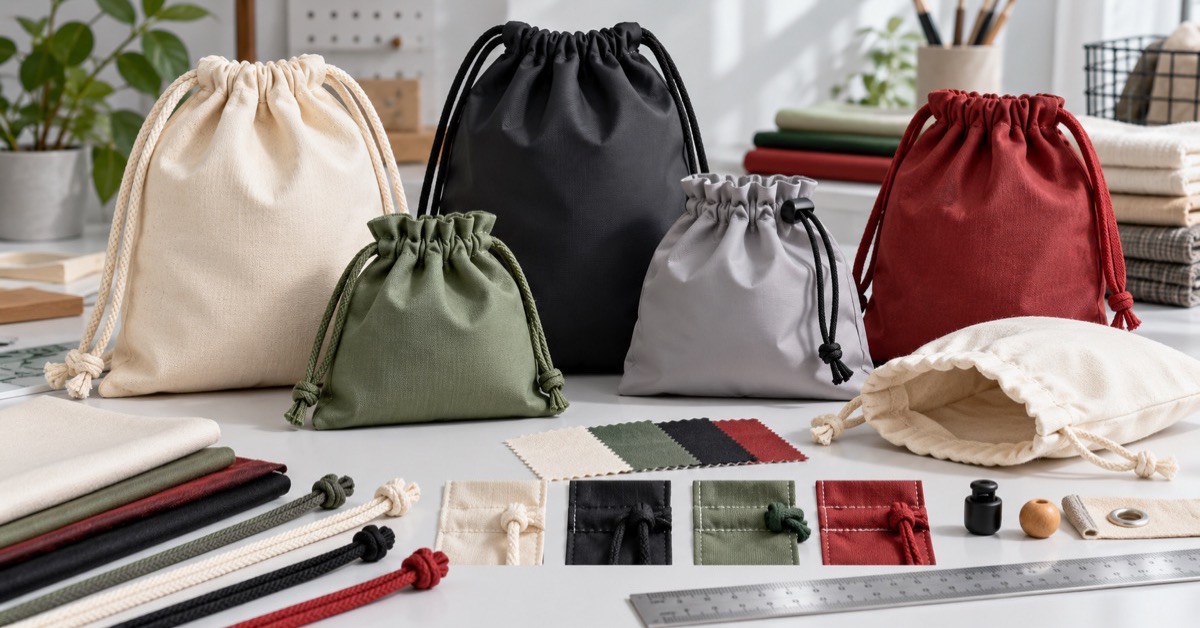


A gift bag has two users: the team that fills and hands it over, and the recipient who carries and opens it. OEM gift bags work when both experiences are designed together. PackMK begins with the product, occasion, handoff route and intended after-use before choosing material or decoration.
This recipient-journey framework replaces vague premium language with observable moments. It helps brand, procurement and operations approve the same bag while there is still time to change size, handles, closure, print or packing.
Moment 1: identify the recipient and occasion
Define who receives the gift, why, where and whether the exchange is private, ceremonial, retail or event-based. PackMK checks the point from the recipient's perspective: what they notice, touch, carry, open and remember. The approved choice must also remain practical for the team that fills, transports and distributes the package.
Write a short scene that includes clothing, weather, queue, transport and the recipient's next destination. This prevents a bag being styled for a mood but not for the real handoff. Record the result beside the live specification so quoting, sampling, production, inspection and repeat orders use the same evidence.
Moment 2: build the complete gift set
List the largest item, total weight, accessories, tissue, card, protective parts and possible product combinations. PackMK checks the point from the recipient's perspective: what they notice, touch, carry, open and remember. The approved choice must also remain practical for the team that fills, transports and distributes the package.
Pack the common and maximum combinations and photograph the filled shape from several angles. This prevents late contents distorting an approved bag. Record the result beside the live specification so quoting, sampling, production, inspection and repeat orders use the same evidence.
Moment 3: choose the useful opening
Set the opening width, access direction, closure, privacy and whether staff need fast repeat filling. PackMK checks the point from the recipient's perspective: what they notice, touch, carry, open and remember. The approved choice must also remain practical for the team that fills, transports and distributes the package.
Time a small packing and handoff rehearsal with someone who did not develop the sample. This prevents an elegant closure slowing the distribution line. Record the result beside the live specification so quoting, sampling, production, inspection and repeat orders use the same evidence.
Moment 4: size the bag by filled behavior
Specify finished width, height, gusset, opening and usable internal space with tolerances. PackMK checks the point from the recipient's perspective: what they notice, touch, carry, open and remember. The approved choice must also remain practical for the team that fills, transports and distributes the package.
Check product clearance, top appearance, center of gravity and tipping with the real gift set. This prevents flat dimensions passing while the gift does not sit well. Record the result beside the live specification so quoting, sampling, production, inspection and repeat orders use the same evidence.
Moment 5: select material for touch and route
Compare paper, cotton, non-woven, coated fabric or another option by hand feel, weight, weather and reuse. PackMK checks the point from the recipient's perspective: what they notice, touch, carry, open and remember. The approved choice must also remain practical for the team that fills, transports and distributes the package.
Handle production-equivalent samples after filling, folding, stacking and transport. This prevents a display-table material failing during actual movement. Record the result beside the live specification so quoting, sampling, production, inspection and repeat orders use the same evidence.
Moment 6: make handles comfortable
Define handle material, width, drop, attachment, reinforcement and the desired carry style. PackMK checks the point from the recipient's perspective: what they notice, touch, carry, open and remember. The approved choice must also remain practical for the team that fills, transports and distributes the package.
Carry the filled bag for the expected distance and inspect comfort, balance and top-edge distortion. This prevents strong handles creating an awkward or painful carry. Record the result beside the live specification so quoting, sampling, production, inspection and repeat orders use the same evidence.
Moment 7: control the first brand view
Place logo, message, event information and legal content around the filled shape and hand position. PackMK checks the point from the recipient's perspective: what they notice, touch, carry, open and remember. The approved choice must also remain practical for the team that fills, transports and distributes the package.
Approve full-size artwork on a formed bag under the lighting of the handoff environment. This prevents important artwork being folded, covered or held. Record the result beside the live specification so quoting, sampling, production, inspection and repeat orders use the same evidence.
Moment 8: prove decorative finishes
Set foil, embossing, varnish, lamination, ribbon or hardware with registration and durability limits. PackMK checks the point from the recipient's perspective: what they notice, touch, carry, open and remember. The approved choice must also remain practical for the team that fills, transports and distributes the package.
Rub, flex, stack and handle samples after final forming rather than approving a flat decoration proof. This prevents a premium finish cracking or marking in use. Record the result beside the live specification so quoting, sampling, production, inspection and repeat orders use the same evidence.
Moment 9: coordinate tissue and inserts
Define tissue size, color, fold, card position, insert protection and the order staff add each part. PackMK checks the point from the recipient's perspective: what they notice, touch, carry, open and remember. The approved choice must also remain practical for the team that fills, transports and distributes the package.
Run a timed packing trial and inspect the recipient's first view after opening. This prevents loose components hiding the product or increasing labor. Record the result beside the live specification so quoting, sampling, production, inspection and repeat orders use the same evidence.
Moment 10: protect privacy and security
Decide whether the contents require opacity, tamper evidence, a closure or discreet outer branding. PackMK checks the point from the recipient's perspective: what they notice, touch, carry, open and remember. The approved choice must also remain practical for the team that fills, transports and distributes the package.
Test the completed pack during queueing, vehicle travel and temporary storage. This prevents the bag revealing or losing valuable contents. Record the result beside the live specification so quoting, sampling, production, inspection and repeat orders use the same evidence.
Moment 11: release a physical master
Approve material, color, dimensions, handles, print, finish, closure and filled presentation on one coded sample. PackMK checks the point from the recipient's perspective: what they notice, touch, carry, open and remember. The approved choice must also remain practical for the team that fills, transports and distributes the package.
Record approver, date, photos and any accepted deviations before bulk production. This prevents different teams using different references. Record the result beside the live specification so quoting, sampling, production, inspection and repeat orders use the same evidence.
Moment 12: inspect the production journey
Check material, dimensions, construction, handles, artwork, finish, cleanliness, variants and quantity across the run. PackMK checks the point from the recipient's perspective: what they notice, touch, carry, open and remember. The approved choice must also remain practical for the team that fills, transports and distributes the package.
Sample multiple cartons and production points and repeat a filled carry check. This prevents one supplier-selected sample hiding variation. Record the result beside the live specification so quoting, sampling, production, inspection and repeat orders use the same evidence.
Moment 13: stage distribution cartons
Set bundle count, fold method, tissue separation, carton marks, location sequence and reserve allocation. PackMK checks the point from the recipient's perspective: what they notice, touch, carry, open and remember. The approved choice must also remain practical for the team that fills, transports and distributes the package.
Open a real carton at the intended venue and rehearse replenishment and exception handling. This prevents good bags arriving in the wrong order or condition. Record the result beside the live specification so quoting, sampling, production, inspection and repeat orders use the same evidence.
Moment 14: learn from the recipient response
Collect observations about comfort, presentation, damage, packing time, leftovers and realistic reuse. PackMK checks the point from the recipient's perspective: what they notice, touch, carry, open and remember. The approved choice must also remain practical for the team that fills, transports and distributes the package.
Compare the response with the approved journey and update only the field supported by evidence. This prevents the next gift program repeating avoidable assumptions. Record the result beside the live specification so quoting, sampling, production, inspection and repeat orders use the same evidence.
Map each recipient moment to a bag decision
| Moment | Buyer question | Proof |
|---|---|---|
| Packing | Does the set fit? | Filled sample |
| Handoff | Is it fast? | Timed rehearsal |
| Carry | Is it comfortable? | Distance trial |
| Opening | Is the reveal right? | Recipient review |
| After-use | Is reuse realistic? | Use-case check |
Compare gift-bag materials by experience
| Material | Experience strength | Watch point |
|---|---|---|
| Paper | Crisp presentation | Moisture and creases |
| Cotton | Soft and reusable | Shrinkage and lint |
| Non-woven | Light and scalable | Handle stress |
| Coated fabric | Structure and weather | Print and folding |
Use material and quality guidance responsibly
External guidance can help frame sourcing and quality questions, but the actual recipient journey and signed sample control acceptance. Review ISO quality management principles and Textile Exchange standards overview as context. Acceptance still depends on the actual product, sample, route and destination defined in the PackMK brief.
Turn OEM gift bags into a complete experience brief
For OEM gift bags, record recipient journey, product fit, gift presentation, handle comfort, closure, print proof, surface finish, tissue insert, distribution, repeat order. The controlled file also identifies PackMK, OEM, gift bag, paper, fabric, MOQ, carton, inspection. These terms turn the keyword into buyer-ready fields that suppliers can quote and inspectors can verify.
Mark assumptions and exclusions next to each quotation. A note about a tolerance, substitute, minimum, lead time or excluded service is more useful than a broad promise because procurement can convert it into a sample question, cost option or release condition.
Ask whether every item of evidence represents the intended quantity, variant mix and delivery route. A small sample can prove fit or appearance, but it cannot automatically prove production consistency, carton protection or receiving speed. Keep those open questions visible until the relevant stage closes them.
After receiving the first shipment, compare results with the approved sample and inspection record. Note what predicted the outcome, what surprised the team and which field should change. PackMK can place that learning into the next brief instead of leaving it in a disconnected complaint or email.
This question-first method keeps OEM gift bags useful across sales, sourcing, quality and operations. Every important decision has an owner, evidence, a stated tradeoff and a recovery path, which is especially important when availability, artwork or timing changes.
Develop OEM gift bags with PackMK
PackMK can develop OEM gift bags from brief and sampling through production checks and export packing. Send PackMK the intended use, product, artwork, quantity, variants, destination and required date to request a structured quotation for OEM gift bags.
OEM gift bag buyer questions
What information is needed to quote OEM gift bags?
For OEM gift bags, provide the occasion, recipient, complete contents, filled weight, size, material, handles, closure, artwork, quantity, packing and destination.
How should a gift bag size be selected?
Pack the common and maximum gift sets, then check opening, filled shape, balance, product clearance and top presentation.
Which gift-bag material is best?
The best fit depends on hand feel, load, weather, presentation, printing, budget, distribution and realistic reuse.
How are gift-bag handles tested?
Carry the intended filled weight for the expected distance and inspect comfort, attachment, reinforcement, balance and top-edge distortion.
Should foil be approved on a flat sheet?
No. Approve it after forming, rubbing, flexing and stacking because edges and folds can change its appearance.
How can staff packing time be reduced?
Use a clear packing order, pre-sized tissue and inserts, accessible openings, coded versions and a timed rehearsal.
What does the signed master sample include?
It should represent material, dimensions, handles, print, finish, closure, filled presentation and approved tolerances.
What should final inspection cover?
Inspect material, construction, dimensions, handles, artwork, finish, function, variants, quantities, bundles and cartons.
How can gift-bag reorders stay consistent?
Retain material and color references, artwork, signed sample, tests, deviations, packing method and receiving feedback.
How does PackMK support OEM gift bags?
PackMK coordinates the recipient brief, samples, decoration, production evidence, inspection, distribution packing and repeat-order file.