

A promotional bag order is judged on one unforgiving date: the moment staff begin handing it to visitors, customers or partners. ODM promotional bags therefore need a campaign plan, not only a product specification. The audience, contents, event route, artwork versions and local allocation all affect the right construction and the latest safe release date.
PackMK works backward from distribution day. This exposes dependencies that a normal quotation can hide, including late sponsor logos, venue delivery windows, mixed packing, sample decisions and the time needed to correct a failed load or print result. The result is a bag program tied to the campaign rather than a product arriving without an operating plan.
Direct answer: Set distribution day as the fixed point, then schedule allocation, delivery, inspection, packing, production, sample approval and artwork freeze backward, with named owners and recovery options at every gate.
Begin at the handout moment, not the factory start date
| Campaign question | Decision | Evidence |
|---|---|---|
| Who receives it? | Format and appearance | Audience profile |
| What goes inside? | Size and strength | Content list |
| Where is it handed out? | Packing and delivery | Venue route |
| When is it needed? | Backward schedule | Fixed deadline |
This first map prevents an attractive concept from being approved before the actual distribution job is understood.
Turn one campaign into distinct audience routes
Separate visitors, VIP guests, retail buyers, staff kits and press packs if their contents or brand treatment differ. A single bag may work for all groups, but that should be a deliberate choice supported by load, size and presentation needs.
PackMK gives each audience route a code, quantity and owner. This makes artwork, production allocation and receiving easier to reconcile and prevents premium units from being consumed by the wrong channel.
Freeze the campaign inputs that can stop production
Before the main sample is released, identify the inputs with the greatest schedule impact:
- final logo and sponsor lockup;
- approved copy, language and campaign date;
- bag size, handle and closure;
- contents and target carry weight;
- version quantities by venue;
- delivery address, access window and contact.
A freeze does not mean changes become impossible. It means every late change receives an owner, consequence, new proof requirement and schedule decision.
Choose the bag format by the distribution behavior
A conference handout, retail gift, sampling kit and employee welcome pack do not create the same handling conditions. Record whether recipients carry the bag for minutes or hours, whether it must stand, fold, close, display a logo or protect boxed contents.
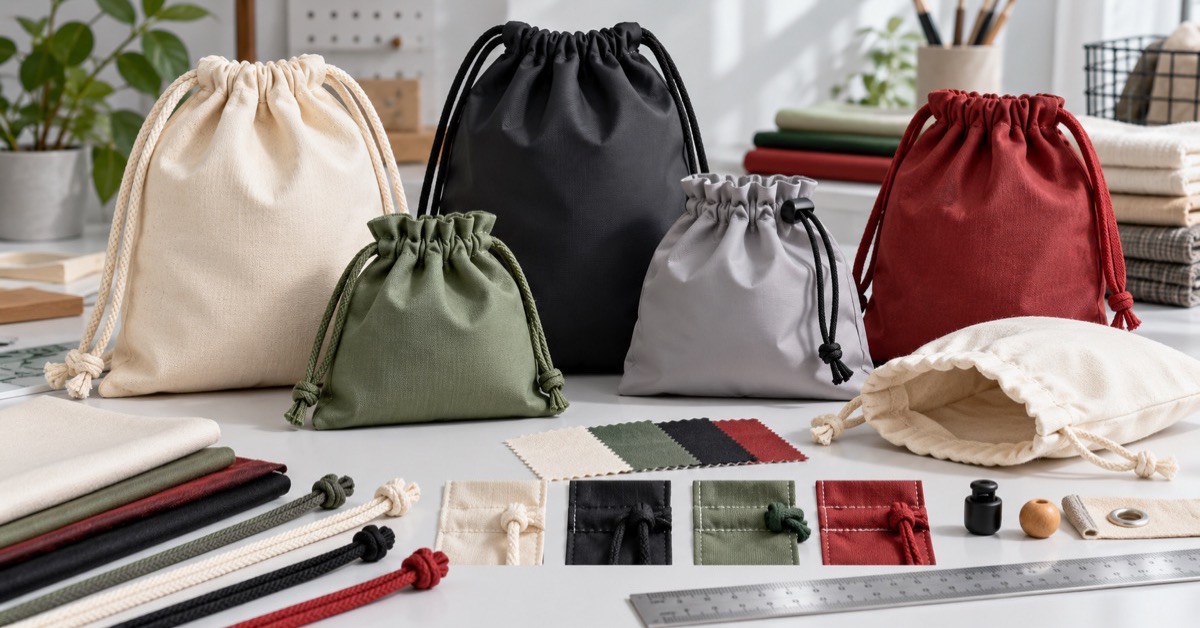
Cotton, non-woven, laminated constructions and other formats bring different appearance, storage and production considerations. PackMK compares them against the campaign route rather than declaring one material universally preferable.
Prototype the loaded kit, not an empty bag
Place the actual or representative contents inside the sample. Check opening, fit, handle comfort, balance, seam stress, base distortion, closure and how the printed face looks when the bag is filled.
An empty sample can hide the most expensive failure: a bag that looks correct but cannot carry the campaign kit. PackMK records the test load and method beside the sample approval so bulk inspection uses the same assumption.
Build a backward calendar with recovery space
| Gate | What must be complete | Recovery option |
|---|---|---|
| Distribution | Units at venue | Local reserve |
| Delivery | Accepted cartons | Partial priority |
| Inspection | Released production | Repair or replacement |
| Production | Correct versions | Approved sequencing |
| Sampling | Physical route approved | Alternate construction |
Dates should include review time and correction time. A calendar made only from ideal processing durations is not a campaign control.
Treat artwork versions as campaign inventory
List every language, sponsor, market, venue and date variation in a version register. Connect the register to the purchase order, proofs, production plan, bundle labels and carton marks.
PackMK reconciles the released artwork count with the printed and packed count. This matters when a late sponsor change creates two visually similar files that cannot be mixed at the event.
Use allocation rules before cartons are closed
Define quantities by location, audience and event day, including the rule for reserve units. Decide whether cartons should contain one version, one venue kit or a controlled mix designed for a specific registration desk.
Mixed packing can reduce local handling, but it also raises reconciliation risk. PackMK uses a packing list that shows exactly what receiving should find when each carton is opened.
Compare quotes on campaign scope
Normalize bag construction, printing, artwork versions, sample stages, tooling, inspection, bundle method, cartons, local allocation and delivery terms. A lower unit price may exclude the handling work that actually protects campaign day.
PackMK separates one-time development, recurring product cost and campaign-specific pack-out. Buyers can then see which cost remains at reorder and which belongs only to this event.
Release production by the riskiest representative
Select samples covering the heaviest load, smallest text, most demanding print, longest handle, largest version and most complex pack-out. A hero sample of the easiest route cannot release the entire campaign family.
PackMK records which risk each representative closes. If an untested combination remains, it stays visible as a condition rather than disappearing inside a general approval email.
Inspect in the order campaign teams will notice
Check identity first, then construction, dimensions, handles, decoration, function, count and packing. Critical errors include wrong event copy, mixed versions or a handle failure under the approved load.
The inspection plan should state sample size, defect categories, acceptance rule and escalation. PackMK links failed results to recovery dates so quality decisions can be made against campaign consequences.
Design venue-ready cartons
Carton marks should identify campaign, venue, version, quantity, sequence and handling contact where appropriate. Bundle labels should remain readable after transport and match the allocation sheet.
A receiving rehearsal can reveal whether staff can count, separate and stage the units quickly. PackMK treats this last operational check as part of product readiness, not an afterthought.
Create a campaign-day reserve policy
Reserve stock should have a purpose: damage replacement, unexpected attendance, sponsor requests or transfer between venues. Name who can release it and how movement will be recorded.
Too little reserve leaves no recovery path, while excessive reserve creates waste and unclear ownership. PackMK helps buyers set the quantity from event risk and reuse potential rather than a generic percentage.
Close the loop after distribution
Record unused quantities, damage, staff feedback, recipient behavior, load issues, delivery performance and the accuracy of venue allocation. Retain one approved bag, pack-out record and final artwork set.
This review converts campaign experience into the next brief. PackMK can then remove controls that added no value and strengthen the points that affected real distribution.
Campaign example: three cities, two sponsor versions, one deadline
A brand plans simultaneous launch events in three cities. Two cities use the global sponsor panel, while the third requires a local partner logo. The contents are identical, but venue access windows and expected attendance differ.
PackMK would create two artwork identities and three allocation identities. Production could be sequenced by version, but cartons would be packed by city with a controlled reserve. The backward calendar would reserve time for the local logo proof and prioritize the earliest venue window during delivery planning.
If the partner logo arrives late, the decision record would show whether to protect the global version, split production or move the local date. The team would choose with visible consequences instead of accepting an undefined rush promise.
Use quality and consumer guidance to sharpen campaign questions
General quality principles and marketing guidance help teams define responsibilities and avoid unsupported product messaging. Use ISO quality management principles and FTC advertising and marketing guidance as question-building context. PackMK still releases an order against the approved buyer brief, physical evidence, production records and destination-specific review.
Write the ODM promotional bags brief as a campaign route
A decision-ready ODM promotional bags brief should define campaign calendar, audience segment, bag format, load test, artwork version, allocation plan, event packing, delivery gate, contingency stock, post-campaign review. It should also identify PackMK, ODM promotional bags, cotton, non-woven, PET, screen printing, MOQ, purchase order. PackMK turns those fields into a quotation scope, approval route and evidence list that purchasing, quality, logistics and receiving teams can read in the same way.
Ask the supplier to state assumptions, exclusions, approved alternatives, tooling, minimums, inspection scope, packing method and lead-time conditions. For ODM promotional bags, a broad promise should become a sample question, a priced option, a measurable tolerance or a release condition before the purchase order is confirmed.
Event rules, product claims, venue access, material expectations and destination requirements vary. This framework supports procurement planning and does not replace legal, venue, transport or product-safety review.
The best campaign bag is not merely the one that passes a factory check. It is the one that reaches the right desk, with the right artwork and contents, before the first recipient arrives.
Before approval, PackMK recommends a one-page decision record naming the selected route, rejected alternatives, evidence reviewed, open limitations, quantity basis, owner and review date. After delivery, add receiving results, user feedback, defects, supplier response and retained references. This keeps the next order from restarting as an unstructured search and lets the team reopen only the decisions affected by a new SKU, market, material, pack-out or delivery route.
Build the next promotional bag calendar with PackMK
PackMK can support ODM promotional bags from buyer brief and samples through production checks and export packing. Send the application, artwork, quantities, variants, destination and required date to request a structured quotation for ODM promotional bags.
- Explore PackMK promotional bag formats
- Review PackMK OEM and ODM support
- Request an ODM promotional bag quotation
Campaign planning questions for promotional bags
What should the initial campaign brief include?
Include audience, contents, load, bag format, artwork versions, quantities, venues, packing, distribution date and responsible owners.
How early should artwork be frozen?
Work backward from sampling, production, inspection, packing and delivery, then reserve time for proof review and correction.
Should every audience use the same bag?
Only when size, load, presentation and allocation needs truly match. Otherwise code the routes separately.
What must a loaded sample prove?
It should prove fit, balance, handle comfort, seam behavior, closure and appearance with representative contents.
How are multiple logos controlled?
Use a version register connecting approved proofs, quantities, production, bundles and cartons.
What belongs in a campaign quote comparison?
Compare construction, print, versions, sampling, tools, inspection, pack-out, cartons, allocation and delivery terms.
Why rehearse receiving?
A rehearsal shows whether venue staff can identify, count, separate and stage the cartons within the access window.
How should reserve stock be set?
Base it on attendance uncertainty, damage risk, venue transfers and realistic reuse rather than a fixed generic percentage.
What if a sponsor change arrives late?
Show the affected proof, quantity, production gate, added cost and date options before accepting the change.
How does PackMK support campaign orders?
PackMK coordinates the brief, samples, versions, production checks, allocation, packing and delivery evidence.