

The buyer question is simple: who owns the decisions that make a box work? With ODM packaging boxes, the answer cannot be limited to artwork. Product fit, opening sequence, insert, board, finishes, tooling and carton cube all interact, so PackMK turns the concept into a controlled development path.
This approach gives brand teams creative range while giving procurement a clear release gate. The useful deliverable is not a beautiful render; it is a stable structure with evidence, cost boundaries and a repeatable file.
PackMK makes the active brief visible to procurement, development, production and inspection. Every recommendation below names the evidence a buyer can request before committing to volume.
Measure the product family first
Record product dimensions, weight, accessories, tolerance, vulnerable surfaces and orientation before sketching.
Use representative units from the range, including the largest and smallest versions, to expose fit risks. This prevents a concept being optimized around an ideal sample and leaves a usable record for the next quotation or repeat order.
Write the opening moment
Define audience, channel, reveal, removal, storage, reuse and the feeling the box must support.
Rank must-have outcomes against cost, cube and assembly time so tradeoffs are explicit. This prevents subjective language producing incompatible structures and leaves a usable record for the next quotation or repeat order.
Choose an architecture with evidence
Compare folding carton, drawer, book style, lid-and-base, rigid and collapsible routes.
Score blanks for fit, opening, protection, assembly, freight cube and recovery before decoration. This prevents selecting a format from a rendering alone and leaves a usable record for the next quotation or repeat order.
Design the insert as part of the box
Select paperboard, molded pulp, foam or textile retention around protection and presentation order.
Run movement, abrasion, pack and unpack trials with production-equivalent blanks. This prevents an insert that looks right but slows packing and leaves a usable record for the next quotation or repeat order.
Specify board and wrap
Name grade, thickness, caliper, stiffness, grain, wrap, liner, color and substitutions.
Compare formed samples because creasing, wrapping and humidity change paper behavior. This prevents a premium adjective replacing a measurable board choice and leaves a usable record for the next quotation or repeat order.
Freeze the dieline before artwork
Issue coded cuts, creases, glue zones, magnets, windows, grain and assembly notes.
Approve a blank and remove obsolete geometry from the live artwork route. This prevents graphics being approved on a moving structure and leaves a usable record for the next quotation or repeat order.
Build a versioned artwork system
Place brand, product, legal, variant and language content within safe areas and opening order.
Link every SKU to the correct dieline and keep master files versioned. This prevents the right artwork being placed on the wrong structure and leaves a usable record for the next quotation or repeat order.
Prove color and finishes physically
Set color, lamination, foil, embossing, varnish, texture and window requirements on intended board.
Check registration, edge cracking and rub behavior on a formed sample. This prevents a digital proof hiding production limits and leaves a usable record for the next quotation or repeat order.
Test opening cycles
Define expected opening, closing, lifting, insert removal, repacking and reuse cycles.
Record method, cycles, observations and acceptance on more than one sample. This prevents a single hero unboxing standing in for use and leaves a usable record for the next quotation or repeat order.
Normalize the development cost
Separate board, print, finish, tool, assembly, inspection, packing, freight and changeover cost.
Compare alternatives at the same quantity, scope and delivery terms. This prevents a saving that quietly removes a function and leaves a usable record for the next quotation or repeat order.
Release tooling conditionally
Identify dies, blocks, magnets and jigs with owner, revision, storage and invalidation rules.
Release irreversible spend only after structure and artwork signatures. This prevents tooling being paid for before inputs are stable and leaves a usable record for the next quotation or repeat order.
Approve the first article
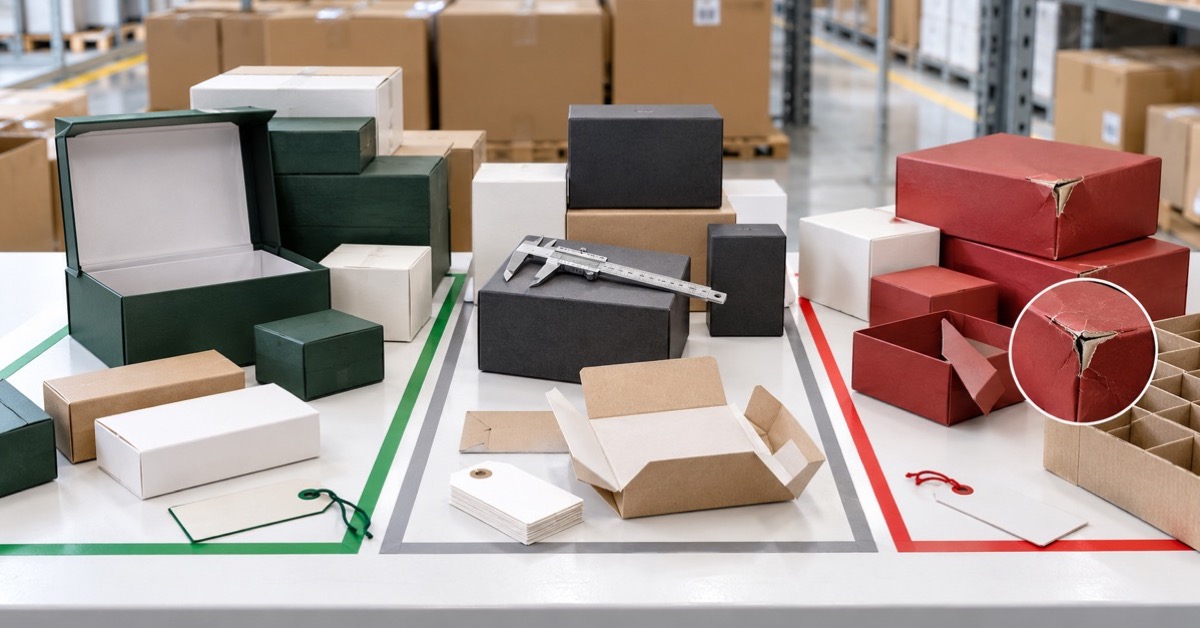
Compare initial production with signed blank, board, artwork, finish, insert, function and packing references.
Stop or correct the line when a critical mismatch appears. This prevents sample-room quality failing to transfer and leaves a usable record for the next quotation or repeat order.
Plan the shipping carton
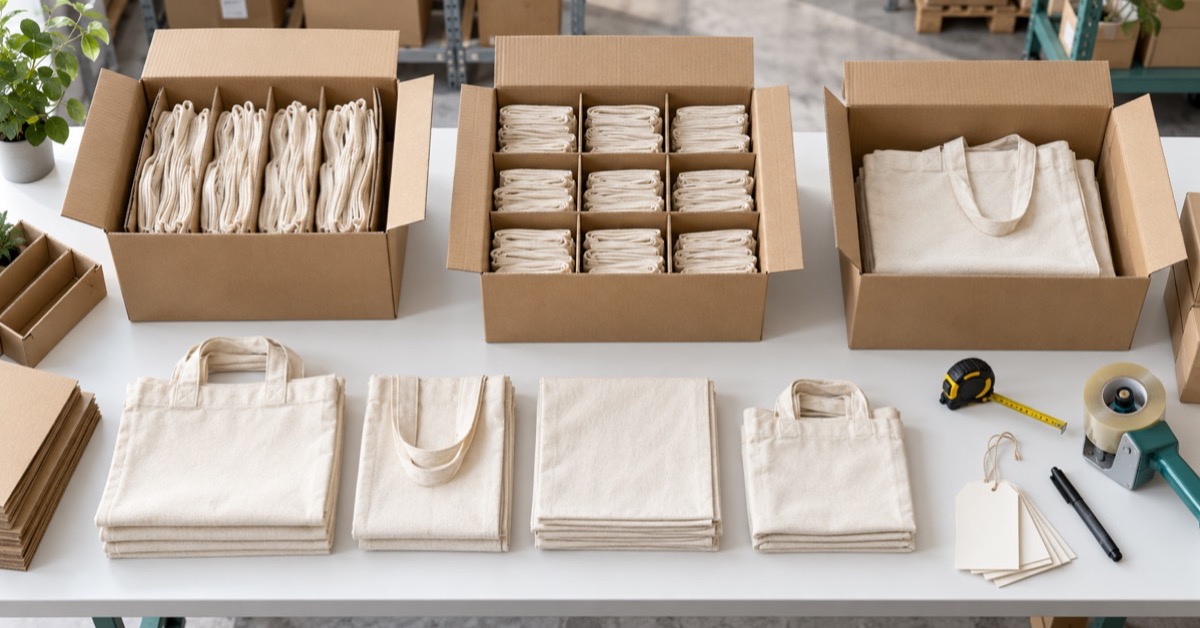
Set units per carton, protection, marks, cube, pallet orientation, moisture control and SKU separation.
Run a receiving and counting rehearsal with a production carton. This prevents the box arriving damaged or hard to identify and leaves a usable record for the next quotation or repeat order.
Close the ODM development file
Store brief, decisions, dieline, artwork, sample, tests, cost, tooling and carton plan.
Record deviations and receiving feedback before marking the project repeat-ready. This prevents the next run reconstructing intent from email threads and leaves a usable record for the next quotation or repeat order.
ODM box decisions and their proof
| Decision | Buyer concern | Proof |
|---|---|---|
| Architecture | Will it fit and open? | Approved blank |
| Board | Will it hold shape? | Formed sample |
| Insert | Will product move? | Movement cycle |
| Finish | Will it survive handling? | Rub and fold test |
| Tooling | When is spend safe? | Signed release gate |
Keep creative and operational signals together
| Signal | Creative owner | Operations owner |
|---|---|---|
| Reveal | Brand | Packing |
| Protection | Product | Quality |
| Cost | Design | Procurement |
| Version | Artwork | Production |
| Repeat | Marketing | Sourcing |
Use paper and quality standards as references
Responsible material and quality references help frame choices, but the approved box must pass product fit, handling, packing and destination-specific checks. Review FSC responsible forestry information and ISO quality management principles for context, then apply the limits to the actual PackMK brief, sample and destination.
Make ODM packaging boxes answerable to a buyer
For ODM packaging boxes, record product fit, box architecture, dieline, paperboard, insert, opening experience, print proof, surface finish, tooling, first article. The same file identifies PackMK, ODM, FSC, paperboard, dieline, rigid box, MOQ, ISO, so a search phrase becomes a set of fields that can be quoted, sampled and inspected.
Buyers should also mark what cannot change without approval: the active material reference, finished dimensions, artwork version, packing count and the acceptance method. Those boundaries give a supplier room to plan while protecting the result that the customer actually ordered.
Ask each quotation to return assumptions in writing. A short note about a substitute, tolerance, lead time, minimum or excluded service is more useful than a broad promise because it tells procurement what must be verified in the next sample or cost comparison.
Use the first shipment as evidence for the next one. Record which checks predicted the receiving result, which observation surprised the team and which field should be tightened. PackMK can convert that learning into an update to the brief rather than leaving it as an isolated complaint.
This buyer-question method keeps ODM packaging boxes practical: a decision has an owner, a physical or written reference, a defined tradeoff and a recovery path. It also gives sales, sourcing, quality and warehouse teams one consistent story when a repeat order is discussed.
Before approval, ask whether the evidence reflects the intended quantity, variant mix and delivery route. A small sample can answer fit or appearance, but it cannot automatically prove run consistency, carton protection or receiving speed. Mark those open questions and assign the next check so the project moves forward with a known level of confidence.
That final note keeps the decision usable for the whole team.
Develop ODM packaging boxes with PackMK
PackMK can develop ODM packaging boxes from buyer brief through sample approval, production checks and export packing. Send the intended use, size, artwork, quantity, variants, destination and deadline to request a structured quotation for ODM packaging boxes.
- Explore PackMK box and insert formats
- Review PackMK OEM and ODM support
- Request an ODM packaging box quotation
ODM packaging box questions
What does ODM packaging boxes development include?
It can include product measurement, architecture, insert, board, dieline, artwork, finishes, testing, tooling, packing and release.
When should the dieline be frozen?
Freeze it after product data, architecture and blank fit are approved, before final artwork and tooling.
How is an insert selected?
Compare protection, presentation, removal, assembly time, material behavior and freight impact with filled trials.
Can a rigid box be changed to a folding carton?
Yes, if the opening, protection, brand and cost requirements are re-scored and a new blank is approved.
What is a useful finish test?
Check color, registration, rub, fold, edge cracking and adhesion on formed production-equivalent samples.
Why separate tool release from concept approval?
Tools create irreversible cost, so structure, artwork and change ownership should be stable first.
How are multiple SKUs controlled?
Use coded dielines, linked artwork, version history and a physical reference for each variant.
What does the first article prove?
It proves transfer from approved development references to the actual production route, not every receiving condition.
How can box freight cost be compared fairly?
Use equal quantity, scope, carton standard, delivery terms and product protection assumptions.
How does PackMK support ODM packaging boxes?
PackMK connects concept, structure, sampling, artwork, production evidence, inspection and repeat-order control.