

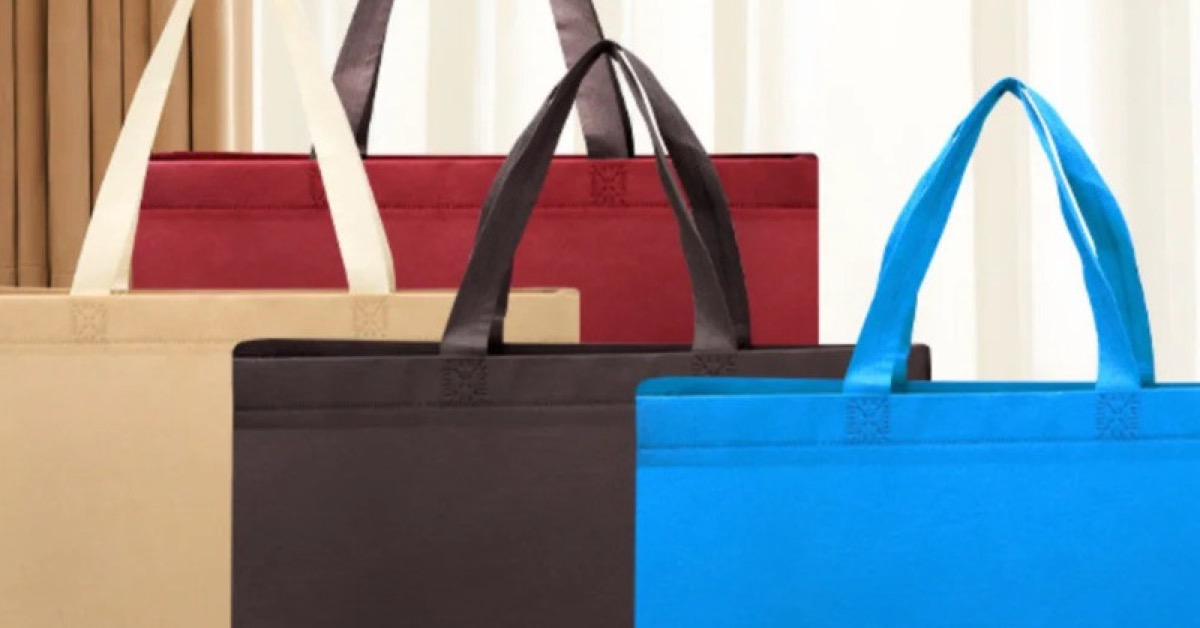
An ODM project becomes expensive when the buyer approves a look before deciding what must stay unchanged. A non woven bag can be light, durable, printable and economical, yet its handle, seam, gusset, fold and packing choices still determine whether the finished item works in a store or at an event. ODM non woven bags need a release board that converts a broad idea into decisions a factory can repeat.
PackMK uses a staged board rather than one oversized specification. Each stage has an owner, evidence and a stop point. That keeps design exploration open at the beginning and makes production strict after approval. The board is especially useful when a brand wants a recognizable silhouette but expects the supplier to recommend construction, print and packing details.
Short answer: Treat ODM non woven bags as a controlled development project: define the user and load, lock construction and artwork in separate gates, test the risky operations, then release a versioned sample and packing instruction for production.
Decide what the ODM partner is actually designing
ODM can mean a factory starts from an existing pattern, adapts a stock construction or develops a new bag around a buyer's brief. Put that boundary in writing. If the supplier may recommend the body shape but the buyer owns the logo and claims, those are different responsibilities from a fully original pattern and exclusive tooling.
PackMK separates reusable know-how from buyer-owned assets. The brief can state which dimensions, materials, artwork, labels, packaging and future adaptations belong to the brand, and which suggestions remain standard options. This avoids a late argument when another size or market is requested.
Build the ODM non woven bags release board
| Gate | Buyer decision | Supplier evidence | Release result |
|---|---|---|---|
| Use case | Load, handling and sales channel | Recommended construction | Approved design intent |
| Material | Weight, color and alternative | Roll data and sample | Material line |
| Construction | Size, gusset, handle and seam | Pattern and first sample | Drawing revision |
| Branding | Artwork, coverage and print route | Marked first-off | Artwork approval |
| Production | Defects, packing and count | Pilot record | Purchase-order version |
The board gives every conversation a place to land. PackMK recommends never marking a bag “approved” without recording the gate, date, revision and approver.
Start with the hand and the load
Ask who will carry the bag, what it will hold, how long it will be used and where it will be stored. A promotional tote used for leaflets has a different stress pattern from a retail carrier holding a boxed product. Note whether users carry it by hand, over a shoulder or by a handle shared between two people.
PackMK turns that observation into a small load test. Record the weight, loading method, carry distance and condition of the bag after the test. The result is not a universal strength claim; it is a boundary for the proposed ODM non woven bags construction.
Choose the construction levers
Let the supplier propose options, but ask for the effect of each change:
- body material weight and whether a lighter approved alternative changes opacity or stiffness;
- flat or gusseted base and the usable volume created by each;
- handle length, width, turn-back and reinforcement under repeated loading;
- stitching, ultrasonic welding or another joining route at high-stress points;
- edge finish, fold line and how the bag recovers after being packed;
- print area, registration tolerance and any panel hidden by a fold.
PackMK asks for one recommended build and one fallback build. Comparing two explicit options is more useful than receiving a long list of unpriced possibilities.
Make the sample answer one question at a time
The first sample should prove proportion and handling. A second sample can confirm material, print, seam and reinforcement after the pattern is stable. If everything changes at once, the team cannot tell whether a better result came from the material, the handle or a different fold.
For ODM non woven bags, PackMK labels every sample with pattern revision, material, artwork version and date. We photograph the loaded bag from the same angles and keep a retained reference. A short comment such as “handle feels weak” is translated into a measurable follow-up, such as stitch length, reinforcement size or load condition.
Compare development options without hiding tradeoffs
| Option | Where it helps | Tradeoff to review | Best release use |
|---|---|---|---|
| Stock body adaptation | Fast launch with familiar tooling | Less control of silhouette | Proving demand |
| New pattern | Distinct size or gusset | More sampling and setup | Core retail program |
| Simplified print | Shorter setup and easier repeat | Less visual coverage | Event quantity |
| Reinforced handle | Heavier loads and longer use | Extra material and operations | Reusable carrier |
A comparison table makes the commercial choice visible. PackMK does not describe an option as “better” until the buyer has stated which constraint matters most.
Use artwork as a production input
Send vector files, color references, safe areas, panel dimensions and the intended reading direction. Show how the design crosses a side seam, bottom fold or handle zone. Ask the supplier to return a proof that reflects the actual print method and substrate, not only a flat digital mockup.
The artwork gate should answer what happens when ink coverage meets a seam, when a pale color sits on a darker material or when a logo is close to the handle. PackMK records an approved print sample and ties it to the bag revision so a later marketing edit cannot silently change a production file.
Pilot the operation that could fail quietly
A pilot should include the hardest color, the longest handle, the fullest load and the actual folding or packing method where possible. Watch cutting drift, handle placement, seam skips, print rub, loose fibers and count accuracy. Keep rejects apart from good work and record the reason for each hold.
PackMK uses the pilot to adjust controls, not to create a flattering showcase. If a problem appears only after bags are folded into a master carton, the packing step becomes part of the control plan. That detail is often missed when the development team reviews only an unfolded sample.
Release quality rules in buyer language
Define acceptable variation for finished dimensions, print position, color appearance, stitching or welds, handle symmetry, stains and missing accessories. State which defects are critical, which are major or minor for the intended use, and who may approve a deviation.
The language should be usable by a line inspector and by a buyer reviewing photographs. PackMK links each rule to an example or measurement when practical. A clear rule reduces the temptation to debate a defect from memory after the shipment has left the factory.
Plan MOQ and reorders with the pattern
MOQ may depend on material width, color, print setup, accessory purchase and the number of artwork versions. Ask whether quantities are combined across sizes or must be split by design. Also ask what happens to leftover rolls, screens, labels or cartons after a small first order.
PackMK puts the minimums beside the release board rather than hiding them in a footnote. For a reorder, stable fields can be carried forward while new artwork or a changed load reopens only the affected gate. That is how ODM non woven bags become a repeatable program instead of a new negotiation every time.
Protect the handoff to purchasing and logistics
The final release should include a bag code, version, finished dimensions, material, artwork, approved sample reference, inspection rule, folding method, inner pack, master-carton quantity, carton marks and destination. The purchase order should point to that release rather than restating a vague product name.
PackMK recommends a short pre-production call with design, purchasing, quality and logistics. Each team reads the same version and names one open item. This small handoff prevents a factory from receiving a new artwork file while the purchase order still points to the old sample.
Measure the first receipt before scaling
At receiving, count representative cartons, inspect the outside condition and compare the bags with the retained sample. Check dimensions, material feel, print, handles, seams, folding and allocation by version. Record any difference with photographs and the carton or production reference.
The review should also capture coordination time, rework, leftover stock and questions that arrived after the cutoff. PackMK uses those observations to refine the next ODM non woven bags board. A program earns the right to scale when its evidence is repeatable, not simply when the first shipment arrives on time.
Case example: a retailer needs one bag for two channels
A specialty retailer wants a printed non woven bag for boutiques and a lighter version for a weekend market. The logo and blue color must match, but the boutique bag carries boxed candles while the market bag carries paper goods.
PackMK would keep the brand gate shared and separate the load and construction gates. The boutique version receives a gusset, reinforced handle and fuller pilot. The market version uses a simpler fold and a smaller quantity, with the difference called out in the release board.
The quote would show artwork setup, quantity by version, pilot work, packing and carton marks. A retained first-off from each version would travel with the final approval. Reorder rules would allow a common artwork revision while preserving two bag codes.
That structure gives the buyer a clear choice. The market bag is not a failed boutique bag, and the boutique bag is not burdened with features the lighter channel does not need.
Use recognized quality language as a reference
A documented development process benefits from common quality vocabulary and a clear division of responsibilities. Buyers can consult ISO quality management principles and ASTM standards portal for additional context. These references do not certify a particular PackMK order.
Prepare an ODM development brief
A practical ODM non woven bags brief should name non woven material, bag gusset, handle reinforcement, print proof, first-off sample, pilot run, defect rule, MOQ by version, master carton, reorder revision. It should also identify PackMK, ODM non woven bags, artwork, purchase order, bag code, retained sample, master carton wherever they affect approval, production, packing or delivery. PackMK uses those fields to organize samples, quotation assumptions and release evidence.
Keep development promises bounded
Final performance depends on the released construction, material, artwork, load, handling and inspection method. PackMK can organize development evidence and supplier communication, but an ODM brief does not replace product-safety, legal, customs or market-specific review.
Turn the idea into a PackMK release board
Send PackMK the intended use, load, preferred material, artwork status, quantity by channel and destination. We can map ODM non woven bags into samples, approval gates and a comparable quotation.
ODM non woven bag questions
What does ODM mean for non woven bags?
It means the supplier contributes design or construction development within the boundary agreed with the buyer, rather than only making a fixed drawing.
How many samples are needed?
Use staged samples when possible: prove proportion first, then material, print, construction and packing so each result is understandable.
What should the first sample prove?
It should answer the intended use, basic size, handling, load and overall shape before detailed print and production controls are finalized.
Can two bag versions share artwork?
Yes, if the artwork gate is shared while each version keeps its own construction, bag code, quantity and approval evidence.
What drives MOQ?
Material width, color, print setup, accessories, tooling and the number of sizes or artwork versions can all affect minimums.
How should a handle be approved?
State length, width, reinforcement, attachment method and a representative load test rather than relying on a visual impression.
Why is a pilot important?
It shows whether cutting, joining, printing, folding, packing and inspection controls work together on a production-representative run.
How do buyers control artwork changes?
Use a versioned file, named approver, cutoff date and a retained print reference tied to the bag code.
What belongs on the purchase order?
Reference the released bag code, drawing, material, artwork, approved sample, inspection rule, pack-out and delivery basis.
What should a reorder review?
Carry forward stable fields, then reopen any gate affected by a new artwork, size, material, load or packing change.