

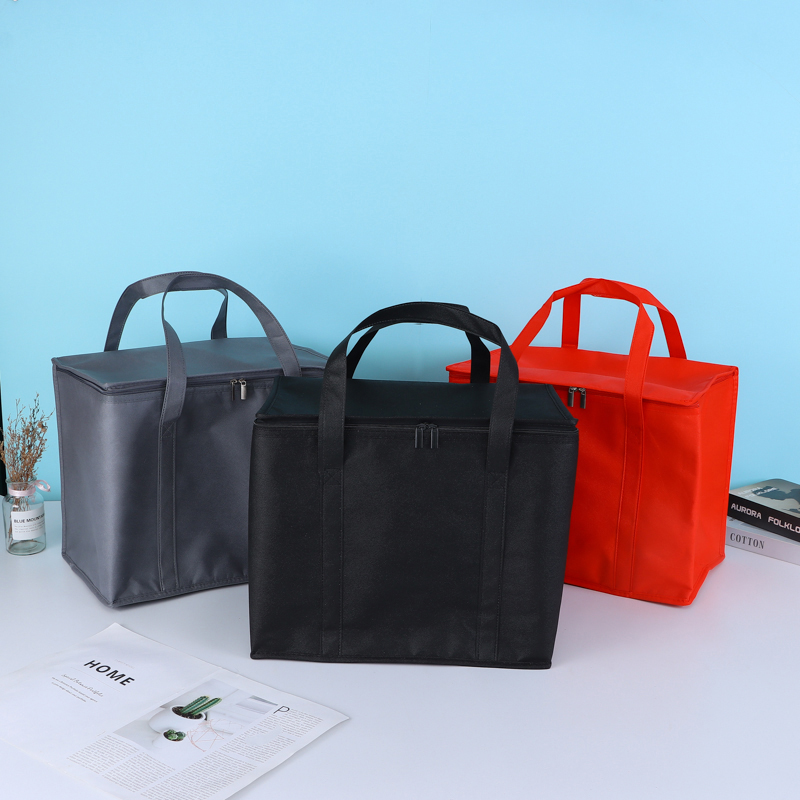
An insulated bag cannot be designed from a capacity number alone. ODM insulated bags must fit the actual containers, close quickly, move through a defined route and remain usable after realistic handling. PackMK models that route before selecting layers or decoration.
The goal is not to make an unsupported temperature promise. It is to define conditions, compare constructions and document what the approved sample did during a repeatable buyer-relevant trial.
PackMK begins with the buyer's operating question and records the active brief, approver, physical reference and open risks before bulk release.
Route point 1: map the workflow
Record filling location, container temperatures, waiting, vehicle, handoff, opening frequency and total route time. PackMK treats the route as the design input. Container fit, closure time, carrying behavior, cleaning and environmental exposure must be observed together.
Walk the route with representative orders and identify the longest delay and roughest handling point. This prevents a generic performance target replacing operations. Keep the evidence with the live specification so quoting, sampling, production, inspection and repeat orders use the same basis.
Route point 2: build the container set
List container sizes, lids, orientation, hot and cold separation, ice packs and maximum order combinations. PackMK treats the route as the design input. Container fit, closure time, carrying behavior, cleaning and environmental exposure must be observed together.
Load common and worst-case sets and inspect clearance, tipping, stacking and access. This prevents a stated capacity failing with real shapes. Keep the evidence with the live specification so quoting, sampling, production, inspection and repeat orders use the same basis.
Route point 3: choose internal geometry
Set width, height, depth, dividers, shelves or inserts around the container set. PackMK treats the route as the design input. Container fit, closure time, carrying behavior, cleaning and environmental exposure must be observed together.
Time loading and unloading and observe whether the bag holds shape when partly filled. This prevents excess space allowing movement and spills. Keep the evidence with the live specification so quoting, sampling, production, inspection and repeat orders use the same basis.
Route point 4: select the outer material
Compare non-woven, woven, polyester or other shells by strength, print, abrasion, weather and cleaning. PackMK treats the route as the design input. Container fit, closure time, carrying behavior, cleaning and environmental exposure must be observed together.
Handle production-equivalent samples after filling, vehicle contact and repeated carry. This prevents appearance winning over route durability. Keep the evidence with the live specification so quoting, sampling, production, inspection and repeat orders use the same basis.
Route point 5: define the insulating stack
Name each layer, thickness, joining method, compression and permitted alternatives. PackMK treats the route as the design input. Container fit, closure time, carrying behavior, cleaning and environmental exposure must be observed together.
Cut open a signed sample and compare construction at sides, base, lid and seams. This prevents a headline layer hiding thermal bridges. Keep the evidence with the live specification so quoting, sampling, production, inspection and repeat orders use the same basis.
Route point 6: specify the lining
Set foil, film or other liner for wipeability, seams, odor, puncture and product-contact boundaries. PackMK treats the route as the design input. Container fit, closure time, carrying behavior, cleaning and environmental exposure must be observed together.
Run cleaning and spill simulations and inspect joins, corners and retained moisture. This prevents a bright liner being difficult to maintain. Keep the evidence with the live specification so quoting, sampling, production, inspection and repeat orders use the same basis.
Route point 7: engineer closure speed
Compare zipper, hook-and-loop, flap or other closure by seal continuity and staff speed. PackMK treats the route as the design input. Container fit, closure time, carrying behavior, cleaning and environmental exposure must be observed together.
Cycle it with full, partial and off-center loads and time normal operation. This prevents a tight closure slowing the route. Keep the evidence with the live specification so quoting, sampling, production, inspection and repeat orders use the same basis.
Route point 8: follow carrying forces
Define handles, shoulder straps, width, length, reinforcement and bottom support for the maximum load. PackMK treats the route as the design input. Container fit, closure time, carrying behavior, cleaning and environmental exposure must be observed together.
Carry the loaded bag over the planned distance and inspect comfort, seams and balance. This prevents thermal performance passing while the bag is hard to carry. Keep the evidence with the live specification so quoting, sampling, production, inspection and repeat orders use the same basis.
Route point 9: place branding safely
Set artwork around folds, handles, abrasion zones and the filled shape. PackMK treats the route as the design input. Container fit, closure time, carrying behavior, cleaning and environmental exposure must be observed together.
Approve print on the actual outer material after rubbing, flexing and cleaning exposure. This prevents branding degrading during normal use. Keep the evidence with the live specification so quoting, sampling, production, inspection and repeat orders use the same basis.
Route point 10: design a comparative trial
Define contents, starting conditions, route time, openings, ambient conditions, measurement points and acceptance. PackMK treats the route as the design input. Container fit, closure time, carrying behavior, cleaning and environmental exposure must be observed together.
Run at least a baseline and candidate under the same method and record limitations. This prevents an isolated number being presented without context. Keep the evidence with the live specification so quoting, sampling, production, inspection and repeat orders use the same basis.
Route point 11: test cleaning and drying
Write the expected wipe, wash or sanitation routine and the responsible operator. PackMK treats the route as the design input. Container fit, closure time, carrying behavior, cleaning and environmental exposure must be observed together.
Repeat cleaning on production-equivalent samples and inspect lining, print, odor and trapped moisture. This prevents maintenance damaging the construction. Keep the evidence with the live specification so quoting, sampling, production, inspection and repeat orders use the same basis.
Route point 12: release the first article
Compare initial production with dimensions, layers, closure, handles, branding, route trial and packing references. PackMK treats the route as the design input. Container fit, closure time, carrying behavior, cleaning and environmental exposure must be observed together.
Stop critical mismatches before full output continues. This prevents development quality failing to transfer. Keep the evidence with the live specification so quoting, sampling, production, inspection and repeat orders use the same basis.
Route point 13: inspect the production run
Check material identity, construction, dimensions, closure, handles, print, cleanliness, function and quantity. PackMK treats the route as the design input. Container fit, closure time, carrying behavior, cleaning and environmental exposure must be observed together.
Sample different shifts, variants and cartons using named defect categories. This prevents one top sample hiding variation. Keep the evidence with the live specification so quoting, sampling, production, inspection and repeat orders use the same basis.
Route point 14: close the route record
Store container set, route map, sample, test conditions, artwork, deviations, inspection and packing plan. PackMK treats the route as the design input. Container fit, closure time, carrying behavior, cleaning and environmental exposure must be observed together.
Add driver, store or receiving feedback before the next run. This prevents a reorder ignoring actual operational learning. Keep the evidence with the live specification so quoting, sampling, production, inspection and repeat orders use the same basis.
Turn the delivery route into design inputs
| Route input | Bag decision | Evidence |
|---|---|---|
| Containers | Internal geometry | Loaded set |
| Time | Layer comparison | Route trial |
| Openings | Closure | Timed cycles |
| Carry | Handles and base | Distance test |
| Cleaning | Liner and seams | Repeated routine |
Read an insulated-bag trial honestly
| Field | Record | Limitation |
|---|---|---|
| Starting state | Container condition | Not universal |
| Ambient | Time and range | Route specific |
| Openings | Count and duration | Operator dependent |
| Measurement | Location and device | Comparative evidence |
| Result | Observed change | No unsupported promise |
Use food and quality guidance as context
Food-handling and quality resources can inform the workflow, while product safety obligations and the order-specific trial require buyer review. Review FDA Food Code and ISO quality management principles as context. The signed sample, actual route and documented conditions still control PackMK acceptance.
Develop ODM insulated bags around a measured route
For ODM insulated bags, record container fit, route time, outer material, insulating layer, lining, closure, handle attachment, temperature trial, cleaning, carton packing. The controlled file also identifies PackMK, ODM, insulated bag, aluminum foil, non-woven, zipper, MOQ, inspection. These terms turn a search phrase into fields that suppliers can quote and inspectors can verify.
Ask each supplier to return assumptions and exclusions in writing. A tolerance, substitution, minimum, lead-time condition or omitted service should become a sample question, cost option or release condition instead of remaining an informal promise.
Evidence must match the intended quantity, version mix and delivery route. A small sample may prove fit or appearance, but it cannot automatically prove run consistency, carton protection or receiving speed. Assign a later check for every risk the sample cannot close.
After receiving the first shipment, compare the outcome with the approved sample and inspection record. Note which check predicted the result, what surprised the team and which field needs revision. PackMK places that learning in the next brief rather than leaving it in an isolated message.
This buyer-question method keeps ODM insulated bags practical across sourcing, quality, sales and operations. Each major choice has an owner, evidence, a visible tradeoff and a recovery path when material, artwork, quantity or timing changes.
Build ODM insulated bags with PackMK
PackMK can develop ODM insulated bags from brief and sampling through production checks and export packing. Send PackMK the product, intended use, artwork, quantity, variants, destination and required date to request a structured quotation for ODM insulated bags.
- Explore PackMK insulated bag formats
- Review PackMK OEM and ODM support
- Request an ODM insulated bag quotation
ODM insulated bag development questions
What information is needed for ODM insulated bags?
Provide the container set, starting conditions, route time, openings, load, cleaning, artwork, quantity, packing and destination.
Can an insulated bag guarantee a temperature?
Performance depends on contents, starting state, ambient conditions, duration, openings and construction, so claims need defined tests.
How should capacity be selected?
Load common and maximum container combinations and check clearance, tipping, stacking, closure and staff access.
What should a layer specification include?
Name each layer, thickness, joining method, critical seams, approved alternatives and the physical reference.
How is closure performance checked?
Cycle it with full and off-center loads while recording sealing continuity, speed, snagging and operator effort.
Why test cleaning?
The routine can affect lining seams, outer print, odor, moisture retention and the usable life of the bag.
How should route trials be compared?
Use the same contents, starting state, ambient conditions, time, openings, measurement points and method.
What belongs in final inspection?
Materials, layers, dimensions, seams, lining, closure, handles, branding, cleanliness, function, quantity and cartons.
What protects a repeat order?
Keep the route map, container set, signed sample, trial record, artwork, deviations, inspection and packing standard.
How does PackMK support ODM insulated bags?
PackMK coordinates route discovery, construction development, samples, comparative trials, production checks and export packing.