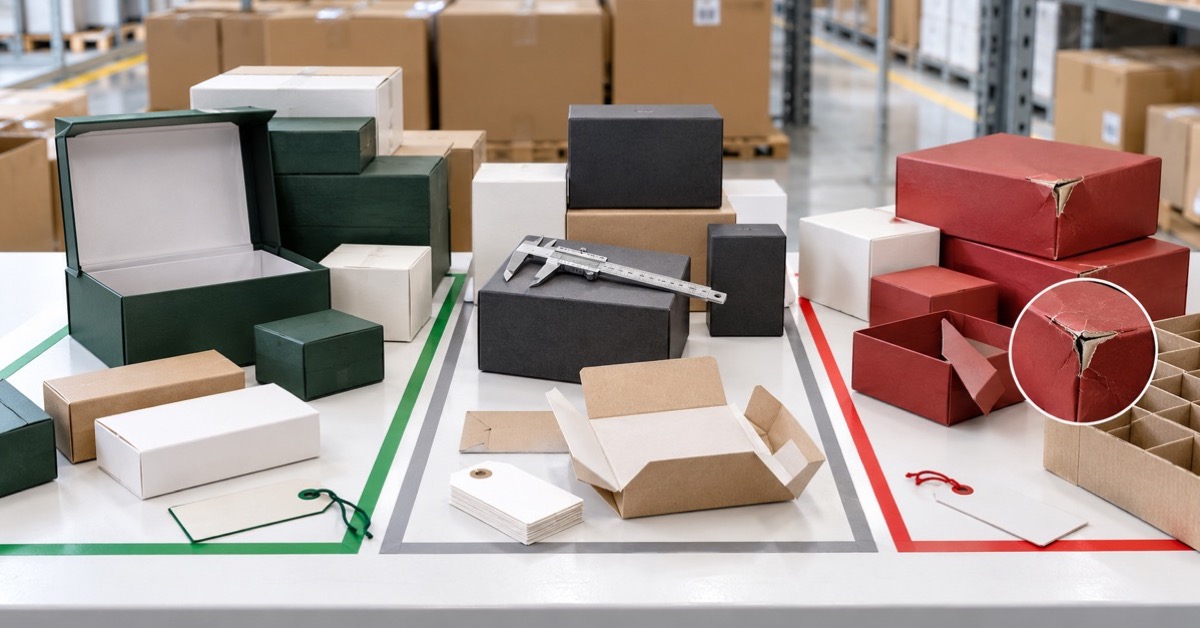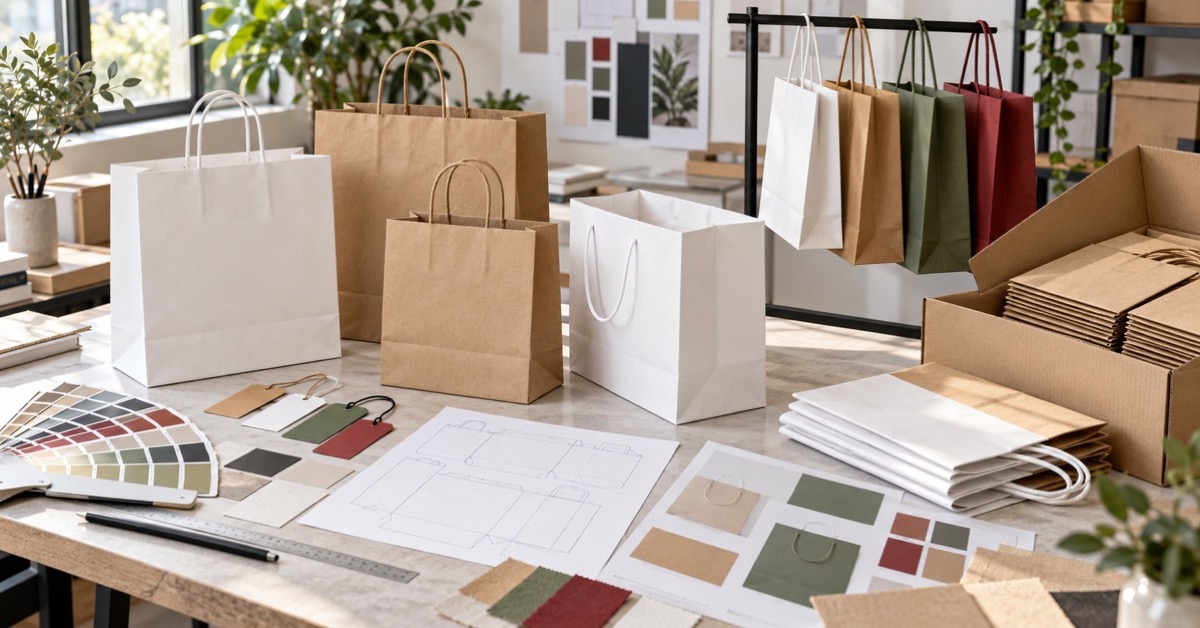


ODM development should add design and engineering discipline, not leave the supplier to guess. ODM gift boxes move from product discovery through concept, structure, inserts, artwork, tests, costing and release. PackMK uses gates so each decision is visible before money is committed.
The gates below allow a buyer to change direction early while protecting the schedule later. Each gate ends with a deliverable, an approver and a clear reason to stop if evidence is incomplete.
PackMK records each decision with its owner, date, approved reference and change history before bulk release.
Gate 1: define the product system
Record final product dimensions, tolerances, weight, accessories, presentation order and vulnerable surfaces. PackMK treats this as a development gate with a named output and stop condition. The next gate opens only when the current structure, artwork or process question has evidence strong enough for tooling and bulk production.
Measure representative units and photograph the complete set before proposing a box. This prevents concepts built around incomplete prototype data. Store the result with the active specification so quoting, production, inspection and reorders use the same evidence.
Gate 2: write the experience brief
Define audience, selling channel, price position, opening sequence, reuse expectation and brand cues. PackMK treats this as a development gate with a named output and stop condition. The next gate opens only when the current structure, artwork or process question has evidence strong enough for tooling and bulk production.
Rank must-have outcomes separately from visual preferences and budget options. This prevents subjective language producing incompatible concepts. Store the result with the active specification so quoting, production, inspection and reorders use the same evidence.
Gate 3: establish constraints
Set target cost, quantity, dimensions, logistics route, assembly location and launch date. PackMK treats this as a development gate with a named output and stop condition. The next gate opens only when the current structure, artwork or process question has evidence strong enough for tooling and bulk production.
Show which constraint is fixed and how a change affects the others. This prevents a beautiful concept that cannot meet commercial reality. Store the result with the active specification so quoting, production, inspection and reorders use the same evidence.
Gate 4: compare architectures
Explore lid-and-base, drawer, book-style, folding and collapsible structures against the brief. PackMK treats this as a development gate with a named output and stop condition. The next gate opens only when the current structure, artwork or process question has evidence strong enough for tooling and bulk production.
Use scored sketches or blanks for fit, opening, assembly, cube and cost before decorative design. This prevents selecting structure from rendered appearance alone. Store the result with the active specification so quoting, production, inspection and reorders use the same evidence.
Gate 5: prototype product fit
Develop inserts for retention, protection, component order and removal. PackMK treats this as a development gate with a named output and stop condition. The next gate opens only when the current structure, artwork or process question has evidence strong enough for tooling and bulk production.
Load representative product tolerances and run movement, abrasion and removal trials. This prevents an insert that presents well but fails packing or transit. Store the result with the active specification so quoting, production, inspection and reorders use the same evidence.
Gate 6: select material families
Name board, wrap, liner and insert options with thickness, color and finish behavior. PackMK treats this as a development gate with a named output and stop condition. The next gate opens only when the current structure, artwork or process question has evidence strong enough for tooling and bulk production.
Compare production-equivalent swatches and state acceptable sourcing evidence and substitutions. This prevents a premium adjective replacing material specification. Store the result with the active specification so quoting, production, inspection and reorders use the same evidence.
Gate 7: freeze structure revision
Issue a coded dieline with dimensions, cuts, creases, glue, components and assembly notes. PackMK treats this as a development gate with a named output and stop condition. The next gate opens only when the current structure, artwork or process question has evidence strong enough for tooling and bulk production.
Approve a blank sample and remove obsolete geometry from the active route. This prevents artwork beginning on a moving structure. Store the result with the active specification so quoting, production, inspection and reorders use the same evidence.
Gate 8: build the artwork system
Place brand, product, legal and variant content within safe areas and opening sequence. PackMK treats this as a development gate with a named output and stop condition. The next gate opens only when the current structure, artwork or process question has evidence strong enough for tooling and bulk production.
Review actual-size print layers and connect every language or SKU to the correct structure. This prevents graphics approved without version control. Store the result with the active specification so quoting, production, inspection and reorders use the same evidence.
Gate 9: prove finishes physically
Test color, lamination, foil, embossing, varnish and texture on intended materials after forming. PackMK treats this as a development gate with a named output and stop condition. The next gate opens only when the current structure, artwork or process question has evidence strong enough for tooling and bulk production.
Define position tolerance, edge behavior and the controlling physical reference. This prevents digital rendering hiding production limits. Store the result with the active specification so quoting, production, inspection and reorders use the same evidence.
Gate 10: run functional trials
Cycle opening, closing, lifting, insert removal and product repacking as required. PackMK treats this as a development gate with a named output and stop condition. The next gate opens only when the current structure, artwork or process question has evidence strong enough for tooling and bulk production.
Record method, cycles, observations and acceptance on production-equivalent samples. This prevents one perfect unboxing standing in for repeated use. Store the result with the active specification so quoting, production, inspection and reorders use the same evidence.
Gate 11: normalize the cost
Separate material, printing, finishes, tools, assembly, inspection and packing. PackMK treats this as a development gate with a named output and stop condition. The next gate opens only when the current structure, artwork or process question has evidence strong enough for tooling and bulk production.
Compare alternatives at equal quantity, variants and delivery terms and show value changes. This prevents cost reduction silently changing the approved concept. Store the result with the active specification so quoting, production, inspection and reorders use the same evidence.
Gate 12: release tools conditionally
Identify dies, plates, foil blocks, embossing tools and jigs with ownership and revision. PackMK treats this as a development gate with a named output and stop condition. The next gate opens only when the current structure, artwork or process question has evidence strong enough for tooling and bulk production.
Release only after structure and artwork signatures and record what would invalidate each tool. This prevents irreversible spend preceding stable inputs. Store the result with the active specification so quoting, production, inspection and reorders use the same evidence.
Gate 13: approve the first production article
Compare initial production with the signed sample for structure, materials, print, finishes and function. PackMK treats this as a development gate with a named output and stop condition. The next gate opens only when the current structure, artwork or process question has evidence strong enough for tooling and bulk production.
Stop or correct the process before the full run continues. This prevents sample-room quality failing to transfer to production. Store the result with the active specification so quoting, production, inspection and reorders use the same evidence.
Gate 14: close the development file
Store the brief, concepts, decisions, dieline, artwork, sample, tests, cost and packing. PackMK treats this as a development gate with a named output and stop condition. The next gate opens only when the current structure, artwork or process question has evidence strong enough for tooling and bulk production.
Record deviations and receiving feedback before marking the project ready for repeat orders. This prevents the next team reconstructing design intent from emails. Store the result with the active specification so quoting, production, inspection and reorders use the same evidence.
Use deliverables to close each development gate
| Gate | Deliverable | Stop condition |
|---|---|---|
| Discovery | Measured product set | Data provisional |
| Concept | Selected architecture | Experience unclear |
| Structure | Approved blank | Fit unresolved |
| Artwork | Coded proof | Dieline mismatch |
| Release | First article | Bulk mismatch |
Compare ODM options without losing the brief
| Option | Experience | Operations | Cost check |
|---|---|---|---|
| Rigid setup | Strong presentation | High cube | Assembly and freight |
| Collapsible | Premium recovery | More setup | Hardware and labor |
| Drawer | Staged reveal | Sleeve friction | Tolerance |
| Folding carton | Efficient volume | Less rigidity | Board and finish |
| Book style | Large display | Manual build | Magnets and wrap |
Anchor paper and process claims in evidence
Sourcing and quality resources support development questions, while the released design needs order-specific proof. Review FSC chain-of-custody information and ISO quality management principles for useful context. Order acceptance still depends on the actual materials, product, route and documented test conditions.
Develop ODM gift boxes through visible gates
For ODM gift boxes, record product discovery, concept brief, box architecture, insert prototype, dieline revision, artwork proof, finish sample, loaded test, cost target, tooling release. The controlled file also identifies PackMK, ODM, FSC, ISO, paperboard, rigid box, dieline, MOQ. This vocabulary turns the search phrase into fields that suppliers can quote and inspectors can verify.
Create ODM gift boxes with PackMK
PackMK can develop ODM gift boxes from brief and samples through production, quality checks and export packing. Send PackMK the product, use, artwork, quantity, variants, destination and required date to request a structured quotation for ODM gift boxes.
ODM gift box development questions
What is needed to begin ODM gift boxes?
For ODM gift boxes, provide the complete product, dimensions and tolerances, audience, channel, experience goals, target cost, quantity, route and launch date.
How is ODM different from OEM gift boxes?
ODM usually includes more concept and structural development, while OEM more often produces against a buyer-defined design; the exact scope should be written.
Why approve structure before artwork?
Structural changes move cuts, folds, glue and safe areas, making artwork on an obsolete dieline costly to redo.
What should an insert prototype prove?
It should prove retention, protection, presentation order, packing, product removal and fit across representative tolerances.
When should finishes be selected?
Shortlist finishes during concept costing, then approve them physically on intended materials after the structure is stable.
What is a development stop condition?
It is an unresolved requirement, fit, cost, proof or test that must close before the project commits to the next stage.
When can tooling be released?
Release tooling only after current structure and artwork are approved and ownership, storage and revision links are recorded.
What should the first production article cover?
Compare materials, dimensions, structure, print, color, finishes, insert, closure, function and packing with the signed standard.
How are ODM design changes controlled?
Use a change request stating the original, proposed change, reason, effects, evidence required and named approvals.
How does PackMK support ODM gift boxes?
PackMK can coordinate discovery, concepts, structures, materials, artwork, prototypes, testing, costing, tooling, production and repeat records.