

Fabric packaging can fold, stretch, protect, present and remain useful after purchase, but those advantages create connected design choices. ODM fabric packaging needs a development route that controls product fit, textile behavior, pattern, closure, decoration and sewing before production release.
PackMK uses decision gates rather than one final approval. Each gate closes a specific uncertainty and produces a record the next team can use, so creative exploration does not become uncontrolled cost or schedule risk.
Gate A: define the product system
Record dimensions, weight, sharp surfaces, accessories, tolerance extremes, presentation and removal sequence. PackMK treats this as a development gate. The team names the decision owner, required evidence, cost consequence and stop condition before moving into the next stage.
Measure representative products and build a common and worst-case pack before concept work. This prevents a concept being designed around incomplete product data. Record the result beside the live specification so quoting, sampling, production, inspection and repeat orders use the same evidence.
Gate B: rank the desired outcomes
Separate protection, portability, reveal, storage, reuse, brand and cost requirements into must-have and preferred outcomes. PackMK treats this as a development gate. The team names the decision owner, required evidence, cost consequence and stop condition before moving into the next stage.
Give every outcome an owner and a simple observation that will show whether it was achieved. This prevents subjective design language producing conflicting proposals. Record the result beside the live specification so quoting, sampling, production, inspection and repeat orders use the same evidence.
Gate C: compare textile families
Review cotton, canvas, felt, velvet, non-woven, mesh, Oxford cloth and blended options by function. PackMK treats this as a development gate. The team names the decision owner, required evidence, cost consequence and stop condition before moving into the next stage.
Handle, fold, load and decorate production-equivalent swatches before narrowing the route. This prevents selecting a textile from appearance alone. Record the result beside the live specification so quoting, sampling, production, inspection and repeat orders use the same evidence.
Gate D: specify construction variables
Name weight, weave, thickness, finish, backing, color, stretch, shrinkage and approved alternatives. PackMK treats this as a development gate. The team names the decision owner, required evidence, cost consequence and stop condition before moving into the next stage.
Measure several swatch positions and retain the chosen range as a physical reference. This prevents a friendly material name replacing the specification. Record the result beside the live specification so quoting, sampling, production, inspection and repeat orders use the same evidence.
Gate E: draft the pattern
Set finished dimensions, seam allowances, gussets, folds, opening, grain or direction and component placement. PackMK treats this as a development gate. The team names the decision owner, required evidence, cost consequence and stop condition before moving into the next stage.
Approve a coded blank with the largest and smallest product configurations. This prevents artwork starting on a moving geometry. Record the result beside the live specification so quoting, sampling, production, inspection and repeat orders use the same evidence.
Gate F: choose the closure
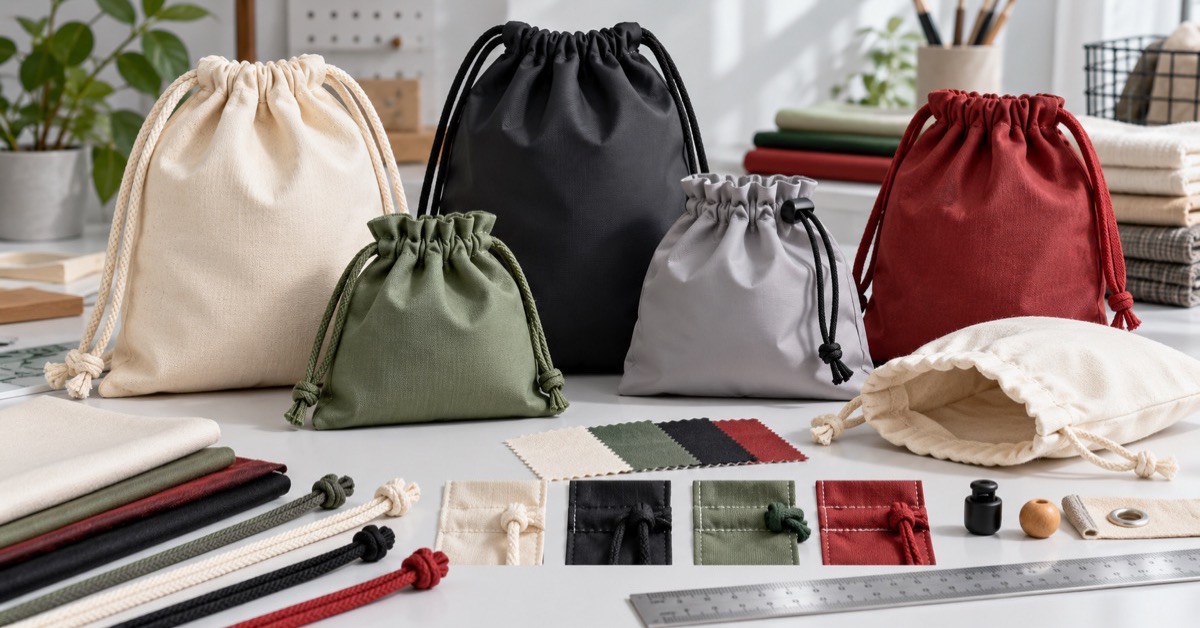
Compare drawcord, zipper, flap, snap, hook-and-loop, button or open-top formats by use and packing speed. PackMK treats this as a development gate. The team names the decision owner, required evidence, cost consequence and stop condition before moving into the next stage.
Cycle the closure with centered and off-center contents and inspect access, snagging and strain. This prevents a closure working only on an empty sample. Record the result beside the live specification so quoting, sampling, production, inspection and repeat orders use the same evidence.
Gate G: engineer seams and edges
Specify seam type, allowance, stitch density, thread, reinforcement, lining and edge finish. PackMK treats this as a development gate. The team names the decision owner, required evidence, cost consequence and stop condition before moving into the next stage.
Cut open selected samples and run repeated loaded handling to reveal continuity and fray risk. This prevents neat exterior sewing hiding a weak load path. Record the result beside the live specification so quoting, sampling, production, inspection and repeat orders use the same evidence.
Gate H: place decoration after forming
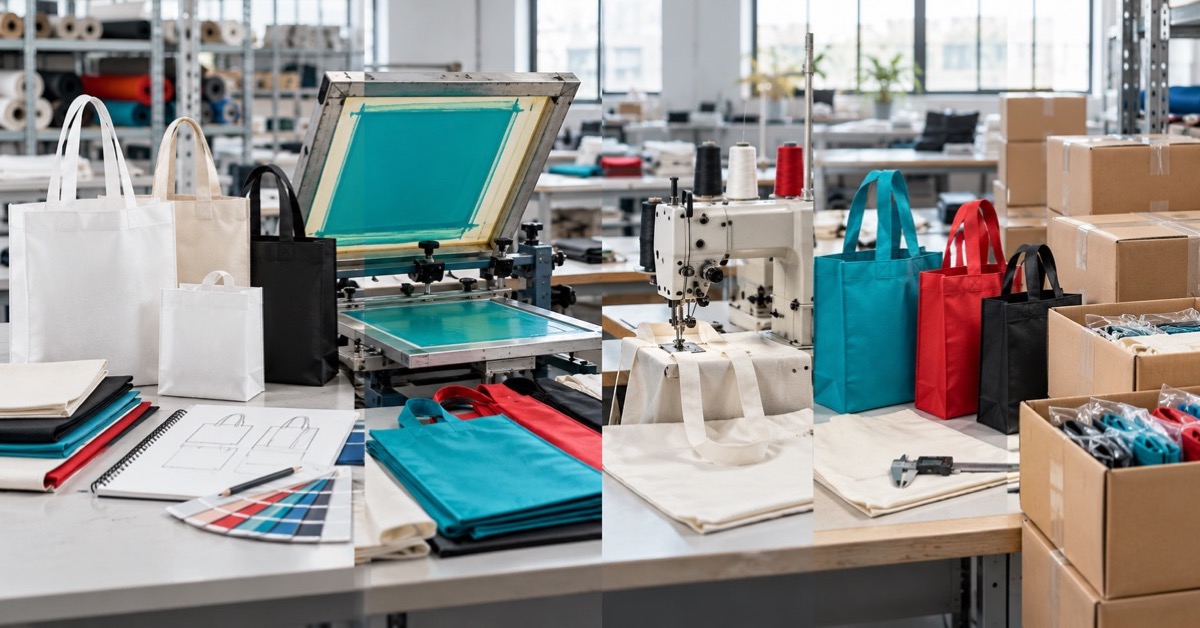
Choose screen, transfer, embroidery, woven label or another method around the actual pattern and folds. PackMK treats this as a development gate. The team names the decision owner, required evidence, cost consequence and stop condition before moving into the next stage.
Approve final-size decoration after curing, sewing, rubbing and flexing the formed package. This prevents flat artwork proof failing on the finished shape. Record the result beside the live specification so quoting, sampling, production, inspection and repeat orders use the same evidence.
Gate I: prototype in stages
Separate material swatch, construction blank, decoration trial, pre-production sample and first article. PackMK treats this as a development gate. The team names the decision owner, required evidence, cost consequence and stop condition before moving into the next stage.
Code each reference and state what question it closes and what remains open. This prevents one sample being treated as evidence for every risk. Record the result beside the live specification so quoting, sampling, production, inspection and repeat orders use the same evidence.
Gate J: run realistic use cycles
Define loading, closing, lifting, opening, product removal, repacking, abrasion and credible environmental exposure. PackMK treats this as a development gate. The team names the decision owner, required evidence, cost consequence and stop condition before moving into the next stage.
Record sample count, method, cycles, observations and acceptance criteria. This prevents a single demonstration replacing repeatable evidence. Record the result beside the live specification so quoting, sampling, production, inspection and repeat orders use the same evidence.
Gate K: normalize the cost
Separate textile, cutting, decoration, sewing, trims, tools, inspection, packing, freight and variant changeovers. PackMK treats this as a development gate. The team names the decision owner, required evidence, cost consequence and stop condition before moving into the next stage.
Compare alternatives at equal quantity, scope and delivery terms and identify cost-sensitive decisions. This prevents a cheaper route silently losing required performance. Record the result beside the live specification so quoting, sampling, production, inspection and repeat orders use the same evidence.
Gate L: verify production transfer
Compare the first production article with material, pattern, decoration, construction, function and packing references. PackMK treats this as a development gate. The team names the decision owner, required evidence, cost consequence and stop condition before moving into the next stage.
Stop and correct critical mismatches before the complete run continues. This prevents sample-room execution failing on the live line. Record the result beside the live specification so quoting, sampling, production, inspection and repeat orders use the same evidence.
Gate M: inspect across time
Check material, dimensions, seams, closure, decoration, function, cleanliness, variants and cartons across the run. PackMK treats this as a development gate. The team names the decision owner, required evidence, cost consequence and stop condition before moving into the next stage.
Sample beginning, middle and end production and use named defect categories. This prevents early good output hiding later process drift. Record the result beside the live specification so quoting, sampling, production, inspection and repeat orders use the same evidence.
Gate N: close the development record
Store the brief, alternatives, decisions, pattern, artwork, sample, trials, cost, deviations and packing plan. PackMK treats this as a development gate. The team names the decision owner, required evidence, cost consequence and stop condition before moving into the next stage.
Add receiving feedback before marking the design repeat-ready. This prevents the next order reconstructing design intent. Record the result beside the live specification so quoting, sampling, production, inspection and repeat orders use the same evidence.
Give every ODM gate a release signal
| Gate | Deliverable | Do not release when |
|---|---|---|
| Product | Measured set | Data provisional |
| Material | Signed swatch | Tolerance unknown |
| Pattern | Approved blank | Fit unresolved |
| Function | Cycle record | Method unclear |
| Production | First article | Reference mismatch |
Compare decoration routes on fabric
| Route | Strength | Critical check |
|---|---|---|
| Screen print | Solid graphics | Cure and rub |
| Transfer | Detail and color | Heat response |
| Embroidery | Texture | Puckering and backing |
| Woven label | Repeat identity | Edge and attachment |
Use textile standards as a sourcing reference
Standards can improve material vocabulary and traceability, while the actual product and production-equivalent trials control the release. Review Textile Exchange standards overview and ISO quality management principles as context. Acceptance still depends on the actual product, sample, route and destination defined in the PackMK brief.
Make ODM fabric packaging development auditable
For ODM fabric packaging, record product fit, textile selection, pattern, seam construction, closure, print method, prototype, loaded trial, cost model, release gate. The controlled file also identifies PackMK, ODM, cotton, canvas, Oxford cloth, MOQ, ISO, inspection. These terms turn the keyword into buyer-ready fields that suppliers can quote and inspectors can verify.
Mark assumptions and exclusions next to each quotation. A note about a tolerance, substitute, minimum, lead time or excluded service is more useful than a broad promise because procurement can convert it into a sample question, cost option or release condition.
Ask whether every item of evidence represents the intended quantity, variant mix and delivery route. A small sample can prove fit or appearance, but it cannot automatically prove production consistency, carton protection or receiving speed. Keep those open questions visible until the relevant stage closes them.
After receiving the first shipment, compare results with the approved sample and inspection record. Note what predicted the outcome, what surprised the team and which field should change. PackMK can place that learning into the next brief instead of leaving it in a disconnected complaint or email.
This question-first method keeps ODM fabric packaging useful across sales, sourcing, quality and operations. Every important decision has an owner, evidence, a stated tradeoff and a recovery path, which is especially important when availability, artwork or timing changes.
Build ODM fabric packaging with PackMK
PackMK can develop ODM fabric packaging from brief and sampling through production checks and export packing. Send PackMK the intended use, product, artwork, quantity, variants, destination and required date to request a structured quotation for ODM fabric packaging.
- Explore PackMK fabric packaging formats
- Review PackMK OEM and ODM support
- Request an ODM fabric packaging quotation
ODM fabric packaging development questions
What does ODM fabric packaging development include?
ODM fabric packaging can include product measurement, concept, textile selection, pattern, closure, sewing, decoration, prototypes, tests, inspection and packing.
When should the textile be selected?
Select it after defining the product, use route and desired outcomes, then confirm it through physical swatches and formed samples.
Why approve a blank before artwork?
A blank closes fit, opening and construction questions so decoration is placed on stable geometry.
How is a fabric closure tested?
Cycle it with realistic contents, including off-center loads, and inspect access, snagging, attachment and surrounding strain.
Which decoration method is best?
Choose according to artwork, textile surface, color, hand feel, durability, quantity, cost and production route.
What should a use-cycle record contain?
Record the sample, conditions, method, cycles, observations, pass criteria and decision owner.
How should ODM costs be compared?
Normalize textile, cutting, decoration, sewing, trims, tooling, inspection, packing, freight, quantity and variants.
What does a first production article prove?
It proves transfer from approved development references to the live production route before bulk continues.
What belongs in the repeat-order file?
Keep the brief, textile, pattern, artwork, approved sample, trials, cost assumptions, deviations and packing specification.
How does PackMK support ODM fabric packaging?
PackMK coordinates discovery, textile decisions, pattern development, prototypes, production evidence, inspection and repeat-order control.