

A non woven bag price is the result of connected choices, not a fixed catalog number. PackMK breaks the quotation into material, dimensions, construction, handles, printing, quantity, inspection and packing so buyers can see why one specification costs more than another.
The useful comparison is not the lowest unit figure. It is the landed cost of a bag that carries the intended load, presents the brand correctly and arrives in a repeatable condition.
Cost layer 1: material type and weight
Non-woven polypropylene is commonly specified by material weight, color and surface characteristics, but performance also depends on construction. Heavier material may add body and cost while failing to solve weak handle attachment.
Ask quotes to state material weight and any lamination or coating. Compare production samples rather than relying on a generic material name.
Cost layer 2: finished dimensions and gussets
Width, height and gusset depth affect material area, cutting yield, appearance and carton packing. Small changes can move the bag into a less efficient layout. Size from the actual product arrangement and loading route.
A larger bag is not automatically safer. Excess space can distort the load and consume unnecessary material.
Cost layer 3: panel and seam construction
Flat bags, side-gusset bags and box-style formats require different cutting, folding, welding or sewing work. Reinforcement at the base or top adds material and operations. Ask which seams carry the load.
Approve the exact construction on a filled sample because two bags with the same external size may perform differently.
Cost layer 4: handle material and attachment
Handle width, length, weight, color, reinforcement and attachment method affect material and labor. Shoulder-length handles may require different packing than short hand-carry loops. Test comfort and strength with realistic contents.
Do not compare quotes if one includes reinforced handles and another uses a lighter unsupported attachment.
Cost layer 5: printing method and coverage
Color count, artwork size, opacity, registration and print method influence setup and unit cost. Large solid areas and multi-position printing may need additional handling. Review artwork on the final bag color and texture.
A smaller, clearer mark can sometimes provide better visibility and lower complexity than full coverage.
See the cost waterfall in one quotation
| Cost layer | Primary driver | Buyer evidence | Optimization question |
|---|---|---|---|
| Material | Weight and color | Specification | Is weight solving a risk? |
| Size | Area and yield | Loaded sample | Can dimensions tighten? |
| Construction | Operations | Pattern and sample | Which reinforcement matters? |
| Printing | Setup and coverage | Physical proof | Can artwork simplify? |
| Packing | Carton cube | Carton data | Can folding improve? |
Cost layer 6: quantity and production setup
MOQ may apply by base color, size, artwork or printing setup rather than only total quantity. Higher volume can spread setup cost, but it also raises cash, storage and obsolescence exposure.
Request several relevant quantity breaks with the same specification. Compare unit savings with realistic demand and reorder lead time.
Cost layer 7: color and variant fragmentation
Each material color, size and artwork version can create separate setup, identification and packing work. A large total order may still contain many small production lots. Use a clear SKU matrix.
Share a base size or color where it does not compromise use. Standardization can reduce complexity more effectively than cutting essential construction.
Cost layer 8: sample and proof development
Blank samples, printed samples, artwork proofs and loaded tests may carry separate charges. Clarify what each sample represents and whether tooling or setup can be reused. Development cost protects against larger bulk errors.
Approve changes in writing and keep the controlling sample for inspection and reorders.
Cost layer 9: quality inspection
Inspection adds cost but can reduce receiving surprises, sorting, missed campaigns and replacements. Define checks for material, dimensions, color, print, handles, seams or welds, loaded performance, counts and packing.
The ISO quality management principles offer process context; the purchase order still needs measurable acceptance points.
Cost layer 10: inner packs and cartons
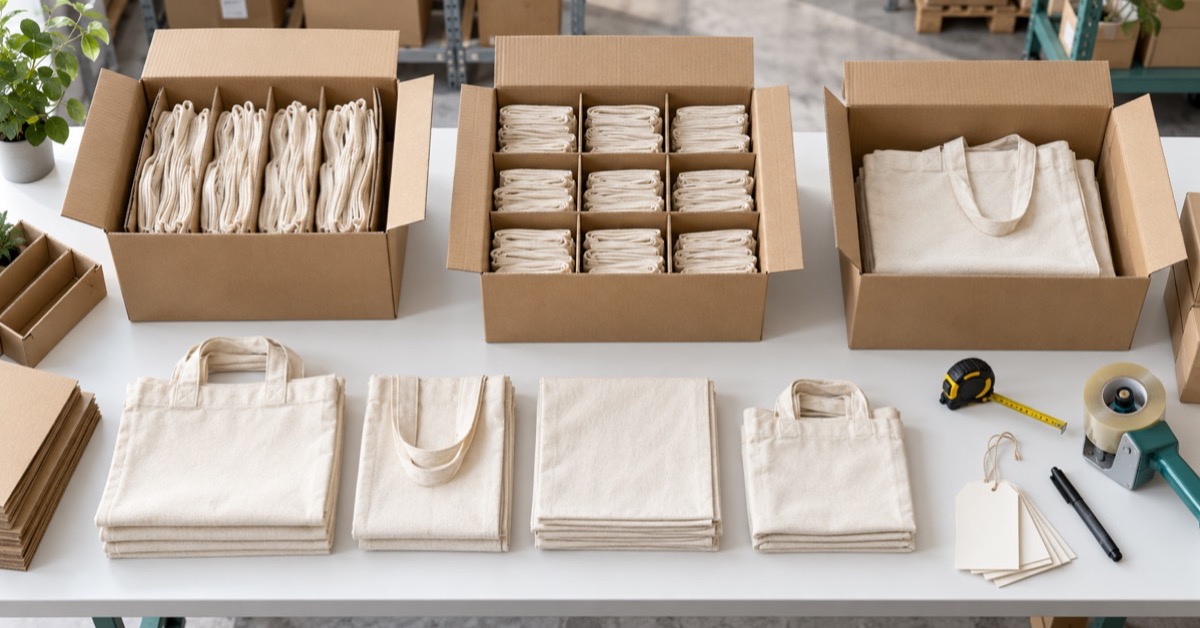
Folding method, bundle quantity, individual protection, pieces per carton and carton strength affect labor and freight cube. Request final carton dimensions, gross weight and quantity with the quote.
Test shape recovery after unpacking. Dense cartons should not create permanent creases or handle marks that reduce usable stock.
Cost layer 11: freight and warehouse handling
Calculate landed cost with carton volume, weight, route, receiving labor and storage space. A modest unit-price saving may disappear if the bag packs inefficiently. Full cartons can simplify counts and warehouse movement.
Use current logistics quotations for purchasing decisions; avoid publishing fixed freight claims inside the product specification.
Cost layer 12: defect and shortage exposure
Estimate sorting, replacement, express freight, delayed campaigns and staff time when a bag fails. The lowest quote can carry higher expected loss if construction or controls are unclear.
Use a loaded pilot and inspection plan where failure would disrupt a launch or retail operation.
Cost layer 13: obsolete inventory
Artwork, campaign dates, store networks and product dimensions can change before excess bags are consumed. Include potential write-off and storage in high-quantity comparisons. A smaller first order may protect flexibility.
Plan how old and new artwork stock will be separated and used down during a transition.
Cost layer 14: environmental claim evidence
A material name does not automatically justify a disposal or sustainability claim. Review the complete construction, intended use and evidence for the destination market. The US EPA's recycling resources note that accepted materials and local systems vary.
Keep any material declaration tied to the actual order.
Normalize supplier offers before negotiating
Put material weight, finished size, gusset, handles, construction, printing, quantity, variants, setup, samples, inspection, inner packs, cartons and delivery terms into the same columns. Mark exclusions.
Ask suppliers to revise missing scope before ranking prices. Negotiating incomparable numbers creates false savings.
Optimize one layer without weakening the bag
Consider tightening size, sharing a base color, simplifying artwork coverage, choosing an efficient handle length or improving carton folding. Change one variable and request the new cost and performance effect.
Retest the affected feature. Cost engineering should preserve the reason the bag exists.
Record the vocabulary behind the price
A non woven bag price brief should state material weight, finished size, gusset depth, handle construction, print coverage, minimum order quantity, setup cost, quality inspection, carton volume and landed cost. Include polypropylene, non-woven, MOQ, carton and freight assumptions.
This makes the next non woven bag price comparison repeatable.
Ask PackMK for an itemized comparison
PackMK can quote non woven bag price options with controlled material, size, handles, construction, printing, samples, inspection and carton data. The goal is a usable cost comparison rather than an isolated unit figure.
Send PackMK the intended contents and load, bag dimensions, artwork, quantity, variants, destination and delivery timing to request a quotation.
Use a purchase-order note to preserve the calculation
Attach the approved cost assumptions, quantity break, material and construction specification, artwork revision, inspection scope and carton data to the purchase order. State which charges recur and which apply only to the first run.
This note lets finance and procurement reconstruct the non woven bag price decision later. It also prevents a repeat quotation from appearing cheaper because an essential test, reinforcement or packing requirement was omitted.
Read the waterfall with a decision matrix
| Option | Unit price | Operational effect | Inventory risk | Best fit |
|---|---|---|---|---|
| Basic standard | Lower | Simple | Low if generic | Short campaigns |
| Reinforced | Higher | Better loaded confidence | Moderate | Heavier contents |
| High print coverage | Higher | More proofing | Artwork risk | Brand programs |
| Large quantity | Lower per unit | More storage | High | Stable demand |
| Smaller quantity | Higher per unit | Flexible | Lower | New launches |
- Explore PackMK non-woven bag formats
- Review PackMK custom bag development
- Request an itemized non-woven bag quotation
Non-woven bag price questions
What affects non woven bag price most?
Material weight, finished size, construction, handles, printing, quantity, variants, samples, inspection and carton packing all matter; the leading driver depends on the specification.
Does heavier non-woven material always make a stronger bag?
No. Material weight matters, but pattern, welding or seams, reinforcement, handles and load distribution also determine finished bag performance.
How does bag size affect price?
Larger dimensions consume more material and can reduce cutting yield or carton density, while gussets and complex panels add conversion work.
Why do printing costs vary?
Artwork size, color count, opacity, registration, print positions, bag color, process, setup and order quantity all affect printing requirements.
How does MOQ affect total cost?
Higher quantities may reduce unit price but increase cash, storage, damage and obsolete-artwork exposure, so the best quantity should match realistic demand.
Are reinforced handles worth the additional cost?
They can be when the intended load and carrying route require them. Compare loaded test results and the cost of failure before deciding.
Why should carton data be included in a quote?
Carton quantity, dimensions and weight allow buyers to estimate freight, receiving, warehouse space and whether folding will affect bag appearance.
How should non-woven bag quotes be compared?
Normalize material, dimensions, construction, handles, printing, quantities, variants, setup, samples, inspection, packing and delivery terms before ranking unit prices.
What records are needed for a repeat quotation?
Keep the approved specification, artwork, material reference, sample, loaded test, inspection criteria, variant matrix, packing and actual carton data.
How can PackMK help control non-woven bag cost?
PackMK can provide itemized options and connect specification changes with samples, performance, production, inspection and packing so cost decisions remain visible.