


A factory quote can make a box look inexpensive until staff must fold it, identify inserts, clean surfaces, load products and recover damaged units. Factory direct gift boxes should be compared on total packing and delivery effort, not the empty unit price alone.
PackMK evaluates the whole conversion from flat or assembled box to a sellable gift set. Structure, finish, labor, packing cube and receiving condition are placed on the same decision sheet.
Direct answer: Compare factory direct gift boxes by normalizing product fit, board and structure, insert, decoration, tooling, assembly minutes, defect recovery, carton cube, delivery terms and reorder controls—not just the quoted box price.
Open the costing exercise with a real packing trial
Give staff production-equivalent boxes, inserts, products, labels and accessories. Observe unfolding, assembly, orientation, product loading, closure, cleaning and final presentation.
PackMK records touch time, confusion points, damage and rework. A small price advantage can disappear when every unit needs extra handling.
Convert unit price into cost per sellable set
| Cost layer | Measure | Common omission |
|---|---|---|
| Box | Quoted unit | Tooling and setup |
| Assembly | Minutes per set | Training and rework |
| Quality | Rejected units | Sorting |
| Packing | Units per carton | Protective material |
| Freight | Carton cube | Delivery term |
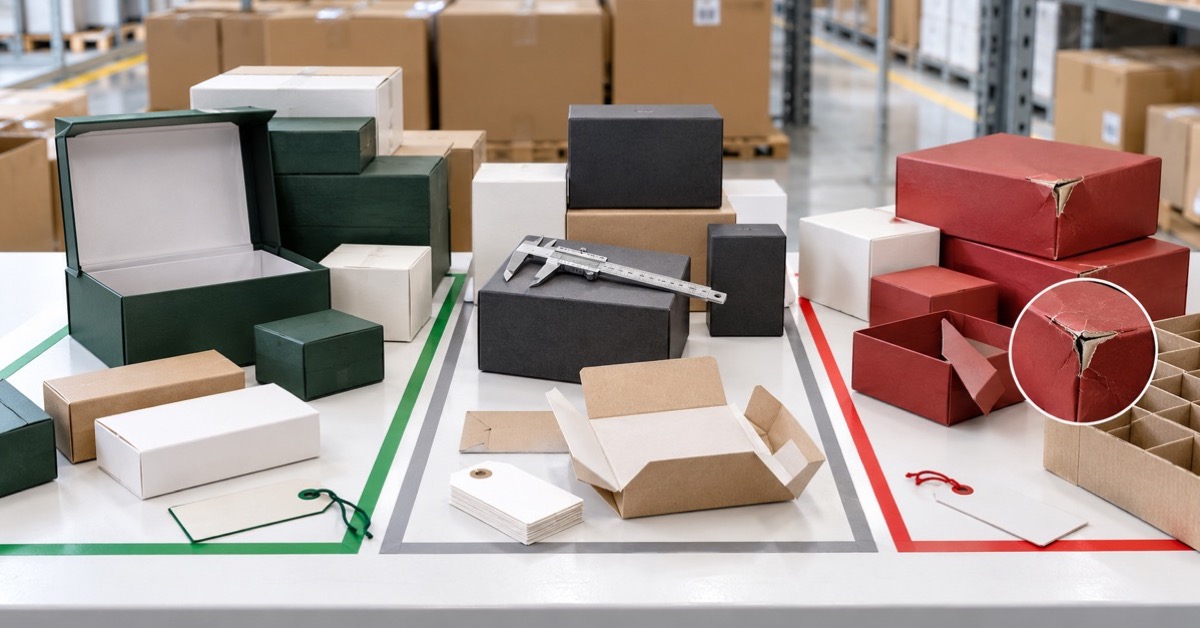
Check whether the structure protects the product or only displays it
Load the exact product, accessories and tolerances. Inspect clearance, movement, pressure points, opening sequence, closure security and removal.
A tight prototype may mark the product, while excess clearance can create transit damage or an unstable unboxing experience. Approve worst-case product dimensions.
Price the insert as a working component
Define material, thickness, cavities, orientation, finger access, retention, assembly and whether the insert arrives fitted. Compare paperboard, molded pulp, foam or other buyer-approved routes by function.
PackMK tests loading speed and product protection. An attractive insert may create labor, waste or product-removal problems that a rendering cannot show.
Separate board identity from finished-box stiffness
State paperboard or greyboard construction, thickness, facing material, grain, moisture condition and approved alternatives. Then test the completed structure.
Board data supports purchasing, but folds, joints, wraps, magnets and geometry determine finished behavior. Keep both material and finished references.
Ask the factory to itemize decoration choices
Decoration pricing should distinguish:
- printing colors and coverage;
- lamination, coating or textured paper;
- foil, embossing or debossing;
- windows, ribbons, magnets or closures;
- multiple artwork versions;
- physical proof and setup charges.
PackMK compares each feature with its shopper value, production risk and changeover cost instead of assuming more finishing always means a better pack.
Use a first article to lock the manufacturing route
The first article should identify board, wrap, print, finish, dieline, tooling, insert, adhesive, assembly, dimensions and packing presentation.
Record measurements, photographs and approvers. State which material, geometry or finish changes require a new first article before the run continues.
Decide where the box should be assembled
| Supply state | Benefit | Tradeoff |
|---|---|---|
| Flat | Lower cube | More labor |
| Pre-folded | Faster setup | Some compression risk |
| Fully assembled | Fast packing | Higher freight cube |
| Insert separate | Flexible loading | Mixing risk |
| Insert fitted | Controlled position | More factory labor |
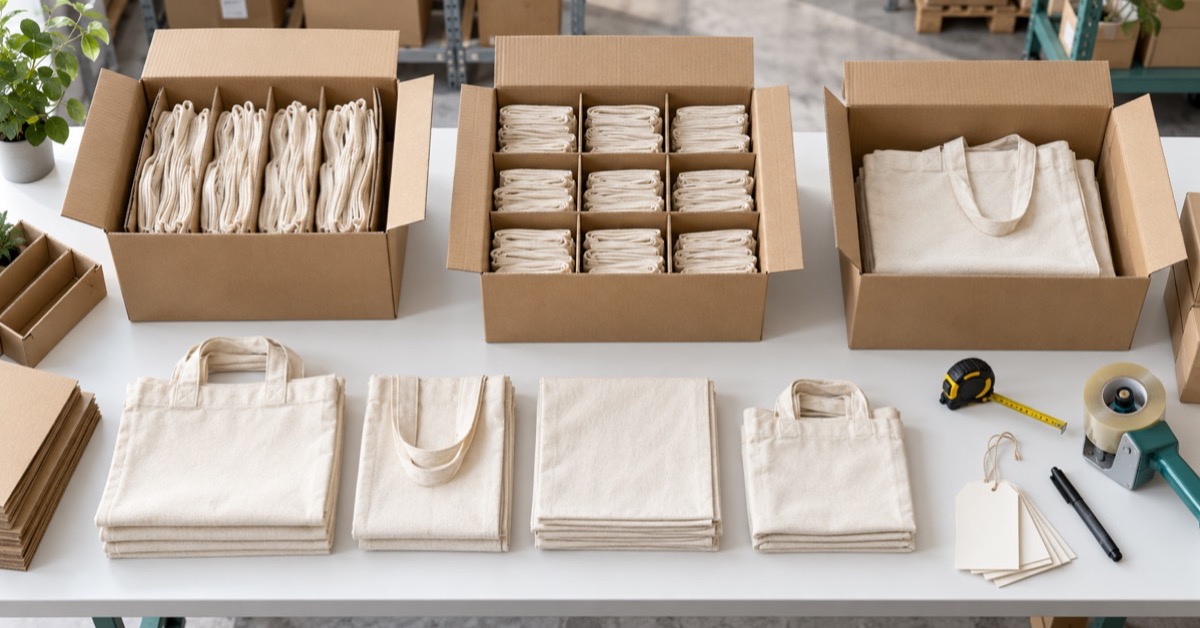
Stress the master carton before approving freight assumptions
Pack production-equivalent units with the intended orientation, count, dividers and protection. Measure carton dimensions and inspect compression, rubbing, corner damage and movement.
Freight cube must come from actual packing, not an early estimate. PackMK also checks whether receiving staff can identify and unpack units without creating damage.
Normalize the quotation before ranking factories
Place size, structure, board, insert, decoration, tooling, quantity, versions, quality, packing, Incoterm and lead time on one comparison basis.
A missing line is not a saving. It is an unresolved scope item that may later become a change order, buyer task or quality gap.
Use the reorder quote as a consistency test
Request the next price against the same coded dieline, material, tooling, sample, inspection and packing standard. Require explanation for every changed assumption.
PackMK treats retained tools and files as controlled assets. Ownership, storage life, maintenance and replacement conditions should be visible before the first purchase.
Worked cost scenario: flat pack versus assembled delivery
Consider two quotations for the same gift set. Option A ships boxes flat at a lower factory and freight cost, while Option B ships them assembled at a higher cube. The purchasing comparison is incomplete until the buyer measures local folding, insert fitting, cleaning, training, rework, storage and the number of sellable sets completed per hour.
A short packing trial can reveal that the flat option needs several careful folds, adhesive tabs and insert orientation. If staff must correct scuffed surfaces or reversed inserts, the apparent saving may disappear. Conversely, a well-designed folding structure with clear fixtures may make flat supply the stronger option even after labor is included.
PackMK would calculate scenarios using the buyer's observed time and stated labor assumptions, but it would keep them separate from the supplier's unit price. Freight should use production carton dimensions and the same delivery basis. Quality recovery should use an agreed defect scenario instead of pretending that every unit is perfect.
The decision may also vary by destination. A central kitting center with trained staff can prefer flat supply, while a retail location with limited labor and space may need assembled units. One box specification can therefore require different packing routes, carton marks and landed-cost comparisons for different channels.
This is why a direct relationship is most useful when it improves visibility. The factory should explain material yield, operations, assembly state and packing assumptions. The buyer should explain product tolerances, labor route and receiving constraints. The best result is a defensible total-cost choice, not simply the lowest number in the quotation column.
A final sensitivity check makes the choice more durable. Recalculate the decision with a slower new operator, a small defect-sorting event, a carton-count change and a different shipment quantity. Include storage space, seasonal labor and disposal of protective materials where they affect the buyer. If the preferred route changes after a modest assumption shift, the buyer should negotiate flexibility or run a larger validation before committing the full program.
Use paper sourcing and quality resources carefully
Responsible forestry and management principles support supplier questions, while finished structure, packing trials and commercial scope determine acceptance. Consult FSC responsible forestry information and ISO quality management principles as context. PackMK still bases release on the actual specification, physical sample, production route and buyer-approved conditions.
Compare factory direct gift boxes by sellable-set cost
A workable factory direct gift boxes brief defines product fit, box structure, paperboard, insert, surface finish, assembly labor, first article, master carton, freight cube, landed cost. It also identifies PackMK, gift box, rigid box, folding carton, FSC, MOQ, dieline, carton. PackMK uses these fields to turn broad search language into evidence that sourcing, quality and operations can verify.
Ask every supplier to state assumptions, exclusions, approved alternatives, tooling, minimums, inspection scope, packing and lead-time conditions. For factory direct gift boxes, an unclear promise should become a sample question, a priced option or a release condition before the purchase order is confirmed.
Assembly observations depend on staff training, product tolerances, workstation layout and order volume. Freight cost also depends on route and commercial terms. PackMK therefore records conditions and uses the trial for comparison rather than presenting one universal saving.
Well-sourced factory direct gift boxes align the empty box, packing operation, master carton and receiving result. A defensible buying decision shows where the money goes and which evidence proves that the final set can be repeated.
Source factory direct gift boxes with PackMK
PackMK can support factory direct gift boxes from buyer brief and samples through production checks and export packing. Send PackMK the product or application, artwork, quantities, variants, destination and required date to request a structured quotation for factory direct gift boxes.
- Explore PackMK gift box formats
- Review PackMK OEM and ODM support
- Request a factory-direct gift box quotation
Factory-direct gift-box cost questions
What should a gift-box quotation include?
Include structure, dimensions, board, insert, decoration, tooling, quantities, versions, quality, supply state, cartons and delivery terms.
Why is assembly time important?
Folding, fitting inserts, cleaning and rework add labor to every sellable set and can outweigh a lower empty-box price.
Should gift boxes ship flat or assembled?
Choose by box design, packing labor, freight cube, compression risk, warehouse space and presentation requirements.
How should product fit be tested?
Load dimensional extremes and accessories, then check clearance, retention, pressure, opening, removal and transit movement.
What should a first article prove?
It should identify current materials, print, finishes, dieline, tooling, insert, dimensions, assembly and packing.
How are decoration costs compared?
Separate printing, lamination, foil, embossing, specialty materials, closures, versions, proofs and changeovers.
Why test the master carton?
Carton count, orientation and protection affect freight cube, rubbing, compression, corners and receiving condition.
What belongs in final inspection?
Check structure, materials, dimensions, print, finishes, insert, assembly, cleanliness, quantity, cartons and marks.
What protects a reorder?
Keep coded dielines, materials, artwork, tools, signed samples, tests, inspection, deviations and packing standards.
How does PackMK support direct gift-box sourcing?
PackMK coordinates normalized quotes, structure development, physical samples, first articles, inspection, export packing and reorder records.