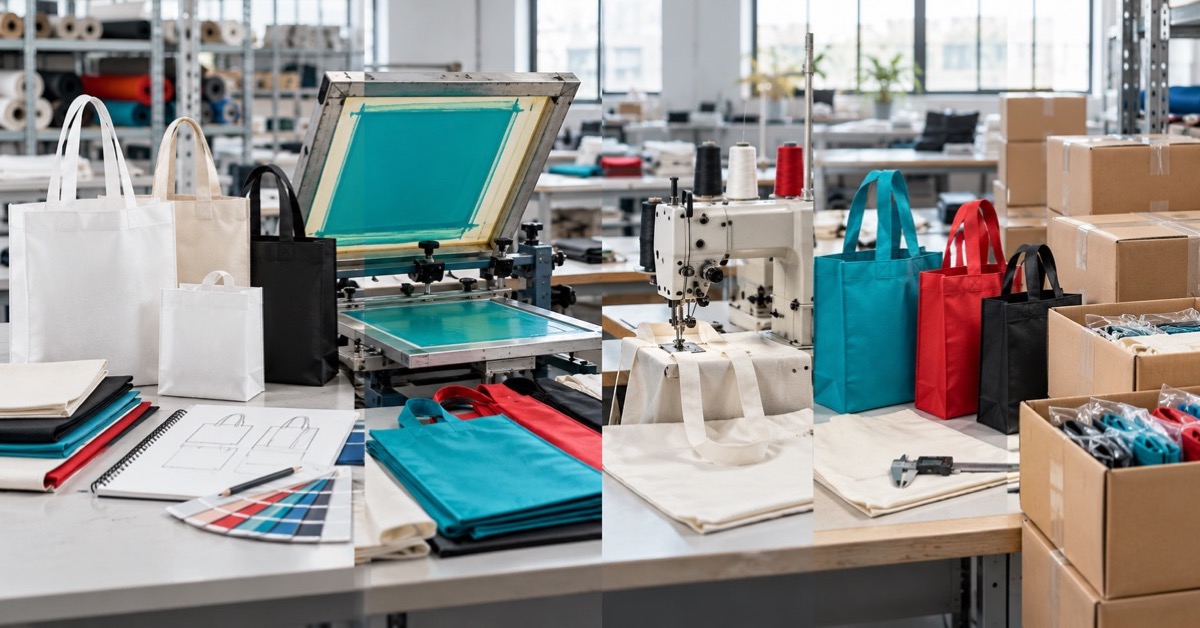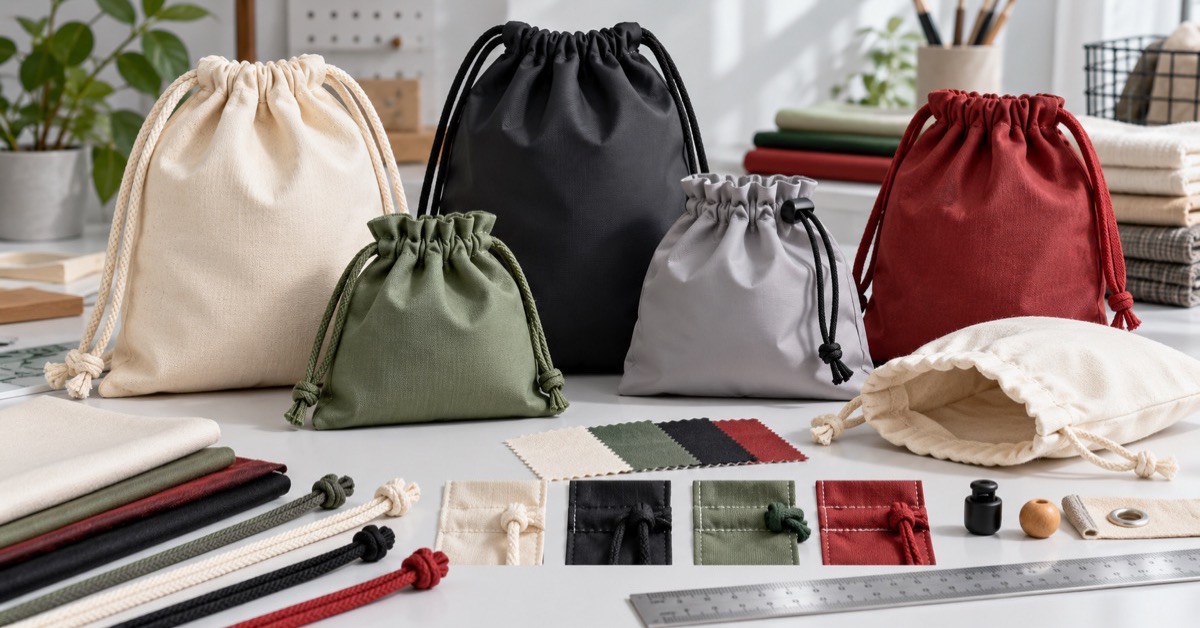


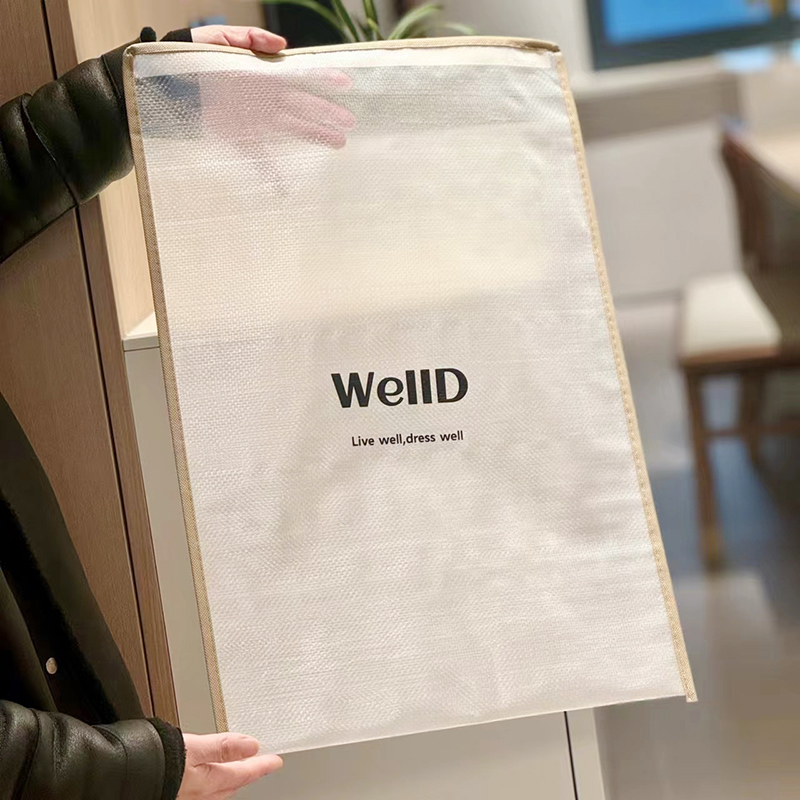
A tote bag order can look like one product while behaving like twelve. Three fabric colors multiplied by two logo designs and two sizes create twelve separate production variants. Buyers asking about custom tote bags MOQ should therefore count combinations, not only the total number of bags.
A useful first order starts with demand, then works backward through material availability, printing setup and carton packing. The factory minimum is only one of those numbers.
Start with the units you can actually place
List the stores, events, kits or online orders that will use the bags. Add a modest reserve for replacements and photography, but do not hide uncertainty inside a large safety quantity. A clear usage plan reveals whether one standard bag can serve several campaigns.
Separate total order quantity from quantity per variant
| Order design | Production effect | Planning response |
|---|---|---|
| One size, one fabric, one print | Setup is concentrated in one run. | Usually the simplest route for a launch. |
| One bag with several print colors | Each color may need its own screen or setup. | Confirm whether the artwork adds setup cost. |
| Several bag colors | Material is divided into smaller lots. | Ask for the minimum per fabric color. |
| Several logos or languages | Printing and packing become separate variants. | Use a quantity table by artwork version. |
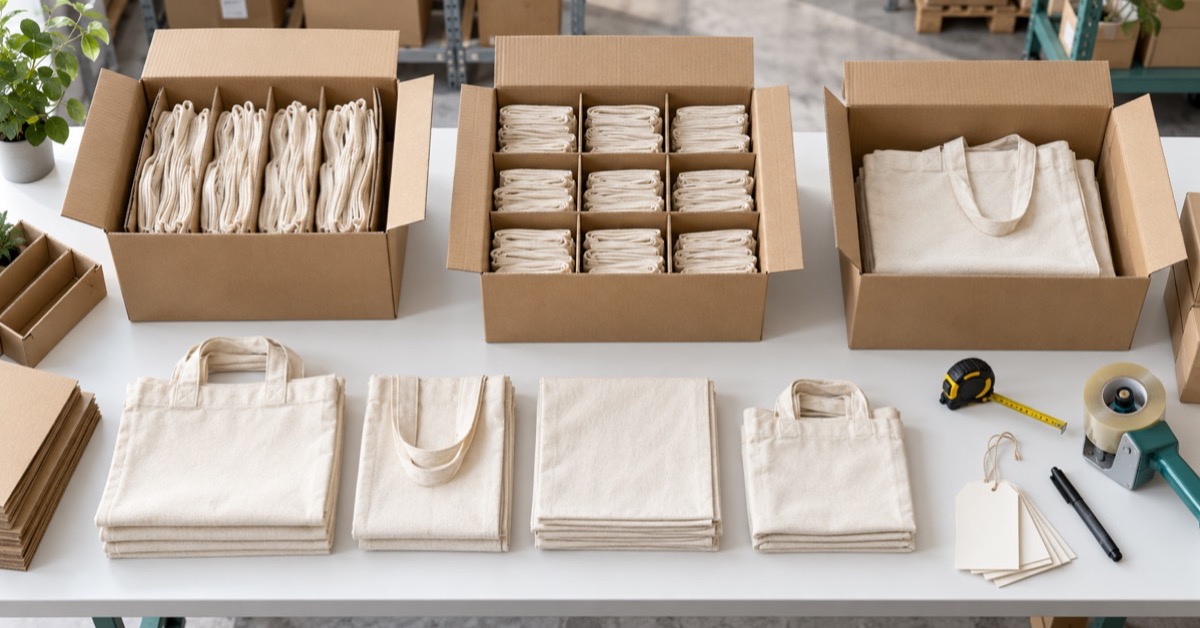
| Individual retail packing | More labor and packing materials are required. | Approve the pack before confirming quantity. |
Ask which part of the specification creates the minimum
The answer may be a fabric roll, a printing setup, a custom handle, a dyed color or a carton configuration. If the buyer understands the constraint, the specification can sometimes be simplified without weakening the product. Using a stock fabric color, one print position or a shared bag size may be more useful than negotiating only on unit price.
Build a quantity ladder instead of requesting one number
Ask for quotations at three realistic levels: launch quantity, expected six-month quantity and repeat-order quantity. Compare total spend, unit cost, storage space and the risk of unused artwork. A lower unit price is not a saving when the additional bags have no planned use.
Material assurance also belongs in the order brief. If textile testing or certification is important, review the OEKO-TEX Standard 100 overview and state the exact evidence required for the proposed fabric.
Use the sample to lock the reorder specification
The approved sample should record dimensions, fabric, weight, handle construction, print size, ink or transfer method and packing. This turns the first custom tote bags MOQ decision into a repeatable purchasing specification rather than a one-time email conversation.
Run a simple first-order calculation
- Forecast usable demand by date and location.
- Reduce unnecessary colors, sizes and artwork versions.
- Request a quantity ladder for the remaining specification.
- Check carton volume and storage before choosing the tier.
- Keep the approved sample and production file for reorders.
- Review PackMK printed tote and non-woven bag options
- See how PackMK develops OEM bag orders
- Request a tote bag quantity ladder
The practical answer to custom tote bags MOQ is the smallest production plan that fits the required material and print process while leaving the buyer with a credible path to use every carton.
Tote bag minimum order questions
Is custom tote bags MOQ based on the total order?
Not always. A supplier may apply minimums by material color, bag size, artwork version or printing setup.
Can using one bag size reduce the minimum?
It can simplify material cutting and production, especially when several campaigns can share the same base bag.
Should samples be included in the MOQ?
Samples are normally handled as a separate development step. Confirm sample cost, timing and whether any tooling can be reused.
What information is needed for an accurate tote bag quote?
Provide size, material, fabric color, handle, artwork, print position, quantity by variant, packing and delivery destination.