


A strong sample proves that one tote can be made. It does not prove that hundreds or thousands can be repeated. Choosing a custom tote bag supplier China requires evidence across fabric receiving, cutting, sewing, handles, decoration, inspection and packing.
PackMK uses an evidence ladder: first confirm the proposed material and process, then observe transfer to production, and finally test whether records support containment and reorders.
PackMK begins with the buyer's operating question and records the active brief, approver, physical reference and open risks before bulk release.
Evidence 1: identify the production route
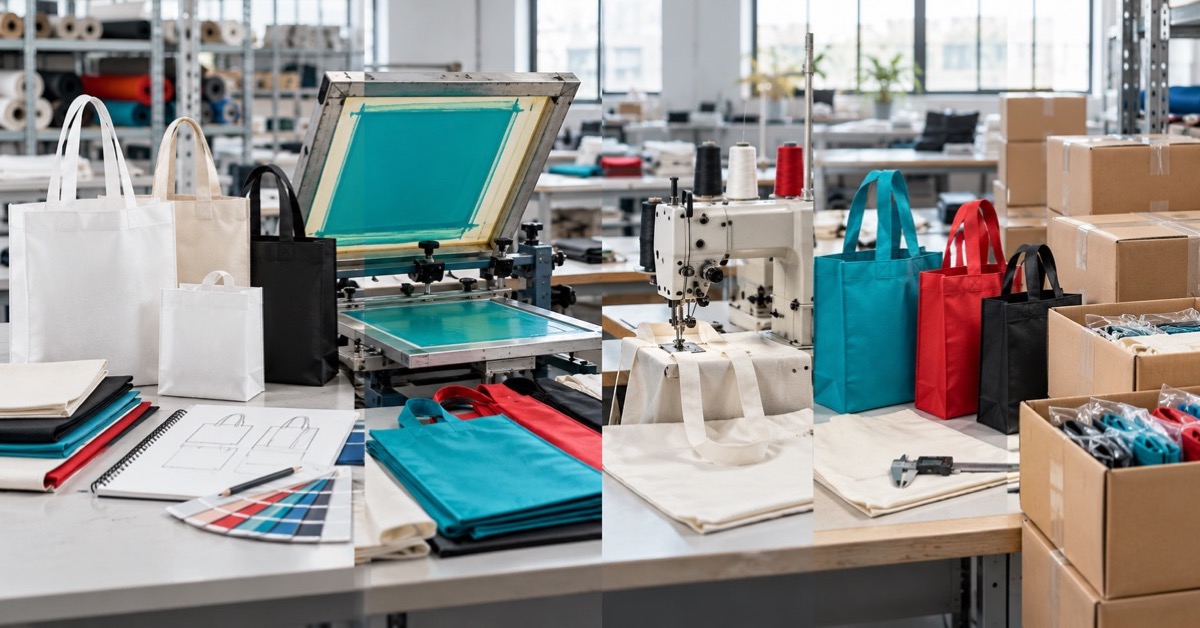
Confirm production address, responsible contacts and which fabric, printing, sewing or packing steps are outsourced. PackMK connects every supplier claim to the proposed order. People, equipment, samples and records must explain how the exact tote will be made and recovered if something changes.
Map the proposed order from incoming material to export carton. This prevents a supplier profile hiding handoffs. Keep the evidence with the live specification so quoting, sampling, production, inspection and repeat orders use the same basis.
Evidence 2: verify fabric control
Ask how fiber, construction, weight, color, finish, lot and substitutions are received and released. PackMK connects every supplier claim to the proposed order. People, equipment, samples and records must explain how the exact tote will be made and recovered if something changes.
Trace one material roll or batch to a current job and retained reference. This prevents the sample fabric differing from bulk. Keep the evidence with the live specification so quoting, sampling, production, inspection and repeat orders use the same basis.
Evidence 3: inspect storage and conditioning
Review cleanliness, moisture, lot separation, shade control and any relaxation before cutting. PackMK connects every supplier claim to the proposed order. People, equipment, samples and records must explain how the exact tote will be made and recovered if something changes.
Compare stored condition with the specification and known shrink or stretch behavior. This prevents fabric changing before production. Keep the evidence with the live specification so quoting, sampling, production, inspection and repeat orders use the same basis.
Evidence 4: examine cutting accuracy
Check pattern revision, marker, grain or direction, ply control and first-piece measurement. PackMK connects every supplier claim to the proposed order. People, equipment, samples and records must explain how the exact tote will be made and recovered if something changes.
Measure components from different stack positions and compare them with tolerances. This prevents layer movement creating inconsistent bags. Keep the evidence with the live specification so quoting, sampling, production, inspection and repeat orders use the same basis.
Evidence 5: follow seam construction
Specify seam type, allowance, stitch density, thread, reinforcement and edge finish. PackMK connects every supplier claim to the proposed order. People, equipment, samples and records must explain how the exact tote will be made and recovered if something changes.
Inspect operators and cut open selected samples to confirm continuity. This prevents neat surfaces hiding weak construction. Keep the evidence with the live specification so quoting, sampling, production, inspection and repeat orders use the same basis.
Evidence 6: prove handle attachment
Define material, width, drop, position, stitch pattern and reinforcement. PackMK connects every supplier claim to the proposed order. People, equipment, samples and records must explain how the exact tote will be made and recovered if something changes.
Run filled carry cycles and inspect comfort, balance and surrounding fabric. This prevents a strong strap failing at the attachment. Keep the evidence with the live specification so quoting, sampling, production, inspection and repeat orders use the same basis.
Evidence 7: audit decoration transfer
Identify screen, transfer, embroidery or label processes and their approved parameters. PackMK connects every supplier claim to the proposed order. People, equipment, samples and records must explain how the exact tote will be made and recovered if something changes.
Compare cured or finished output across production time against the physical reference. This prevents sample-room print failing on bulk. Keep the evidence with the live specification so quoting, sampling, production, inspection and repeat orders use the same basis.
Evidence 8: test loaded function
Use intended contents, weight, carry distance, opening and credible reuse cycles. PackMK connects every supplier claim to the proposed order. People, equipment, samples and records must explain how the exact tote will be made and recovered if something changes.
Record method, sample count, defects and acceptance rather than relying on one demonstration. This prevents a generic strength claim replacing use evidence. Keep the evidence with the live specification so quoting, sampling, production, inspection and repeat orders use the same basis.
Evidence 9: verify capacity honestly
Review machines, operators, current workload, bottlenecks, changeovers and peak-season assumptions. PackMK connects every supplier claim to the proposed order. People, equipment, samples and records must explain how the exact tote will be made and recovered if something changes.
Build a dated plan for the exact fabric, print, sewing and packing route. This prevents headline capacity ignoring constraints. Keep the evidence with the live specification so quoting, sampling, production, inspection and repeat orders use the same basis.
Evidence 10: meet quality ownership
Identify who approves incoming, first article, in-process, final, packing and shipment release. PackMK connects every supplier claim to the proposed order. People, equipment, samples and records must explain how the exact tote will be made and recovered if something changes.
Review a real defect record and its containment, cause and verification. This prevents quality existing only in presentation slides. Keep the evidence with the live specification so quoting, sampling, production, inspection and repeat orders use the same basis.
Evidence 11: normalize the quote
Separate fabric, cutting, print, sewing, trims, tools, inspection, packing and freight. PackMK connects every supplier claim to the proposed order. People, equipment, samples and records must explain how the exact tote will be made and recovered if something changes.
Compare suppliers at equal specification, quantity, versions and delivery terms. This prevents a low number hiding missing scope. Keep the evidence with the live specification so quoting, sampling, production, inspection and repeat orders use the same basis.
Evidence 12: approve production transfer
Compare first articles with fabric, dimensions, seams, handles, print, function and packing references. PackMK connects every supplier claim to the proposed order. People, equipment, samples and records must explain how the exact tote will be made and recovered if something changes.
Stop critical mismatches before the complete run. This prevents the golden sample not reaching the line. Keep the evidence with the live specification so quoting, sampling, production, inspection and repeat orders use the same basis.
Evidence 13: open packed cartons
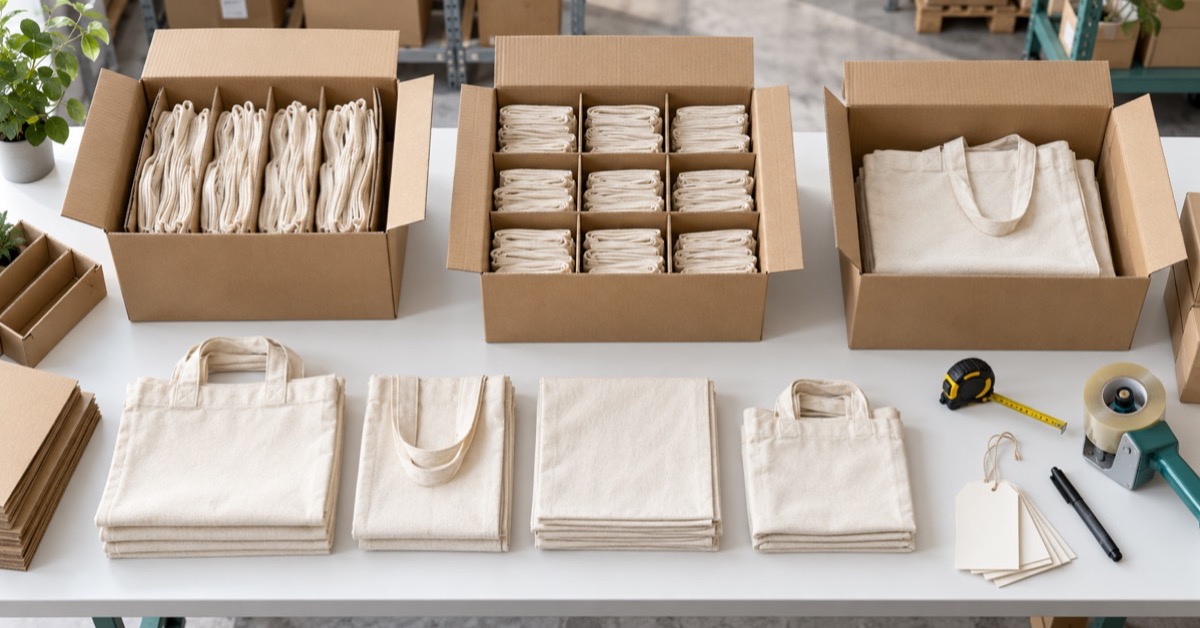
Check fold, bundle, moisture protection, count, carton strength, marks and SKU separation. PackMK connects every supplier claim to the proposed order. People, equipment, samples and records must explain how the exact tote will be made and recovered if something changes.
Rehearse receiving and counting with a production carton. This prevents good totes arriving mixed or creased. Keep the evidence with the live specification so quoting, sampling, production, inspection and repeat orders use the same basis.
Evidence 14: test corrective action
Set response, containment, affected-lot trace, replacement or credit and prevention requirements. PackMK connects every supplier claim to the proposed order. People, equipment, samples and records must explain how the exact tote will be made and recovered if something changes.
Review a closed case or give the supplier a realistic defect scenario. This prevents recovery being discussed only after failure. Keep the evidence with the live specification so quoting, sampling, production, inspection and repeat orders use the same basis.
Build a tote supplier evidence ladder
| Level | Question | Proof |
|---|---|---|
| Material | Is input controlled? | Lot trace |
| Process | Can construction transfer? | First article |
| Run | Is output stable? | Periodic checks |
| Packing | Will it arrive usable? | Carton trial |
| Recovery | Can issues be contained? | Closed action |
Normalize supplier quotes before ranking
| Line | Confirm | Common omission |
|---|---|---|
| Fabric | Construction and tolerance | Substitution |
| Decoration | Method and coverage | Setup |
| Sewing | Seams and reinforcement | Labor scope |
| Quality | Checks and release | Third-party cost |
| Packing | Bundle and carton | Freight cube |
Use textile and quality guidance carefully
Standards improve vocabulary and management questions, while order-specific samples and records decide supplier approval. Review Textile Exchange standards overview and ISO quality management principles as context. The signed sample, actual route and documented conditions still control PackMK acceptance.
Score a custom tote bag supplier China by repeatability
For custom tote bag supplier China, record fabric specification, cutting tolerance, seam construction, handle attachment, printing method, production capacity, first article, final inspection, corrective action, repeat order. The controlled file also identifies PackMK, China, tote bag, cotton, canvas, non-woven, OEM, MOQ. These terms turn a search phrase into fields that suppliers can quote and inspectors can verify.
Ask each supplier to return assumptions and exclusions in writing. A tolerance, substitution, minimum, lead-time condition or omitted service should become a sample question, cost option or release condition instead of remaining an informal promise.
Evidence must match the intended quantity, version mix and delivery route. A small sample may prove fit or appearance, but it cannot automatically prove run consistency, carton protection or receiving speed. Assign a later check for every risk the sample cannot close.
After receiving the first shipment, compare the outcome with the approved sample and inspection record. Note which check predicted the result, what surprised the team and which field needs revision. PackMK places that learning in the next brief rather than leaving it in an isolated message.
This buyer-question method keeps custom tote bag supplier China practical across sourcing, quality, sales and operations. Each major choice has an owner, evidence, a visible tradeoff and a recovery path when material, artwork, quantity or timing changes.
Evaluate a custom tote bag supplier China with PackMK
PackMK can develop custom tote bag supplier China from brief and sampling through production checks and export packing. Send PackMK the product, intended use, artwork, quantity, variants, destination and required date to request a structured quotation for custom tote bag supplier China.
- Explore PackMK custom tote bag formats
- Review PackMK OEM and ODM support
- Request a custom tote bag supplier China quotation
Custom tote bag supplier questions
What should I send a custom tote bag supplier China?
Send size, contents, load, fabric, handles, seams, artwork, quantities by version, packing, destination and required date.
Does one good sample prove supplier capability?
No. It proves one result; production transfer, run records, packing and corrective action show repeatability.
How is fabric identity controlled?
Use construction, weight, color, finish, lot, physical reference, incoming checks and substitution approval.
What should a handle test include?
Use the intended filled load and carry distance, then inspect comfort, balance, attachment and surrounding fabric.
How should supplier capacity be verified?
Review current workload and the exact material, decoration, sewing, inspection and packing route with dates.
What quality evidence matters?
First-article records, periodic checks, defect categories, lot traceability and verified corrective actions.
How can quotations be compared fairly?
Normalize fabric, cutting, decoration, sewing, trims, tools, inspection, packing, freight, quantity and versions.
What belongs in final inspection?
Fabric, dimensions, seams, handles, decoration, loaded function, cleanliness, quantity, versions, bundles and cartons.
What protects a repeat order?
Retain fabric and color references, artwork, signed sample, tests, inspection, deviations and packing standard.
How does PackMK support supplier selection?
PackMK connects the tote brief with supplier evidence, sampling, production checks, export packing and repeat-order records.