

A tote bag order can be physically simple and operationally complicated once artwork, variants, cartons and export timing are involved. Buyers searching for a custom tote bag exporter China need a timeline that shows where decisions are made and what evidence is handed to the next team.
PackMK treats export readiness as part of product development. The goal is not to promise a universal lead time; it is to identify dependencies, owners, approval gates and records so an avoidable change does not arrive at the loading date.
Direct answer: Plan a custom tote bag exporter China project as a gated timeline: brief, artwork, material, sample, pilot, production, inspection, packing, document review and receiving feedback.
The ten gates in an export-ready tote project
| Gate | Owner | Release evidence |
|---|---|---|
| Brief | Buyer | Approved specification |
| Artwork | Brand team | Versioned file |
| Material | Buyer and supplier | Reference or swatch |
| Sample | Quality | Measured sample |
| Pilot | Production | Run notes |
| Inspection | QC | Report and photos |
| Packing | Logistics | Carton list |
| Documents | Exporter | Draft set |
| Receiving | Buyer | Exception log |
A gate is complete when the next team can act without reconstructing the previous decision.
Gate 1: freeze the export brief
State bag dimensions, filled load, fabric, handle, gusset, print, finish, quantity by variant, packing, destination, required date and any market-specific marks.
PackMK separates must-have requirements from preferences. This lets the exporter propose an alternative without silently changing the acceptance basis.
Gate 2: release artwork with production fields
The artwork package should include:
- front, back, side and handle placement;
- color references and print method;
- safe area, bleed and seam clearance;
- language, care or claim copy;
- variant code and file version;
- approval owner and date.
Artwork is not released when it merely opens on a screen. It is released when production and inspection can identify the same version.
Gate 3: align fabric and handle with use
Cotton, canvas, non-woven and synthetic constructions offer different hand feel, load behavior, print response, fold recovery and packing cube. Choose from the intended route rather than a generic fabric label.
Handle length, width, reinforcement and attachment should be reviewed with the filled product. PackMK records where the load enters the bag and what repeated lifting is expected.
Gate 4: make the sample measurable
Measure finished size, gusset, handle drop, fabric, print placement, seams, bottom, odor and packing. Note what is approved and what remains open for the pilot.
A sample can be visually good and still be the wrong export product if the carton count, fold direction or variant coding is unresolved. PackMK keeps those decisions in the same file.
Match timeline risk to evidence
| Risk | Early question | Later evidence |
|---|---|---|
| Artwork change | Who can approve? | Release log |
| Material drift | What is the reference? | Incoming check |
| Capacity | What is loaded? | Carry trial |
| Mixed variants | How are they coded? | Carton reconciliation |
| Date pressure | Which gate is open? | Updated plan |
The timeline should show open risks instead of hiding them inside a single promised ship date.
Gate 5: use a pilot to expose production behavior
Run enough pieces to observe print registration, seam consistency, handle attachment, folding, packing speed and variant separation. A pilot is especially useful when the order includes several sizes or colors.
PackMK records corrections, rejected pieces, material usage and the final settings that should carry into bulk production. The pilot is a bridge between sample approval and a repeatable line.
Gate 6: inspect production with the buyer's risks in mind
Check dimensions, fabric, print, seams, handles, gussets, stains, odor, quantity, labels and version identity. Sample the features most likely to drift, not only the easiest visual points.
Use a report that links defects to cartons or lots. This makes containment possible if one variant needs rework while the remainder can continue.
Gate 7: make carton marks useful at receiving
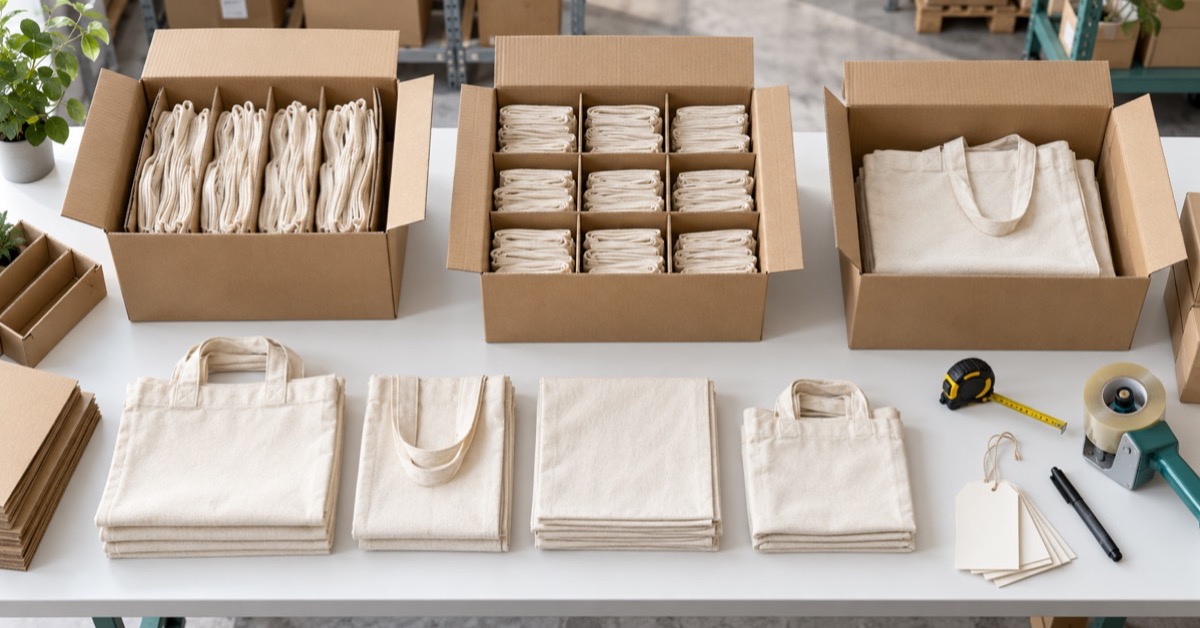
State carton number, SKU or variant, quantity, gross and net weight, dimensions, purchase order, destination and handling marks as required by the buyer's process.
PackMK reconciles accepted pieces, packed pieces, cartons and documents. Total quantity alone is not enough when a buyer receives mixed color or market versions.
Gate 8: review the document set before loading
Agree which commercial and shipping records are needed, who drafts them, who checks them and when changes stop. Export documents should use the same product and carton identity as the packing list.
PackMK flags assumptions and exclusions rather than treating document review as a last-minute administrative task.
Gate 9: define what happens when the date moves
If artwork, material, inspection or documents slip, show the affected gate, new dependency, owner and decision deadline. Do not compress every downstream activity without checking quality or packing impact.
A transparent plan lets the buyer choose an approved alternative, partial shipment or revised date with evidence instead of relying on optimism.
Gate 10: close the loop after delivery
Record receiving count, carton condition, application or carry feedback, color comments, damage and supplier response. Compare the result with the original brief and pilot notes.
PackMK uses the exception log to improve the next quote. The exporter becomes more valuable when the second order is easier to release than the first.
Compare exporters on handoffs, not only on galleries
Ask each candidate to explain who owns artwork, sample measurements, production updates, inspection, carton reconciliation and document review. A gallery proves taste; a handoff plan proves operational fit.
PackMK helps buyers score unanswered questions separately from price. A clear escalation route can be worth more than a small unit-cost difference when the launch date is fixed.
Protect the reorder with an export dossier
Retain approved artwork, fabric reference, measurements, sample, inspection, packing list, carton marks, document set, deviations and receiving feedback.
The dossier should show what is fixed and what can change. When quantity, destination or campaign timing shifts, the buyer can reopen only the affected fields.
Scenario: the bags are ready but the shipment is not
Production passes inspection, but the carton list still uses an old variant code and the buyer's document review finds a mismatch. The bags may be physically correct, yet loading pauses because receiving cannot identify the mix.
PackMK would trace the approved version, packed cartons and draft documents, then correct the identity before release. The incident becomes a timeline lesson: document and carton review must be a gate, not a clerical afterthought.
For the next order, the exporter can add a scan or second-person reconciliation for mixed variants. The control is small, but it protects the handoff that matters most at the destination.
Use trade and quality resources as context
Trade-process and quality references can strengthen the questions asked during export planning, while the approved product and shipment dossier control the order. Review ISO quality management principles and CPSC business education resources as context. PackMK still bases release on the actual brief, samples, production route and buyer-approved conditions.
Evaluate a custom tote bag exporter China by handoff quality
A useful custom tote bag exporter China brief defines export brief, artwork release, fabric, handle, sample, production, inspection, carton mark, shipping document, reorder. It also identifies PackMK, custom tote bag, exporter China, cotton, canvas, non-woven, MOQ, carton. PackMK turns those fields into evidence that sourcing, quality and operations can verify.
Ask suppliers to state assumptions, exclusions, approved alternatives, tooling, minimums, inspection scope, packing and lead-time conditions. For custom tote bag exporter China, an unclear promise should become a sample question, a priced option or a release condition before the purchase order is confirmed.
Export documents, marks and product requirements vary by buyer, destination and shipment route. This article supports procurement planning and is not legal or customs advice.
A dependable custom tote bag exporter China makes artwork, product, inspection, cartons and documents agree. PackMK helps buyers see each handoff before the shipping deadline arrives.
Before approval, PackMK recommends a short decision memo stating the chosen route, rejected alternatives, evidence reviewed, open limitations, quantity assumption, responsible owner and review date. This keeps the work useful beyond the first quote. If the product, market, material, packing or delivery route changes, the buyer can reopen only the affected decision instead of repeating a broad search. After delivery, record what worked, what failed, how the supplier responded and which evidence should be retained. This creates a practical learning loop for sourcing, quality and operations.
The decision should also name what is not being promised. A sample, certificate, supplier statement or past shipment can support a question, but it cannot automatically prove every future condition. PackMK keeps limitations beside the approval record so sales, procurement and quality teams use the same language.
Plan a custom tote bag export with PackMK
PackMK can support custom tote bag exporter China from buyer brief and samples through production checks and export packing. Send PackMK the product or application, artwork, quantities, variants, destination and required date to request a structured quotation for custom tote bag exporter China.
- Explore PackMK custom tote bag formats
- Review PackMK OEM and ODM support
- Request a custom tote bag exporter China quotation
Custom tote bag exporter China questions
What belongs in the export brief?
Include dimensions, load, fabric, handle, print, variants, packing, destination, marks and required date.
How should artwork be released?
Use versioned files with color, placement, bleed, safe area, copy, variant code, owner and approval date.
What should a sample prove?
Measure size, gusset, handle, fabric, print, seams, odor, packing and unresolved production risks.
Why run a pilot?
It exposes production behavior, variant separation, packing speed, print registration and correction needs before bulk output.
How do I compare exporters?
Compare handoffs, evidence, ownership, escalation, inspection, carton reconciliation and document review as well as price.
What should final inspection include?
Check fabric, dimensions, handles, seams, print, stains, odor, quantity, labels and variant identity.
Why are carton marks important?
They connect packed pieces to the purchase order, SKU, quantity, destination and receiving process.
What if the ship date is at risk?
Show the affected gate, new dependency, owner and options such as approved alternative, partial shipment or revised date.
What protects repeat orders?
Retain artwork, material, sample, inspection, packing, documents, deviations and receiving feedback.
How does PackMK support export projects?
PackMK coordinates the brief, artwork release, sampling, production checks, packing, dossier review and reorder control.