

Custom paper boxes succeed when structure, material conversion and decoration are engineered in the correct order. PackMK starts with the product and the packing process, then chooses a box style, board, insert, print and finish that can be manufactured and inspected consistently.
A premium surface cannot correct a weak dieline. A strong box can still fail if staff cannot assemble it quickly or if export packing rubs the finish. This engineering guide organizes the decisions into approval gates so buyers can see where risk enters the project.
1. Define the box's structural assignment
Decide whether the box is primary presentation packaging, a retail carton, a gift layer, a storage format or a secondary package around another container. State the expected product weight, orientation, opening frequency and handling route.
List the tasks outside its assignment. A display carton may still require a shipping case. A rigid gift box may need surface protection inside the master carton. Clear boundaries prevent under-designed transport protection.
2. Measure the complete product and tolerance range
Use production units with all accessories, leaflets and protective components. Measure the largest and smallest acceptable product, not only one ideal sample. Record pressure-sensitive areas, permitted movement and the intended removal direction.
When products vary, decide whether the insert absorbs tolerance or whether separate box versions are required. The choice affects tooling, inventory and version control.
3. Select a box structure with an engineering matrix
| Structure | Assembly | Presentation | Storage | Best use |
|---|---|---|---|---|
| Folding carton | Manual or automated | Strong print area | Efficient flat pack | Retail products |
| Rigid lid-and-base | Usually supplied assembled | High perceived structure | More shipping volume | Premium gifts |
| Sleeve and tray | Simple loading sequence | Controlled reveal | Moderate volume | Sets and electronics |
| Mailer style | Folded locking panels | Functional branding | Flat before use | Subscription or ecommerce |
| Window carton | Additional window process | Product visibility | Flat pack possible | Retail display |
4. Specify board by stiffness, fold and surface needs
Board grade and thickness influence stiffness, scoring, edge appearance, printing and freight weight. Ask for a physical material reference and confirm whether the visible surface, reverse side and core color matter to the design.
Paper grain and conversion direction can affect folds. Review scores and panels on a production-equivalent blank, especially where heavy ink coverage or lamination crosses a fold.
5. Approve the dieline as a controlled technical file
The dieline should show finished dimensions, cut lines, scores, perforations, glue zones, safe artwork areas and orientation. Lock a version code before artwork is finalized. A small structural edit can move text, foil or barcodes.
Test the blank custom paper boxes with the actual product. Check loading, closure, opening, stacking and whether any panel bows or unlocks after repeated handling.
6. Design inserts for retention and removal
Inserts should hold the product during expected movement while allowing an intuitive removal. Check finger access, orientation, scratch risk, assembly and how accessories are separated. Use production-equivalent materials because stiffness and friction change the experience.
If one outer box supports several variants, mark the insert version clearly and build line-clearance rules so the wrong insert cannot be packed with the product.
7. Build artwork around folds, edges and viewing distance
Place the brand hierarchy on panels customers actually see. Keep small text away from tight folds, corners, windows and glue zones. Review the box at shelf distance, in hand and under close inspection.
Print a final-size mockup and assemble it. A flat proof cannot show how adjacent panels meet or how a logo changes when the lid, sleeve or tray moves.
8. Sequence printing and finishes by risk
Lamination, foil, embossing, spot coatings and textured papers can interact. Fine foil detail may fill in, embossing can distort nearby print and dark surfaces may show rubbing. Approve the complete process sequence, not isolated swatches.
| Finish | Buyer objective | Risk | Approval method |
|---|---|---|---|
| Lamination | Surface feel and protection | Color shift or fold response | Finished folded sample |
| Foil | Reflective brand detail | Registration and fine-line loss | Actual-size production proof |
| Embossing | Tactile emphasis | Depth variation or reverse marking | Physical approved reference |
| Spot coating | Contrast and highlight | Misregistration | Inspection under angled light |
| Window | Product visibility | Glue, haze or distortion | Filled box review |
9. Verify sourcing and claims before artwork release
If certified fiber is specified, confirm the material, supplier chain and exact claim for the order. The FSC chain-of-custody overview explains how certified materials are tracked. Do not print a mark or sourcing statement based only on a verbal assurance.
Keep compliance and claim approval with the responsible buyer or qualified adviser. The packaging supplier can provide manufacturing evidence but should not replace market-specific legal review.
10. Inspect structure and appearance at production speed
Check incoming board, first printed sheets, die cutting, stripping, folding, glue or wrapping, inserts and packed cartons. The ISO quality management principles support a process approach, while the project checklist defines the actual acceptance points.
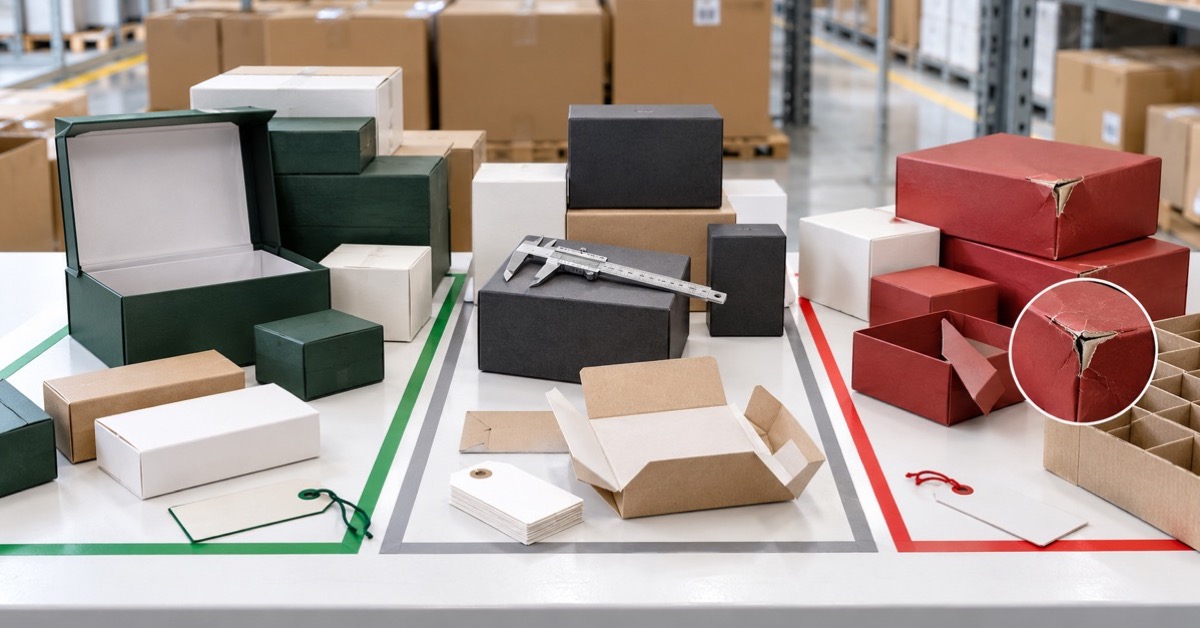
Use defect samples or clear photographs for critical cosmetic areas. Written phrases such as good finish or neat edges are too subjective for consistent inspection.
11. Plan capacity, assembly and launch timing
Separate tooling, material, printing, finishing, hand assembly and inspection in the schedule. Rigid boxes and complex inserts may require more assembly time than a printing-only quotation suggests.
Run an operator trial if boxes are assembled or filled at the buyer's site. Record seconds per unit, error points and workspace needs. A structural improvement that saves several seconds can matter across a large launch.
12. Protect finished boxes through export packing
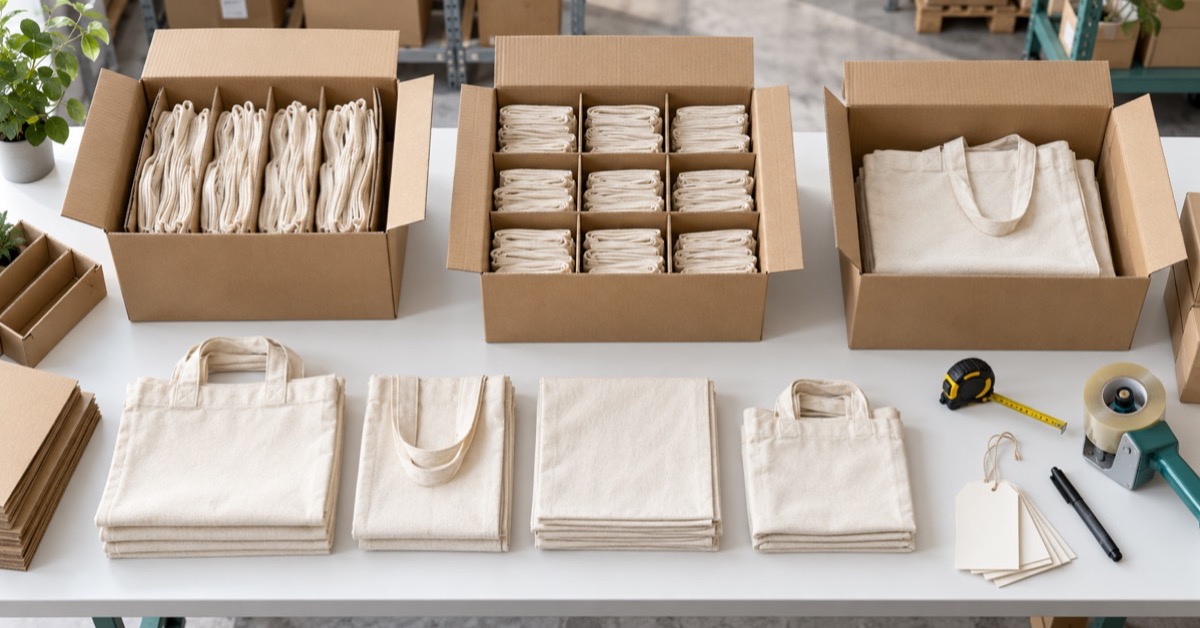
Flat-packed cartons need protection from crushing, edge damage and moisture. Assembled boxes need controlled nesting, separators and surface protection. Confirm pieces per inner pack, orientation, master carton dimensions and labels.
Perform a packed sample review, not only a loose sample review. Open the carton after simulated handling and inspect corners, foil, dark surfaces, windows, inserts and shape recovery.
13. Release custom paper boxes with a repeatable record
PackMK can develop custom paper boxes from blank structure through printing, finishing, inspection and packing. The completed record should include the approved dieline, board, artwork, finish locations, insert, sample, inspection criteria and carton plan.
Before mass production, conduct a release meeting that compares the purchase order, specification, approved sample and packing plan. Confirm which characteristics require first-article approval and who may authorize a deviation. For multiple SKUs, use a matrix that connects each product, insert, dieline, artwork code and carton label.
When comparing supplier proposals, ask each supplier to state board, manufacturing route, included finishes, sample level, inspection scope, assembly condition and carton quantity. Normalize these items before comparing price. A lower unit figure may exclude hand assembly, protective wrapping or a production-equivalent sample that the launch genuinely requires.
Define how unused stock will be handled if artwork or product dimensions change. A planned label, sleeve or insert revision may preserve an existing outer structure, while an uncontrolled change can strand finished inventory. Include obsolete-version identification in the change procedure.
After the first delivery, review assembly time, product damage, cosmetic defects, customer response and remaining inventory. These observations can improve the next run of custom paper boxes without changing successful features unnecessarily.
Send PackMK the product, target box style, preferred material, artwork, quantity and delivery schedule. The quotation can then show which development and production decisions are included instead of hiding them inside a unit price.
- Explore PackMK custom paper packaging
- Review PackMK box development support
- Request a custom paper box quotation
Custom paper box buyer questions
What details are needed to quote custom paper boxes?
Provide product dimensions and weight, box style, board preference, insert requirements, artwork, print and finish details, quantity, packing method and destination.
Which paper box style should a buyer choose?
Choose according to product fit, opening experience, assembly labor, retail display, shipping protection, storage space and budget rather than appearance alone.
Why is a blank box prototype important?
It verifies dimensions, product loading, closure, folds, locks and assembly before printed decoration makes structural revisions more expensive.
Can one box fit several product variants?
Sometimes. A shared outer box with variant inserts, labels or sleeves may work if every product remains secure and the presentation is still intentional.
How should box inserts be evaluated?
Test retention, product removal, material contact, orientation, movement, presentation and whether the insert can be assembled consistently in production.
What causes cracking on folded paper boxes?
Board choice, grain direction, ink coverage, lamination, score design and folding conditions can contribute. Review production-equivalent samples at the final fold locations.
How are foil and embossing approvals controlled?
Approve the exact size, position, depth, color and registration on the selected material. Save the finished physical reference for production comparison.
What should a paper box quality checklist include?
Include dimensions, board, print, color, finish position, folds, edges, glue, insert fit, assembly, cleanliness, carton packing and version separation.
How should paper boxes be packed for export?
Choose flat or assembled packing according to the structure, then control orientation, surface protection, carton compression, moisture exposure, labels and pallet rules.
How does PackMK manage repeat paper box orders?
PackMK can retain approved specifications, artwork, structure references, finish details and packing records so repeat orders have a clear comparison standard.