

A logo can be technically present and still feel wrong on a package. Scale, clear space, substrate color, ink spread, fold position, handle movement and lighting all change how the mark is seen. Custom packaging with logo therefore needs a proofing route that links brand intent to a repeatable production file.
PackMK separates brand approval from print approval, then reconnects them at the production sample. This keeps creative teams from approving a flat artwork image while manufacturing teams quietly solve the real constraints at the press, cutting table or sewing line.
Direct answer: Approve custom packaging with logo through a staged path: brand brief, structural file, color proof, material proof, production sample and retained release record.
Define what the logo must do
Write the viewing distance, orientation, minimum size, contrast, clear space, color intent and any legal or partner marks before selecting a print route. A logo on a shelf-facing box has different constraints from a mark on a soft tote that folds during use.
PackMK asks which brand decisions are fixed and which can flex. This makes it possible to propose a suitable substrate, decoration method and placement without pretending every mockup can be manufactured unchanged.
Use the right proof for the right question
| Proof | Question answered | What it cannot prove | Owner |
|---|---|---|---|
| Digital artwork | Is the message and layout correct? | Final color or fit | Brand |
| Dieline proof | Do panels and folds align? | Press behavior | Packaging |
| Color drawdown | How does ink look on substrate? | Full construction | |
| Blank structure | Does size and opening work? | Logo appearance | Product |
| Production sample | Does the released route repeat? | Long-term field life | Quality |
| Packed sample | Does it arrive and store correctly? | Future artwork changes | Operations |
PackMK labels each proof with its decision purpose. That prevents a proof from being reused as evidence for a question it was never designed to answer.
Create a logo handoff sheet
Give the supplier a one-page handoff that names:
- approved logo file and color references;
- minimum size and clear-space rule;
- no-distortion and no-unapproved-color rule;
- panel, fold, seam or handle exclusions;
- approved substrate and acceptable alternatives;
- who can approve a deviation.
A short handoff reduces interpretation. PackMK keeps it beside the dieline and quotation so the commercial file and the creative file do not drift apart.
Select the decoration route after the substrate
Screen printing, transfer, offset, flexographic, digital or stitched decoration each behaves differently on paper, film, cotton, non-woven fabric and coated board. The best route depends on surface, quantity, color count, edge definition and handling.
PackMK compares the route against the use case rather than choosing a method from a sample book. The decision record names setup, registration, opacity, texture, curing or drying and inspection implications.
Review placement on a working mockup
Fold the bag, erect the box, fill the pouch or attach the label before approving placement. A logo can cross a crease, disappear behind a handle, sit too close to a seam or become hidden by the product inside.
PackMK photographs the package in its real orientation and under the intended light. The image becomes a useful reference for a first-off inspection because it shows the context, not only a flat panel.
Record the print approval gates
| Gate | Release evidence | Stop condition | Next action |
|---|---|---|---|
| Artwork | Named file and revision | Unresolved copy or mark | Return to brand |
| Structure | Dieline and blank sample | Fit or fold conflict | Revise construction |
| Color | Substrate proof or target | Unresolved contrast | Adjust route or color |
| First-off | Measured sample and photos | Placement or finish out | Hold production |
| Pack-out | Carton and count check | Mixed or damaged units | Correct packing |
| Reorder | Release record and change log | Old version active | Retire obsolete stock |
The gates let a buyer approve progress without giving a later team permission to guess. PackMK uses the stop condition to make escalation immediate and specific.
Keep color claims precise
A brand color may need a target, tolerance, viewing condition and substrate note. A single digital screenshot is not a universal color standard, especially when paper, film or fabric changes the appearance.
PackMK records the reference and the production check separately. If a color is critical, the buyer should decide whether a physical drawdown, press proof or retained swatch is the required evidence.
Protect small text and codes
Logo projects often include ingredients, care text, barcodes, QR codes or partner marks. These elements can fail through small type, low contrast, fold placement, coating or distortion even when the main logo looks good.
PackMK reviews the longest text and the smallest code on the actual construction. The proofing route should state who checks readability and what happens when a code cannot be scanned.
Control last-minute changes
A late logo adjustment can reopen plates, cylinders, cutting, color matching, sample approval and carton timing. Record the cutoff date and the commercial effect before accepting the change.
PackMK keeps a change log with old file, new file, reason, approver, affected stock and disposition. This gives the brand room to improve without sending mixed versions into the same channel.
Design the reorder file at launch
A reorder should not depend on a supplier remembering which proof was approved. Store the logo file, dieline, construction, color target, pack-out, inspection photos and change rules under the SKU.
PackMK treats that record as part of custom packaging with logo delivery. It shortens future quoting and makes a small artwork update easier to evaluate.
Brand example: one logo across paper bags and rigid boxes
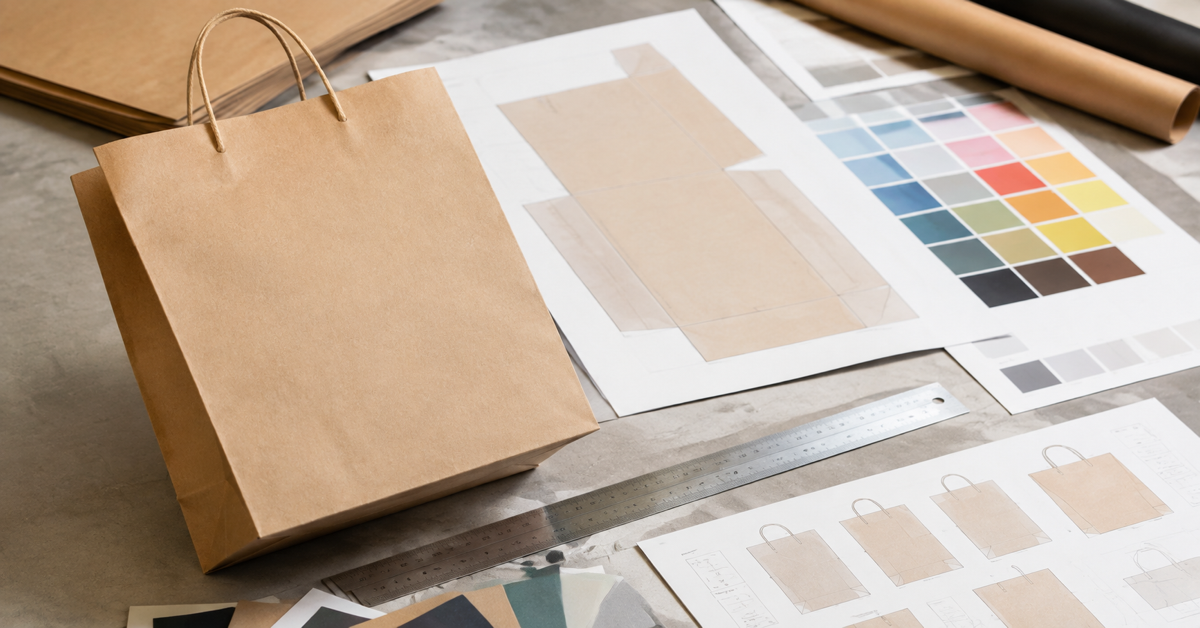
A footwear brand wants the same mark on a kraft paper bag and a coated rigid box. The bag flexes at the handle area, while the box has a dark exterior and a foil accent.
PackMK would create one brand handoff sheet but two route-specific proof paths. The bag would receive a filled and folded placement check; the box would receive a substrate drawdown and a production sample with the foil registered to the artwork.
The first-off record would include a logo placement photograph, color reference, code check and carton version. Any later shift from foil to ink would be treated as a controlled change, not an automatic substitution.
The brand team would approve appearance, while quality and operations would approve repeatability and pack-out evidence.
Use brand and quality references together
Design consistency is strengthened when creative approval is connected to documented production and inspection decisions. For orientation, buyers can consult ISO quality management principles and GS1 barcode standards overview. These references inform the method but do not certify a particular PackMK project.
Specify custom packaging with logo without vague artwork language
A decision-ready custom packaging with logo brief should define logo file, clear space, substrate, decoration route, dieline, color target, placement, code readability, first-off, change log. It should name PackMK, custom packaging with logo, brand guide, dieline, screen printing, offset printing, foil, barcode where they affect the decision. PackMK uses those details to organize questions, samples, quotation assumptions and release evidence.
Ask the supplier to separate confirmed facts from assumptions, options and exclusions. Record tooling, minimums, approved alternatives, test conditions, inspection scope, packing, lead-time triggers and the person who can release a change. That record is more useful than a promise built from undefined words such as premium, durable or sustainable.
Logo appearance depends on artwork, substrate, decoration route, viewing condition, structure, finishing and inspection method. PackMK can organize a defined proofing and production plan, but cannot promise a universal color match or approve brand and regulatory claims for every destination.
Send PackMK the logo rules and the real package
Share the approved logo files, brand colors, package dimensions, materials, quantity by version, viewing context and destination. PackMK can build a custom packaging with logo proofing route that your brand and quality teams can both release.
Custom packaging with logo questions
What logo file should I send?
Send the approved vector file, color references, minimum size, clear-space rule and any prohibited alterations.
Can a digital proof approve final color?
It can approve layout, but substrate and print route usually require a physical color or production proof for final appearance.
Which print method is best for a logo?
Choose after reviewing substrate, quantity, colors, edge detail, handling and required finish.
Why test a filled package?
Filling exposes folds, handles, seams, product occlusion and the viewing orientation that a flat artwork cannot show.
How do I protect small text near a logo?
Check the smallest text and codes on the real construction with the intended coating and viewing distance.
Who approves deviations?
Name a brand owner for appearance and a quality or operations owner for repeatability and release evidence.
What happens when the logo changes late?
Record affected files, plates, samples, timing, old stock and the authorization before making the change.
Should the logo be the same size on every format?
Use a consistent brand rule, then adapt size to viewing distance, panel, structure and production tolerance.
How can reorders stay consistent?
Keep the approved file, dieline, construction, color target, inspection photo and change log under the SKU.
What should PackMK quote?
Provide the artwork, package type, material, dimensions, quantity, finish, destination and date.